

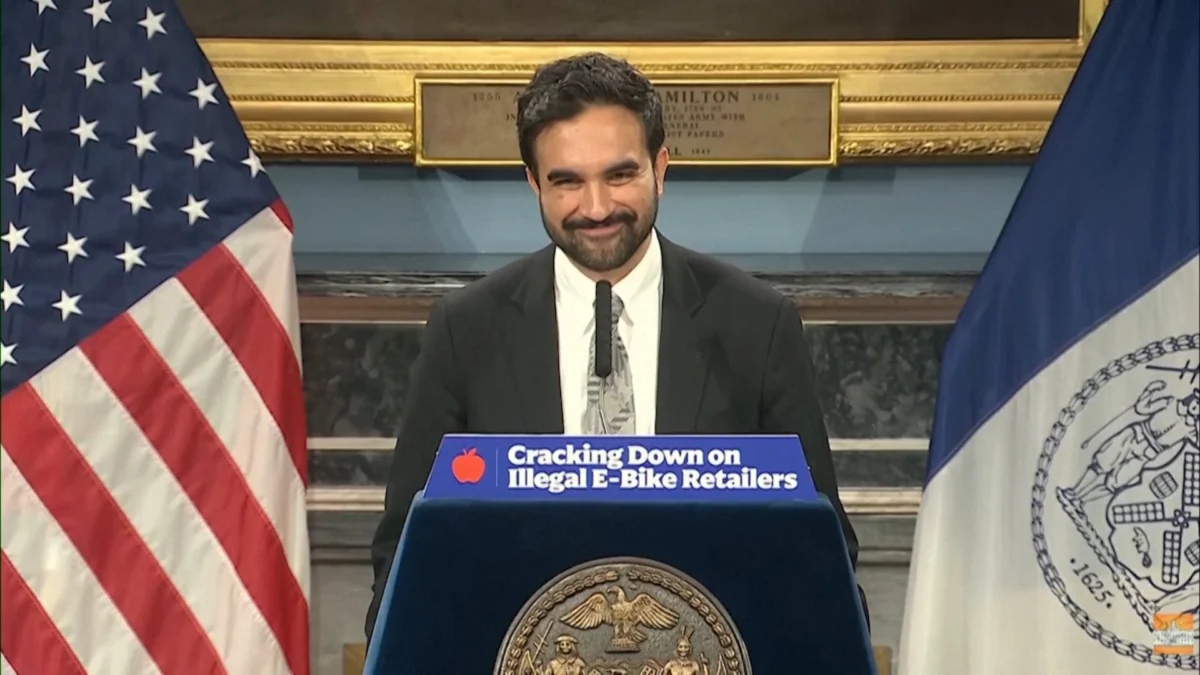
New York City’s Mayor Zohran Mamdani extended fervent congratulations to Abdul El-Sayed following his decisive victory in Michigan’s Democratic Senate primary. The endorsement, delivered on August 6, 2026, highlighted El-Sayed’s steadfast commitment to critical issues such as healthcare accessibility and the escalating cost of living, which resonated deeply with voters across the Wolverine State. Mamdani, a prominent figure in the progressive movement, also took the opportunity to humorously dismiss Republican attempts to brand El-Sayed as a “mini Mamdani,” quipping, “he can lift a lot more than I can,” in a clear rejection of reductive political labeling. This primary outcome signals a significant moment for the progressive wing of the Democratic Party, demonstrating its growing influence in key electoral battlegrounds and setting the stage for a high-stakes general election in Michigan.
El-Sayed’s Resounding Primary Win and Progressive Platform
Abdul El-Sayed’s victory in the Michigan Democratic Senate primary marks a pivotal moment in the 2026 election cycle. Having previously mounted a strong gubernatorial primary challenge in 2018, El-Sayed leveraged his established progressive credentials and grassroots support to secure the nomination. His campaign focused on a robust platform centered around universal healthcare, often advocating for a Medicare-for-All system, and addressing the severe economic pressures faced by Michigan families, including rising housing costs, stagnant wages, and increasing utility bills. These issues, particularly healthcare affordability, have been consistently identified by Michigan voters as top concerns. A recent poll conducted by the Detroit Free Press and EPIC-MRA in July 2026 showed that 68% of likely Democratic primary voters ranked healthcare as their primary concern, followed by economic stability at 61%. El-Sayed’s clear articulation of solutions to these challenges is widely credited with mobilizing a diverse coalition of voters, including young progressives, urban residents, and a significant portion of the working-class electorate.
His primary win was not merely a testament to his individual appeal but also an indicator of a broader shift within the Democratic Party. Across the nation, candidates aligning with the progressive movement are increasingly finding success in primary elections, challenging established norms and pushing the party platform further left on economic and social issues. El-Sayed’s campaign demonstrated effective organizing, utilizing digital outreach and community engagement to overcome better-funded, more centrist opponents who often relied on traditional campaign advertising. His digital team, in particular, was lauded for its innovative use of social media and influencer engagement, reaching younger demographics who are often disengaged from conventional political discourse.
Mamdani’s Endorsement: A Symbol of Progressive Solidarity
Mayor Zohran Mamdani’s vocal support for El-Sayed underscores a growing trend of cross-state solidarity among progressive elected officials. Mamdani, who himself made headlines with his own progressive victory in New York City’s Council elections, represents a new generation of Democratic leadership. His endorsement of El-Sayed is more than just a personal congratulations; it signifies a strategic alignment and mutual recognition of shared ideological goals. Both Mamdani and El-Sayed are known for their unwavering commitment to policies aimed at dismantling systemic inequalities and advocating for robust social safety nets.
Mamdani’s lighthearted dismissal of the "mini Mamdani" label, likely a pejorative term coined by Republican strategists to link El-Sayed to what they perceive as radical progressive ideologies, reveals a tactical effort to neutralize opposition rhetoric. By embracing the comparison with humor, Mamdani reframes it, stripping away its intended negative connotation and instead highlighting shared strengths. The "mini Mamdani" trope is an attempt to paint El-Sayed as an extremist, echoing similar tactics used against other progressive figures. However, the success of candidates like El-Sayed suggests that such labels may be losing their potency, particularly among a segment of the electorate yearning for bolder policy solutions. Mamdani’s jocular remark about El-Sayed’s physical strength subtly pivots the conversation from ideological attacks to a more relatable, human level, while simultaneously asserting El-Sayed’s distinct identity and capabilities.
Background and Chronology of the Michigan Senate Race
The 2026 Michigan Senate race is widely regarded as one of the most critical contests of the midterm elections, with national implications for the balance of power in the U.S. Senate. The seat, currently held by Senator Deborah Stabenow (D-MI), who announced her retirement in early 2025 after decades of distinguished service, created an open field, attracting a crowded primary. Senator Stabenow’s retirement opened up a rare opportunity for both parties to gain a crucial foothold in a perennial swing state.
- Early 2025: Senator Deborah Stabenow announces her decision not to seek re-election, immediately triggering widespread speculation and interest in the open seat.
- Mid-2025: Abdul El-Sayed, leveraging his 2018 gubernatorial campaign experience, becomes one of the first prominent Democrats to officially announce his candidacy for the U.S. Senate. His early entry allowed him to begin building a campaign infrastructure and fundraising network.
- Late 2025 – Early 2026: A field of Democratic contenders emerges, including state legislators, established local officials, and business leaders, many adopting more moderate positions to appeal to a broader base. Republican hopefuls also begin their campaigns, with a strong focus on national economic issues and cultural conservative talking points.
- Spring 2026: Primary debates commence, with El-Sayed consistently highlighting his progressive stances on healthcare, climate change, and economic justice. His campaign emphasizes grassroots organizing and direct voter engagement, distinguishing itself from opponents relying heavily on traditional media buys.
- Summer 2026: Polling indicates a tightening race in the Democratic primary, with El-Sayed gaining significant traction, particularly in urban centers and among younger voters. The "cost of living" and "healthcare access" emerge as dominant themes in voter discussions.
- August 6, 2026: Abdul El-Sayed secures the Democratic nomination, triumphing over a field of well-funded primary opponents. The victory is swiftly acknowledged by prominent progressive figures like Mayor Zohran Mamdani.
Michigan, historically a bellwether state, has seen its political landscape evolve significantly in recent years. While it has voted Democratic in presidential elections since 2020, its statewide races remain highly competitive. The state’s economic identity, heavily tied to the automotive industry, has made it particularly sensitive to issues of trade, manufacturing jobs, and economic security. The demographic composition of Michigan, with its significant urban populations, diverse suburban areas, and rural communities, necessitates a nuanced political strategy, making the general election an uphill battle for any candidate.
Reactions from Related Parties
Following El-Sayed’s primary victory, reactions from various political camps were swift and indicative of the battle ahead:
- Abdul El-Sayed (D-MI Senate Nominee): In his victory speech, El-Sayed thanked his supporters and reiterated his campaign’s core message. "Tonight, Michigan has spoken," he declared to a cheering crowd in Detroit. "We are tired of a system that puts profits over people. We are ready for universal healthcare, for an economy that works for everyone, not just the wealthy few. This victory belongs to every Michigander who believes in a brighter, more equitable future." He emphasized the need for unity within the Democratic Party to tackle the challenges of the general election.
- Republican National Committee (RNC) & Michigan GOP: The Republican Party immediately launched attacks, branding El-Sayed as an "extreme socialist" who would jeopardize Michigan’s economy and national security. A statement from the Michigan Republican Party chairperson, released hours after El-Sayed’s win, read: "Michigan Democrats have chosen a radical progressive whose policies would cripple our economy, raise taxes on hardworking families, and undermine our way of life. Abdul El-Sayed is out of touch with Michigan values, and we look forward to exposing his dangerous agenda to voters across the state." They signaled an aggressive campaign focused on national security, fiscal conservatism, and criticisms of the Democratic Party’s progressive wing.
- Democratic Senatorial Campaign Committee (DSCC): While privately acknowledging the potential challenges of a progressive nominee in a swing state, the DSCC publicly congratulated El-Sayed, emphasizing party unity and the importance of holding the Senate seat. A spokesperson stated, "We congratulate Abdul El-Sayed on his hard-fought primary victory. Michigan voters have chosen a champion for working families, and we are committed to ensuring he has the resources needed to win this critical general election and keep Michigan blue." This statement reflects the national party’s need to coalesce behind its nominee while preparing for a tough general election fight.
- Progressive Organizations (e.g., Justice Democrats, Our Revolution): Progressive groups hailed El-Sayed’s victory as a testament to the power of grassroots movements and the growing appeal of bold, transformative policies. "Abdul El-Sayed’s win is a clear signal that voters are demanding real change, not incremental adjustments," said a representative from Justice Democrats. "His campaign, built on Medicare for All and economic justice, proves that a progressive vision can win in crucial states like Michigan. This is a huge step forward for our movement."
Policy Deep Dive: Healthcare and Cost of Living
El-Sayed’s campaign platforms on healthcare and the cost of living are not merely rhetorical; they address tangible anxieties felt by millions of Americans, particularly in states like Michigan.
- Healthcare: Michigan faces significant healthcare challenges. According to the Kaiser Family Foundation’s 2024 data (extrapolated to 2026), approximately 7% of Michigan residents remain uninsured, and many more are underinsured, struggling with high deductibles and co-pays. The average annual premium for employer-sponsored family health coverage in Michigan exceeded $24,000 in 2025, with workers contributing a substantial portion. El-Sayed’s call for a single-payer "Medicare for All" system directly confronts these issues by proposing universal coverage, eliminating premiums and deductibles, and allowing for greater negotiation power for prescription drug prices. Proponents argue this would significantly reduce administrative waste and ensure equitable access to care, while opponents raise concerns about cost, government bureaucracy, and patient choice.
- Cost of Living: Michigan’s cost of living, while generally below the national average, has seen significant increases in specific sectors, particularly housing and energy. The median home price in Michigan increased by over 15% between 2023 and 2025, making homeownership increasingly difficult for first-time buyers and pushing rental costs higher. Additionally, energy prices, especially for natural gas and electricity, have seen steady upward trends, impacting household budgets. El-Sayed’s proposals to address the cost of living include investments in affordable housing initiatives, rent control measures, advocating for higher minimum wages, and implementing policies to curb corporate price gouging. He also supports infrastructure investments that would create well-paying union jobs and stimulate local economies, aiming to tackle the root causes of economic insecurity.
Broader Impact and Implications
El-Sayed’s primary win in Michigan carries significant implications for both the Democratic Party and the national political landscape.
- Progressive Momentum: This victory further solidifies the progressive wing’s growing influence within the Democratic Party. It demonstrates that a consistently progressive message, focused on systemic change rather than incremental reforms, can resonate with a substantial portion of the electorate, even in diverse, economically sensitive states. This could encourage other progressive candidates to challenge incumbents or run in open seats in future cycles.
- Senate Control: The Michigan Senate seat is crucial for the Democrats’ ambitions to maintain or expand their narrow majority in the U.S. Senate. A progressive nominee in a swing state like Michigan presents a double-edged sword: it energizes the party’s base but may alienate more moderate independent voters. The general election campaign will be a litmus test for the national viability of progressive candidates in highly competitive races.
- Republican Strategy: Republicans will undoubtedly use El-Sayed’s progressive platform to paint him as extreme, attempting to tie him to broader national progressive figures and policies that they argue are out of step with mainstream American values. Expect a campaign heavily focused on fiscal conservatism, national security, and potentially cultural wedge issues.
- Voter Engagement: El-Sayed’s campaign has shown an ability to mobilize younger voters and minority groups, demographics that are critical for Democratic success. The challenge now is to sustain that enthusiasm through the general election, ensuring high turnout in November. His ability to connect with working-class voters in Michigan’s industrial strongholds will be a key determinant of his success.
- Future of the Democratic Party: The outcome of the Michigan Senate race will offer valuable insights into the ongoing ideological struggle within the Democratic Party. If El-Sayed wins, it will bolster arguments for a more progressive national platform. If he struggles, it may lead to renewed calls for moderation to appeal to broader swaths of the electorate.
In conclusion, Abdul El-Sayed’s primary victory, lauded by figures like Mayor Zohran Mamdani, is more than just a local election result; it is a significant indicator of the evolving political landscape. It signals the growing strength of the progressive movement within the Democratic Party and sets the stage for a fiercely contested general election in Michigan, a contest that will undoubtedly have profound implications for the national balance of power and the future direction of American politics. The battle ahead will test the resonance of progressive policies on a national stage and the effectiveness of contrasting campaign strategies.
