

The global landscape of modern transportation is paved with an unavoidable and mounting consequence: the disposal of nearly one billion tires every year. As the automotive industry expands and the demand for mobility increases, the environmental footprint of end-of-life tires (ELTs) has become a critical challenge for waste management authorities and environmental scientists alike. Beyond the sheer volume of material waste, improperly discarded tires pose severe public health and safety hazards. They are notorious for fueling massive, difficult-to-extinguish fires that release toxic smoke into the atmosphere and leachable oils into the soil. Furthermore, in warmer climates and during summer months, abandoned tire piles become the ideal breeding ground for mosquitoes, facilitating the spread of diseases such as the West Nile virus and Zika.
Despite these challenges, a burgeoning industry is transforming what was once considered an environmental liability into a versatile raw material. While the scientific community has yet to perfect a method for recycling old tires into new ones at a commercial scale—primarily due to the complex chemical process of vulcanization—innovators are finding valuable second lives for rubber in a diverse array of products. From the specialized matting used in high-end equestrian facilities to the durable flooring found in professional hockey rinks, the journey of a retired tire is becoming a hallmark of the emerging circular economy.
The Regulatory Framework: From Stewardship to Individual Producer Responsibility
The success of tire recycling is often dictated by the strength of the legislative framework supporting it. Across the globe, jurisdictions have experimented with various models to incentivize the recovery of rubber. One of the most advanced systems currently in operation is found in Ontario, Canada. As the country’s most populous province, Ontario has transitioned from a traditional "stewardship" model to a more rigorous system known as Individual Producer Responsibility (IPR).
Unlike Extended Producer Responsibility (EPR), which often allows companies to pay a fee to a third-party organization to handle waste on their behalf, IPR places the legal and financial burden directly on the tire producers. In Ontario, companies that sell tires—ranging from global manufacturers to vehicle importers—are mandated to ensure their products are collected and recycled responsibly. This responsibility is calculated by weight rather than by brand, creating a comprehensive system where every ton of rubber sold must be accounted for in the recycling stream.
This shift to IPR has necessitated a high level of transparency and data integrity. Producers must maintain an auditable record of where tires are collected, how they are transported, and which processing facilities receive them. This regulatory pressure has birthed sophisticated logistics networks designed to track the movement of rubber across vast geographic areas.

The Logistics of Recovery: Digital Tracking and eTracks
To navigate the complexities of Ontario’s IPR laws, tire producers often turn to specialized organizations like eTracks. As a not-for-profit entity, eTracks was established to manage the "flow" of tires from the point of disposal to the point of transformation. The scale of this operation is immense; eTracks manages a network of approximately 5,500 collection sites, including automotive dealerships, independent repair shops, and dedicated tire retailers.
The province of Ontario covers an area roughly 1.5 times the size of Texas, presenting significant logistical hurdles. To manage this, eTracks employs the eSRP (Sustainable Recovery Platform), a digital system that verifies the lifecycle of a tire in real-time. Every year, approximately 13 million tires are traced through this system. When a truck picks up a load of tires from a repair shop, the transaction is digitally logged. When those tires arrive at a processing facility, they are weighed and verified again. This "digital paper trail" ensures that producers can prove compliance with provincial laws and that no tires are diverted to illegal landfills or dangerous stockpiles.
The Industrial Transformation: Inside the Evolve Recycling Plant
Once tires are collected and tracked, they enter the industrial processing phase. A leader in this space is Northwest Rubber, a global producer of rubber mats that operates Evolve Recycling in Brantford, Ontario. This facility serves as a primary destination for millions of Ontario’s discarded tires, turning bulk waste into refined raw materials.
The recycling process at Evolve is a masterclass in mechanical separation. Modern tires are sophisticated pieces of engineering, composed not just of rubber, but also of high-tensile steel wire and synthetic fibers (such as nylon or polyester) designed to provide structural integrity at high speeds.
The transformation begins with primary shredding, where whole tires are reduced to large chunks. These chunks are then fed into powerful grinding machines. During this stage, a series of high-intensity magnets are used to extract the steel components. The recovered steel is high-quality and is typically sold back to the steel industry to be melted down and reused in new metal products.
Simultaneously, air-suction and fractionation systems are employed to pull away the "fluff"—the textile fibers that once reinforced the tire’s casing. What remains is clean rubber, which is then processed through secondary and tertiary grinders to achieve specific "mesh" sizes. The final product is known as "crumb rubber," a granular material that serves as the feedstock for a new generation of rubber products.
Engineering New Lives: From Livestock Welfare to Athletic Performance
The utility of crumb rubber depends largely on its consistency and size. Coarser crumbs are frequently used as "infill" for artificial turf fields, providing the cushioning and shock absorption necessary for sports like soccer and American football. However, companies like Northwest Rubber take the process a step further, using the crumb rubber as a primary ingredient in manufactured goods.
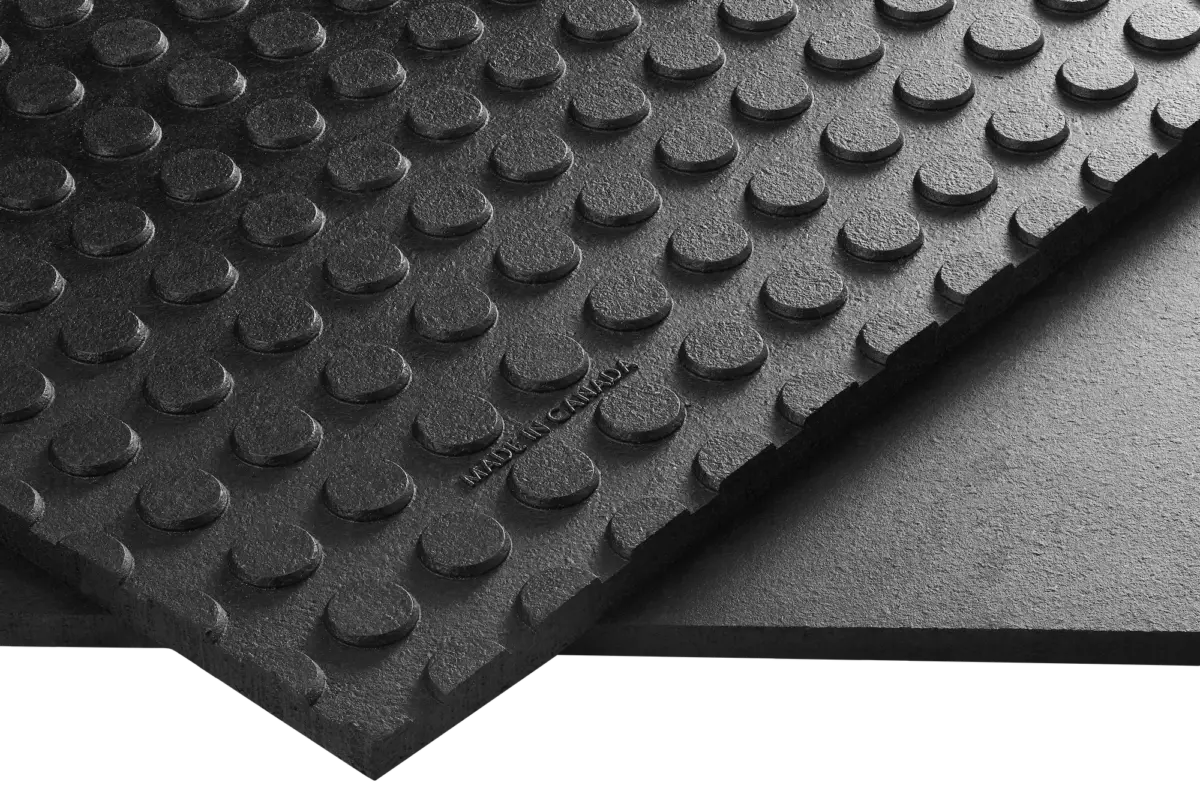
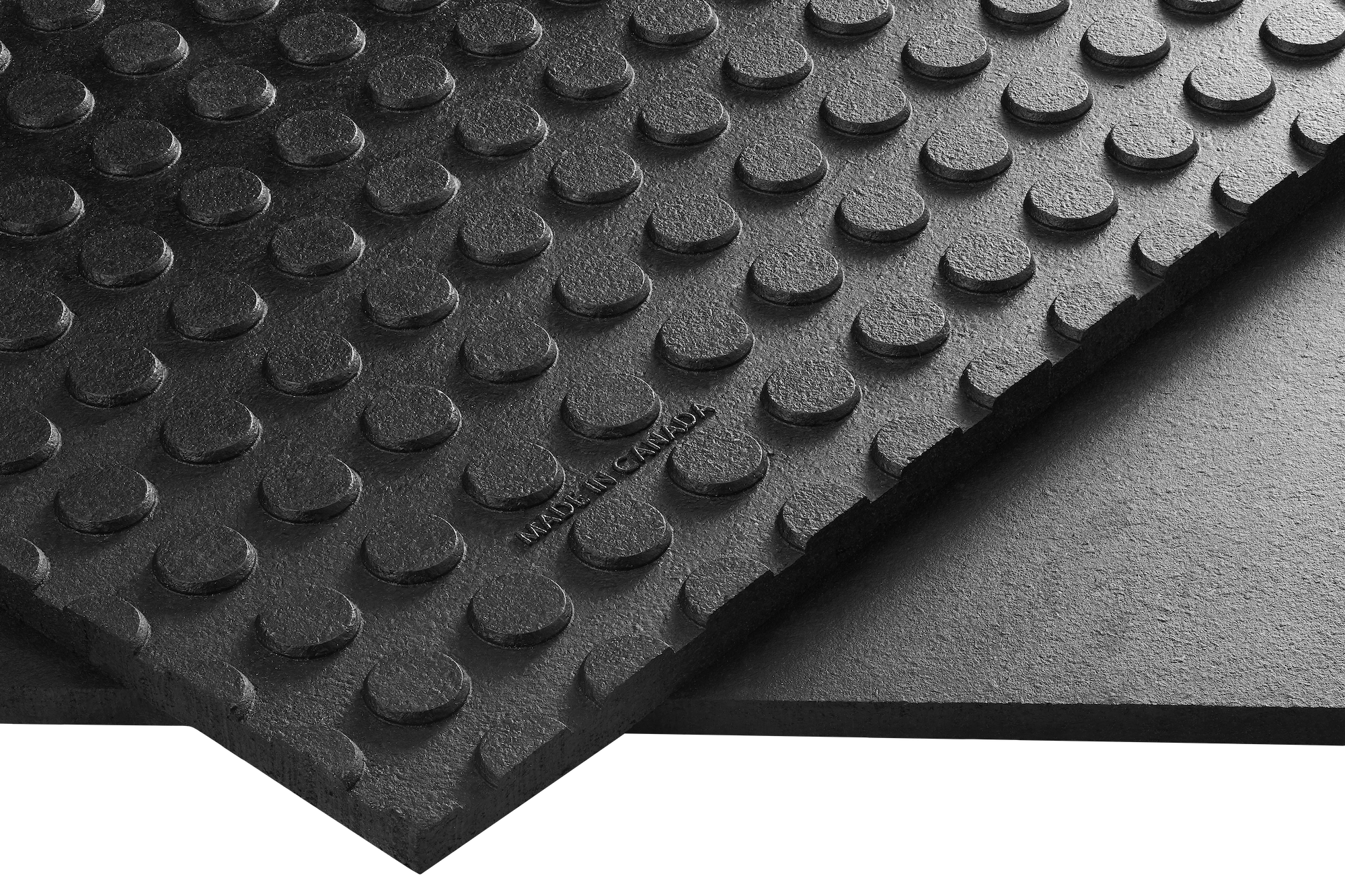
One of the most impactful applications of this recycled material is found in the agricultural sector through Northwest’s "Animat" brand. Animat specializes in manufacturing heavy-duty rubber mats for livestock and equestrian facilities. For decades, cows and horses were kept on hard concrete floors, which are unforgiving on joints and can lead to chronic lameness.
Research has shown that installing recycled rubber matting significantly improves animal welfare. In the dairy industry, the benefits are even quantifiable in economic terms. Studies comparing rubber flooring to standard concrete have linked increased "cow comfort" to higher milk production. When a cow is comfortable, it spends more time lying down and ruminating, which increases blood flow to the udder and boosts yields. Thus, a recycled tire from a passenger car can eventually play a role in the efficiency of a dairy farm.
Beyond the barn, recycled rubber is a staple in the sports and fitness world. Northwest Rubber produces the thick, durable flooring found in weight rooms and CrossFit gyms, where the material must withstand the impact of dropped heavy weights. In Canada, where hockey is a cultural cornerstone, recycled rubber mats are essential in arenas, providing a surface that can withstand the sharp blades of skates while protecting the concrete subfloor.
The Circularity Gap: Challenges and the Path Forward
While the tire recycling industry has made monumental strides, it has not yet achieved "full circularity." In a truly circular economy, a product is recycled back into its original form. Currently, the chemical makeup of tires—specifically the vulcanization process that uses sulfur to create cross-links between polymer chains—makes it incredibly difficult to revert the rubber to a "virgin" state for use in new tires.
Furthermore, there is the challenge of what happens to the recycled products themselves. While Northwest Rubber has turned more than 160 million tires into mats over the last 60 years, those mats eventually wear out. Currently, the logistics of recovering, cleaning, and re-grinding used mats are more complex than the logistics of collecting tires.

"It’s more of a logistical challenge, frankly, than anything else," notes David Pruim, CFO of Northwest Rubber. The industry lacks a centralized mechanism to recover these secondary products once they reach the end of their second life.
However, the outlook is optimistic. Ongoing research into "devulcanization" and "pyrolysis" (the thermal decomposition of tires in the absence of oxygen) suggests that we may soon be able to recover oil, carbon black, and combustible gas from tires, which could then be used to manufacture new tires.
Conclusion: A Model for Global Waste Management
The evolution of tire recycling from a simple waste-reduction effort to a sophisticated manufacturing sector demonstrates the potential of the circular economy. By combining stringent government policy, like Ontario’s IPR, with digital tracking technology and advanced industrial processing, the industry has turned a significant environmental threat into a resource.
As more jurisdictions look to solve their own waste challenges, the "Ontario model" and the success of companies like Northwest Rubber provide a blueprint. The journey from the highway to the hockey rink is more than just a clever reuse of material; it is a vital component of a sustainable future where nothing is truly "waste," and every product is merely waiting for its next useful life. The billion tires discarded each year represent a massive opportunity for innovation, provided the world continues to invest in the infrastructure and technology necessary to keep the wheels of the circular economy turning.
