

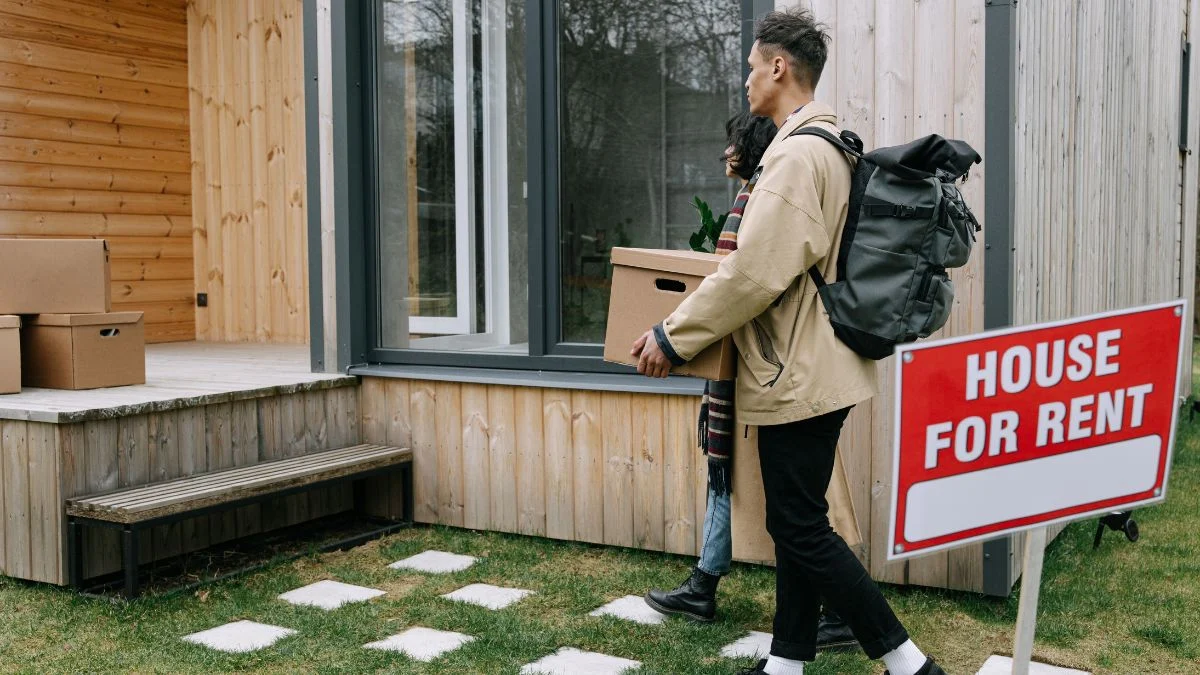
The single-family rental (SFR) industry has emerged from a period of significant legislative turbulence following the passage of the 21st Century ROAD to Housing Act. For months, the sector faced a near-existential threat as early versions of the bill contained provisions that threatened to choke off capital flows into the build-to-rent (BTR) market. However, following the removal of these restrictive measures, the industry’s two largest public operators, AMH and Invitation Homes, have signaled a return to growth, albeit with a strategy defined by caution and a heightened focus on scale. Recent second-quarter 2026 earnings calls from both companies provide a comprehensive look at how these giants are repositioning themselves in a post-policy-certainty environment.
The Legislative Context: Understanding the 21st Century ROAD to Housing Act
The 21st Century ROAD (Renewing Opportunity, Accountability, and Decisions) to Housing Act was initially introduced with the intent of addressing the national housing affordability crisis. Early iterations of the bill, however, drew sharp criticism from institutional investors and housing advocates alike. Specifically, provisions aimed at curbing "predatory" institutional buying were seen as overly broad, potentially penalizing companies that contribute to the housing supply through new construction.
The most contentious elements of the legislation would have largely frozen capital flows into the BTR industry by imposing tax penalties or acquisition limits on large-scale operators. This created a "wait-and-see" atmosphere during the first half of 2026, during which deal activity slowed to a crawl. The eventual removal of these provisions has been hailed by industry leaders as a victory for supply-side solutions, as the final version of the bill now appears to support business models that prioritize the creation of new housing inventory rather than just the acquisition of existing stock.
Comparative Growth Strategies: AMH vs. Invitation Homes
While both AMH and Invitation Homes are poised to benefit from the new legislative clarity, their operational philosophies have diverged significantly over the past several years.
AMH, founded in 2012 as American Homes 4 Rent, has undergone a radical transformation. In its infancy, the company relied heavily on the Multiple Listing Service (MLS) to acquire individual homes. Today, it has pivoted almost entirely toward an internal development model. Launched in 2017, the AMH Development Program has become the company’s primary engine for growth. This strategy allows the company to control the quality of the assets, design homes specifically for the rental market, and achieve better operational efficiencies through clustered, purpose-built communities.
To fund this capital-intensive development, AMH has aggressively pursued a "capital recycling" strategy. During the last two quarters, the company sold 1,318 older, scattered-site homes—a significant increase from the 786 homes sold during the same period in 2025. By disposing of these "non-core assets," AMH is rotating capital into newer, more efficient BTR communities that require less maintenance and offer higher long-term yields.
Invitation Homes, by contrast, has historically functioned as a premier acquirer and manager of SFR properties. Its growth has traditionally been fueled by bulk purchases of BTR communities and forward-purchase agreements with national homebuilders. Under a forward-purchase agreement, Invitation Homes commits to buying a certain number of homes from a builder upon completion, providing the builder with guaranteed liquidity.
Recently, however, Invitation Homes has shifted its tactics. Rather than committing to long-term forward purchases, the company has capitalized on builder inventory that is nearly complete. By stepping in when homes are 60 to 90 days from completion, Invitation Homes has been able to secure discounted pricing from builders looking to move inventory quickly in a high-interest-rate environment. Furthermore, the company’s $89 million acquisition of ResiBuilt in January 2026 marks its first serious foray into in-house development, suggesting that it may eventually mirror AMH’s internal construction capabilities.
The Capital Thaw: A Slow Return to Market Activity
The legislative uncertainty of early 2026 had a chilling effect on the BTR market. Executives at Invitation Homes noted that deal flow was essentially stagnant for the first six months of the year. Investors and developers were hesitant to commit capital to projects that might be rendered unviable by the stroke of a pen.
Scott Eisen, Chief Investment Officer at Invitation Homes, noted during the Q2 2026 earnings call that the passage of the ROAD Act has served as a catalyst for renewed interest. "Now that the act has been passed, we’re seeing capital start to open up again and start to test the waters," Eisen stated. However, the recovery is not instantaneous. Dallas Tanner, President and CEO of Invitation Homes, described the current state of capital as "poking its eyes up," rather than fully thawed.
This "shortfall" in activity is particularly evident in the development pipeline. Projects that were scheduled to break ground in early 2026 were frequently delayed or canceled due to the legislative overhang. Invitation Homes reported that while projects already "in flight" continued, the disruption created a gap in their near-term delivery schedule that the company is now working to refill.
Market Consolidation and the "In-Betweener" Crisis
One of the most significant implications of the 21st Century ROAD to Housing Act is its potential to spur industry consolidation. While the final bill is seen as favorable to large-scale operators with development arms, it remains a challenge for smaller institutional investors.
AMH CEO Bryan Smith pointed out that additional regulations within the bill continue to make MLS-based purchases more difficult and costly. This disproportionately affects "in-betweener" companies—those that own more than 350 homes but lack the massive scale and sophisticated operating platforms of AMH or Invitation Homes. These smaller firms often lack the capital access to pivot to a full-scale BTR development model.
As a result, industry analysts expect a wave of consolidation. Smaller operators, facing increased regulatory hurdles and capital constraints, may choose to sell their portfolios to the sector leaders. This dynamic mirrors the consolidation seen in the broader for-sale homebuilding industry, where large, well-capitalized firms have increasingly gained market share over local and regional builders. Jay Parsons, a prominent rental economist, noted that these "edge cases" for smaller owners could create a permanent divide in the market, where only the largest players can viably compete in the BTR space.
The Rise of Fee Building and Third-Party Management
A secondary effect of the new legislative environment is the growing importance of "fee building." This occurs when a developer or SFR operator hires a professional builder to manage construction for a set fee. For Invitation Homes, the acquisition of ResiBuilt has provided a platform to not only build for its own portfolio but also to provide construction services for others.
Jon Olsen, CFO of Invitation Homes, highlighted fee building as an "accretive, profitable business." As the industry moves toward a greater reliance on new construction to satisfy the demand for rental housing, the expertise required to manage large-scale residential construction becomes a valuable commodity. Both AMH and Invitation Homes are positioning themselves as comprehensive platforms that can handle the entire lifecycle of a rental home, from land acquisition and construction to property management and eventual disposition.
Near-Term Market Outlook: Sun Belt Recovery and Rent Growth
The broader economic environment for SFR remains resilient, despite the earlier policy threats. Market fundamentals are beginning to stabilize, particularly in the Sun Belt. Over the past year, markets such as Austin, San Antonio, Dallas-Fort Worth, and Phoenix experienced negative rent growth as a result of a massive influx of new apartment and SFR supply.
However, executives at both firms believe the worst of the supply glut has passed. Invitation Homes reported that supply and demand are becoming more balanced, which should lead to improved pricing power in the coming year. AMH’s outlook remains steady, with the company projecting blended rent growth in the low-2% range for the remainder of 2026.
Occupancy rates remain a bright spot for the sector. Both companies reported occupancy levels exceeding 95%, a testament to the continued demand for single-family living among Millennials and Gen Z renters who may be priced out of the homeownership market by high mortgage rates and limited inventory. Lincoln Palmer, COO at AMH, noted that the current environment is characterized by "the same foot traffic competing for lower inventory," suggesting that as new supply moderates, the rental market will remain tight.
Conclusion: A New Era of Institutional SFR
The passage of the 21st Century ROAD to Housing Act marks the beginning of a more mature phase for the single-family rental industry. The period of rapid, MLS-driven expansion has largely concluded, replaced by a sophisticated, development-heavy model that prioritizes the creation of new housing stock.
For AMH and Invitation Homes, the legislative resolution provides a clear runway for their respective strategies. AMH will continue to lean into its role as a developer-operator, while Invitation Homes will likely use its scale to lead a new wave of industry consolidation while expanding its in-house construction capabilities. While the "capital freeze" of early 2026 created a temporary setback, the underlying demand for high-quality, professionally managed rental homes suggests that the BTR sector will remain a cornerstone of the American housing market for the foreseeable future. The industry is no longer just buying the neighborhood; it is building it.
