

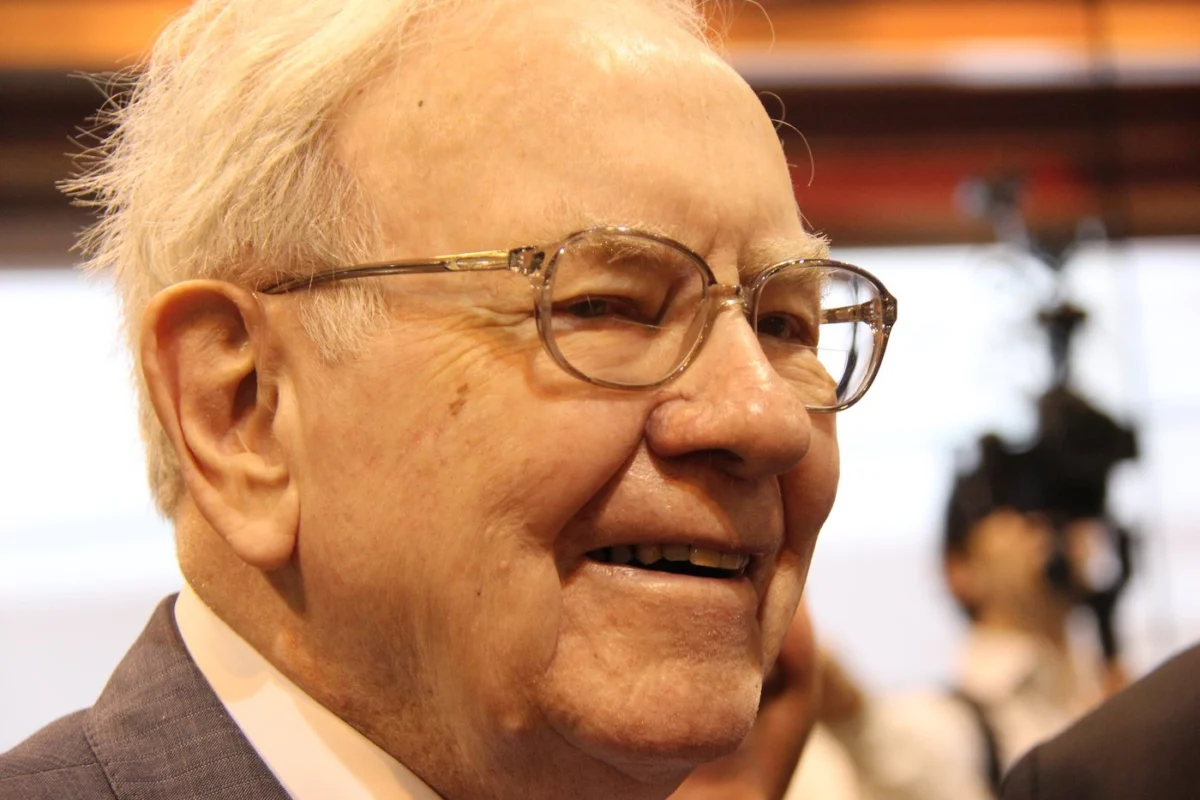
Warren Buffett, the legendary investor and retired CEO of Berkshire Hathaway, stands as a titan in the financial world, having amassed one of the largest fortunes globally through his unparalleled ability to select individual stocks and hold them for decades. Yet, despite his own extraordinary success in active investing, Buffett has consistently championed a remarkably simpler strategy for the vast majority of retail investors: forgo individual stock picking in favor of investing in a low-cost index fund that tracks the S&P 500. This seemingly paradoxical advice from the "Oracle of Omaha" has resonated across the financial landscape for decades, underpinned by a compelling body of evidence and a famous multi-million dollar wager.
The Paradox of the Master Investor
For more than half a century, Warren Buffett has demonstrated an uncanny knack for identifying undervalued companies with strong competitive advantages, purchasing them, and patiently waiting for their intrinsic value to be recognized by the market. His investment conglomerate, Berkshire Hathaway, a diversified holding company, is a testament to this disciplined, value-oriented approach, boasting an average annual gain that has consistently outstripped the S&P 500 for decades. However, Buffett has repeatedly asserted that his method is not easily replicable for the average investor, nor is it necessarily the most optimal path for them to build wealth. Instead, he advocates for a passive investment strategy, specifically recommending an S&P 500 index fund, which offers broad diversification, minimal fees, and an inherent mechanism for long-term growth without requiring individual stock analysis or market timing.
An S&P 500 index fund, whether an exchange-traded fund (ETF) like the Vanguard S&P 500 ETF (VOO) or a mutual fund, passively holds the stocks of the 500 largest publicly traded companies in the United States, weighted by their market capitalization. This means it automatically invests in the most successful and influential American corporations, adjusting its holdings as companies grow or shrink, effectively ensuring constant exposure to the leading segments of the U.S. economy. For Buffett, this approach eliminates the need for individual research, complex financial analysis, and the emotional pitfalls that often derail individual investors.
A History of Advocacy: From Letters to Public Challenges
Buffett’s advocacy for index funds is not a recent phenomenon; it has been a consistent theme throughout his public discourse and shareholder letters. As early as 1993, in a letter to Berkshire Hathaway shareholders, Buffett articulated his belief that an investor lacking the specialized knowledge to evaluate individual companies could still outperform most investment professionals simply by investing in a diversified, low-cost index fund. He posited that the compounding effect of long-term market returns, coupled with the avoidance of high fees and frequent trading costs associated with active management, would ultimately yield superior results.
This conviction culminated in a widely publicized 10-year bet, initiated in 2007, that served as a practical demonstration of his philosophy. Buffett wagered $500,000 (with the final payout to charity) against Protégé Partners co-founder Ted Seides. Seides, representing the active management industry, chose five funds of hedge funds, arguing that their collective expertise and sophisticated strategies would generate "alpha" – returns exceeding the broader market. Buffett, on the other hand, put his faith in a simple, low-cost Vanguard S&P 500 Admiral Shares index fund (VFINX).
The bet ran from January 1, 2008, through December 31, 2017, encompassing a period that included the dramatic financial crisis of 2008-2009 and a subsequent prolonged bull market. The outcome was decisive: Buffett’s chosen S&P 500 index fund achieved an average annual gain of 7.1%, while Seides’ handpicked portfolio of hedge funds returned a meager 2.2% annually after fees. The total cumulative return for the S&P 500 fund was 125.8%, compared to just 36.3% for the hedge funds. This stark difference underscored Buffett’s central argument: even highly compensated, experienced professionals often struggle to beat the market, especially after accounting for their substantial fees.
Upon the bet’s conclusion, Buffett remarked, "A low-cost index fund is the most sensible equity investment for the great majority of investors… They will be a winning strategy over time." He frequently reiterates this advice, even stating in his 2013 shareholder letter that the trustee overseeing the inheritance for his wife should invest 90% in a low-cost S&P 500 index fund and 10% in short-term government bonds. This personal directive further solidifies his unwavering belief in the strategy’s efficacy for wealth preservation and growth.
The Unforgiving Math: Why Active Management Struggles
The data supporting Buffett’s stance is compelling and consistently reinforced by independent research. The S&P Dow Jones Indices’ "SPIVA" (S&P Index Versus Active) reports have become a definitive benchmark for evaluating the performance of actively managed funds against their respective benchmarks. These reports consistently reveal a dismal track record for active managers, particularly over longer time horizons.
For instance, the SPIVA U.S. Year-End 2023 report, reflecting data up to December 31, 2023, paints a challenging picture for active management:
- One-Year Performance: 60% of large-cap U.S. equity funds underperformed the S&P 500.
- Three-Year Performance: This figure rises to 73% for large-cap funds.
- Five-Year Performance: A staggering 80% of large-cap funds failed to beat the S&P 500.
- Ten-Year Performance: Over a full decade, 86% of large-cap funds underperformed their benchmark.
- Fifteen-Year Performance: This number climbs to 90%.
- Twenty-Year Performance: A striking 93% of large-cap funds underperformed the S&P 500 over a two-decade period.
These figures are not isolated to large-cap funds; similar trends are observed across mid-cap, small-cap, and various international equity categories. The consistent underperformance highlights several critical factors:
-
High Fees and Trading Costs: Actively managed funds typically charge significantly higher expense ratios than index funds (often 1% or more annually, compared to 0.03-0.15% for S&P 500 index funds). These fees are deducted regardless of performance, creating a substantial hurdle that managers must overcome just to break even with a passive index. Additionally, active trading within a portfolio generates transaction costs (commissions, bid-ask spreads) and can trigger capital gains taxes, further eroding returns.
-
Market Efficiency: Modern financial markets are remarkably efficient, meaning that new information is rapidly disseminated and incorporated into asset prices. This makes it incredibly difficult for even sophisticated investors to consistently identify mispriced securities that can generate "alpha." Any perceived advantage is often fleeting, as other market participants quickly arbitrage away opportunities.
-
The "Zero-Sum Game": Before costs, the market is essentially a zero-sum game for active investors. For every investor who outperforms the market, another must underperform by an equal amount. When fees and trading costs are introduced, the collective result for active investors as a group becomes a negative-sum game; they are guaranteed to underperform the market as a whole.
-
Behavioral Biases: Even professional money managers are susceptible to psychological biases such as overconfidence, herd mentality, and confirmation bias. These biases can lead to suboptimal decision-making, such as chasing past performance, holding onto losing stocks too long, or prematurely selling winners.
The S&P 500 itself acts as a dynamic, self-correcting portfolio. Companies that grow and become more valuable naturally gain a larger weighting in the index, while underperformers shrink or are eventually removed. This ensures that an S&P 500 index fund automatically has greater exposure to the market’s most successful and innovative companies without requiring any active management decisions.
The Simplicity and Power of Index Funds
For the retail investor, the benefits of following Buffett’s advice are manifold:
- Unparalleled Diversification: An S&P 500 index fund immediately provides exposure to 500 of the largest and most influential U.S. companies across diverse sectors. This broad diversification significantly reduces company-specific risk, meaning that the poor performance of any single company will have only a minimal impact on the overall portfolio.
- Extremely Low Costs: The operational simplicity of an index fund translates into very low expense ratios. For instance, the Vanguard S&P 500 ETF (VOO) boasts an expense ratio of just 0.03% annually, meaning an investor pays only $3 per year for every $10,000 invested. This cost advantage compounds powerfully over decades, allowing more of the investor’s returns to remain in their pocket.
- Ease of Use: Investing in an S&P 500 index fund is remarkably straightforward. Investors don’t need to research individual companies, analyze financial statements, or monitor market news constantly. The strategy is "set it and forget it," requiring minimal time commitment.
- Automatic Rebalancing: As companies’ market capitalizations shift, the index automatically adjusts its weightings. New companies that meet the S&P 500 criteria are added, and those that no longer qualify are removed, ensuring the fund always represents the current leading edge of the U.S. economy.
- Long-Term Growth Potential: Historically, the S&P 500 has delivered average annual returns of approximately 10-12% over long periods. While past performance is not indicative of future results, this consistent historical growth, coupled with the power of compounding, offers a robust path to significant wealth accumulation over decades.
Beyond the Numbers: Behavioral Advantages
Beyond the purely quantitative advantages, index investing offers significant behavioral benefits. One of the biggest obstacles for individual investors is their own psychology. Fear and greed often lead to irrational decisions: panic selling during market downturns, missing out on recovery, or chasing hyped stocks at their peak. Buffett’s recommendation for long-term, passive index investing removes these emotional traps. By committing to hold an S&P 500 fund indefinitely, investors are encouraged to ride out market volatility, trust in the long-term upward trajectory of the economy, and avoid the costly mistakes of market timing. This discipline is often more valuable than any perceived "edge" in stock picking.
Implications for the Modern Investor and the Financial Industry
Buffett’s consistent advocacy has had profound implications. It has empowered countless individual investors to take control of their financial futures without needing to become market experts. The rise of low-cost index funds and ETFs, championed by firms like Vanguard (founded by John Bogle, another staunch advocate for passive investing), has democratized investing, making sophisticated, diversified portfolios accessible to everyone.
For the financial industry, Buffett’s message serves as both a challenge and a guide. It puts pressure on actively managed funds to justify their higher fees, leading to increased competition and, in some cases, a shift towards lower-cost offerings. It also redefines the role of financial advisors, moving them away from being stock pickers towards becoming holistic financial planners who guide clients on asset allocation, risk management, tax efficiency, and behavioral coaching, rather than trying to beat the market.
While a small percentage of active managers do outperform the market in any given year, identifying them consistently before they do so is akin to finding a needle in a haystack. For the vast majority of retail investors, and even many institutional ones, the effort, cost, and risk associated with attempting to beat the market simply do not justify the potential (and often unrealized) rewards. Exceptions might exist in highly inefficient, illiquid, or specialized markets, but these are far removed from the typical investment landscape for most individuals.
Conclusion: Buffett’s Legacy of Accessible Investing
Warren Buffett’s enduring legacy is not just about his unparalleled skill as an investor, but also his commitment to demystifying investing for the everyday person. His simple, yet profound, advice to invest in a low-cost S&P 500 index fund and hold it indefinitely represents a powerful distillation of decades of market wisdom. It offers a clear, actionable strategy for long-term wealth creation, bypassing the complexities, high costs, and emotional traps of active stock picking. In a world often characterized by financial jargon and aggressive marketing, Buffett’s consistent message stands as a beacon of clarity, reminding investors that sometimes, the simplest path is indeed the most effective. The compounding power of broad market exposure, achieved through a low-cost index fund, remains the most sensible and historically proven strategy for the vast majority seeking financial security and growth.
