

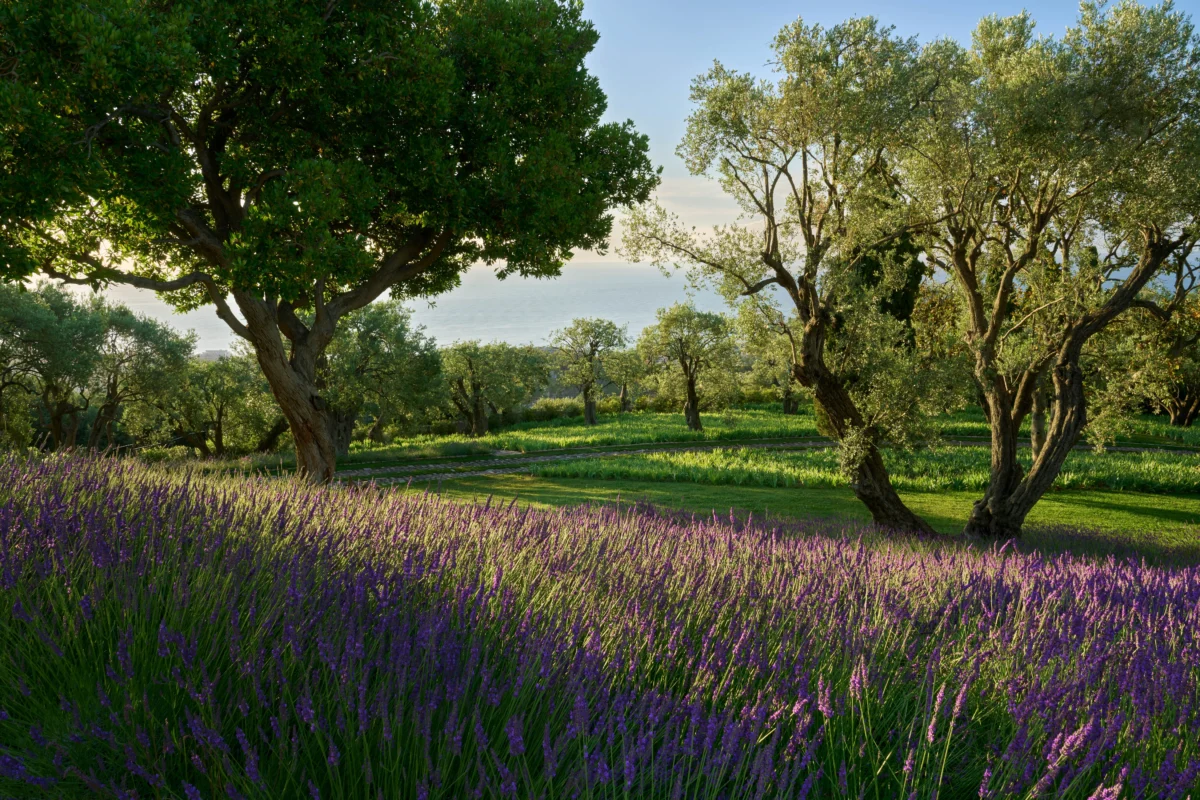
The House of Chanel has completed an extensive and meticulous restoration of La Pausa, the legendary Mediterranean estate built by Gabrielle “Coco” Chanel in the late 1920s. Located on the sun-drenched heights of Roquebrune-Cap-Martin, overlooking the azure waters of the French Riviera, the property serves as a physical manifesto of the designer’s aesthetic principles and a testament to her enduring legacy. Following its reacquisition by the brand in 2015, the estate has been returned to its 1930s splendor under the guidance of renowned architect Peter Marino and the Chanel Heritage team. This restoration marks a significant investment in the brand’s cultural capital, preserving a site that was once the creative refuge for Chanel and her circle of avant-garde luminaries.

The Genesis of a Modernist Retreat
In 1928, Gabrielle Chanel purchased nearly 10 acres of land on the hillside of Roquebrune, a move funded by the unprecedented commercial success of her fragrance, Chanel No. 5—introduced in 1921—and the steady expansion of her revolutionary couture house. At the time, the French Riviera was transforming from a winter health resort for the European aristocracy into a summer playground for the international creative elite. Chanel, ever the pioneer, sought a space that offered both privacy and a connection to the rugged, natural beauty of the Provençal landscape.
To realize her vision, Chanel collaborated with architect Robert Streitz. The resulting structure was a departure from the ornate Belle Époque villas that dotted the coastline. Instead, Chanel opted for a sober, sturdy, and almost monastic design. The architecture was deeply influenced by the Aubazine convent, the Cistercian orphanage where she spent her formative years. The house featured white-washed walls, stone floors, and a central cloister that would become the heart of the residence.

The name "La Pausa" carries both spiritual and historical weight. It is believed to be named after a 15th-century chapel located on the property, where, according to local legend, Mary Magdalene rested during her journey to Marseille following the crucifixion of Jesus. For Chanel, the estate lived up to its name, providing a "pause" from the relentless pace of her life in Paris.
A Timeline of Ownership and Cultural Significance
The history of La Pausa is inextricably linked to the broader cultural shifts of the 20th century. Between 1929 and the late 1930s, the estate hosted a rotating cast of intellectual and artistic giants, including Salvador Dalí, Jean Cocteau, Igor Stravinsky, and Luchino Visconti. It was a laboratory for ideas where the lines between fashion, art, and lifestyle were blurred.

However, the onset of World War II disrupted this idyllic existence. Chanel closed her couture house in 1939 and retreated from the public eye. In 1953, shortly before she staged her major professional comeback in Paris, Chanel sold La Pausa to the American publisher and literary agent Emery Reves. Under the ownership of Reves and his wife, Wendy, the house entered a second golden age of hospitality. The Reveses hosted world leaders and celebrities, most notably Sir Winston Churchill, who became a frequent guest and painted several landscapes of the surrounding hills.
The property remained in the Reves family for decades. Following the death of Wendy Reves in 2007, the estate’s future remained uncertain until the House of Chanel intervened in 2015. The acquisition was seen by industry analysts as a strategic move to secure the brand’s heritage, ensuring that the most personal of Chanel’s residences would not be lost to private development or unsympathetic renovation.

The Restoration Strategy: A Return to 1935
When Peter Marino was commissioned to restore the estate, he faced the challenge of peeling back decades of modifications to find the original "Chanel" soul of the house. Marino, who has designed Chanel’s retail environments for over forty years, worked closely with the Chanel Heritage team to analyze archival photographs, blueprints, and personal accounts.
The team selected 1935 as the reference point for the restoration. This year represented the moment when the gardens had matured and Chanel’s vision for the property was at its peak. Marino noted that because 1935 was in the midst of the Great Depression, the original aesthetic was characterized by a certain "demure" quality. The luxury was found in proportion, light, and natural materials rather than overt opulence.

The architectural restoration involved re-creating original features, such as the custom blue shutters, which were matched to flakes of paint found on the oldest wood layers. Inside, the layout was returned to its original configuration, emphasizing the flow between the cloister, the great hall, and the terraces. The furnishings were carefully curated to reflect Chanel’s preference for simple clay pots, wrought-iron furniture, and rustic textures.
Botanical Heritage and the "Tweed" Garden
A primary focus of the restoration was the revitalizing of the 10-acre grounds. The garden at La Pausa is not merely decorative; it is an extension of Chanel’s olfactory and tactile world. Two of the three primary ingredients of Chanel No. 5—jasmine and iris—are grown on the property.

Marino’s landscape design emphasized the "garrigue" or native scrubland of the region. He removed non-native species, such as palms and weedy invasive trees, to restore the panoramic views of Menton to the east and Monaco to the west. The centerpiece of the garden remains the ancient olive trees. During the original construction, Chanel famously ordered architect Robert Streitz to build around a centenary olive tree in the courtyard and another in the entrance walkway, refusing to let them be moved. Today, some of the 250 olive trees on the property are estimated to be over 800 years old.
To bring a contemporary yet subtle touch to the landscape, Marino utilized a planting style known as "coulée" (flood), where swaths of lavender and iris cascade down the slopes. He described his approach as "color-blocking," inspired by the painter Wassily Kandinsky. The goal was to create a garden that felt "textured," much like the signature tweed fabrics of Chanel’s suits. The mix of wild grasses, clover, and sculptural succulents reflects a preference for hardy, heat-resistant plants that thrive in the Mediterranean climate.

Innovative Lighting and Modern Infrastructure
While the goal was historical accuracy, the restoration utilized modern technology to enhance the estate’s atmosphere. Marino implemented a sophisticated lighting system for the olive trees. Rather than using harsh uplighting, he ran wires through the trunks to small LED spotlights affixed to the branches. These lights face downward, creating a "moonlit" effect that casts intricate shadows on the ground, even on cloudy nights.
This attention to detail extends to the estate’s infrastructure, ensuring that the house can function as a modern venue for the brand’s activities while maintaining its historic character. The restoration included the installation of climate control and security systems designed to be invisible to the casual observer, preserving the illusion of a house frozen in time.

Implications for the House of Chanel and the Luxury Sector
The restoration of La Pausa is a prime example of "heritage branding," a strategy where luxury houses invest in their history to differentiate themselves in a crowded global market. By owning and maintaining sites like La Pausa, the Rue Cambon apartment, and the flower fields in Grasse, Chanel creates a physical narrative that competitors cannot replicate.
The estate is now used for high-profile brand events, such as the 2024 high-jewelry presentation, and as a backdrop for creative campaigns. Last spring, Creative Director Matthieu Blazy utilized the estate for a ready-to-wear campaign, featuring models interacting with the same olive trees that Chanel herself climbed decades ago.

Beyond marketing, the House of Chanel has committed to using La Pausa as a site for cultural production. The estate now hosts artist residencies, continuing Chanel’s tradition of supporting the arts. A residency for writers was held in the autumn of 2025, and a program for composers is scheduled for the summer of 2026. These initiatives ensure that La Pausa remains a living, breathing center of creativity rather than a static museum.
Conclusion: The Preservation of a Creative Sanctuary
The restoration of La Pausa by Peter Marino and the House of Chanel successfully bridges the gap between historical preservation and modern brand utility. By returning the estate to its 1935 state, the project honors Gabrielle Chanel’s original vision of a "demure" and naturalistic retreat.

As the luxury industry continues to evolve, the value of such authentic heritage sites only increases. La Pausa stands as a monument to a woman who redefined modern femininity and as a sanctuary where the "pause" she sought can still be felt. In the words of Peter Marino, the estate remains one of the few places on earth where the worries of the world seem to vanish, replaced by the scent of jasmine and the timeless silhouette of ancient olive trees against the Mediterranean Sea.
