

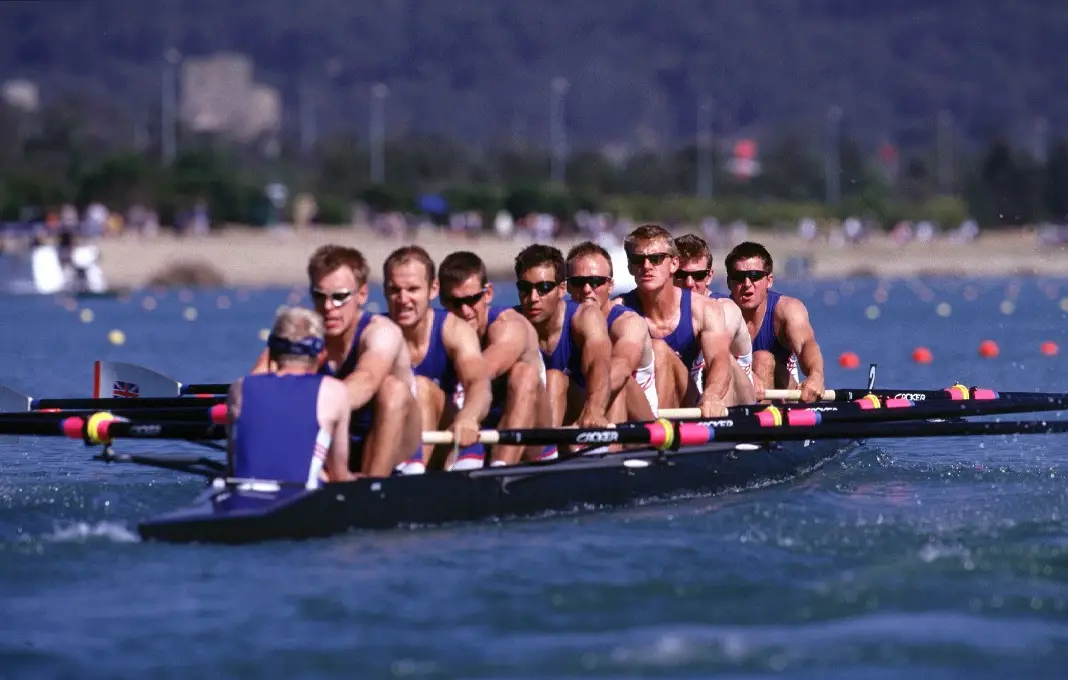
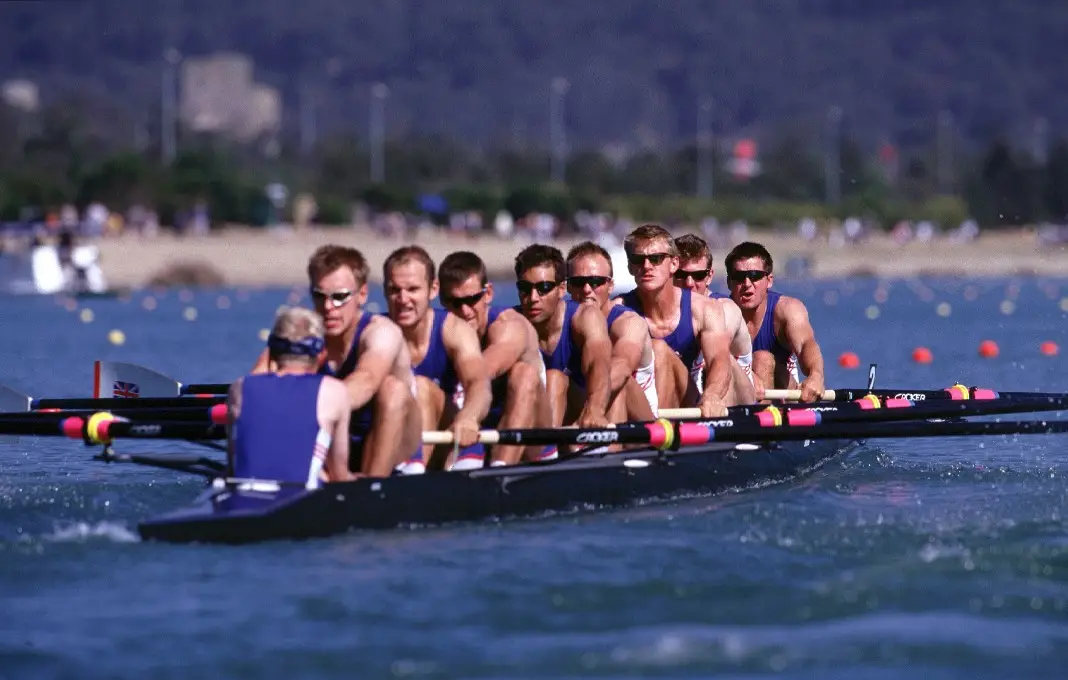
The triumph of the British Men’s Eight rowing team at the Sydney 2000 Olympic Games was not a singular moment of sudden brilliance, but rather the culmination of years of meticulous effort, a testament to the power of compounded incremental improvements. Their journey from consistently finishing in the lower ranks to standing atop the podium offers profound lessons for leaders across all sectors, highlighting the critical importance of collective vision, disciplined execution, and a shared operating system that aligns individual actions with overarching goals. This victory underscores that sustained high performance is built not on isolated breakthroughs, but on the strategic orchestration of hundreds of seemingly small, aligned choices made day in and day out.
From Underdogs to Olympians: The Genesis of a Gold Medal Mindset
For years preceding their historic win, the British Men’s Eight team found themselves perpetually positioned between seventh and eighth place in international competitions. This persistent mediocrity was not attributed to a lack of raw talent, but rather to a fundamental deficit in their approach to teamwork and operational effectiveness. The transformative shift that propelled them to Olympic gold was rooted in a radical re-evaluation of their working methodology, characterized by an unwavering obsession with teamwork, stringent discipline in execution, and the establishment of a cohesive "operating system." This system was designed to synchronize the myriad of daily decisions around a singular, paramount objective: winning Olympic gold. Their guiding principle, famously distilled into a deceptively simple question, served as a constant arbiter for every action and initiative: "Will it make the boat go faster?"
This philosophy emerged from a period of intense introspection and strategic redirection. Following a disappointing performance in previous Olympic cycles, a palpable need for change permeated the team. The coaching staff, led by Jürgen Grobler, alongside figures like Ben Hunt-Davis, who would later become a vocal proponent of their success model, recognized that incremental adjustments were insufficient. A paradigm shift in mindset was required.
H2: Turning Ambition into Unwavering Alignment
Every significant transformation, whether in sport or business, begins with a fundamental choice. For the British rowing team, this choice was to move beyond the aspiration of simply being Olympians to embracing a far grander, collective mission. As Ben Hunt-Davis articulated in retrospective analyses of their journey, "It started with a shared goal, a shared vision." The coach played a pivotal role in articulating this vision, effectively "painting a picture of what the future could look like," thereby igniting the catalyst for profound change.
Crucially, the deep-seated belief in this ambitious future did not materialize overnight. Hunt-Davis recalled the extensive dialogue and numerous conversations that gradually shifted the team’s collective mindset from a tentative "we might be able to" to an unshakeable "we will do this." This transition was a testament to the power of persistent communication and shared conviction-building.
The implications for business leaders are significant. While many organizations prioritize acquiring superior talent, a common oversight is that many already possess capable individuals. The true deficiency often lies in the absence of a compelling, unifying destination and a team that is genuinely aligned on the direction of travel. For the British rowing crew, this clearly defined destination provided the essential directional compass. The subsequent challenge was to meticulously determine the daily focus required to navigate them toward that ultimate objective.
This phase of alignment involved a deep dive into what constituted genuine progress. It wasn’t about individual accolades or superficial metrics; it was about understanding the intricate interplay of elements that contributed to overall speed. The team engaged in rigorous self-assessment, dissecting every aspect of their training, nutrition, recovery, and team dynamics. This period of intense internal dialogue laid the groundwork for the subsequent operational disciplines that would define their success.
H2: Deconstructing Performance: Beyond the Scoreboard
One of the most impactful distinctions articulated by Hunt-Davis is the crucial separation between "performance" and "results." He observed, "We are generally rewarded on the results we achieve." However, he emphasized that true discipline stems from stepping back and asking, "What were the things that really made a difference?" This introspective approach eschewed the superficial allure of immediate outcomes in favor of a deeper understanding of the underlying drivers of success.
The rowing team had previously become preoccupied with quantifiable metrics such as "hit rates," intricate timing data, and numerical targets, often measured against theoretical gold-medal benchmarks. Their coach, however, steered them towards a less tangible yet far more consequential focus: the intrinsic qualities that fostered speed. Hunt-Davis explained, "What we’re looking for is a feel. We’re looking for a rhythm." Instead of evaluating each training session solely on its speed output, the team deliberately concentrated on the fundamental ingredients that predictably produced that speed.
This emphasis on process over outcome is robustly supported by academic research. A comprehensive meta-analysis published in the International Review of Sport and Exercise Psychology indicated that process goals can exert a more potent positive influence on performance than outcome goals. This is primarily because process goals direct attention towards controllable actions. In the business realm, this translates to the critical difference between fixating on quarterly revenue figures and actively working to enhance client conversations, improve decision quality, foster innovation, or strengthen customer relationships. These are the actionable elements that, when consistently refined, ultimately drive financial results.
The strategic shift away from pure outcome measurement allowed the team to identify and refine critical micro-behaviors. For instance, instead of merely aiming for a faster race time, they focused on optimizing the synchronicity of their strokes, the efficiency of their recovery phase, and the collective power applied during the drive. Each of these elements, while seemingly minor in isolation, contributed significantly to the overall speed and efficiency of the boat. This granular focus on the "how" rather than solely the "what" was instrumental in their ascent.
H2: The Power of a Singular Question: Cutting Through Complexity
Every high-performing team requires a robust decision-making filter—a mechanism to navigate competing priorities and maintain focus. For the British Eight, this filter was encapsulated in the elegantly simple question that sliced through ambiguity and competing agendas: "Will it make the boat go faster?"
Hunt-Davis posited that many leadership teams falter due to the inherent tendency of individual functions to optimize for their own siloed priorities. Sales teams, for example, are driven by revenue targets, marketing by awareness metrics, human resources by retention rates, and finance by profit margins. The formidable challenge lies in establishing a "north star" that transcends these departmental scorecards. "What’s most important is boat speed," Hunt-Davis reiterated, emphasizing that "We worked really hard on decision-making, on trying to make better decisions based on the information available and getting alignment around it."
A surprisingly straightforward discipline employed by the team was the regular and rigorous challenging of assumptions, agendas, and activities, rather than passively accepting them. Hunt-Davis also drew a crucial distinction between mere discussions and actual decisions. A decision, in their operational framework, only held weight when there was universal commitment to its execution. He articulated this with precision: "I will do it whether I like it or not." This commitment ensured that once a course of action was agreed upon, it was pursued with unwavering dedication.
The pervasive issue in many organizations is not a scarcity of effort or a lack of potential initiatives, but rather an "excess of drift." This drift occurs when priorities are unclear, decisions are inconsistent, and collective energy is dissipated across numerous, often competing, endeavors. The "boat speed" question served as a powerful antidote to this drift, ensuring that every action was evaluated against its contribution to the ultimate objective.
The implementation of this question required a cultural shift towards critical thinking and open dialogue. Team members were encouraged to voice their concerns and challenge proposed actions if they believed they did not align with the overarching goal. This was not about creating a culture of perpetual negativity, but about fostering an environment where rigorous vetting of ideas was the norm, leading to more robust and effective decision-making.
H2: Making the Rules Real: From Values on Walls to Lived Principles
A decision filter provides clarity, but clarity alone does not translate into performance. True performance is realized when that clarity actively shapes everyday behavior. Many companies proudly display their values on walls, yet few possess a set of explicit rules that their employees genuinely remember and adhere to. The British rowing crew, conversely, developed and continuously refined a set of explicit team rules that governed behavior, accountability, professionalism, and focus. "They developed with us," Hunt-Davis explained, underscoring the participatory nature of their rule-making process. "Having the same understanding and the same expectations is really important."
Rather than viewing these rules as mere compliance mechanisms, the crew utilized them as a shared language, a common lexicon for understanding what constituted exemplary conduct. Everyone understood precisely what "good" looked like in practice.
This principle is reinforced by research highlighted in Forbes, which emphasizes that team norms serve to reduce ambiguity, accelerate decision-making, and enhance accountability by establishing a shared playbook. Much like a perfectly timed stroke in rowing, these small, consistent behavioral agreements have the potential to compound into a significant competitive advantage.
The development of these explicit rules was an iterative process. The team identified areas where ambiguity or inconsistent behavior could impede progress and collectively devised clear guidelines. These rules covered a wide spectrum, from the punctuality of training sessions to the conduct expected during travel, the nature of feedback exchanged, and the commitment to supporting fellow crew members. The key was that these rules were not imposed from above but were co-created, fostering a sense of ownership and commitment among all members. The critical test for any organization is its ability to articulate its operating principles clearly and consistently. If a business struggles to explain its fundamental rules of engagement, it likely lacks a cohesive and effective operational framework.
H2: Choosing Candor Over Comfort: The Engine of Feedback-Rich Teams
Elite teams are not characterized by an absence of conflict, but rather by a high volume of constructive feedback. This principle fundamentally altered the dynamics within the British rowing team. As Hunt-Davis eloquently put it, "If you see something that’s not as good as it can be, and you choose to say nothing, you’re choosing to help us lose." This stark statement underscored the profound responsibility each team member had to contribute to the collective success, even when it meant engaging in difficult conversations.
The crew actively cultivated the capacity for uncomfortable conversations, openly discussed frustrations, proactively sought feedback, and learned to challenge one another constructively without eroding trust. Hunt-Davis repeatedly returned to a critical question during moments of tension: "What’s most important, boat speed or being right?" This question served as a constant reminder that the ultimate objective—winning gold—superseded individual ego or the desire to be correct. The team’s sports psychologist, Dr. Chris Shambrook, and coach, Martin McElroy, were instrumental in reinforcing this culture, nurturing the emotional intelligence required for honest and productive dialogue.
Research archived in the National Library of Medicine’s PubMed Central repository describes accountability as an adhesive that binds social and organizational systems together. A business culture that views feedback as assistance rather than criticism is a potent driver of performance. The cost of silence, in many instances, is far greater than the temporary discomfort of candid dialogue.
The implementation of this feedback culture required significant psychological preparation. Team members were trained in active listening, empathetic communication, and the art of delivering constructive criticism in a manner that fostered growth rather than defensiveness. The goal was to create an environment where feedback was seen as a gift, an opportunity for collective improvement, and a vital component of their pursuit of excellence. This shift transformed potential friction points into opportunities for learning and refinement, ultimately strengthening the team’s cohesion and performance.
H2: Under Pressure, Trust the System: The Ultimate Test of Discipline
One of the most counterintuitive lessons learned from the Sydney Olympics was that discipline becomes not less, but more critical, as pressure intensifies. Under immense strain, individuals are prone to distraction, overreaction, chasing fleeting opportunities, and abandoning established, proven habits. Hunt-Davis’s simple yet profound advice for such moments was: "Stick to what we know."
The team dedicated significant time to anticipating and preparing for the inherent distractions of the Olympic environment. They proactively discussed potential scenarios, analyzed their likely impact, and developed robust routines designed to withstand them. This preparation ensured that when the heat of competition was at its peak, their ingrained habits and operating procedures would serve as a stable anchor.
This mirrors the challenges faced in business during periods of significant upheaval, such as major acquisitions, complex technology implementations, initial public offerings, or market crises. The natural inclination during such times is to innovate and devise entirely new strategies. However, the truly winning approach often lies in executing the fundamental principles of the organization exceptionally well. When pressure mounts, the imperative is not to abandon the established operating system, but to rely on its strength. Pressure does not create character; rather, it reveals the resilience and robustness of one’s systems.
The British Men’s Eight’s Olympic gold medal was not the product of a single, miraculous breakthrough. It was the compounded effect of hundreds of meticulously aligned choices, diligently practiced, openly tolerated, rigorously challenged, and consistently prioritized every single day. Every leadership team possesses its own unique version of "boat speed"—the ultimate outcome that should serve to align decisions, behavior, feedback, and effort. The true measure of leadership, and indeed organizational health, is whether that objective remains crystal clear and steadfast when pressure escalates and competing priorities inevitably vie for attention. Therefore, before embarking on the next meeting, initiative, or investment, the crucial question to ask, stripped of all superficiality, remains: "Will it make the boat go faster?" This question, simple in its formulation, serves as a powerful compass, guiding organizations toward their ultimate goals with unwavering focus and strategic precision.
