

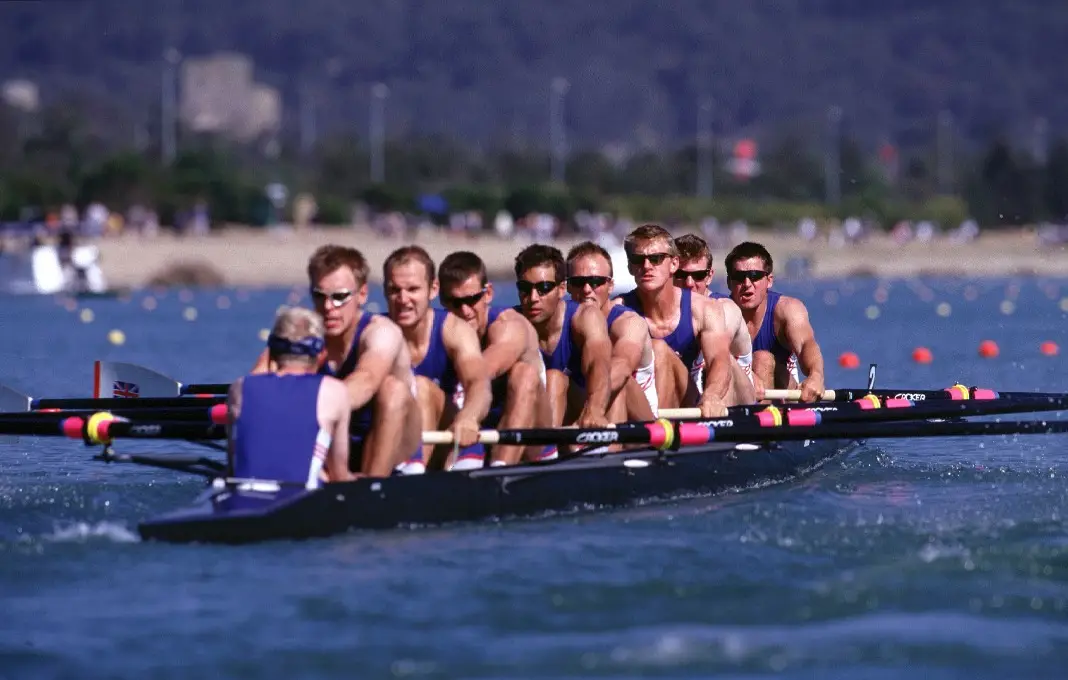
The seemingly overnight transformation of the British Men’s Eight rowing team from consistent also-rans to Olympic champions in Sydney 2000 was not the result of a single, dramatic breakthrough. Instead, it was the meticulously engineered outcome of hundreds of small, aligned choices, a testament to the power of a unified vision and disciplined execution. For leaders in any field, the journey of this crew offers a profound blueprint for achieving extraordinary results through the strategic application of teamwork, process optimization, and unwavering focus.
From Frustration to Forefront: The Sydney 2000 Turning Point
For years leading up to the Sydney Games, the British Men’s Eight had consistently occupied the lower rungs of international competition, frequently finishing seventh or eighth. The pressure to perform, coupled with the persistent disappointment, could have easily demoralized the squad. However, rather than succumbing to frustration, the team, under the guidance of their coaching staff, embarked on a radical re-evaluation of their approach. The critical shift was not in discovering some previously unknown pool of extraordinary talent, but in fundamentally altering how they functioned as a collective unit.
This transformation was driven by an intense obsession with teamwork, a rigorous commitment to disciplined execution, and the development of a shared operating system. This system acted as a filter, aligning dozens of daily decisions around a singular, overarching objective: winning Olympic gold. Their mantra became famously simple and potent: "Will it make the boat go faster?" This question served as the ultimate arbiter for every training session, every piece of equipment choice, and every strategic discussion.
H2: Cultivating Ambition into Collective Alignment
The genesis of any significant transformation, whether in sports or business, lies in a conscious choice. For the British rowing team, this choice was a deliberate shift in mindset, a move away from mere participation towards aspirational dominance. Ben Hunt-Davis, a key figure in the crew, reflects that the breakthrough wasn’t attributable to a revolutionary training technique or a sudden influx of talent. Instead, it stemmed from a profound agreement on their collective mission.
"It started with a shared goal, a shared vision," Hunt-Davis explained. Their coach played a pivotal role in articulating this future, "painting a picture of what the future could look like," thereby creating the essential catalyst for change. This vision wasn’t immediately embraced by all; belief did not materialize overnight. It was painstakingly cultivated through numerous conversations, gradually shifting the team’s collective mindset from a tentative "we might be able to" to an unwavering "we will do this."
In the corporate world, leaders often prioritize the acquisition of new talent as the primary driver of improvement. Yet, many organizations already possess competent individuals. The missing ingredient is frequently a compelling destination and a team that genuinely shares a unified direction. For the British rowing team, this clearly defined destination provided direction, but the subsequent challenge was to determine the daily focus required to achieve it. This involved translating a grand ambition into actionable, day-to-day commitments.
H2: Deconstructing Performance: Beyond the Scoreboard’s Grip
A particularly insightful principle championed by Hunt-Davis is the crucial distinction between performance and results. "We are generally rewarded on the results we achieve," he notes. However, true discipline, he argues, emerges from stepping back and asking, "What were the things that really made a difference?"
The rowing team had previously become fixated on quantifiable metrics: hit rates, timing benchmarks, and numerical targets. Every session was measured against theoretical gold-medal standards. Their coach, however, steered them towards a more nuanced and ultimately more impactful focus. Hunt-Davis elaborates, "What we’re looking for is a feel. We’re looking for a rhythm." Instead of judging each session solely on speed, they concentrated on the underlying elements that intrinsically produced speed.
This approach is strongly supported by academic research. A comprehensive meta-analysis published in the International Review of Sport and Exercise Psychology indicated that process goals can exert a more potent positive influence on performance than outcome goals. This is because process goals direct attention toward controllable actions, fostering a sense of agency and continuous improvement. In a business context, this translates to prioritizing the refinement of client conversations, the quality of decision-making, the cultivation of innovation, or the strengthening of customer relationships, rather than solely fixating on quarterly revenue figures.
H3: The Power of a Singular Question: Cutting Through the Corporate Clutter
High-performing teams require a robust decision-making filter, a mechanism to navigate competing priorities. For the British Eight, this filter was the incisive question that immediately cut through any ambiguity: "Will it make the boat go faster?"
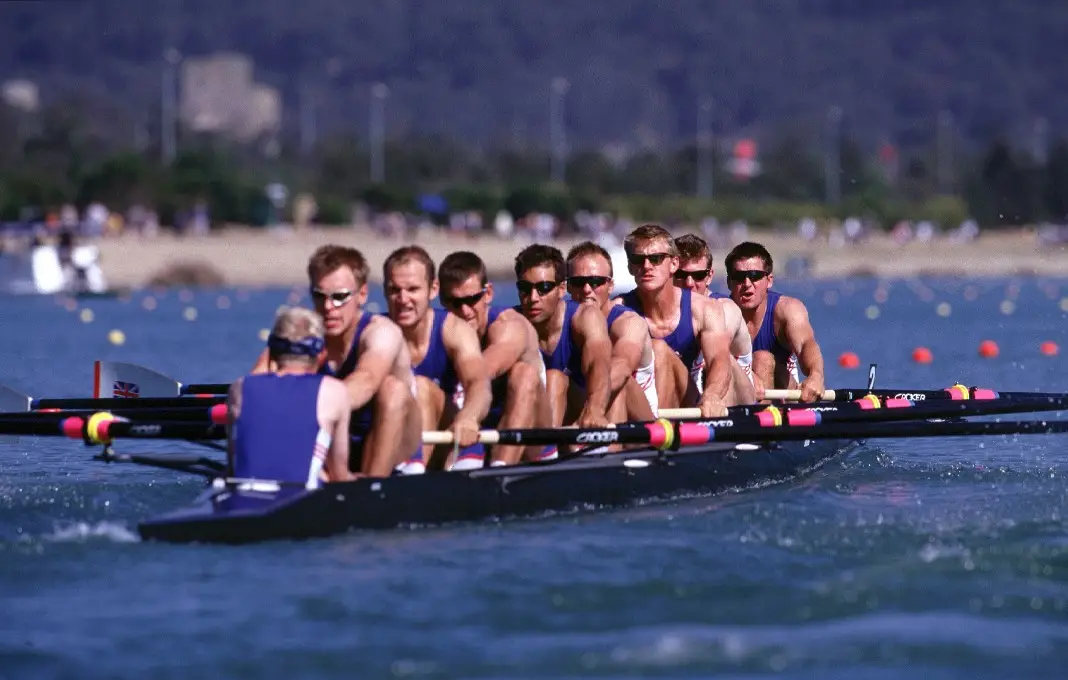
Hunt-Davis posits that many leadership teams falter because each functional department optimizes for its own localized priorities. Sales may champion revenue generation, marketing might focus on brand awareness, HR could prioritize employee retention, and finance might aim for enhanced profit margins. The fundamental challenge lies in establishing a "north star" objective that transcends departmental scorecards. "What’s most important is boat speed," Hunt-Davis emphasized. "We worked really hard on decision-making, on trying to make better decisions based on the information available and getting alignment around it."
A surprisingly simple discipline employed by the team involved regularly challenging assumptions, agendas, and activities rather than passively accepting them. Hunt-Davis also draws a critical distinction: discussions are not decisions. A decision only gains traction and efficacy when everyone commits to its execution. His pragmatic summation captures this essence: "I will do it whether I like it or not." Many organizations, he suggests, are not suffering from a lack of effort but rather from an excess of "drift"—a diffusion of focus and intent.
H2: Embedding Principles: Transforming Rules into Real-World Behavior
A well-defined decision filter provides clarity, but clarity only translates into tangible performance when it demonstrably shapes everyday behavior. While many companies prominently display corporate values on their walls, few possess explicit rules that are consistently remembered and adhered to by their employees. The rowing crew, in contrast, developed and continuously refined a set of explicit team rules. These guidelines covered essential aspects of their operation, including behavior, accountability, professionalism, and focus.
"They developed with us," Hunt-Davis explained. "Having the same understanding and the same expectations is really important." Rather than viewing these rules as mere compliance mandates, the crew utilized them as a shared language, ensuring that everyone possessed a clear and common understanding of what constituted optimal performance.
Research highlighted in Forbes corroborates this point, emphasizing that well-defined team norms serve to reduce ambiguity, accelerate decision-making processes, and enhance accountability by establishing a shared playbook. Much like a precisely timed stroke in rowing, these small, incremental behavioral agreements compound to create a significant competitive advantage. If a business cannot articulate its operating principles with clarity and conciseness, it is likely that these principles are not deeply ingrained or effectively implemented.
H3: The Crucible of Performance: Embracing Candor Over Comfort
Elite teams are not characterized by an absence of conflict; rather, they are distinguished by a high volume of constructive feedback. This principle fundamentally altered the team’s dynamic. As Hunt-Davis articulated, "If you see something that’s not as good as it can be, and you choose to say nothing, you’re choosing to help us lose." The crew actively engaged in uncomfortable conversations, openly discussed frustrations, proactively sought feedback, and learned to challenge one another constructively without eroding trust.
During moments of heightened pressure or interpersonal friction, Hunt-Davis consistently returned to a pivotal question: "What’s most important, boat speed or being right?" The team’s sports psychologist, Dr. Chris Shambrook, and coach, Martin McElroy, were instrumental in reinforcing this culture, nurturing the emotional intelligence necessary for honest and productive dialogue.
Research archived in the National Library of Medicine’s PubMed Central repository underscores the role of accountability as a critical adhesive that binds social and organizational systems. A business culture that perceives feedback as assistance rather than criticism is demonstrably more conducive to high performance. In such environments, silence often carries a far greater cost than the temporary discomfort of candid exchange.
H2: The Ultimate Test: Trusting the System Under Pressure
One of the most counterintuitive lessons learned from the Sydney Olympic experience was that discipline becomes even more paramount, not less, as pressure intensifies. Under duress, individuals are prone to distraction, overreaction, the pursuit of fleeting opportunities, and the abandonment of well-established habits. Hunt-Davis’s counsel in these moments is remarkably straightforward: "Stick to what we know."
The team dedicated significant effort to preparing for the inherent distractions of the Olympic environment. They anticipated these challenges, discussed them openly, and developed routines robust enough to withstand them. This mirrored approach is highly relevant to businesses navigating periods of intense pressure, such as major acquisitions, complex technology implementations, initial public offerings, or market crises. The instinctive reaction may be to devise novel solutions, but the truly winning approach often lies in the exceptional execution of fundamental processes. When pressure reaches its zenith, the imperative is not to abandon one’s operating system but to reinforce it. Pressure, after all, does not forge character; it merely reveals the strength and resilience of the systems in place.
The attainment of Olympic gold by the British Men’s Eight was not a singular event but rather the cumulative outcome of countless aligned choices. These choices were meticulously practiced, openly tolerated, rigorously challenged, and consistently prioritized on a daily basis.
Every leadership team possesses its own equivalent of "boat speed"—the overarching objective that should serve to align decisions, behaviors, feedback, and collective effort. The true measure of a team’s effectiveness, however, is whether this objective remains clear and unwavering when pressure mounts and competing priorities vie for attention. Therefore, before embarking on the next meeting, initiative, or investment, leaders are urged to pose a deceptively simple yet profoundly powerful question: Will it make the boat go faster?
