

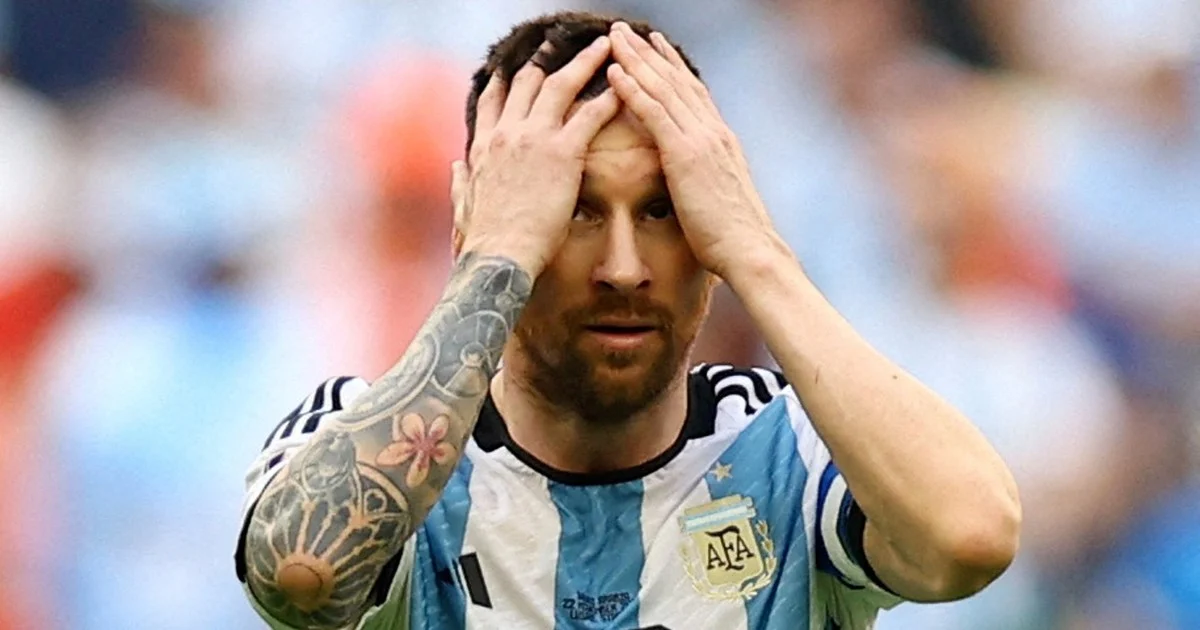
The FIFA World Cup 2026 stands as the most eagerly awaited sports event, promising a global spectacle where nations vie for football’s ultimate prize. As fans prepare to witness record-breaking goal scorers, monumental individual performances, and the crowning of a new champion, the tournament’s rich history reminds us that the script is rarely written in advance. Throughout its storied past, the World Cup has consistently defied expectations, serving up astonishing upsets where defending champions have crumbled in the group stages and perceived minnows have brought down giants, such as Saudi Arabia’s historic victory over eventual champions Argentina at Qatar 2022. These moments of unforeseen triumph and dramatic downfall are integral to the World Cup’s allure, cementing its reputation as a stage where anything is possible.
The narrative of the FIFA World Cup is as much about the anticipated triumphs as it is about the seismic shocks that reverberate through football history. These unexpected results not only captivate audiences but also underscore the unpredictable nature of sport at its highest level. From post-war amateur teams humbling established footballing nations to modern-day titans collapsing under pressure, these upsets are etched into the collective memory of fans, defining eras and shaping legacies.
Historic World Cup Shocks: A Timeline of Unforeseen Victories
The following provides a chronological examination of some of the most significant upsets in the history of the FIFA World Cup, detailing the context, key moments, and lasting implications of these extraordinary matches.
USA 1-0 England (1950): The Miracle on Grass

The 1950 FIFA World Cup, hosted by Brazil, marked a pivotal moment in international football as England, often considered the inventors of the modern game, made their long-awaited debut. The post-war England team, boasting legendary figures such as Alf Ramsey, Tom Finney, and Billy Wright, arrived in South America as strong favourites to lift the trophy. Their self-assuredness was palpable, rooted in a formidable record that saw them lose only four times in 30 matches since the war, including a dominant 10-0 victory over Portugal just a month prior.
In stark contrast, the United States squad was a ragtag assembly of part-timers, comprising individuals like Walter Bahr, a schoolteacher; Frank Borghi, a funeral home embalmer and former semi-professional baseball catcher; and Joe Gaetjens, a dishwasher from Haiti who was not even a U.S. citizen but was eligible under the rules of the time. This mixed bunch, having barely trained together as a cohesive unit, travelled to Brazil by boat, reflecting their amateur status and the minimal expectations placed upon them. Their odds of victory against England were estimated at 500-1.
The match, played on June 29, 1950, at Estádio Independência in Belo Horizonte, began as expected, with England dominating possession and creating numerous chances. They hit the post and crossbar and forced Borghi into several spectacular saves. However, against the run of play, in the 38th minute, a long shot from Walter Bahr was met by Joe Gaetjens with a diving header. The ball glanced off Gaetjens’ head, wrong-footing England’s acclaimed goalkeeper Bert Williams and finding the back of the net. The USA took a shocking 1-0 lead.
The second half saw relentless pressure from England. Their attack, featuring the likes of Stanley Mortensen and Jackie Milburn, mounted wave after wave of assaults on the American goal. Yet, Frank Borghi, in a performance of a lifetime, became an impenetrable barrier, denying every English attempt with a combination of skill, luck, and sheer determination. His heroics, coupled with the resilience of the American defense, preserved the slender lead until the final whistle. The result, a 1-0 victory for the USA, sent shockwaves across the footballing world. Many English newspapers initially dismissed the telex report as a typo, assuming the score must have been 10-1 in favour of England. This match, famously dubbed "The Miracle on Grass," not only etched the USA’s name into history but also stands as one of the most improbable upsets in World Cup annals, highlighting the unpredictable nature of the beautiful game.
West Germany 3-2 Hungary (1954): The Miracle of Bern
Four years later, the 1954 World Cup in Switzerland produced another monumental upset, often referred to as "The Miracle of Bern." This final pitted the seemingly invincible "Mighty Magyars" of Hungary against a West German side that was still rebuilding its footballing identity in the post-war era.

Hungary, led by the legendary Ferenc Puskás and featuring an array of tactical innovators like Nándor Hidegkuti and Sándor Kocsis, were widely considered the best team in the world. They arrived in Switzerland on an incredible 32-match unbeaten streak, a run that stretched back four years and included an iconic 6-3 victory over England at Wembley in 1953, becoming the first non-British team to beat England at home. Their dominance in the tournament was absolute; they had already delivered a crushing 9-0 defeat to South Korea and an emphatic 8-3 thrashing of West Germany in the group stages. Entering the final, Hungary’s victory was seen as a mere formality, a coronation for arguably the greatest team never to win the World Cup.
The final, held on July 4, 1954, at the Wankdorf Stadium in Bern, appeared to follow the expected script early on. Hungary raced to a two-goal lead within eight minutes, with Puskás scoring in the 6th minute and Zoltán Czibor adding another in the 8th. The German comeback, however, was swift and unexpected. Max Morlock pulled one back in the 10th minute, and Helmut Rahn equalized in the 18th, stunning the Hungarian team and the capacity crowd.
The game remained tied at 2-2 for much of the second half, with both teams battling fiercely. Puskás had a goal controversially disallowed for offside in the dying minutes. Then, in the 84th minute, Helmut Rahn, who had scored West Germany’s second goal, unleashed a powerful left-footed shot from outside the box that beat Hungarian goalkeeper Gyula Grosics. The stadium erupted as West Germany took a 3-2 lead. Despite a desperate late push from Hungary, the Germans held on, completing one of the most astonishing comebacks in World Cup history.
"The Miracle of Bern" had profound implications beyond the football pitch. For West Germany, it was a symbolic moment of national recovery and resurgence, boosting the morale of a country still grappling with the aftermath of World War II. For Hungary, it was a devastating blow, widely believed to have contributed to the political instability that led to the Hungarian Revolution of 1956. The match remains a testament to resilience, illustrating how even the most dominant teams can be overcome on football’s grandest stage.
North Korea 1-0 Italy (1966): A Cold War Football Shock
The 1966 World Cup in England provided one of the tournament’s most politically charged and unexpected upsets. North Korea’s mere presence at the tournament was a significant feat, given the diplomatic complexities of the Cold War era. The English FA had initially considered rejecting their visa application due to the ongoing political tensions between North Korea and Western-allied South Korea, but FIFA intervened, ensuring their participation. The team, largely unknown and perceived as an amateur outfit, was expected to be a walkover for their opponents.

Italy, on the other hand, arrived in England as two-time World Champions (1934, 1938) and a formidable footballing nation. Their squad featured seasoned professionals and tactical prowess, making them heavy favourites against the Asian debutants. The match, played on July 19, 1966, at Ayresome Park in Middlesbrough, was crucial for Italy’s progression from the group stage.
The game took a dramatic turn when Italy’s influential midfielder, Giacomo Bulgarelli, suffered an injury that forced him off the pitch. In an era where substitutions were not yet permitted, Italy was reduced to 10 men for the majority of the match. Seven minutes after Bulgarelli’s departure, North Korea seized their opportunity. Pak Doo Ik, a corporal in the North Korean army, struck a powerful shot that beat Italian goalkeeper Enrico Albertosi. The goal not only gave North Korea a shocking lead but, more significantly, condemned Italy to an early exit from the tournament.
The 1-0 victory was a monumental achievement for North Korea, propelling them unexpectedly into the quarterfinals. Their journey captivated the neutral fans, especially the local Middlesbrough supporters who adopted them. The match is universally regarded as one of the biggest upsets in World Cup history, a stark reminder that passion and tactical discipline can overcome superior individual talent. The original match ticket is preserved in the FIFA Football Museum, and the spot where Pak Doo Ik scored his historic goal at the now-demolished Ayresome Park has been marked with iron stud marks, commemorating an indelible moment where sport transcended political divides and defied all predictions.
Algeria 2-1 West Germany (1982): The Disgrace of Gijón Precursor
The 1982 World Cup in Spain delivered another stunning blow to a European powerhouse. West Germany entered the tournament as reigning European champions, two-time World Cup winners, and among the top favourites. Their squad was brimming with talent, including stars like Hansi Müller, Wolfgang Dremmler, Karl-Heinz Rummenigge, and a young Lothar Matthäus. Their confidence, bordering on arrogance, was well-documented, with many German players and coaches openly dismissing Algeria’s chances.
Algeria, making their World Cup debut, were largely an unknown quantity on the international stage, despite having performed commendably in African qualifiers. Their team was composed of lesser-known names, but they played with a spirit and tactical cohesion that belied their underdog status. The match, played on June 16, 1982, in Gijón, was expected to be a comfortable opening victory for the Germans.

However, the Algerians had other plans. Their dynamic play and fluid attacking style caught the complacent Germans off guard. In the 54th minute, Rabah Madjer scored, capitalising on a rebound after his initial shot was saved, to give Algeria a sensational lead. The Germans, visibly shaken, pushed for an equalizer, and Karl-Heinz Rummenigge eventually found it in the 67th minute. But Algeria’s response was almost immediate and devastating. Just a minute later, Lakhdar Belloumi, a legendary figure in Algerian football, netted the winning goal, shocking West Germany and the entire footballing world.
The 2-1 victory was not just an upset; it was a testament to Algeria’s talent and courage, and a profound embarrassment for the Germans. The implications of this match extended beyond the final whistle. While Algeria’s performance earned them global admiration, their World Cup journey was controversially cut short by the infamous "Disgrace of Gijón," a subsequent match where West Germany and Austria allegedly colluded to ensure both teams progressed at Algeria’s expense. This incident led to FIFA implementing simultaneous kick-offs for the final group stage matches, a lasting legacy of Algeria’s impactful debut.
Cameroon 1-0 Argentina (1990): The Indomitable Lions Roar
The 1990 FIFA World Cup in Italy opened with an upset that immediately set the tone for a tournament often remembered for its defensive football and unexpected turns. Argentina, the defending champions, were led by arguably the greatest footballer of his generation, Diego Maradona. They were considered overwhelming favourites, with a seemingly easy opening match against Cameroon.
Cameroon, making only their second World Cup appearance and the sole sub-Saharan African country in the tournament, were widely dismissed. Their reputation was primarily for physical play, and many expected them to be easily dispatched by Maradona’s Argentina. The opening match, held at the iconic San Siro stadium in Milan on June 8, 1990, was supposed to be a celebratory start for the reigning champions.
Despite Argentina starting brightly, the Cameroonians, led by their charismatic veteran Roger Milla (who would later become a global sensation), grew in confidence. Their disciplined defense and energetic midfield stifled Argentina’s creative efforts, particularly Maradona. The game remained goalless for much of the first half, a surprise in itself. Cameroon’s physicality, however, led to two players being sent off – André Kana-Biyik and Benjamin Massing. Despite being reduced to nine men for the final stages, they remained resolute.

The decisive moment arrived in the 67th minute. A free kick from the left flank was headed by François Omam-Biyik. The header was not particularly powerful, but it bounced awkwardly in front of Argentine goalkeeper Nery Pumpido, who misjudged it, allowing the ball to trickle into the net. The stadium erupted in disbelief and jubilation as Cameroon took a 1-0 lead. The Indomitable Lions then defended heroically against Argentina’s desperate attempts to equalize, holding on for a famous victory.
This 1-0 win was a seismic shock that resonated globally. It marked the first time an African nation had defeated a reigning world champion in the World Cup. Cameroon’s performance and subsequent run to the quarterfinals (where they narrowly lost to England) fundamentally shifted perceptions of African football, proving that teams from the continent could compete with the world’s elite. It was a moment of immense pride for Africa and a humbling experience for Argentina, who nevertheless managed to reach the final despite their inauspicious start.
France 0-1 Senegal (2002): The Champions’ Curse Strikes Early
The 2002 FIFA World Cup, co-hosted by South Korea and Japan, began with another classic David-vs-Goliath encounter that ended in spectacular fashion. The opening match pitted reigning World and European champions France against tournament debutants Senegal. The narrative was rife with subplots: former coloniser versus former colony, established superpower against emerging nation. France, featuring a squad packed with global superstars like Thierry Henry, David Trezeguet, and Patrick Vieira, were widely expected to dominate, despite the absence of an injured Zinedine Zidane.
Senegal, under French coach Bruno Metsu, were making their first-ever appearance at the World Cup. They were viewed as plucky underdogs but possessed a squad with significant talent playing in top European leagues, though largely overshadowed by their French counterparts. The match, played on May 31, 2002, at the Seoul World Cup Stadium, was anticipated to be a routine French victory.
However, from the outset, Senegal displayed remarkable tactical discipline, energy, and fearlessness. Their meticulously planned strategy involved stifling France’s midfield creativity and exploiting the pace of forwards like El Hadji Diouf on the counter-attack. The French struggled to break down Senegal’s organised defence, and their frustration grew as the match progressed.

The decisive moment arrived in the 30th minute. El Hadji Diouf, weaving past French defenders on the left wing, delivered a sharp cross into the box. French goalkeeper Fabien Barthez parried the ball, but it fell directly to Papa Bouba Diop, who bundled it into the net. Senegal had taken a sensational 1-0 lead. The goal sent shockwaves through the stadium and around the world.
France, even with the introduction of Zidane in later matches, never recovered their form. They failed to score a single goal in the tournament, losing their next match and drawing their final group game, resulting in a humiliating group stage exit as defending champions – a fate that would become a recurring theme in future World Cups. Senegal, conversely, thrived on their opening victory, progressing through the group stage and becoming only the second African nation (after Cameroon in 1990) to reach the quarterfinals, where they were eventually eliminated by Turkey. This upset was a landmark moment for African football and a stark reminder that past glories guarantee nothing on the global stage.
Germany 7-1 Brazil (2014): The Mineirazo
The 2014 FIFA World Cup, hosted by Brazil, was meant to be a triumphant redemption for the football-mad nation, an opportunity to exorcise the ghosts of the "Maracanazo" – their shock defeat in the 1950 final. With immense national pride and expectation, the stage was set for Brazil to claim a record-extending sixth World Cup title on home soil. Their path to the semifinals saw them topping their group and navigating challenging knockout encounters, building belief that destiny was on their side.
However, fate dealt Brazil two crucial blows before their semifinal clash against Germany. Star forward Neymar Jr. suffered a tournament-ending back injury in the quarterfinal against Colombia, and captain Thiago Silva was suspended due to yellow card accumulation. These absences left significant voids in both attack and defense, but few anticipated the scale of the disaster that was about to unfold.
Germany, a consistently strong force in World Cup knockout matches, had shown their mettle throughout the tournament. The semifinal, played on July 8, 2014, at the Estádio Mineirão in Belo Horizonte, began with an early German goal in the 11th minute from Thomas Müller. What followed, however, transcended a mere upset and spiralled into an unprecedented national humiliation. Between the 23rd and 29th minutes, Germany scored four more goals in a breathtaking, almost surreal six-minute blitz. Miroslav Klose broke the World Cup all-time scoring record, Toni Kroos scored twice, and Sami Khedira added another. The score stood at an unbelievable 5-0 by the half-hour mark, leaving Brazilian players, fans in the stands, and millions watching across the country in a state of shock and despair.

The second half brought no respite. André Schürrle added two more goals for Germany in the 69th and 79th minutes, extending the lead to an astonishing 7-0. Oscar scored a consolation goal for Brazil in the final minute, but it was a mere footnote to the catastrophe. The final scoreline of 7-1 represented Brazil’s biggest defeat since 1920 and their heaviest-ever World Cup loss. Dubbed "the Mineirazo" (a play on the "Maracanazo"), this match was more than just a defeat; it was a national trauma that profoundly questioned Brazil’s footballing identity and legacy. Germany, having delivered this historic thrashing, went on to win the final against Argentina, securing their fourth World Cup title.
Netherlands 5-1 Spain (2014): The End of an Era
The 2014 World Cup in Brazil opened with another significant upset in Group B, featuring a rematch of the 2010 final between Spain and the Netherlands. Spain arrived in Brazil as the undisputed dominant force in international football, having won the UEFA European Championship in 2008, the FIFA World Cup in 2010, and another European Championship in 2012. Their "tiki-taka" style of play had revolutionised the game, and with a squad featuring legends like Iker Casillas, Xavi, Andrés Iniesta, and Sergio Ramos, they were considered one of the primary contenders to defend their title.
The Netherlands, under coach Louis van Gaal, had undergone a tactical transformation, opting for a more counter-attacking style rather than their traditional "Total Football." Expectations for the Dutch were more modest compared to Spain’s lofty aspirations. The match, played on June 13, 2014, in Salvador, was expected to be a tight affair, but few predicted the dramatic outcome.
When Xabi Alonso converted a penalty in the 27th minute, giving Spain a 1-0 lead, it seemed as if the champions were on track. However, just one minute before half-time, the tournament witnessed arguably its most iconic goal. Daley Blind delivered a looping long pass from the left wing, which Robin van Persie met with an incredible diving header from 15 yards out, sending the ball soaring over Iker Casillas and into the net. This "flying Dutchman" goal not only equalized for the Netherlands but also signalled a shift in momentum.
The second half was a complete Dutch masterclass. Louis van Gaal’s tactical setup proved devastatingly effective against Spain’s aging defense. Arjen Robben’s blistering pace terrorised the Spanish backline, scoring two brilliant goals in the 65th and 80th minutes. Stefan de Vrij added another in the 64th minute, and Van Persie completed his brace in the 72nd. The final score of 5-1 was a stunning indictment of Spain’s decline.

This defeat was Spain’s second-biggest loss in a World Cup and, more significantly, the largest margin of defeat for a defending champion in FIFA World Cup history. The psychological impact was immediate and profound; Spain suffered another loss in their next match and were shockingly knocked out in the group stage, marking the definitive end of their golden era. The Netherlands, meanwhile, rode the wave of this spectacular victory, finishing third in the tournament and showcasing a tactical blueprint that dismantled the world’s best.
South Korea 2-0 Germany (2018): The Champions’ Curse Continues
The 2018 FIFA World Cup in Russia continued the growing trend of defending champions failing to advance beyond the group stage, an unfortunate phenomenon often dubbed the "Curse of the Champions." Germany, having lifted the trophy in 2014, entered the tournament as one of the favourites, but their campaign had been surprisingly lacklustre. They came into their final group match needing a win against South Korea to guarantee progression to the knockout rounds.
South Korea, on the other hand, were playing primarily for pride. With two previous losses, their chances of advancing were mathematically slim, dependent on a highly improbable combination of results in other matches. The encounter, played on June 27, 2018, in Kazan, was expected to see Germany’s class prevail under pressure.
However, the match was a tense, hard-fought affair. South Korea defended resolutely and posed a threat on the counter-attack, while Germany, despite their attacking talent, struggled to break down their opponents. The game remained goalless deep into injury time, a result that would still see Germany eliminated if Sweden won their concurrent match (which they did). Desperate for a winning goal, German captain and goalkeeper Manuel Neuer ventured far into the Korean half in the dying moments, essentially playing as an outfield player to support the attack.
This bold, yet ultimately ill-fated, gamble proved catastrophic. In the 92nd minute, after a corner, South Korea’s Kim Young-gwon scored from close range. The goal was initially disallowed for offside but was subsequently awarded after a VAR review, confirming South Korea’s lead. Just minutes later, as Neuer was still stranded near the halfway line, South Korea launched a swift counter-attack. Ju Se-jong collected a misplaced pass from Neuer and launched a long ball forward. Son Heung-min, running onto the pass, slotted the ball into an empty net, sealing a historic 2-0 victory for South Korea.

The result was nothing short of sensational. It marked the first time since 1938 that Germany had failed to advance beyond the first stage of a World Cup, and their first-ever defeat against an Asian country in the tournament’s history. The "Curse of the Champions" had struck again, with Germany becoming the third consecutive holder (after Italy in 2010 and Spain in 2014) to exit at the first hurdle. South Korea’s victory, though not leading to their own progression, was celebrated as a monumental achievement, a testament to their fighting spirit and tactical discipline against a footballing superpower.
Saudi Arabia 2-1 Argentina (2022): The Lusail Stunner
The most recent entry into the pantheon of World Cup upsets occurred at the 2022 FIFA World Cup in Qatar. Argentina, under the leadership of Lionel Messi in what was widely anticipated to be his final World Cup, arrived with immense expectations. They were on a remarkable 36-match unbeaten streak, one of the longest in international football history, and were among the top tournament favourites, tipped by many to finally deliver Messi his elusive World Cup trophy.
Their opening Group C match on November 22, 2022, was against Saudi Arabia, a team ranked 51st in the world and considered significant underdogs. The match, played at the iconic Lusail Stadium, appeared to be following the expected script when Lionel Messi converted a 10th-minute penalty, giving Argentina an early lead. Argentina continued to dominate, having several more goals disallowed for offside by tight VAR calls, and it seemed only a matter of time before they extended their lead. The half-time whistle blew with Argentina 1-0 up, seemingly in control.
However, the second half proved to be a stark contrast. Saudi Arabia, spurred on by coach Hervé Renard’s halftime team talk and a newfound intensity, emerged with a renewed sense of purpose. Just three minutes after the restart, in the 48th minute, Saleh Al-Shehri latched onto a long ball, evaded the Argentine defense, and fired a low shot through the legs of goalkeeper Emiliano Martinez to stun Argentina and equalize the score.
The shock quickly turned into disbelief five minutes later. In the 53rd minute, winger Salem al-Dawsari, a veteran of Saudi football, produced a moment of individual brilliance. He cut inside from the left wing, danced past two defenders, and curled a magnificent shot into the top corner of the net, leaving Martinez with no chance. Saudi Arabia had taken a sensational 2-1 lead.

What followed was a masterclass in resilient defending. The Saudis weathered the inevitable late Argentine onslaught, with their goalkeeper Mohammed Al-Owais making several crucial saves and their defenders throwing their bodies in front of every shot. Despite Argentina’s relentless pressure, Saudi Arabia held on for a historic 2-1 victory.
While Argentina ultimately recovered from this stunning defeat to go on and lift the World Cup trophy, securing Messi’s dream, Saudi Arabia’s triumph over the eventual champions remains one of the greatest upsets in World Cup history. The victory ignited rapturous celebrations across Saudi Arabia and the wider Arab world, momentarily overshadowing the rest of the tournament. It was a testament to courage, tactical discipline, and the sheer unpredictability that makes the FIFA World Cup such an enthralling spectacle.
The Enduring Legacy of World Cup Upsets
These historic upsets are more than just isolated results; they are pivotal moments that shape the narrative of the FIFA World Cup. They demonstrate that pre-tournament rankings, star power, and historical pedigree can be rendered irrelevant on any given day. From the "Miracle on Grass" in 1950 to the "Lusail Stunner" in 2022, these matches remind us of football’s inherent drama and the capacity for the underdog to rise. They inject an unparalleled level of excitement and unpredictability into the tournament, fostering dreams for smaller nations and keeping even the most dominant teams on their toes. As the FIFA World Cup 2026 approaches, fans worldwide will undoubtedly be hoping for more such moments of shock and awe, proving once again that in football, anything truly is possible.
