

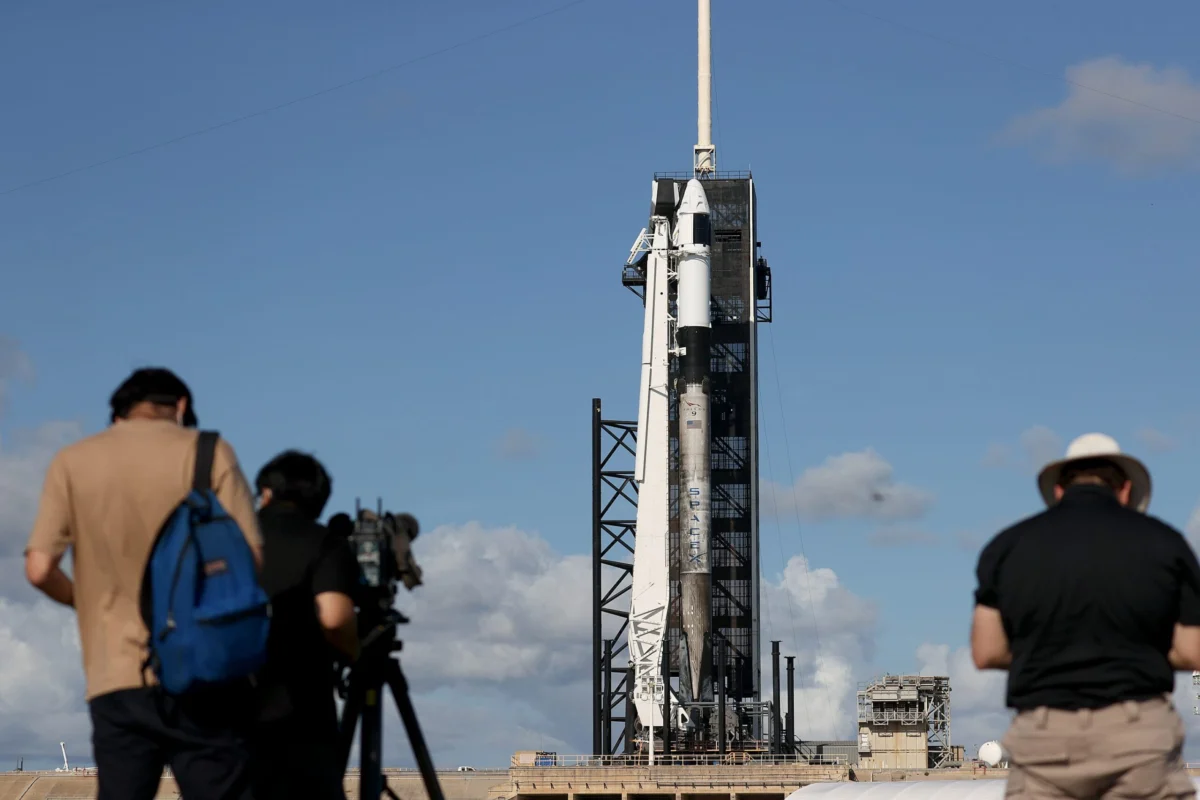
In a move poised to significantly reshape the landscape of initial public offerings, Elon Musk’s SpaceX has announced a groundbreaking decision to allocate a portion of its highly anticipated shares directly to retail investors. This unprecedented approach, detailed in a prospectus filed with the Securities and Exchange Commission (SEC) on Wednesday, will allow everyday traders to purchase shares at the same IPO price and simultaneously with institutional investors, effectively bypassing the traditional Wall Street gatekeepers. The company confirmed its plans this week to go public under the ticker SPCX on the Nasdaq, following a confidential filing with regulators in April. A crucial investor roadshow, where SpaceX will present its strategic vision and financial projections, is slated to commence on June 8. This development marks a pivotal moment for market accessibility, challenging long-standing conventions that have historically favored large institutional clients in high-demand public offerings.
The Traditional IPO Landscape and SpaceX’s Departure
For decades, the initial public offering process has been a structured and often opaque system, largely dominated by institutional investors, hedge funds, and high-net-worth individuals. When a company decides to go public, investment banks underwrite the offering, setting an initial price and distributing shares primarily to their preferred institutional clients. These clients, often with substantial capital and long-standing relationships with the banks, receive the bulk of the allocations. Retail investors, on the other hand, typically find themselves at a significant disadvantage.
Barriers for Retail Investors
The conventional IPO model presents several formidable barriers for individual investors. Firstly, access to pre-market shares is severely limited, if not entirely non-existent. Brokerage firms often receive only a small fraction of the total shares, which are then distributed sparingly to their most valuable individual clients. This scarcity means the vast majority of retail investors can only participate once the shares begin trading on the open market, often at a substantially inflated price due due to immediate demand and the "pop" that many hot IPOs experience on their first day. This dynamic means that by the time retail investors can buy in, much of the initial upside has already been captured by institutional players. Secondly, the allocation process lacks transparency, with criteria for receiving shares often remaining obscure to the general public. This has long fueled a perception of an unequal playing field, where the average investor is an afterthought in the most lucrative investment opportunities.
The SpaceX Model: Direct Access
SpaceX’s announcement directly addresses these long-standing inequities. By explicitly stating that a portion of its shares will be sold through popular trading platforms such as Robinhood, Fidelity, and Charles Schwab, the company is democratizing access to one of the most coveted IPOs in recent memory. This strategy allows individual investors to acquire shares at the initial offering price, before they hit the secondary market, placing them on par with major institutional buyers. This commitment to equitable access aligns with a broader trend towards financial inclusion and leveraging technology to break down traditional barriers, a philosophy that resonates deeply with the ethos of Silicon Valley and the tech-savvy investor base that often follows companies like SpaceX. The move could set a powerful precedent for future IPOs, compelling other high-profile companies to consider similar retail-friendly allocation strategies.
A Deep Dive into SpaceX: From Vision to Valuation
Founded in 2002 by visionary entrepreneur Elon Musk, Space Exploration Technologies Corp., or SpaceX, embarked on an ambitious mission to revolutionize space technology, with the ultimate goal of enabling human life on Mars. From its humble beginnings in El Segundo, California, the company has grown into one of the world’s most valuable private entities, consistently pushing the boundaries of what is technologically feasible in aerospace. Its journey has been marked by audacious goals, technological breakthroughs, and a relentless pursuit of efficiency and reusability.
Genesis and Early Triumphs
SpaceX’s early years were characterized by a series of challenging developmental phases and setbacks. Its first three Falcon 1 launch attempts failed, pushing the company to the brink of bankruptcy. However, a successful fourth launch in September 2008 marked a turning point, demonstrating the company’s resilience and engineering prowess. This success paved the way for a crucial contract with NASA under the Commercial Orbital Transportation Services (COTS) program, designed to resupply the International Space Station (ISS) after the retirement of the Space Shuttle program. The subsequent development of the Falcon 9 rocket and the Dragon spacecraft cemented SpaceX’s position as a reliable partner for government and commercial space missions. The Falcon 9, particularly its ability to land and reuse its first stage, fundamentally altered the economics of space travel, drastically reducing launch costs and increasing flight cadence.
Pillars of Growth: Rockets, Satellites, and Beyond
Today, SpaceX operates across several critical business lines, each contributing significantly to its multi-billion-dollar valuation. The reusable rocket technology, spearheaded by the Falcon 9 and the heavier-lift Falcon Heavy, remains a cornerstone, facilitating numerous launches for NASA, the U.S. military, and commercial satellite operators. The company has become the world’s leading launch provider by volume and mass to orbit. Beyond launch services, SpaceX holds lucrative national security and defense contracts, leveraging its advanced technology for governmental needs. The development of Starship, a fully reusable, super heavy-lift launch system designed for deep space missions to the Moon and Mars, represents the company’s long-term vision and continued investment in future capabilities, though it is still in its extensive testing phase.
The Starlink Phenomenon
Perhaps the most significant growth engine for SpaceX in recent years has been its Starlink satellite internet network. Comprising a rapidly expanding constellation of tens of thousands of small satellites in low Earth orbit, Starlink aims to provide high-speed, low-latency internet access globally, particularly to underserved rural and remote areas. Since its initial deployment, Starlink has attracted millions of subscribers worldwide, generating substantial recurring revenue. The sheer scale and speed of its deployment are unprecedented, with thousands of satellites launched and operational within a few years, fundamentally disrupting the satellite communications industry. This segment alone has been a major contributor to SpaceX’s private market valuation, which has soared past $180 billion in recent funding rounds.
Expanding Horizons: xAI and Future Ventures
Elon Musk’s entrepreneurial ventures extend beyond rocketry and satellite internet. Under the broader corporate umbrella, Musk has also expanded into artificial intelligence through xAI, adding another potentially high-growth business line. While xAI operates as a separate entity, its existence and potential synergies with SpaceX’s data-rich operations in space and on Earth hint at a future where AI plays a critical role in optimizing space missions, managing vast satellite networks, and processing extraterrestrial data. This diversification strategy positions SpaceX not just as a space company, but as a multi-faceted technology conglomerate with ambitious plans spanning multiple cutting-edge sectors.
Chronology of the IPO Process
The decision to take SpaceX public has been a subject of intense speculation for years, given its immense private market valuation and widespread public interest. Elon Musk has historically expressed a reluctance to take Starlink public until its cash flow becomes more predictable, implying a cautious approach to public markets for his space ventures. However, the recent filings indicate a shift in strategy, potentially driven by the need for substantial capital to fund the ambitious Starship program and future Martian endeavors, or to provide liquidity for early investors and employees.
Confidential Filings and Public Unveiling
The initial steps towards the IPO began discreetly. SpaceX confidentially filed its S-1 registration statement with the SEC in April. This allows companies to keep their financial details and business plans private during the initial stages of the IPO process, typically until about 15 days before the roadshow begins. The public unveiling of these plans occurred this week, confirming long-held rumors and igniting excitement across financial markets. The prospectus, made public on Wednesday, provided the first official glimpse into SpaceX’s financial health, operational strategies, and the specifics of its public offering, including the groundbreaking retail investor access.
The Roadshow and Investor Engagement
A critical phase in any IPO is the roadshow, a series of presentations by company management to potential institutional investors, investment banks, and financial analysts. SpaceX’s roadshow is scheduled to begin on June 8. During this period, company executives, led by Elon Musk, will articulate their vision, financial performance, growth strategies, and the unique value proposition of investing in SpaceX. This engagement is crucial for generating demand, building confidence among large investors, and ultimately influencing the final IPO price. The inclusion of retail investor access in the prospectus ensures that the excitement generated during the roadshow will extend beyond traditional institutional circles to a broader public audience.
Brokerage Platforms and Investor Access
The decision to route IPO shares through major brokerage platforms is a significant departure from standard practice. It directly challenges the oligopoly traditionally held by large investment banks in the primary market for new issuances.
Robinhood, Fidelity, and Charles Schwab
The involvement of platforms like Robinhood, Fidelity, and Charles Schwab underscores a broader shift in retail investing. These platforms have significantly lowered the barriers to entry for individual investors, offering commission-free trading, fractional shares, and user-friendly interfaces. Robinhood, in particular, has been at the forefront of democratizing stock market access, though it has also faced scrutiny over its business model and impact on market volatility. Fidelity and Charles Schwab, established giants in the brokerage industry, have also adapted to the digital age, offering robust platforms and a wide range of investment products. By partnering with these diverse platforms, SpaceX ensures its IPO reaches a broad spectrum of retail investors, from seasoned traders to newer entrants in the market. Each platform will likely have its own process for handling the allocations, requiring users to express interest or meet certain criteria.
Constraints and Allocation Challenges
While the opportunity for retail investors is unprecedented, it is not without potential constraints. SpaceX’s prospectus explicitly states that purchases through these brokerage platforms will remain subject to each firm’s own requirements and terms. IPO share allocations are inherently limited, especially for highly sought-after companies. Demand for SpaceX, given its profile and the public’s fascination with Elon Musk’s ventures, is expected to substantially outstrip the available supply. This means that while retail investors will have access, the actual number of shares each individual can acquire might be restricted. Brokerage firms will face the complex task of managing this immense demand, potentially implementing lottery systems, tiered allocations based on account size or activity, or other proprietary methods to distribute shares equitably among interested clients. The challenge will be to ensure fairness and transparency in a process that is designed to be accessible to millions.
Market Implications and Future Outlook
SpaceX’s innovative approach to its IPO carries significant implications for both the company itself and the broader financial markets. It represents a bold experiment that could redefine how companies go public and how investors participate in these events.
Democratizing Investment: A New Precedent?
The most immediate impact is the potential for further democratization of investment opportunities. If SpaceX’s retail-inclusive IPO proves successful, it could establish a new precedent for other high-growth, high-profile companies considering going public. This could lead to a permanent shift in the IPO landscape, forcing investment banks to re-evaluate their allocation strategies and embrace more inclusive models. It empowers individual investors, granting them a more direct stake in the growth stories they often admire from afar. This shift could also foster greater retail investor engagement and loyalty to companies that prioritize their access.
Risks and Rewards for Retail Participants
For retail investors, the opportunity comes with both significant rewards and inherent risks. The potential reward is access to a company at the forefront of technological innovation, with multiple high-growth business lines. Early access at the IPO price could yield substantial returns if the stock performs well post-listing. However, investing in an IPO, especially one with such high expectations, carries considerable risk. Valuations for private companies like SpaceX can be extremely high, potentially baking in years of future growth. Market sentiment can be fickle, and initial share price volatility is common. Retail investors, who may not have the same research capabilities or risk tolerance as institutional investors, must conduct their due diligence and understand that space ventures, while exciting, involve long-term horizons and significant capital expenditure.
Impact on the IPO Market Structure
The move by SpaceX could disrupt the traditional fee structures of investment banks involved in IPOs. If a significant portion of shares is allocated directly through brokerage platforms, it might reduce the overall fees collected by underwriting banks, who typically earn substantial amounts for their role in distribution. This could encourage a more competitive environment among banks and platforms for future IPOs. Furthermore, it could lead to increased scrutiny from regulators regarding allocation fairness and market manipulation, ensuring that the new model genuinely serves to broaden access rather than simply shifting it.
Strategic Rationale for SpaceX
From SpaceX’s perspective, this strategy serves several strategic objectives. Firstly, it could foster a loyal and engaged shareholder base. Retail investors often exhibit greater long-term holding tendencies compared to some institutional investors who might engage in short-term trading. Secondly, it generates immense public goodwill and brand loyalty, aligning with Musk’s public persona of challenging established norms. Thirdly, it could potentially reduce reliance on a narrow set of institutional investors, diversifying the company’s investor base and potentially stabilizing its stock in the long run. Finally, it provides a powerful narrative for a company built on ambitious, transformative goals – democratizing space and democratizing finance.
Analyst and Industry Reactions
Initial reactions from market analysts and industry observers have been largely positive, albeit with a degree of caution regarding implementation. Many laud the initiative as a step towards a more equitable financial system. Analysts note that while the concept is revolutionary, the practical execution will be key, particularly concerning how brokerage platforms manage demand and allocate shares transparently. Some investment bankers, while acknowledging the potential disruption, also recognize the increasing power of retail investors in today’s markets, making such a move perhaps inevitable for a company with SpaceX’s public appeal. The SEC, whose mission includes protecting investors and facilitating capital formation, will undoubtedly monitor this new approach closely, potentially paving the way for regulatory guidance on future retail-inclusive IPOs.
Conclusion: A New Era for Public Offerings
SpaceX’s decision to offer direct access to its IPO shares for retail investors is more than just a logistical change; it is a philosophical statement. It reflects a growing desire, particularly within the tech sector, to democratize access to wealth creation and challenge the long-standing hierarchies of traditional finance. As SpaceX prepares for its highly anticipated public debut, the financial world will be watching closely to see if this groundbreaking approach becomes a new standard, ushering in an era where the public truly has a direct shot at investing in the companies shaping the future. While challenges in managing demand and ensuring fair allocation remain, the precedent set by SpaceX could fundamentally alter the dynamics of initial public offerings for years to come, marking a significant victory for the everyday investor.
