

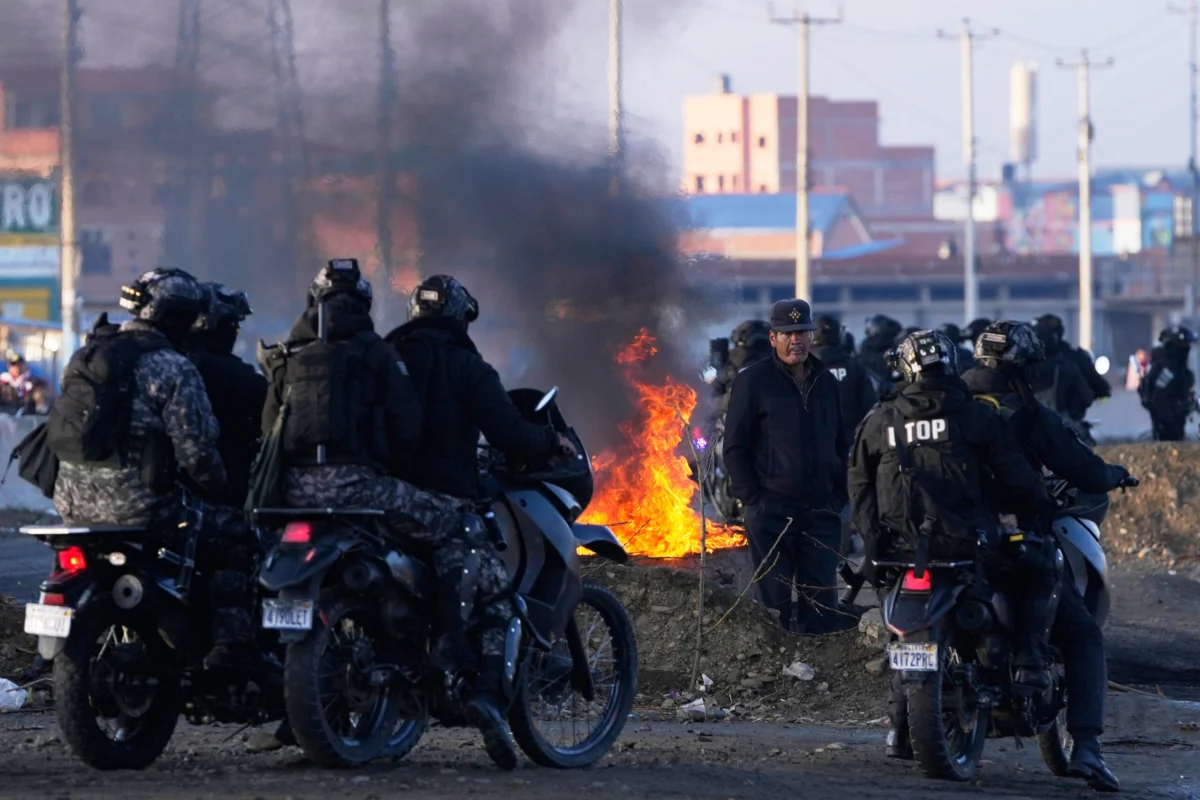
Bolivian President Rodrigo Paz announced on Monday his decision to halve his salary and those of his cabinet ministers, a move he described as a demonstration of the government’s "commitment to the country" amidst a rapidly escalating political and social crisis. Speaking from Sucre, Bolivia’s constitutional capital, the centrist leader’s declaration comes as the nation grapples with its fourth consecutive week of intense protests, roadblocks, and a growing chorus of demands for his resignation. The unrest has severely disrupted daily life, particularly in the major urban centers of La Paz and El Alto, where critical shortages of food, fuel, and medicine are increasingly impacting markets, hospitals, and petrol stations, threatening to plunge the country into a humanitarian crisis.
Deepening Crisis: Protests and Economic Hardship Grip Bolivia
The current wave of protests, characterized by widespread civil disobedience and strategically placed roadblocks, represents a profound challenge to President Paz’s nascent administration. Since taking office in November, Paz has faced an uphill battle against an economy described as being "in turmoil," a situation exacerbated by global economic pressures and lingering domestic issues. The decision to implement austerity measures, including the contentious rollback of a long-standing fuel subsidy, ignited the initial spark of public outrage. Protesters are demanding an immediate reversal of these policies, advocating for increased wages, and the restoration of the fuel subsidy that had previously maintained prices at 2006 levels, a significant historical benchmark for economic stability in the eyes of many Bolivians.
Beyond the immediate economic grievances, the protests also reflect deeper societal anxieties regarding President Paz’s perceived alignment with "big business and elites." This perception has been fueled by his cabinet appointments, which notably lack Indigenous or working-class representation – a stark contrast to previous administrations that had made efforts to include a broader spectrum of Bolivian society. This perceived exclusionary approach has resonated deeply in a nation with a rich history of Indigenous movements and a strong emphasis on social inclusion, particularly after periods of significant political and social change. The lack of diverse representation in Paz’s cabinet is seen by many as a betrayal of the inclusive principles that many Bolivians associate with democratic governance and equitable power distribution.
The tangible impact of the unrest is most acutely felt in the urban centers. In La Paz and El Alto, reports indicate that supply chains have been fractured, leading to severe scarcity. Essential goods, from basic foodstuffs like bread and rice to critical medical supplies and fuel, are either unavailable or being sold at significantly inflated prices on black markets. Hospitals are reportedly struggling to maintain operations, with some reporting dwindling stocks of essential medicines and oxygen, threatening patient care. Petrol stations frequently display "no fuel" signs, bringing transportation and commerce to a near standstill, further isolating communities and exacerbating economic hardship for ordinary citizens. This critical situation underscores the urgent need for a resolution to the political stalemate.
Roots of Discontent: Austerity, Subsidies, and Social Divides
President Paz inherited an economy facing multiple structural challenges. Decades of reliance on commodity exports, primarily natural gas and minerals, left the nation vulnerable to global price fluctuations. A significant drop in commodity prices in recent years, coupled with the economic fallout from the global pandemic, had already strained public finances. Analysts suggest that the previous administration had accumulated substantial public debt, leaving Paz with a depleted treasury and limited fiscal maneuvering room. Upon assuming office, Paz argued that drastic measures were necessary to prevent a complete fiscal collapse.
The cornerstone of his austerity program was the reduction, and in some cases elimination, of state subsidies, most controversially the fuel subsidy. For years, this subsidy had shielded Bolivian consumers from the true cost of fuel, making it among the cheapest in the region. While fiscally unsustainable in the long run, its removal instantly translated into higher transport costs for goods and people, directly impacting the cost of living for average Bolivians. This policy change, implemented without sufficient public consultation or compensatory measures, was perceived by many as an attack on their economic stability and a direct burden on the working class.
Furthermore, the composition of Paz’s cabinet has been a significant point of contention. Bolivia is a nation with a vibrant Indigenous population, representing a substantial portion of its demographic fabric. Past administrations, particularly during the early 21st century, had made concerted efforts to integrate Indigenous leaders and working-class representatives into high-level government positions, reflecting the country’s multicultural identity and history of social movements. Paz’s decision to appoint a cabinet largely drawn from centrist and business-aligned backgrounds, without visible Indigenous or working-class representation, has fueled accusations that his government is out of touch with the majority of the population and primarily serves the interests of a narrow elite. This has exacerbated existing social and political divides, transforming economic grievances into a broader struggle for equitable representation and justice.
A Nation in Turmoil: A Chronology of Escalation
The current crisis did not emerge overnight but rather represents the culmination of mounting tensions since President Paz took office.
- November (Year Prior): Rodrigo Paz is inaugurated as President, inheriting an economy described as "in turmoil" with significant fiscal deficits and rising inflation. His initial pronouncements emphasize fiscal discipline and economic stabilization.
- December (Year Prior): The Paz administration announces a series of austerity measures, including public spending cuts and a review of state subsidies. Initial public reaction is mixed, with some economists supporting the fiscal prudence while social organizations express concern over potential impacts on vulnerable populations.
- Early January (Current Year): The government formally implements significant reductions to the long-standing fuel subsidy. Fuel prices at the pump immediately rise by an estimated 70-100%, depending on the type of fuel, triggering initial, localized protests by transport unions and consumer groups.
- Mid-January (Current Year): Protests begin to intensify and spread from major cities to rural areas. Roadblocks emerge on key highways, disrupting inter-departmental transport. Demands shift from a simple reversal of the fuel subsidy cut to broader calls for increased wages, social protections, and criticism of the government’s economic policies.
- Late January (Current Year): The protests escalate dramatically. Major cities like La Paz and El Alto become focal points of demonstrations, with thousands participating in daily marches. Roadblocks become more numerous and entrenched, severely impacting supply chains. Reports of initial shortages of fresh produce and some manufactured goods begin to surface. Opposition political figures and indigenous organizations begin to formally align with the protest movement, amplifying calls for Paz’s resignation.
- Early February (Current Year, the "Fourth Week"): The crisis reaches a critical point. Severe shortages of food, fuel, and medicine are widely reported across major urban centers. Hospitals warn of critical supply levels. International bodies express concern over the deteriorating situation. Protest leaders issue ultimatums to the government, reiterating demands for Paz’s resignation and a complete overhaul of his economic agenda.
- Monday (Current Day of Report): Amidst the mounting pressure and the humanitarian implications of the blockades, President Rodrigo Paz announces a 50% cut to his salary and that of his cabinet ministers, framing it as a gesture of "commitment to the country."
Economic Backdrop: Inherited Challenges and Policy Responses
The economic challenges facing Bolivia under President Paz are multifaceted and deeply entrenched. Prior to his administration, the country had enjoyed a period of robust growth driven largely by high commodity prices. However, this masked underlying structural weaknesses, including an over-reliance on extractive industries, limited diversification, and persistent informal economic sectors. When global commodity prices began to decline significantly in the mid-2010s, Bolivia’s economy, like many in the region, felt the strain.
The "economy in turmoil" Paz inherited was characterized by several critical indicators: a widening fiscal deficit, with government spending consistently outstripping revenues; rising public debt, estimated by some independent analysts to be approaching 80% of GDP, limiting future borrowing capacity; and a persistent trade imbalance. Inflation, while historically managed, had begun to creep upwards, eroding purchasing power, a trend exacerbated by global inflationary pressures in the wake of the pandemic and geopolitical events. The previous administration had reportedly resorted to drawing heavily on international reserves to maintain the fixed exchange rate and finance public expenditures, a strategy deemed unsustainable in the long term.
Paz’s administration, upon assuming power, diagnosed these issues as requiring immediate and decisive action. His economic team argued that the fuel subsidy alone was costing the state billions annually, funds that could otherwise be directed towards public services or debt reduction. They contended that maintaining artificially low fuel prices distorted markets, encouraged smuggling, and disproportionately benefited wealthier consumers and industries rather than the most vulnerable. The removal of the subsidy, while politically unpopular, was framed as a necessary step towards fiscal solvency and economic rationalization. Similarly, broader spending cuts were presented as essential to rein in the fiscal deficit and stabilize public finances, thereby creating a more attractive environment for foreign investment and long-term sustainable growth. However, the timing and execution of these reforms, without adequate social safety nets or effective communication, proved to be highly destabilizing.
Voices from the Ground: Reactions and Demands
The announcement of salary cuts by President Paz has met with a largely skeptical and critical response from the protest movement and opposition parties. Leaders of various social organizations quickly dismissed the gesture as "too little, too late" and "purely symbolic." Juan Mamani, a prominent leader of a peasant farmers’ union, stated, "Our demand is not for Paz to cut his salary, but for him to listen to the people. We need food, fuel, and fair prices, not a symbolic gesture while our children go hungry." He reiterated the movement’s core demands: a full reversal of the austerity measures, the restoration of the 2006 fuel subsidy, and meaningful dialogue that addresses the rising cost of living and stagnant wages. Many also insist on a more inclusive government that truly represents the diverse fabric of Bolivian society.
Opposition political parties have seized upon the crisis to further criticize Paz’s governance. A spokesperson for a major opposition bloc described the salary cut as "a desperate attempt to deflect from the government’s abject failure to manage the crisis." They called for Paz to engage in "genuine dialogue" with all stakeholders, including the protest leaders, and warned that continued intransigence could lead to further instability and potentially calls for early elections or even impeachment proceedings. International human rights organizations have also voiced concerns about the humanitarian impact of the blockades, urging all parties to seek a peaceful resolution and ensure the free flow of essential goods.
Meanwhile, the business community, while often wary of social unrest, has expressed growing alarm over the economic damage caused by the prolonged protests. Chambers of commerce have reported significant losses due to disrupted supply chains, inability to transport goods, and reduced consumer spending. They have called for the government to restore order and ensure economic stability, emphasizing that continued chaos threatens investment and employment. The general public, caught in the middle, expresses a mixture of frustration, anger, and despair, with many recounting personal stories of hardship due to the shortages and price gouging.
The Symbolic Gesture: Analysis of the Salary Reduction
President Paz’s decision to halve his salary and those of his cabinet ministers is undeniably a symbolic gesture. In many political contexts, such moves are intended to demonstrate empathy with a struggling populace, convey a sense of shared sacrifice, and restore public trust in leadership. For a government accused of being aligned with elites and out of touch with the common person, a pay cut might aim to counter this narrative.
However, the effectiveness of this symbolism in Bolivia’s current heated climate is highly questionable. The core demands of the protesters revolve around fundamental economic policy shifts – the reversal of austerity, restoration of subsidies, and addressing living costs. A reduction in ministerial salaries, while financially noteworthy for the individuals involved, does not directly address these systemic issues. Critics argue that the amount saved by these cuts, while substantial for a few individuals, is negligible in the context of the national budget deficit or the billions required to reinstate subsidies.
Furthermore, the timing of the announcement – after weeks of intense unrest and only when the crisis has reached a critical point – may lead many to perceive it as a reactive measure, an attempt to de-escalate without truly conceding to the substantive demands. For a population feeling the immediate and severe impact of shortages and rising prices, a symbolic gesture might be seen as an insufficient, even insulting, response to their profound suffering. Its success in restoring public confidence or de-escalating the protests will depend heavily on whether it is followed by more substantial policy changes or a genuine commitment to an inclusive dialogue process.
Broader Implications: Political Stability and Humanitarian Concerns
The ongoing crisis in Bolivia carries significant broader implications for the country’s political stability, social cohesion, and economic future. Politically, President Paz’s government faces an existential threat. Continued protests and demands for his resignation, if unaddressed, could lead to a deeper institutional crisis, potentially paralyzing governance and creating a power vacuum. The absence of a clear resolution mechanism could further destabilize a nation with a history of political volatility.
Economically, the prolonged disruptions are inflicting severe damage. Beyond the immediate losses from halted commerce, the blockades are likely to deter foreign investment, damage Bolivia’s credit rating, and create long-term inflationary pressures. The social fabric is also under immense strain, with deepening divisions between the government and significant segments of the population. The humanitarian concerns are perhaps the most pressing. The sustained shortages of food, medicine, and fuel pose a direct threat to public health and welfare. Vulnerable populations, particularly in remote areas or those reliant on public healthcare, are at heightened risk. International organizations are closely monitoring the situation, fearing a potential escalation of violence or a severe humanitarian emergency if essential supplies cannot reach affected communities.
Looking Ahead: Pathways to Resolution?
As Bolivia enters a critical juncture, pathways to resolution appear fraught with challenges. The government’s immediate priority must be to restore the flow of essential goods and alleviate the humanitarian crisis. This would likely require negotiations to lift the blockades, potentially offering some concessions or guarantees to protest leaders. Beyond this, a sustainable resolution necessitates a comprehensive and inclusive dialogue process. This dialogue would need to bring together the government, protest leaders, opposition parties, civil society organizations, and Indigenous representatives to address both the immediate economic grievances and the deeper issues of social inclusion and governance.
President Paz faces a difficult balancing act: maintaining fiscal discipline, which he views as crucial for long-term economic health, while simultaneously responding to the immediate and pressing needs of a populace struggling with rising costs and perceived governmental neglect. The symbolic salary cut, while a gesture, will likely need to be accompanied by more concrete policy shifts, potentially including a re-evaluation of the pace of austerity, targeted social programs, or a commitment to greater cabinet diversity, to truly bridge the chasm of distrust that has opened between the government and its people. The stability and future trajectory of Bolivia depend on the willingness of all parties to engage constructively and prioritize the well-being of the nation over political posturing.
