

In the remote reaches of Alaska’s wilderness, where the infrastructure of the modern electrical grid disappears into vast tundra and winding waterways, two indigenous communities are rewriting the blueprint for rural energy independence. The villages of Igiugig and Napaimute are currently at the forefront of a technological shift, transitioning from a total reliance on expensive, carbon-intensive diesel fuel to a sophisticated system of hydrokinetic river turbines. This transition is not merely an environmental endeavor; it is a critical strategy for economic survival and food security in some of the most isolated inhabited places on Earth.
For decades, the high cost of energy has been a primary driver of "rural flight" in Alaska, forcing residents to abandon ancestral lands for urban centers like Anchorage or Fairbanks. However, by harnessing the kinetic energy of the Kvichak and Kuskokwim rivers—without the ecological disruption of traditional dams—these villages are demonstrating that renewable energy can coexist with the delicate life cycles of the Pacific salmon, the lifeblood of the region’s culture and economy.
The Economic Burden of Diesel Sovereignty
To understand the urgency of the hydrokinetic projects in Igiugig and Napaimute, one must first examine the logistical and financial nightmare of rural Alaskan energy. In communities disconnected from the road system, electricity is traditionally generated by massive diesel generators. The fuel for these generators must be transported via barge during the short summer window when rivers are high enough to navigate.
In Napaimute, diesel costs can soar to $10.50 per gallon. When river levels drop too low for barges—a phenomenon becoming more frequent due to shifting climate patterns—fuel must be flown in via cargo planes. This method is exponentially more expensive and carries significant safety risks. Jonathan Salmon, the energy director for the Igiugig Village Council, notes that the arrival of fuel has been an "everlasting issue" since the introduction of electricity to the region.
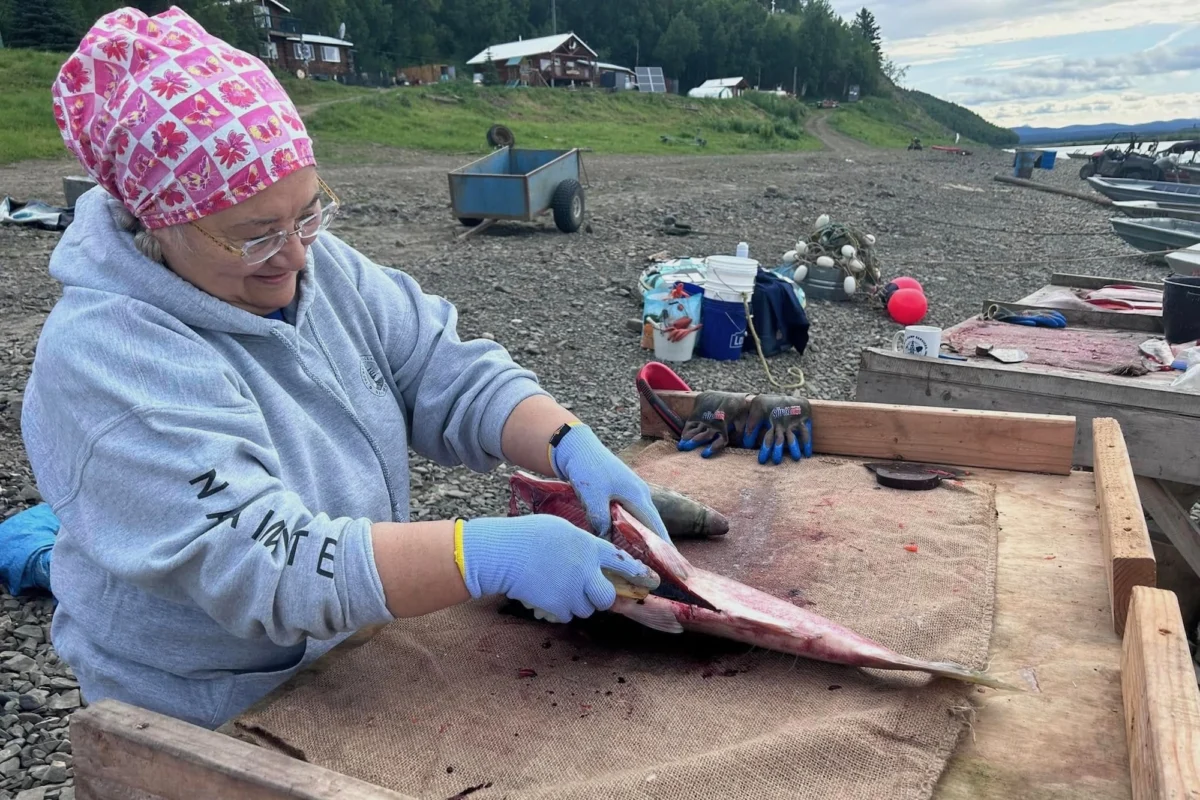
The stakes of a power failure are exceptionally high. In these communities, electricity is synonymous with food security. Residents rely on large industrial freezers to store their annual harvest of salmon and moose. A missed fuel delivery or a generator failure doesn’t just mean the lights go out; it threatens the entire winter food supply for the village. This vulnerability has fueled a decade-long quest for "energy sovereignty"—the ability of a community to generate its own power from local, renewable resources.
A Chronology of Innovation: The Igiugig Success Story
Igiugig, situated at the mouth of the Kvichak River near Lake Iliamna, serves as the global proof-of-concept for this technology. The village’s journey toward water power began nearly two decades ago, characterized by a cautious, community-led approach to technological adoption.
2007 – 2012: The Visionary Phase
The Igiugig community recognized the Kvichak River’s consistent, fast-flowing current as a goldmine of kinetic energy. In 2007, the village applied for a state grant to explore hydrokinetic power. By 2012, they were awarded the funding necessary to begin vetting potential technology partners.
2015: The Testing Grounds
The village invited several companies to demonstrate their designs. This period proved the importance of local knowledge. One firm’s turbine failed because it could not withstand the river’s immense power, leaving the village to handle the cleanup. However, the Ocean Renewable Power Company (ORPC) distinguished itself by prioritizing community input and designing a system that could be maintained by local technicians.
2019: The Historic Launch
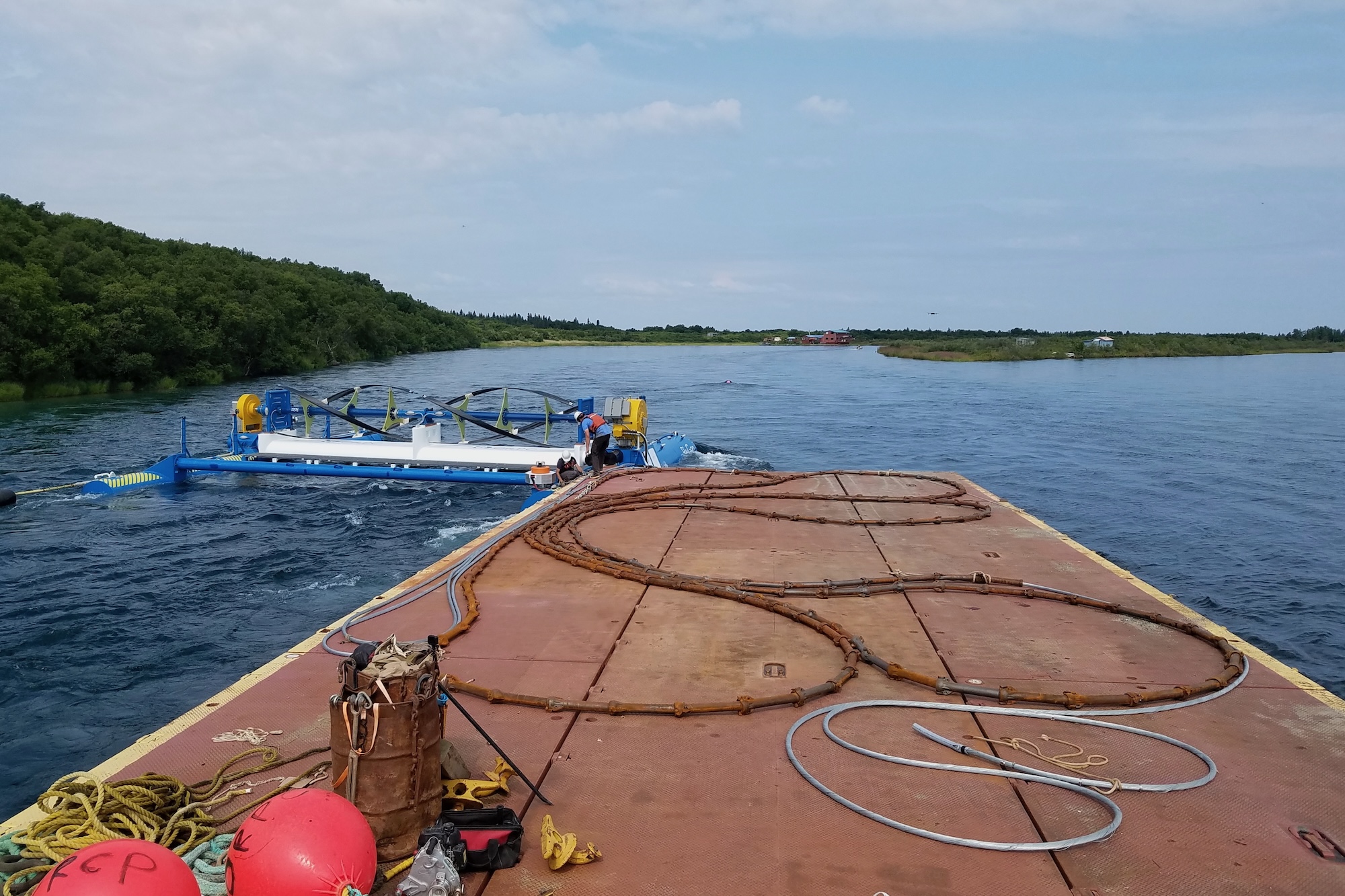
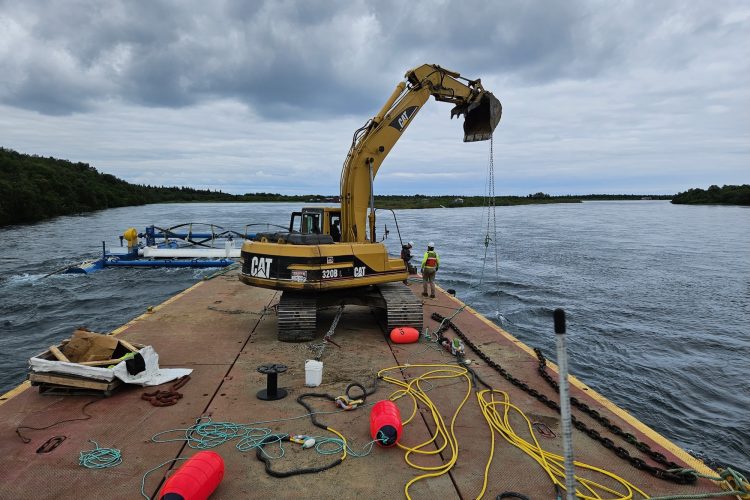
Igiugig and ORPC successfully deployed the first "RivGen" turbine. Unlike traditional hydroelectric power, which requires a dam to create a head of water, the RivGen system sits on the riverbed and uses the natural flow of the current to spin its foils. This "run-of-river" approach eliminates the need for massive infrastructure and preserves the river’s natural flow.
2023 – Present: Scaling Up
A second turbine was installed in 2023. These devices feed power directly into the local microgrid. While they do not yet provide 100 percent of the village’s power year-round, they have significantly reduced diesel consumption. The Igiugig Village Tribal Council has set an ambitious goal to reduce electricity-related diesel use by 50 percent by 2030, integrating the turbines with a growing array of solar panels.
Environmental Stewardship: Protecting the Salmon Runs
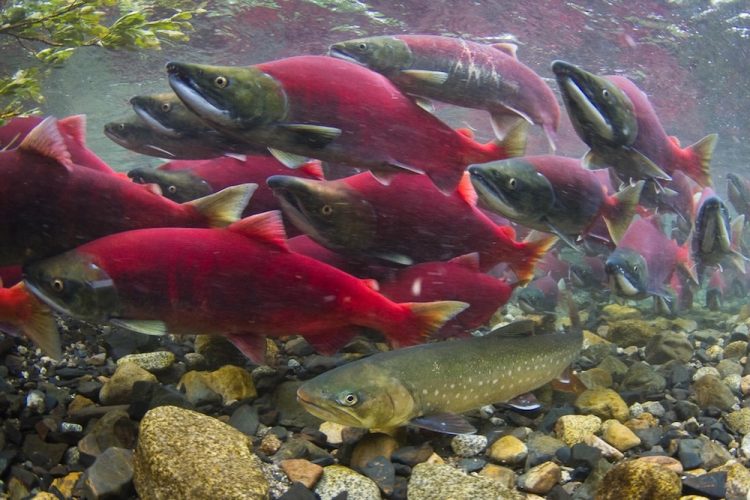
The primary concern for any river-based project in Alaska is the impact on salmon. Every year, millions of sockeye and Chinook salmon migrate from the Bering Sea into the Kvichak and Kuskokwim systems to spawn. These fish are not only a primary food source but are also ecological engines, as their decaying bodies provide essential nutrients to the surrounding forests and scavengers.

The RivGen turbines were designed with "fish-friendly" foils that rotate at a relatively slow speed, allowing fish to swim through or around the device. To verify this, ORPC and the Igiugig community utilized advanced underwater sonar and video monitoring. The research to date is highly encouraging. Adult salmon, which tend to avoid the fastest-moving sections of the river where turbines are placed, have shown no significant behavioral changes. While young smolts migrating downstream can occasionally be disoriented by the turbulence, the vast majority appear to swim above the units, which are submerged deep enough to avoid surface traffic and ice.
Even the acoustic impact is negligible. In the turbulent waters of the Kvichak, the sound of the turbines is often drowned out by the natural "noise" of gravel and rocks moving along the riverbed.
Napaimute’s Pilot: A New Model for Seasonal Energy
Building on Igiugig’s success, the village of Napaimute on the Kuskokwim River is launching its own pilot project this summer. Napaimute’s needs are slightly different; it is a hub for seasonal fishing activities, meaning its energy demand peaks in the summer when visitors arrive to process their catch.

The Napaimute project utilizes a smaller, portable turbine design from BladeRunner Energy. Dan Gillikin, the environmental director for the Native Village of Napaimute, estimates that the combination of solar power and the new river turbine could allow the village to reach 100 percent renewable power during the peak summer months.
The economic implications are profound. Gillikin estimates that even a 10 percent contribution from a river turbine could save the village between $25,000 and $30,000 annually. In a community of limited means, those savings can be reinvested into other essential services, from education to healthcare.
However, the Napaimute project remains a cautious "pilot." The community has established strict parameters: if the turbine is found to negatively impact fish, the project will be terminated immediately. Local experts will use traditional fish wheels—large wooden structures used for centuries to catch salmon—to examine fish that have passed the turbine for signs of injury or stress.

Technical Specifications and the Harsh Alaskan Reality
The engineering required for these projects is formidable. Alaska’s rivers are not just water; they are conduits for massive amounts of debris, including uprooted trees and, most dangerously, "frazil ice" and large ice sheets during the winter.
The RivGen system is built for durability. Nathan Johnson, ORPC’s vice president of development, notes that the technology has survived direct collisions with ice and pieces of steel being bent by the sheer force of the river’s frozen surface. The turbines are designed to be "bottom-dwelling," sitting below the level where most ice and debris flow.
Crucially, the systems are designed for "local repairability." In regions where a specialized technician might be a $5,000 plane ride away, the ability for a local fisherman or mechanic to perform maintenance is the difference between a successful project and an expensive piece of underwater junk. ORPC’s model involves training local residents to handle operations and maintenance, utilizing local fishing vessels for deployment rather than requiring specialized heavy machinery.

Broader Implications for the Global Blue Economy
The success of these Alaskan villages is resonating far beyond the Arctic Circle. As the world seeks to decarbonize, the "Blue Economy"—energy derived from oceans and rivers—is gaining momentum.
Similar projects are appearing globally:
- Germany: A river turbine at a UNESCO World Heritage site in Bamberg provides power for 300 homes while maintaining the historic aesthetic of a medieval watermill.
- Canada: ORPC is moving into more urban environments, with planned installations in Montreal’s St. Lawrence River and the Niagara River between New York and Ontario.
The lessons learned in Igiugig and Napaimute provide a roadmap for the thousands of remote communities worldwide that are currently "energy islands." By proving that hydrokinetic energy is both technically viable and ecologically responsible, these villages are offering a solution to the dual crises of climate change and rural poverty.

Conclusion: The Path to 2030
As Napaimute monitors its first summer of river power and Igiugig looks toward its 2030 goals, the future of hydrokinetic energy remains a work in progress. Igiugig’s 10-year pilot license expires in 2029, and the community is currently working with regulators to establish a permanent framework for river power—a task that involves navigating a regulatory landscape originally designed for massive dams, not small-scale turbines.
Despite the challenges, the motivation remains clear. For the people of the Kvichak and Kuskokwim, the river has always been their provider. Now, in addition to the salmon that sustain their bodies, the water itself is providing the power to sustain their way of life in a changing world. If these projects continue to succeed, the roar of the river may soon replace the hum of the diesel generator across the Alaskan bush, ensuring that these ancient communities can thrive for another thousand years.
