

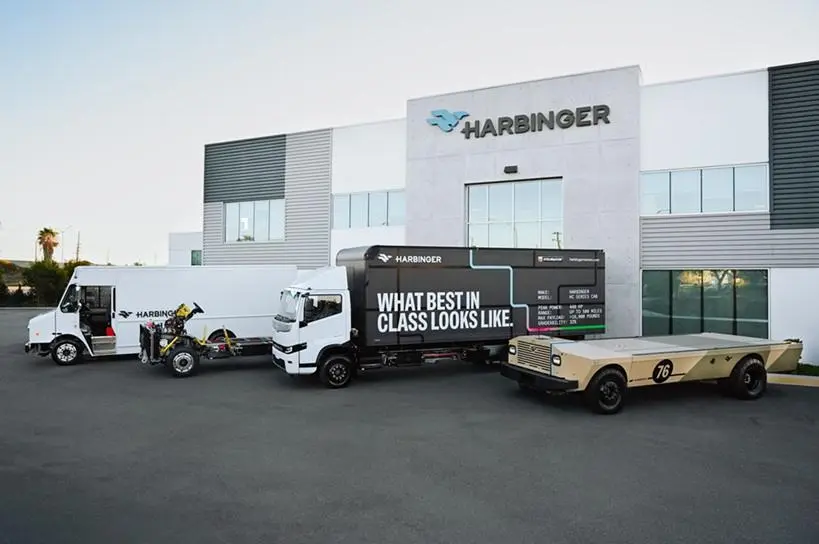
The California-based electric vehicle startup Harbinger has successfully closed a $240 million Series D funding round, marking a pivotal moment in the company’s evolution from a specialized chassis manufacturer to a diversified electrification powerhouse. This substantial capital infusion is earmarked for a strategic expansion that transcends the company’s initial focus on medium-duty commercial vehicles. Harbinger intends to leverage its proprietary technology stack to penetrate the burgeoning sectors of stationary energy storage, tactical defense applications, and autonomous software integration. The round underscores a growing investor appetite for "first-principles" engineering in the climate tech space, particularly as traditional automotive manufacturers struggle to transition legacy platforms to fully electric architectures.
A Strategic Pivot Toward Diversified Electrification
Founded in 2021 by a team of veterans from industry leaders such as Tesla, Faraday Future, and Canoo, Harbinger has spent its formative years perfecting a vertically integrated electric platform designed specifically for the medium-duty vehicle segment. This segment, which includes Class 4 through Class 7 vehicles like delivery vans, school buses, and recreational vehicles (RVs), has historically been underserved by the first wave of passenger EV innovation.
With the Series D funding, Harbinger is signaling that its technology is no longer confined to the road. The company’s core intellectual property—including its high-voltage battery systems, eAxle architecture, and sophisticated vehicle control software—is being repurposed for three distinct yet synergistic verticals:
- Energy Storage and Power Generation: Harbinger is entering the stationary storage market, targeting the massive energy demands of AI-driven data centers. As these facilities require unprecedented levels of reliable, high-density power, Harbinger’s modular battery systems offer a scalable solution for grid stabilization and backup power.
- Defense and National Security: The electrification of the battlefield has become a priority for global defense agencies seeking "silent watch" capabilities and reduced thermal signatures for tactical vehicles. Harbinger’s ruggedized chassis and high-torque electric drivetrains provide the foundation for a new generation of military mobility.
- Mobility and Autonomy: While continuing to scale its commercial truck production, the company is deepening its investment in autonomy-ready hardware. By engineering "by-wire" systems from the ground up, Harbinger provides a seamless interface for autonomous driving software providers, positioning itself as the preferred "skate" for the future of driverless logistics.
The Investment Syndicate: A Vote of Confidence in "First Principles"
The funding round was co-led by a trio of heavyweight investors: Tiger Global, Capricorn’s Technology Impact Fund, and Ridgeline. The involvement of Capricorn is particularly noteworthy, as the firm was an early backer of Tesla and has a track record of identifying foundational shifts in the energy and transportation sectors.
The round also saw significant participation from institutional giants including Fidelity Management & Research Company and Squarepoint Capital, alongside returning investors Maniv and Greycroft. Strategic investors played a crucial role in this round, reflecting the cross-industry utility of Harbinger’s platform. These include:
- FedEx: The logistics giant’s participation follows a massive $300 million order for Harbinger’s electric trucks, signaling a deep operational commitment to the platform.
- THOR Industries: As the world’s largest manufacturer of recreational vehicles, THOR’s investment points toward the imminent electrification of the motorhome and travel trailer markets.
- BuildGroup: Their focus on data center infrastructure aligns with Harbinger’s push into the energy storage sector.
Griffin Schroeder, Partner at Tiger Global, highlighted the logic behind the investment, noting that the "bottlenecks of the AI era" are increasingly tied to energy availability. "Harbinger excels at electrification," Schroeder stated. "We led this financing because we see tremendous value in bringing Harbinger’s technical expertise and manufacturing capabilities to new markets."
Technical Differentiation: Engineering from the Ground Up
The core of Harbinger’s value proposition lies in its rejection of the "glider" model. Many early entrants in the electric truck space attempted to "electrify" existing internal combustion engine (ICE) chassis by swapping out the engine for a motor and stuffing batteries into the frame. This approach often results in compromised weight distribution, reduced payload capacity, and excessive costs.
Harbinger’s "first-principles" approach involves designing every component specifically for an electric powertrain. Key features of their platform include:
- Integrated eAxle: Combining the motor, inverter, and gearbox into a single unit, which reduces weight and improves efficiency.
- Modular Battery Architecture: Allows for customizable range and power output without redesigning the chassis.
- 800V Liquid-Cooled System: Enables ultra-fast charging and superior thermal management, which is critical for the high-duty cycles of commercial fleets and the extreme environments of defense operations.
- Floor-Height Optimization: By removing the traditional driveshaft and exhaust systems, Harbinger offers a lower floor height, which improves ergonomics for delivery drivers and increases interior volume for cargo or living space in RVs.
John Harris, Co-Founder and CEO of Harbinger, emphasized that this engineering philosophy is the company’s greatest competitive advantage. "By rethinking critical systems from first principles, we aim to unlock better performance, greater reliability, safer operations, and more room to grow," Harris said. "Electrification is at the core of everything we do, and increasingly, electrification is at the core of industry, defense, mobility, and AI."
Chronology of Growth: From Stealth to Scale
Harbinger’s trajectory since its inception has been marked by rapid technical milestones and strategic partnerships:
- 2021: Harbinger is founded in Southern California, assembling a team with deep experience in EV startups and traditional OEMs.
- 2022: The company emerges from stealth mode, debuting its initial medium-duty electric platform at major industry trade shows.
- 2023: Early pilot programs begin with select fleet partners. The company secures its Series B and C rounds, focusing on refining the manufacturing process.
- 2024-2025: Harbinger signs a landmark $300 million deal with FedEx. The agreement includes the delivery of thousands of units over several years. Paul Melander, FedEx Senior Vice President of Safety and Transportation, joins Harbinger’s Board of Directors, cementing the relationship.
- November 2026: The $240 million Series D is announced, marking the company’s transition into a multi-vertical technology provider.
Market Context and Economic Implications
The timing of Harbinger’s expansion is critical. The medium-duty truck market is currently facing a "perfect storm" of regulatory pressure and economic incentives. In the United States, the Advanced Clean Trucks (ACT) regulation in California and similar mandates in other states are forcing fleets to transition to zero-emission vehicles (ZEVs). Simultaneously, the Inflation Reduction Act (IRA) provides significant tax credits for commercial EVs and domestic battery manufacturing.

However, the industry has also seen the failure of several "EV 1.0" startups that struggled with scaling production or relied on faulty business models. Harbinger’s success in raising nearly a quarter-billion dollars in a more disciplined capital environment suggests that investors are now prioritizing companies with proven engineering depth and clear paths to revenue.
The expansion into energy storage for data centers is a particularly savvy move. With the explosion of generative AI, the demand for "behind-the-meter" storage is skyrocketing. Data center operators are looking for ways to bypass grid constraints and ensure 24/7 uptime. Harbinger’s ability to mass-produce high-density battery packs—originally designed for the rigors of trucking—gives them an immediate entry point into this high-margin sector.
Broader Impact and Future Outlook
The implications of Harbinger’s Series D round extend beyond the company’s balance sheet. For the defense sector, it represents a move toward more sustainable and tactically superior equipment. For the logistics industry, it offers a scalable way to meet ESG (Environmental, Social, and Governance) targets without sacrificing operational efficiency.
As Harbinger ramps up its manufacturing capacity, the focus will shift to execution. The company must now manage a complex supply chain while simultaneously entering three new, highly competitive markets. However, with the backing of strategic partners like FedEx and THOR, and the financial firepower of Tiger Global and Fidelity, Harbinger is positioned to be a defining player in the second wave of the electric revolution.
The company’s roadmap for 2027 and beyond likely includes the full-scale deployment of its energy storage products and the delivery of its first tactical chassis to defense contractors. If successful, Harbinger will have proved that the future of electrification isn’t just about changing what we drive, but about rethinking how we power our world, from the front lines of conflict to the servers powering the global digital economy.
