

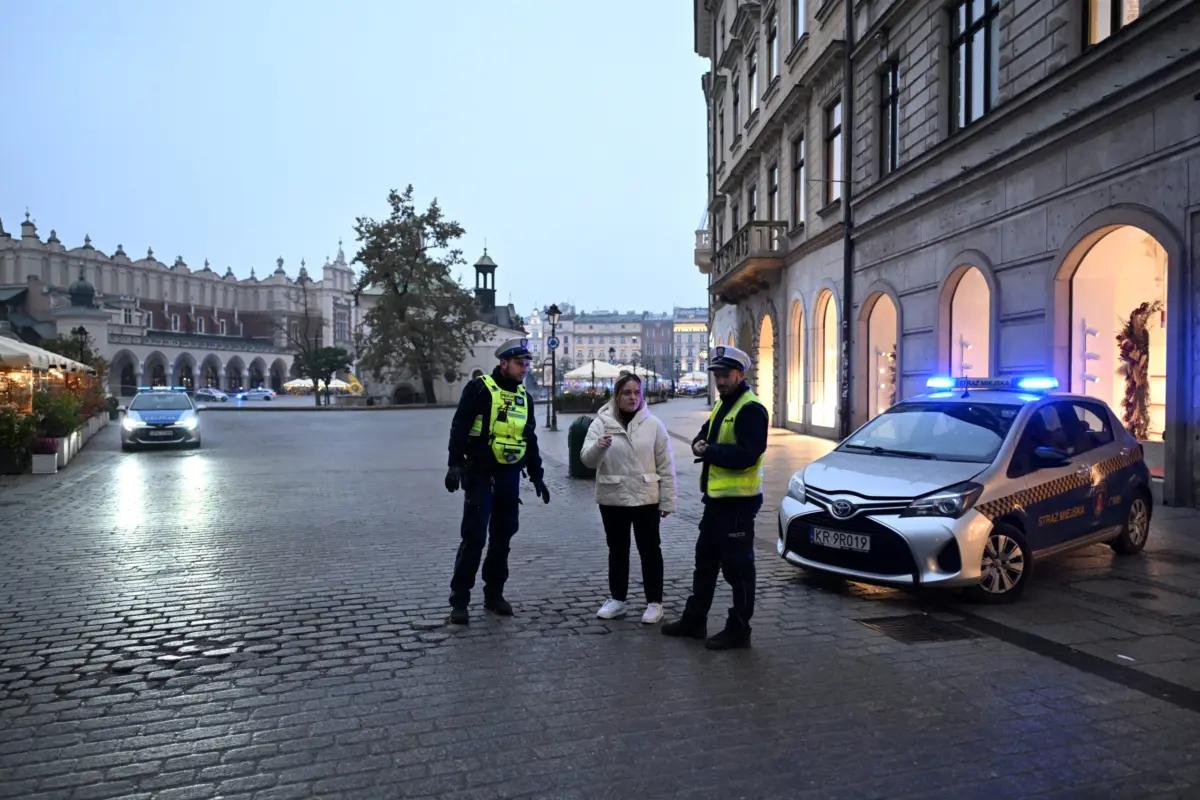
The historic heart of Krakow, Poland’s second-largest city and a primary cultural hub, was thrust into chaos on Saturday following a violent shooting incident near the city’s Main Market Square. According to preliminary reports from municipal authorities and national law enforcement, the attack resulted in at least two fatalities and more than ten injuries, marking one of the most significant acts of public violence in the city’s recent history. The perpetrator, who reportedly opened fire from a moving vehicle, was apprehended shortly after the incident following a rapid mobilization of local police units. Polish Prime Minister Donald Tusk confirmed the gravity of the situation, labeling it a "tragic shooting" and ensuring the public that the Ministry of the Interior is overseeing a comprehensive investigation into the motives and circumstances surrounding the attack.
Chronology of the Incident
The events unfolded during a busy Saturday afternoon in Krakow’s Old Town, an area typically teeming with local residents and international tourists. The Main Market Square (Rynek Główny), a UNESCO World Heritage site, serves as the focal point of the city’s social and commercial life. At approximately the time of the incident, the square and its surrounding streets were crowded with pedestrians visiting the Cloth Hall, the numerous cafes, and historical landmarks.
According to eyewitness accounts and reports from Polsat News, the violence began when a vehicle entered the vicinity of the square. A spokesperson for the local fire brigade indicated that the perpetrator discharged a firearm from within the passing car, targeting individuals in the pedestrian-heavy zone. The sudden nature of the attack led to immediate panic as bystanders sought cover in nearby buildings and alleyways.
Within minutes of the first shots being fired, Krakow’s emergency services were dispatched to the scene. The Polish police (Policja) arrived to secure the perimeter and coordinate with medical teams. By late afternoon, the police confirmed that a suspect had been taken into custody. While the identity of the shooter has not yet been officially released, authorities are currently interrogating the individual to determine if the act was premeditated, a random act of violence, or linked to broader criminal activity.
Medical responders, including several units from the regional ambulance service and local firefighters, treated the wounded on-site before transporting them to various hospitals across the city. The fire brigade, which often acts as first responders for medical emergencies in Poland, played a critical role in stabilizing victims before they reached clinical care. As of Saturday evening, the death toll stood at two, with at least ten others receiving treatment for various degrees of gunshot wounds and trauma-related injuries.
Official Responses and Government Action
The shooting prompted an immediate response from the highest levels of the Polish government. Prime Minister Donald Tusk took to the social media platform X (formerly Twitter) to address the nation and express his condolences to the victims. "I am being kept informed by the Minister of the Interior about the situation in Krakow," Tusk stated. He emphasized that the "police are investigating the background and all the circumstances of the attack," signaling that the state would utilize all available resources to uncover the truth behind the tragedy.
The Minister of the Interior and Administration, Tomasz Siemoniak, is reportedly coordinating the investigation with the Malopolska Provincial Police Commander. The focus of the inquiry is currently two-pronged: identifying any potential accomplices and determining the motive. Authorities are also reviewing extensive CCTV footage from the Main Market Square, which is one of the most heavily monitored areas in the country.
The municipal government of Krakow, led by Mayor Aleksander Miszalski, issued a statement urging residents to remain calm while avoiding the immediate vicinity of the crime scene to allow investigators to conduct their work. The city has also announced that psychological support services will be made available to witnesses and families affected by the shooting.
Supporting Data and Security Context in Poland
To understand the impact of this event, it is necessary to examine the broader context of safety and firearm prevalence in Poland. Historically, Poland has maintained some of the lowest rates of violent crime and gun-related deaths in the European Union. According to data from the Small Arms Survey and the Polish National Police, Poland has one of the lowest rates of civilian firearm ownership in Europe, with approximately 2.5 firearms per 100 people.
Strict gun control laws in Poland require citizens to undergo rigorous psychological evaluations, provide a valid reason for ownership (such as sport shooting, hunting, or collection), and pass a background check before being granted a license. Consequently, public shootings, especially those involving multiple casualties in high-profile locations, are exceedingly rare.
Krakow itself is a cornerstone of the Polish economy, particularly through its tourism sector. In 2023, the city welcomed over 9 million visitors. The Main Market Square is not only a historical monument but also an economic engine. An incident of this magnitude raises concerns regarding the potential impact on tourism and the perceived safety of Poland as a travel destination. Comparative data suggests that while Poland has seen a slight increase in applications for firearm permits since the start of the conflict in neighboring Ukraine, the actual incidence of gun violence has remained statistically low, making the Saturday shooting an outlier in national safety trends.
Broader Impact and Security Implications
The shooting in Krakow is likely to spark a national debate regarding urban security and the regulation of vehicle access to historic city centers. While the Rynek Główny is largely a pedestrian zone, certain streets allow for restricted vehicle traffic, including deliveries and local residents. The fact that the perpetrator was able to fire from a passing car suggests a vulnerability in the current security perimeter of the Old Town.
Security analysts suggest that the Polish government may now consider implementing stricter "ring of steel" measures similar to those seen in other major European capitals like London or Paris. This could include more permanent bollards, increased police patrols in tourist zones, and the use of advanced license plate recognition (ALPR) technology at all entry points to the city center.
Furthermore, the psychological impact on the local population cannot be understated. Krakow has long enjoyed a reputation as a safe, family-friendly city. The violation of this sense of security in its most famous public space may lead to a temporary shift in public behavior and a demand for a more visible security presence.
The investigation will also likely look into the mental health history of the suspect and whether there was any radicalization or prior criminal record. In recent years, European security agencies have been on high alert for "lone wolf" attacks, which are difficult to predict and prevent. If the investigation reveals a ideological or terrorist motive, it could lead to a shift in Poland’s national threat level, which has remained relatively stable despite regional tensions.
Conclusion and Future Outlook
As the investigation into the Krakow shooting continues, the city remains in a state of mourning and high alert. The immediate arrest of the suspect has provided some measure of relief, but the questions surrounding the "why" and "how" of the attack remain at the forefront of the public consciousness.
In the coming days, the Polish police are expected to provide more detailed information regarding the victims and the legal proceedings against the arrested gunman. The Ministry of the Interior will likely conduct a review of security protocols for major public gatherings and historic sites to prevent a recurrence of such a tragedy.
For a city that has survived centuries of history, including the devastations of World War II, the resilience of Krakow is well-documented. However, the events of this Saturday serve as a somber reminder that even the most peaceful urban centers are not entirely immune to the specter of modern violence. The focus now shifts from the immediate emergency response to a long-term pursuit of justice and a reinforcement of the safety standards that have long defined the Polish way of life.
As more information emerges, the international community and the people of Poland will be looking for transparency and decisive action from the Tusk administration to ensure that the "tragic shooting" in Krakow remains an isolated incident rather than the start of a new, more dangerous trend in the region. For now, the city’s flags fly at half-mast, and the flowers beginning to appear at the edge of the police cordons serve as a silent testament to those lost in the heart of Krakow.
