

White Sulphur Springs, Montana, a town of approximately 1,000 residents situated at the intersection of the Great Plains and the Continental Divide, currently finds itself at the center of a global debate regarding the extraction of critical minerals. As the world pivots toward a renewable energy economy, the demand for copper—a fundamental component in wind turbines, solar panels, and electric vehicle (EV) motors—has surged. For the residents of Meagher County, this global demand has manifested locally as the Black Butte Copper Mine Project, a proposed underground facility targeting the Johnny Lee copper deposit. While the project promises an economic revitalization for one of the nation’s poorest counties, it has simultaneously ignited a profound community debate over the potential risks to the Smith River, a blue-ribbon trout fishery that serves as the ecological and recreational heart of central Montana.

The conflict in White Sulphur Springs represents a modern iteration of a historical paradox. Montana’s identity is inextricably linked to the "boom-and-bust" cycles of resource extraction, a legacy that has provided immense wealth but left behind significant environmental scars. Today, the town is attempting to navigate this tension through a pioneering Community Benefits Agreement (CBA), a proactive legal and social framework intended to ensure that the community retains its character and environmental integrity while reaping the economic rewards of the mining industry.
The Economic Necessity and the Poverty Trap
Meagher County has long struggled with economic stability. Historically reliant on agriculture and logging, the region has seen these industries wane, leaving a void that has impacted the local tax base and infrastructure. In 2021 and 2022, Meagher County was ranked among the poorest counties in the United States, a statistic that underscores the town’s vulnerability. For many, the Black Butte Copper Mine is not merely a corporate venture but a necessary lifeline.

Sandfire Resources America, the U.S. subsidiary of the Australian-based Sandfire Resources, has projected that the mine will provide approximately 300 high-paying jobs for a minimum of 12 years. In a community where agriculture and small-scale tourism are the primary employers, the influx of industrial-scale wages could fundamentally alter the local economy. Beyond direct employment, the project is expected to generate significant tax revenue for Meagher County, funding essential services such as public safety, road maintenance, and local schools.
Copper’s Role in the Global Energy Transition
The push for the Black Butte Copper Mine is driven by a macro-economic shift toward decarbonization. Copper is often referred to as the "metal of electrification" due to its superior conductivity. According to International Energy Agency (IEA) projections, the demand for copper must double by 2035 to meet global net-zero targets. A single offshore wind turbine can require up to 15 tons of copper, while electric vehicles use nearly four times as much copper as internal combustion engine vehicles.

The Johnny Lee deposit is considered one of the highest-grade undeveloped copper projects in North America. For proponents, developing domestic sources of copper is a matter of both economic strategy and national security, reducing reliance on foreign supply chains while supporting the technologies required to combat climate change. However, for local skeptics, the "green" label of the energy transition does not automatically mitigate the localized environmental risks of extraction.
A Legacy of Extraction: The Shadow of Butte
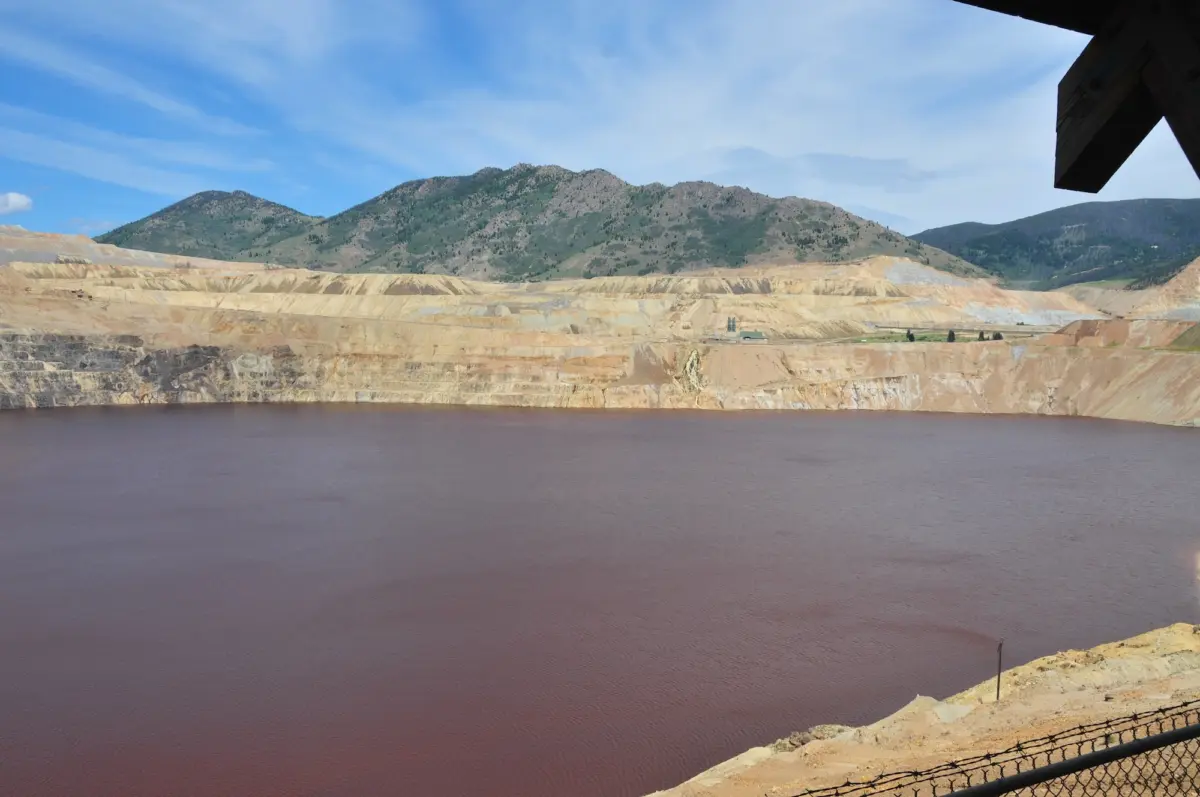
The primary source of opposition to the mine is rooted in Montana’s history. Two hours to the southwest lies Butte, once known as the "Richest Hill on Earth." While Butte’s copper fueled the American industrial revolution, it also left behind the Berkeley Pit, an open pool of toxic mining waste that remains one of the largest Superfund sites in the United States. This legacy of environmental degradation is a constant specter for Montanans.

Katie Bodecker, owner of the Showdown Montana ski resort and a prominent voice in the community, characterizes her opposition not as an anti-mining stance, but as a protective measure for a specific watershed. "I am pro-mining—just not in my backyard and not on the Smith River," Bodecker stated. The Smith River is famed for its 59-mile remote canyon stretch, which requires a highly coveted permit to float. It is a critical driver for the local tourism and outfitting economy, sectors that many residents believe offer a more sustainable, long-term future than the finite lifespan of a mine.
The Community Benefits Agreement (CBA) Model
Recognizing that traditional permitting processes often leave communities in a reactive position, Meagher County leaders organized early to negotiate directly with Sandfire Resources. The result was the formation of the Meagher County Stewardship Council, an independent body of 16 community members representing diverse interests, from ranching and business to environmental conservation.

In 2026, the community and Sandfire entered into a Community Benefits Agreement. This model was inspired by the Stillwater Good Neighbor Agreement in nearby Stillwater County, which has successfully governed palladium mining impacts for over two decades. The Meagher County CBA aims to secure:
- Economic Investment: The establishment of a community investment fund, with annual contributions projected to reach $1.8 million, dedicated to housing, education, and local infrastructure.
- Environmental Oversight: Provisions for independent water monitoring and waste management protocols that exceed state regulatory requirements.
- Transparency: Regular, formal communication channels between the mining company and the public to address concerns in real-time.
- Durability: A structure designed to remain legally binding even if the mine’s ownership changes—a frequent occurrence in the mining industry that often leads to the dissolution of previous promises.
Engineering and Environmental Risk Management
The Black Butte Copper Mine is designed as an underground operation, which Sandfire argues significantly reduces its environmental footprint compared to traditional open-pit mines. By keeping excavation below ground, the project minimizes landscape scarring and reduces the amount of waste rock exposed to oxygen and water, which can lead to acid mine drainage.

Water protection is the project’s most critical technical challenge. Sandfire has committed to a "closed-loop" water system, where any water encountered during mining or collected on-site is treated to meet stringent standards before being returned to the groundwater system. The company has also emphasized its extensive baseline data collection, which began in 2011. Nancy Schlepp, Vice President of Communications for Sandfire and a lifelong Meagher County resident, notes that the 15 years of environmental data provide a robust foundation for monitoring any deviations from natural water quality levels.
Despite these assurances, local outfitters and farmers remain concerned about water quantity. Joe Sowerby, a local fishing outfitter, points out that the Smith River is already prone to drought. "This mine could be the straw that breaks the camel’s back on the whole system," Sowerby remarked, noting that any additional demand on the watershed could jeopardize both the fishery and the 36,000 acres of irrigated farmland that rely on the basin.

Chronology of the Black Butte Copper Mine Project
The path to the current impasse has been decades in the making:
- 1985: The Johnny Lee copper deposit is discovered.
- 2011: Sandfire Resources America (then Tintina Resources) begins extensive environmental baseline monitoring.
- 2017: The company submits its formal Mine Operating Permit application to the Montana Department of Environmental Quality (DEQ).
- 2020: The Montana DEQ issues the final permit, which is immediately met with legal challenges from environmental groups.
- 2024: Following several years of litigation, the Montana Supreme Court upholds the legality of the mine’s permits, clearing the way for construction.
- 2026: The Meagher County Stewardship Council and Sandfire formalize the Community Benefits Agreement framework.
Analysis of Broader Implications
The situation in White Sulphur Springs is a microcosm of the "Green Mining" dilemma facing many rural communities worldwide. As nations seek to secure the materials necessary for a low-carbon future, they must confront the reality that mining is inherently an invasive process. The Meagher County model suggests that the future of the industry may lie in "Social License to Operate"—the idea that a project must have the ongoing approval of the local community to be truly successful.

The success of the CBA will depend on its transition from a framework to a legally binding contract. If the agreement can survive ownership changes and provide the promised oversight, it could serve as a global blueprint for how small towns can negotiate with multinational corporations. However, if the environmental safeguards fail or the economic benefits prove transitory, it will reinforce the skepticism that has defined mining communities for generations.
For the people of White Sulphur Springs, the stakes are deeply personal. The debate is not just about copper or jobs; it is about whether a 19th-century industry can be adapted to 21st-century values. As construction nears, the eyes of the mining world and environmental advocates alike remain fixed on Meagher County, waiting to see if this rural community can truly break the cycle of boom and bust while protecting the "crown jewel" of the Smith River.
