

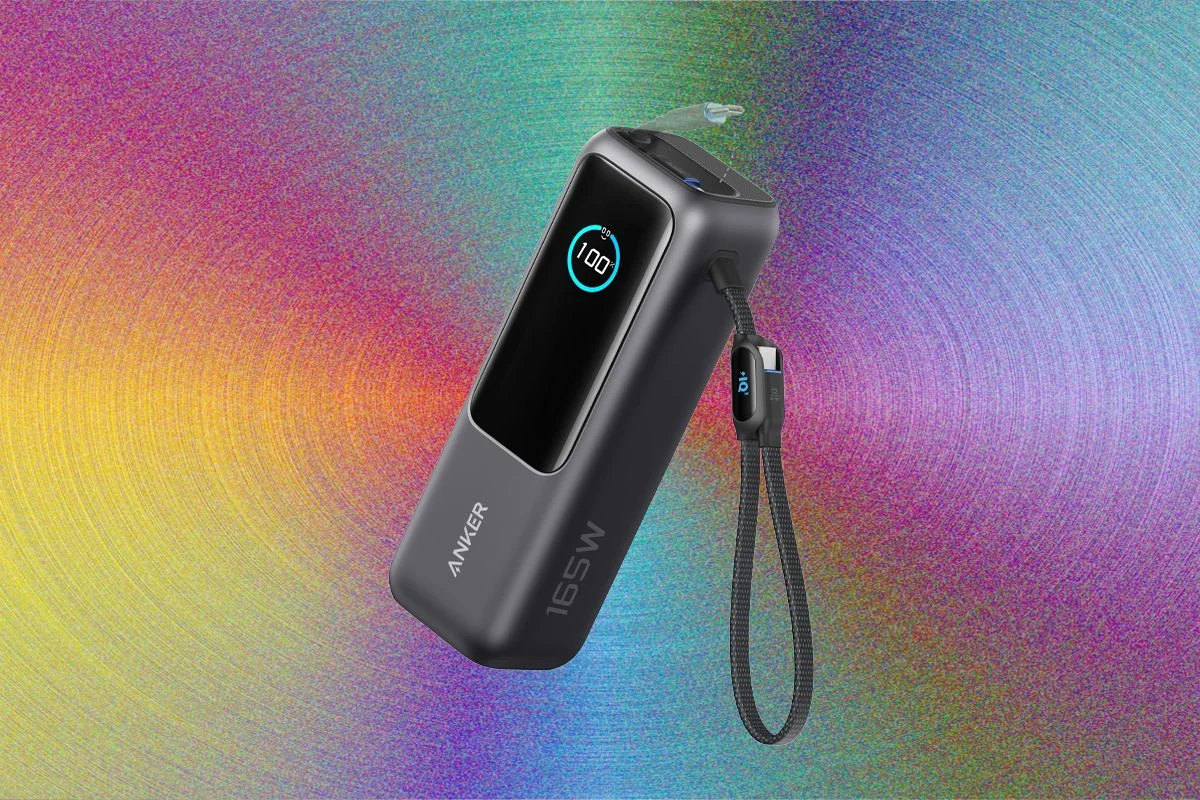
The global portable power bank market is undergoing a significant transformation as consumer demand shifts toward higher wattage, standardized USB-C connectivity, and the emergence of the Qi2 magnetic charging standard. As mobile devices become more integral to professional and personal life, the reliance on external power sources has evolved from a luxury to a necessity. This evolution is driven by the increasing power requirements of modern laptops and the universal adoption of USB-C across both Android and Apple ecosystems, following recent regulatory mandates in the European Union. Today’s market offers a diverse range of solutions, from credit-card-sized emergency backups to high-capacity stations capable of jump-starting a vehicle or powering multiple professional-grade laptops simultaneously.
The Evolution of Portable Charging Technology
The trajectory of portable power technology has been defined by two major breakthroughs: the integration of Gallium Nitride (GaN) components and the refinement of Power Delivery (PD) protocols. GaN technology allows manufacturers to produce smaller, more efficient chargers that generate less heat compared to traditional silicon-based models. Simultaneously, the introduction of the Qi2 wireless charging standard has brought the convenience of Apple’s MagSafe technology to a broader range of devices, offering 15-watt magnetic wireless charging with improved alignment and efficiency.
In 2025, the industry has seen a move toward "smart" power banks. These devices no longer simply provide a current; they feature integrated displays that report real-time health data, discharge rates, and estimated time-to-full metrics. This data-centric approach helps users manage their energy needs more effectively during travel or remote work sessions.
Small Capacity Solutions: The 5,000 mAh Tier
For users prioritizing portability, the 5,000 mAh category serves as the "emergency kit" of the power bank world. These devices are designed to provide approximately one full charge to a modern smartphone while maintaining a footprint small enough for a pocket or a small clutch.
A leading example in this category is the Baseus PicoGo Air (AM71). Measuring only 0.27 inches in thickness, it represents the current limit of ultra-slim engineering. While its wireless charging is capped at 7.5 watts to manage heat in such a thin chassis, it offers a 22.5-watt boost when used with a physical USB-C cable. For users requiring faster wireless speeds, the BMX SolidSafe Air provides a Qi2-certified 15-watt magnetic connection. This model emphasizes safety through advanced thermal management systems designed to reduce fire risks associated with high-speed wireless energy transfer.
Other notable compact options include the Anker Nano Power Bank, which features a unique foldable connector. This design eliminates the need for carrying a separate cable, plugging directly into the base of a smartphone. For the absolute minimum footprint, the Clutch Pro offers a chassis roughly the size of a stack of credit cards, making it the preferred choice for formal wear or minimal carry setups.
Mid-Range Versatility: 10,000 to 20,000 mAh
The mid-range segment is the most competitive area of the market, balancing capacity with portability. These units are typically capable of charging a smartphone two to three times or providing a significant top-up to a tablet.

The Cuktech 15 Air has emerged as a standout in this category. Despite its 15,000 mAh capacity, it maintains a svelte profile and delivers a robust 65 watts of power. This wattage is sufficient to charge many Ultrabooks and high-end tablets at full speed. The unit is also notable for its rapid recharge capability, accepting up to 100 watts of input to go from empty to full in approximately 90 minutes.
Anker continues to innovate in this space with the Nano Power Bank with Instacord, which integrates a 2.3-foot retractable cable. This addresses a common pain point for commuters who frequently lose or tangle their charging cords. For environmentally conscious consumers, the Gomi Power Bank offers a unique value proposition. Handmade in Brighton, UK, from recycled plastic, the company claims its production process results in 50 percent less CO2 emissions than traditional manufacturing methods, signaling a growing trend toward sustainable electronics.
High-Capacity Stations and Professional Gear
For digital nomads and professional photographers, high-capacity power banks (20,000 mAh and above) are essential. These devices are often designed to meet the maximum capacity allowed on commercial aircraft—typically 100 watt-hours (Wh)—to ensure they can be transported in carry-on luggage.
The Ecoflow Rapid Pro Power Bank sits at the top of this category, delivering an impressive 300 watts of total output. With three USB-C ports and a retractable cable, it can power two laptops and a smartphone simultaneously. Similarly, the Aohi Starship Power Bank provides 240 watts of output, styled with an industrial aesthetic reminiscent of science fiction hardware. These devices are increasingly used as primary power hubs for remote film sets and field research.
Anker’s Prime Power Bank (26,250 mAh) further pushes the boundaries by including app control and a sophisticated smart display. This allows users to monitor the power consumption of each individual port, ensuring that critical devices receive priority current.
Specialized Power: Travel, Rugged, and Automotive
Beyond standard consumer electronics, the market has expanded into specialized niches. The travel sector is currently dominated by multi-functional units like the Infinacore P3 Pro and the Statik SmartCharge 5-in-1. These devices combine a power bank with a wall charger and include international plug adapters for the UK, Europe, and Australia. They often feature Qi2 wireless pads, allowing them to serve as a bedside charging station in a hotel room and a portable battery during the day.
For outdoor enthusiasts, the Elecom Nestout Rugged Power Bank offers an IP67 rating, indicating it is waterproof and dustproof. Its chassis includes shock absorbers and screw-on caps for the ports, making it suitable for backpacking or construction environments.
The intersection of mobile charging and automotive safety is represented by the Noco Boost Plus GB40. While it functions as a standard power bank for USB devices, its primary purpose is a 1,000-amp jump starter. This 12-volt battery pack can start engines up to 6.0 liters (gasoline) or 4.0 liters (diesel), providing a critical safety net for motorists.
-Reviewer-Photo-(no-border)-SOURCE-Simon-Hill.jpg)
Understanding Battery Metrics and Safety Standards
To make an informed purchase, consumers must look beyond the marketed mAh capacity. Due to energy loss through heat and voltage conversion, most power banks deliver between 60 and 80 percent of their theoretical capacity. This is why many reputable manufacturers now list a "Rated Capacity," which provides a more accurate reflection of real-world performance.
Safety remains a paramount concern in the lithium-ion industry. The chemical reactions involving lithium-carbon and cobalt oxide (or newer cobalt-free alternatives) require precise management. Industry analysts advise avoiding "white-label" or extremely cheap power banks found on unverified online marketplaces. These units often skimp on the Battery Management System (BMS), which prevents overcharging, short-circuiting, and thermal runaway.
Flight Regulations and Compliance
The Federal Aviation Administration (FAA) and international aviation bodies maintain strict guidelines for lithium batteries. As of 2025, the standard limit for a single power bank in carry-on luggage is 100 watt-hours. While some airlines allow up to 160 watt-hours with prior approval, the 100Wh limit (approximately 27,000 mAh at 3.7V) remains the safest threshold for international travel. It is important to note that power banks are strictly prohibited from checked luggage due to the risk of fire in the cargo hold.
Market Analysis and Future Outlook
The portable power industry is moving toward a future of total integration. The distinction between a wall charger and a power bank is blurring as "hybrid" devices become more common. Furthermore, the push for sustainability is forcing brands to reconsider their supply chains, with more companies following the lead of firms like Gomi by utilizing post-consumer recycled materials.
Data suggests that as smartphone batteries become larger and more efficient, the demand for small-capacity "lipstick" chargers is declining in favor of 10,000 mAh units that can support high-speed PD charging. For the professional sector, the ability to charge a laptop at its native speed (often 65W to 140W) has become the new benchmark for a "capable" power bank.
In conclusion, the current landscape of portable power offers a solution for every use case, provided the consumer understands the trade-offs between size, capacity, and wattage. As standards like Qi2 and USB-C PD 3.1 become universal, the interoperability of these devices will continue to improve, making the "dead battery" an increasingly rare inconvenience in the modern age.
