

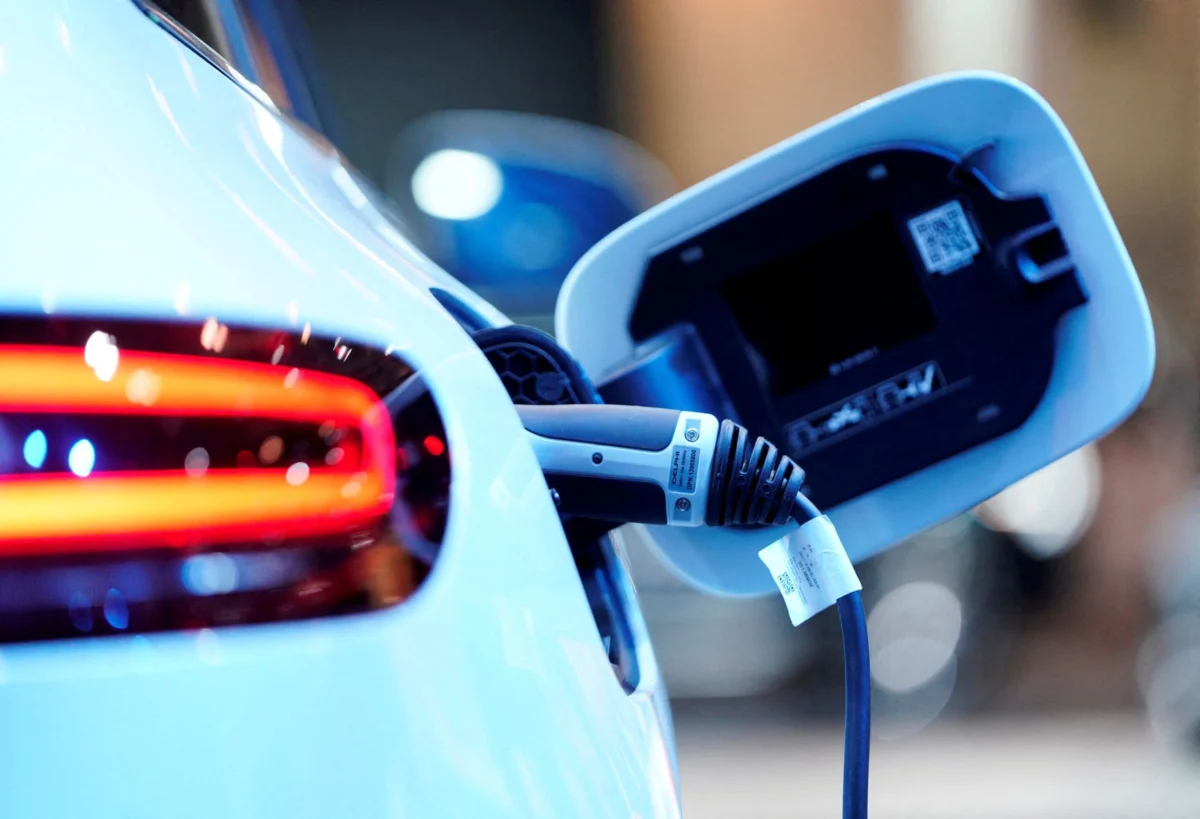
The global automotive industry is currently navigating a fundamental shift in vehicle architecture, transitioning from traditional mechanical systems to what experts call "software-defined vehicles." Central to this transformation is the implementation of over-the-air (OTA) technology, a wireless system that allows manufacturers to deliver software updates, firmware patches, and data fixes directly to vehicles without requiring a physical visit to a dealership. While this technology has revolutionized vehicle maintenance and feature deployment, it has simultaneously introduced a complex array of cybersecurity vulnerabilities that are now attracting intense scrutiny from national security agencies, academic researchers, and international regulators.
As vehicles become increasingly interconnected, the "attack surface" available to malicious actors expands. Analysts warn that the very convenience provided by OTA updates—which can remotely modify a vehicle’s braking, steering, and power management systems—could be exploited by foreign adversaries or cybercriminals to compromise public safety on a massive scale. The urgency for intervention has reached a critical point as real-world testing reveals that the theoretical risks of remote vehicle manipulation are becoming a tangible reality.
The Evolution of OTA Technology: From Innovation to Industry Standard
The trajectory of OTA technology in the automotive sector began in earnest in 2012, when Tesla Motors deployed its first wireless updates to the Model S. At the time, the move was viewed as a disruptive innovation that allowed Tesla to improve battery range, enhance Autopilot features, and fix software bugs without the logistical nightmare of a physical recall. According to Jason Van der Schyff, a fellow of cyber, technology, and security at the Australian Strategic Policy Institute, Tesla’s early adoption helped normalize the technology, making it a benchmark for the rest of the industry.
Today, nearly every major global automaker, including Mercedes-Benz, Ford, Volkswagen, and General Motors, has integrated OTA capabilities into their fleets. Siraj Ahmed Shaikh, a professor in systems security at Swansea University in the United Kingdom, notes that the technology is welcomed by manufacturers because it offers a quick and cost-effective method for managing complex vehicle systems. In a traditional setting, a software glitch might necessitate a multi-million dollar recall campaign involving thousands of service center appointments. With OTA, a manufacturer can push a fix to an entire fleet of hundreds of thousands of vehicles simultaneously at a fraction of the cost.
However, the rapid penetration of this technology has outpaced the development of robust, standardized security protocols. What was once a tool for updating navigation maps has evolved into a mechanism for controlling the core operational parameters of the vehicle, leading to significant concerns regarding transportation infrastructure and national security.
The Norwegian Case Study: Uncovering Real-World Vulnerabilities
The theoretical dangers of OTA technology were brought into sharp focus late last year following an investigation by the Norwegian bus company Ruter. As part of its transition to a zero-emission fleet, Ruter conducted extensive security audits on its electric buses. The findings sent shockwaves through the European transport sector.
In tests conducted on two buses manufactured by the Chinese firm Yutong, researchers discovered that one vehicle possessed a significant security loophole. The bus’s battery and power supply control systems were accessible via a mobile network through a Romanian SIM card. This configuration meant that, in theory, the manufacturer—or anyone who gained access to the manufacturer’s network—could remotely stop the bus or render it completely inoperable while it was in service.
Ruter’s disclosure prompted immediate reactions from neighboring nations. In Denmark, authorities initiated a rush to close similar security loopholes in Chinese-made electric buses used in public transit. Meanwhile, the United Kingdom’s Department for Transport confirmed it was working closely with the National Cyber Security Centre (NCSC) to investigate the implications for British infrastructure. These incidents highlight a critical vulnerability: the reliance on international telecommunications infrastructure and foreign-managed servers to control domestic transport assets.
National Security and the Threat of Foreign Espionage
The risks associated with OTA updates extend beyond the physical control of a vehicle; they also encompass data privacy and state-sponsored espionage. Gabriel Lim, a senior analyst at the S. Rajaratnam School of International Studies (RSIS) in Singapore, characterizes the current state of vehicle connectivity as a "unique national security concern."
Lim points out that modern electric vehicles (EVs) are essentially mobile data collection platforms. They are equipped with numerous cameras, microphones, GPS trackers, and sensors that monitor both the internal environment and the vehicle’s surroundings. If a foreign actor were to gain unauthorized access via an OTA gateway, they could potentially turn a fleet of vehicles into a distributed surveillance network.
In May, a report from the American Enterprise Institute (AEI) warned that safeguarding the automotive sector is now a prerequisite for limiting the espionage capabilities of foreign governments. The report specifically highlighted the risks posed by Chinese-manufactured components and software. The AEI recommended that the United States implement additional security reviews, mandate increased data-collection disclosures, and consider restrictions on foreign-made hardware in critical vehicle systems.
The concern is not limited to passenger cars. Professor Shaikh emphasizes that the OTA model is being adopted across various sectors, including maritime shipping, rail networks, aerospace (particularly drones), and industrial robotics. The potential for a "cascading failure" or a coordinated cyberattack across multiple transport modes represents a systemic risk to modern economies.
A Chronology of Connectivity and Risk
To understand the current landscape, it is necessary to examine the timeline of automotive connectivity and the corresponding rise in security incidents:
- 2012: Tesla introduces OTA updates for the Model S, setting a precedent for software-defined maintenance.
- 2015: Cybersecurity researchers Charlie Miller and Chris Valasek famously "hacked" a Jeep Cherokee via its cellular connection, remotely controlling its steering and brakes. This led to a recall of 1.4 million vehicles and served as the industry’s first major wake-up call.
- 2018-2020: Major European and American manufacturers begin standardizing OTA for infotainment and engine management systems.
- 2021: The United Nations Economic Commission for Europe (UNECE) introduces Regulation No. 156, which establishes requirements for software update management systems (SUMS) in vehicles.
- 2023-2024: National security concerns regarding Chinese-made EVs and buses escalate in the US and Europe, leading to investigations in Norway, Denmark, and the UK.
- 2025 (Projected): Global analysts predict that over 80% of new vehicles sold in developed markets will be equipped with full-vehicle OTA capabilities.
Technical Analysis: The Mechanics of an OTA Attack
The vulnerability of an OTA system typically lies in the communication link between the manufacturer’s cloud server and the vehicle’s Telematics Control Unit (TCU). In many cases, the TCU acts as a gateway to the vehicle’s Controller Area Network (CAN) bus—the internal "nervous system" that allows various Electronic Control Units (ECUs) to communicate.
If the encryption between the cloud and the TCU is weak, or if the authentication process for a software "handshake" is compromised, an attacker could inject malicious code into the vehicle’s firmware. Once inside the CAN bus, the attacker can send spoofed messages to the ECUs responsible for critical functions. For example, a malicious update could instruct the powertrain to shut down at highway speeds or disable the electronic stability control.
Furthermore, the "background" nature of these updates makes them difficult for the average consumer to monitor. As Gabriel Lim of RSIS noted, OTA systems run quietly in the background, often performing tasks that the driver is entirely unaware of. This lack of transparency makes it difficult to detect when a system has been tampered with until a malfunction occurs.
Regulatory and Economic Implications
The shift toward OTA technology is driven largely by economic necessity. The automotive industry is currently facing immense pressure to reduce costs while transitioning to electric drivetrains. Software represents an increasing share of a vehicle’s value—estimated by some analysts to reach 35% to 40% by 2030.
However, the cost of a major cybersecurity breach could far outweigh the savings gained from OTA. A successful large-scale attack on a specific model could result in catastrophic legal liabilities, brand destruction, and government-mandated bans. Consequently, the industry is seeing a move toward more rigorous certification processes.
The ISO/SAE 21434 standard, titled "Road vehicles — Cybersecurity engineering," has become a critical framework for the industry. It requires manufacturers to consider cybersecurity at every stage of a vehicle’s lifecycle, from design to decommissioning. Despite these standards, the geopolitical nature of the hardware supply chain remains a sticking point. Many Western nations are now debating whether "cybersecurity" can ever be truly achieved if the underlying hardware is manufactured in a "high-risk" jurisdiction.
The Path Forward: Accountability and Transparency
As OTA technology becomes an inextricable part of everyday life, the call for greater accountability is growing. Experts suggest that governments must move beyond voluntary guidelines and toward mandatory, audited security protocols.
"It is crucial for us to be aware of this technology and to hold entities and governments accountable for how OTA systems are applied," says Lim. This includes demanding transparency regarding where vehicle data is stored, which entities have the authority to push updates, and what redundancies are in place to prevent remote hijacking.
The future of the automotive industry depends on the delicate balance between innovation and security. While OTA updates offer the promise of vehicles that "get better over time," they also create a digital tether that can be pulled by those with malicious intent. For the sector to maintain public trust, the next generation of vehicles must be as resilient against cyber threats as they are against physical collisions.
In conclusion, the evolution of the car from a mechanical tool to a mobile computer has fundamentally altered the security landscape. The investigations in Norway and the warnings from the American Enterprise Institute serve as a timely reminder that in the age of the software-defined vehicle, the greatest threat to a car may not be on the road, but in the code. As the UK, Denmark, and the US continue their investigations, the automotive industry faces a pivotal moment: it must prove that its digital innovations do not come at the expense of national and personal safety.
