

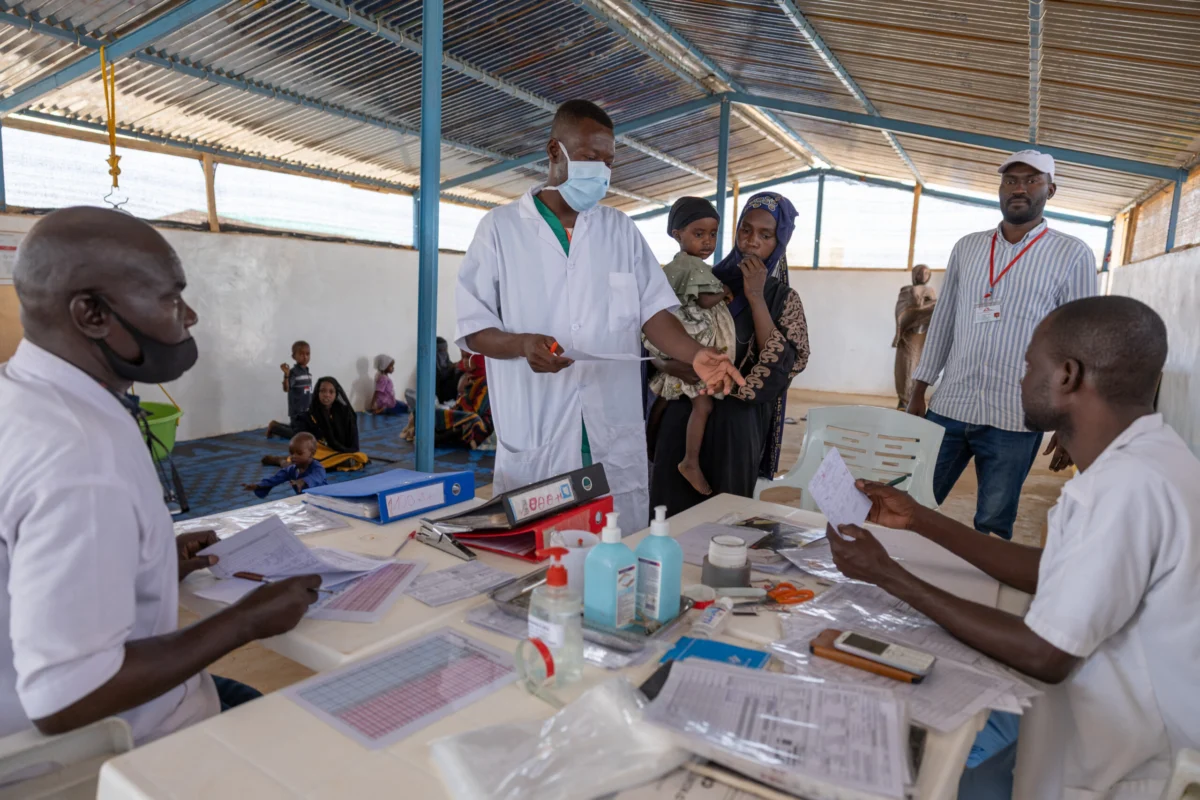
The healthcare infrastructure of Sudan is spiraling into a catastrophic state of decay as a combination of relentless conflict and a drastic reduction in international aid funding leaves millions of civilians without access to life-saving medical services. According to a harrowing report released on Tuesday by the international medical charity Doctors Without Borders, known by its French initials MSF (Médecins Sans Frontières), more than one-third of the nation’s health facilities are now completely nonoperational. This collapse occurs at a juncture where the country’s civil war, which erupted in April 2023, is intensifying, driving up the number of casualties and displaced persons even as the resources to treat them vanish.
The warning from MSF highlights a grim reality: as the war between the Sudanese Armed Forces (SAF) and the paramilitary Rapid Support Forces (RSF) enters its eighteenth month, the international community’s financial commitment to the crisis has significantly waned. MSF reports that the shrinking number of functional facilities is being overwhelmed by a massive influx of patients, many of whom have traveled hundreds of miles through active conflict zones to seek basic care. This healthcare vacuum is compounded by a broader humanitarian failure, where food rations are being slashed and protection programs for the most vulnerable are being dismantled.
A Chronology of Conflict and Healthcare Decay
To understand the current state of Sudan’s medical crisis, one must look at the timeline of the conflict and the subsequent erosion of the state’s ability to provide basic services.
April 2023: The Outbreak
The conflict began in Khartoum when long-simmering tensions between General Abdel Fattah al-Burhan of the SAF and Mohamed Hamdan "Hemedti" Dagalo of the RSF turned into open urban warfare. Within the first week, major hospitals in the capital were caught in the crossfire, leading to the first wave of facility closures.
June – August 2023: Expansion to Darfur
The war spread rapidly to the Darfur region, awakening old ethnic tensions. Healthcare facilities in cities like El Geneina and Nyala were looted and destroyed. Medical staff became targets, and many fled the country, leading to a massive "brain drain" of Sudan’s skilled healthcare professionals.
Early 2024: The Hunger Crisis Emerges
By the start of 2024, the disruption of planting seasons and trade routes led to a projected famine. MSF and other agencies began reporting "crisis levels" of hunger, with approximately 19.5 million people—nearly 40 percent of the population—facing acute food insecurity. This physical weakness made the population more susceptible to diseases like cholera and measles.
June 2024: The Funding Cliff
A critical turning point occurred in mid-2024 when major international grants began to expire. Specifically, MSF noted that grants from the United States Agency for International Development (USAID) for several key programs in Sudan ended in June. Simultaneously, European institutions significantly reduced their year-over-year aid allocations, citing budget constraints and competing global crises.
September 2024: Current Escalation
As the UN General Assembly convenes in New York, the situation on the ground has reached a breaking point. Attacks in Kordofan and the ongoing siege of El Fasher have created new waves of displacement, pushing the total number of displaced persons to an estimated 14 million.
The Data Behind the Collapse
The statistical reality of the Sudanese crisis is staggering. MSF reports that approximately 37 percent of health facilities across the country are out of service. In conflict-heavy zones like Khartoum, Darfur, and Kordofan, that number is estimated to be much higher, with some districts having no functional medical presence at all.
The funding gap is equally alarming. The United Nations’ humanitarian response plan for Sudan, which requires billions of dollars to address the needs of the population, is currently only 41 percent funded. This shortfall has direct, lethal consequences. When humanitarian organizations lack the funds to pay staff, buy medicines, or maintain cold-chain storage for vaccines, facilities are forced to shut their doors.
Furthermore, the global context of aid is shifting. MSF points to a "historic" reduction in global humanitarian aid, which has dropped by 35.8 percent since last year. While crises in Ukraine and Gaza have dominated international headlines and donor budgets, the "forgotten war" in Sudan has seen its financial support evaporate.
Voices from the Frontlines
The human cost of these funding cuts is articulated by those attempting to manage the crisis on the ground. Mohammad Ibrahim, the head of MSF in Sudan, emphasized that the organization is being pushed beyond its limits. "Donors must protect essential health services and provide sustained, flexible funding to organizations that depend on it," Ibrahim stated in the report. He noted that as other aid efforts disappear, MSF is often the "last man standing," but even a large international NGO cannot fill the void left by the withdrawal of major state-level donors like the U.S. and the EU.
The crisis extends beyond the treatment of war wounds. Fabrizio Locuratolo, a humanitarian affairs manager at an MSF-supported hospital in Um Rakuba, highlighted the intersection of healthcare and basic survival. "Food rations are shrinking and protection programs are being dismantled, pulling away the last safety nets and leaving refugees completely exposed," Locuratolo said. In refugee camps, where hygiene is poor and nutrition is scarce, the absence of medical oversight is a precursor to mass mortality from preventable causes.
Regional Impacts: Darfur and Kordofan
The situation in regional hubs is particularly dire. In North Darfur, the city of El Fasher has been under a prolonged siege, with hospitals frequently hit by shelling. When a hospital is damaged or its staff flees, the impact radiates across the entire region, as that facility likely served as a referral hub for dozens of smaller clinics.
In Kordofan, recent attacks by rebel groups and the ongoing SAF-RSF clashes have disrupted the supply lines for essential medicines. Chronic conditions such as diabetes, hypertension, and asthma are becoming death sentences because the supply of insulin and other routine medications has dried up. Maternal health is also in a state of emergency; without functional clinics, women are forced to give birth in unsafe conditions, leading to a spike in maternal and neonatal mortality rates.
Analysis: The Implications of a Medical Vacuum
The collapse of Sudan’s healthcare system is not merely a local humanitarian issue; it is a regional security threat with long-term implications.
First, the lack of medical surveillance and response capacity is a breeding ground for infectious diseases. Sudan has already seen outbreaks of cholera, which can easily cross borders into neighboring South Sudan, Chad, and Ethiopia—countries that are already struggling with their own internal instabilities. A regional epidemic would further strain the limited resources of East Africa.
Second, the "stopgap" nature of current funding—where it exists—prevents any long-term planning. Medical aid requires consistency. Without predictable funding, organizations cannot hire permanent staff or invest in the infrastructure needed to combat malnutrition and child mortality. The current "hand-to-mouth" existence of Sudanese clinics means that even if the war ended tomorrow, the healthcare system would take decades to rebuild.
Third, the withdrawal of USAID and European funding suggests a broader trend of "donor fatigue." As the war in Sudan becomes protracted and lacks a clear political resolution, international interest wanes. However, the MSF report suggests that this is a strategic error. By cutting aid now, the international community is ensuring that the eventual cost of reconstruction and the management of a massive refugee exodus will be far higher than the cost of maintaining current health services.
A Plea to the International Community
As world leaders gather for the United Nations General Assembly, MSF and other humanitarian actors are issuing an urgent call for action. They are requesting that governments not only honor their previous funding pledges but also provide emergency "stopgap" financing to prevent the immediate closure of facilities at risk.
The medical charity argues that healthcare must be "de-linked" from political considerations. Regardless of the progress of peace talks between the SAF and RSF, the provision of neutral, impartial medical care must be protected and funded. The report concludes that without an immediate reversal of the current funding trends, the world will witness the total extinction of the formal healthcare sector in one of Africa’s largest nations, leaving a population of 48 million people to face war, famine, and disease alone.
The war in Sudan has already claimed at least 59,000 lives, though experts believe the true death toll is significantly higher due to the lack of reporting from remote areas. If the healthcare system continues its downward trajectory, the number of deaths from indirect causes—malnutrition, untreated infection, and lack of maternal care—will likely far surpass the number of those killed by bullets and bombs. The international community now faces a choice: reinvest in Sudan’s survival or permit a humanitarian disaster of historic proportions to unfold unchecked.
