

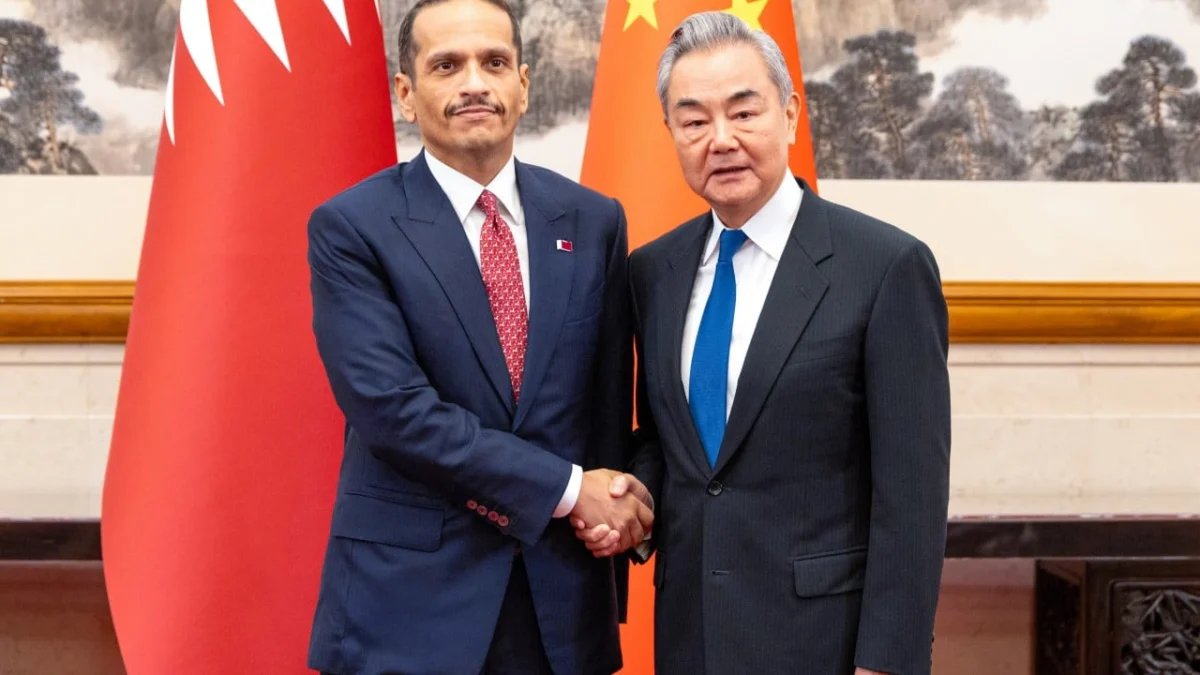
In a significant diplomatic move that underscores the deepening strategic alignment between the Gulf and East Asia, Qatar has officially pledged to prioritize energy supplies to China and collaborate on safeguarding the vital maritime corridors of the Middle East. This commitment was solidified during a high-level meeting in Beijing between Qatari Prime Minister and Foreign Minister Sheikh Mohammed bin Abdulrahman Al Thani and Chinese Foreign Minister Wang Yi. The discussions, which centered on regional stability and energy security, come at a time when the Middle East is grappling with heightened volatility, particularly regarding the safety of international shipping lanes and the ongoing conflict in Gaza.
The two leaders emphasized the critical importance of maintaining unimpeded maritime traffic through the Strait of Hormuz and the broader Red Sea region. Sheikh Mohammed affirmed Doha’s unwavering support for all diplomatic endeavors aimed at securing the freedom of maritime navigation. He noted that such efforts are essential not only for regional stability but also for reaching a comprehensive agreement that achieves sustainable peace. This diplomatic outreach highlights Qatar’s dual role as a global energy powerhouse and a central mediator in Middle Eastern geopolitics, while also reflecting China’s growing influence as a key stakeholder in regional security.
The Strategic Importance of the Qatar-China Energy Nexus
The pledge to prioritize China’s energy supply is a cornerstone of the bilateral relationship, which Sheikh Mohammed described as entering a new "golden decade." China has emerged as Qatar’s largest trading partner and its primary destination for liquefied natural gas (LNG) exports. This relationship is built on a foundation of long-term stability and mutual economic interest.
In recent years, the energy partnership has been codified through record-breaking agreements. QatarEnergy, the state-owned petroleum company, has signed several 27-year Sale and Purchase Agreements (SPAs) with Chinese state-owned entities, including China Petroleum & Chemical Corporation (Sinopec) and China National Petroleum Corporation (CNPC). These deals involve the supply of millions of tons of LNG annually from Qatar’s North Field expansion project, the largest gas field in the world.
By prioritizing China’s energy needs, Qatar is providing Beijing with a reliable alternative to more volatile energy markets. For China, which is the world’s largest importer of LNG, securing long-term Qatari supplies is a matter of national energy security. The North Field expansion is expected to increase Qatar’s LNG production capacity from 77 million tons per annum (mtpa) to 126 mtpa by 2027, with a significant portion of this additional capacity already earmarked for the Chinese market.
Safeguarding the Strait of Hormuz and Global Trade Arteries
The commitment to safeguard shipments through the Strait of Hormuz is particularly poignant given the current geopolitical climate. The Strait of Hormuz is the world’s most important oil transit chokepoint, with approximately 20% to 30% of the world’s total oil consumption passing through it daily. Any disruption to this narrow waterway would have catastrophic effects on global energy prices and the Chinese economy, which relies heavily on Middle Eastern crude and gas.
Furthermore, the meeting in Beijing addressed the spillover effects of the Red Sea crisis. Since late 2023, attacks on commercial shipping in the Red Sea have forced many vessels to reroute around the Cape of Good Hope, significantly increasing shipping costs and delivery times. Qatar and China have both expressed deep concern over these developments, advocating for a de-escalation of tensions and a return to maritime normalcy.
Sheikh Mohammed’s statement that Doha would "overcome difficulties" to ensure energy flow suggests a proactive Qatari stance in navigating the logistical and security challenges posed by regional conflicts. This includes leveraging Qatar’s diplomatic channels with various regional actors, including Iran, to ensure that energy exports remain insulated from broader geopolitical skirmishes.
Chronology of Recent Diplomatic and Economic Engagements
The strengthening of ties between Doha and Beijing is the result of a deliberate, multi-year diplomatic strategy. The following timeline illustrates the key milestones that have led to the current "golden decade" of cooperation:
- January 2019: Sheikh Tamim bin Hamad Al Thani, the Amir of Qatar, visits Beijing, where both nations agree to deepen their "Comprehensive Strategic Partnership."
- November 2022: QatarEnergy signs a landmark 27-year LNG supply deal with China’s Sinopec, marking the longest-ever agreement in the history of the LNG industry at that time.
- June 2023: A similar 27-year agreement is signed with CNPC, which also includes the Chinese firm taking a 5% stake in one of the North Field East expansion trains.
- Late 2023: As the Israel-Hamas conflict escalates, China and Qatar begin frequent consultations on humanitarian aid and mediation efforts, with China supporting Qatar’s role as a primary negotiator.
- May 2024: The current meeting in Beijing takes place, focusing on the specific threats to maritime security and the formalization of energy priority status for China.
Supporting Data: Trade and Energy Statistics
The economic interdependence between the two nations is reflected in the robust trade data of the last three years:
- Trade Volume: Total bilateral trade between China and Qatar exceeded $25 billion in 2023, representing a significant increase from previous years. China has remained Qatar’s top trading partner for several consecutive years.
- LNG Export Volumes: In 2023, Qatar supplied approximately 25% of China’s total LNG imports. This figure is expected to rise as the North Field expansion projects come online and long-term contracts begin their delivery phases.
- Infrastructure Investment: Under the framework of the Belt and Road Initiative (BRI), Chinese companies have been heavily involved in Qatari infrastructure, including the construction of the Lusail Stadium for the 2022 FIFA World Cup and major desalination plants.
Official Responses and Regional Mediation Roles
During the meeting, Foreign Minister Wang Yi praised Qatar’s unique role in Middle Eastern affairs, particularly its efforts in mediating the conflict in Gaza and its work toward a ceasefire. China has consistently positioned itself as a proponent of a "two-state solution" and has sought to coordinate with Arab nations to present a unified front in international forums like the United Nations Security Council.
Wang Yi stated that China views Qatar as a "priority partner" in the Gulf and is willing to work together to oppose "the practice of power politics and hegemonism." This rhetoric aligns with China’s broader strategy of presenting itself as a more neutral and development-focused alternative to Western powers in the region.
From the Qatari perspective, the foreign ministry’s statement emphasized that the partnership with China is not merely economic but strategic. By aligning with China, Qatar gains a powerful ally that is also a permanent member of the UN Security Council, providing Doha with additional diplomatic leverage as it navigates its complex relationships with both Western and regional powers.
Broader Impact and Geopolitical Implications
The "golden decade" of China-Qatar relations has profound implications for the global geopolitical landscape. First, it signals a shift in the traditional security architecture of the Middle East. While the United States remains the primary security guarantor for many Gulf nations—hosting its largest regional military base, Al Udeid, in Qatar—the increasing involvement of China in maritime security and energy stability suggests a more multipolar regional order.
Second, the Qatar-China alliance serves as a model for how resource-rich Middle Eastern states are diversifying their strategic portfolios. By securing long-term markets in Asia, Qatar is hedging against potential shifts in Western energy policies and the transition toward green energy, which may move at a different pace in Europe compared to the industrializing economies of Asia.
Third, the focus on the Strait of Hormuz and maritime navigation reflects a shared concern over the militarization of trade routes. If Qatar and China can successfully coordinate on maritime security, it could lead to new multilateral frameworks for protecting global commons, potentially involving other major Asian energy importers like India and South Korea.
Conclusion: Navigating a Volatile Future
The meeting in Beijing serves as a definitive statement of intent. Qatar’s vow to prioritize China’s energy supply and safeguard the Strait of Hormuz is a calculated move to ensure economic continuity in an era of unprecedented regional instability. As the Middle East continues to face challenges ranging from the Red Sea crisis to the humanitarian catastrophe in Gaza, the partnership between Doha and Beijing offers a stabilizing force rooted in the mutual necessity of energy flow and trade security.
As the "golden decade" unfolds, the world will be watching how this relationship evolves, particularly in its ability to influence other regional actors toward de-escalation. For now, the alignment between the world’s leading gas exporter and the world’s largest energy consumer stands as a pillar of the contemporary global energy market, reinforcing the reality that the future of Middle Eastern security is increasingly intertwined with the economic interests of East Asia.
