

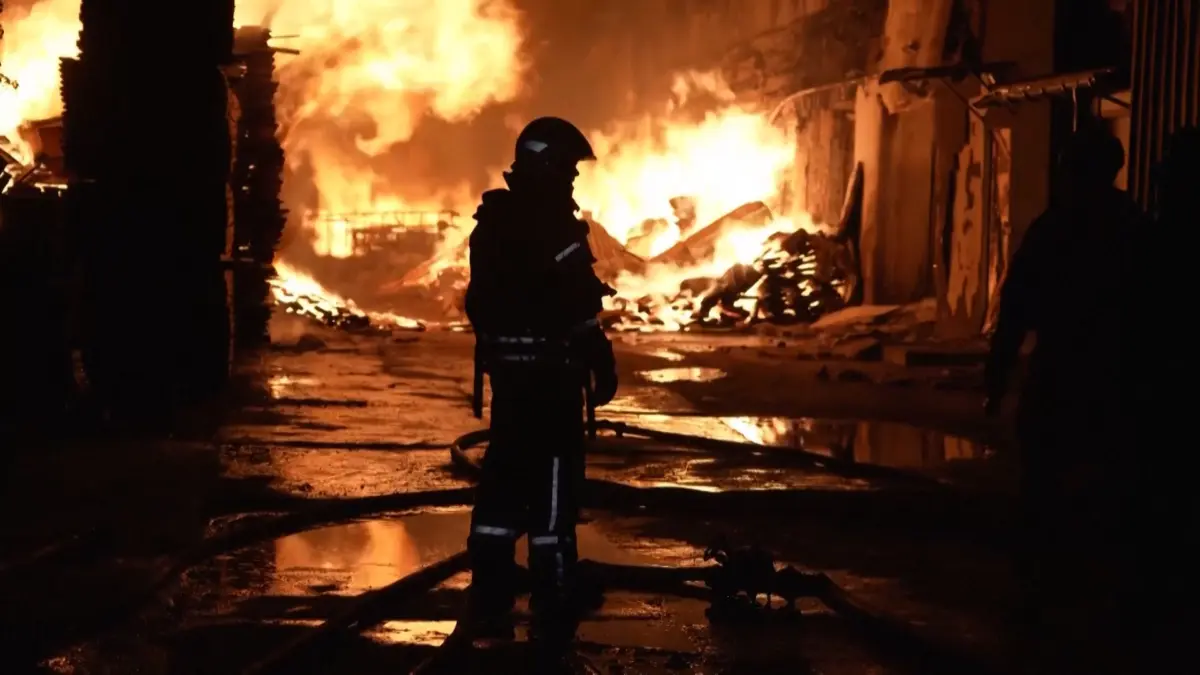
The city of Kharkiv, a primary urban center in northeastern Ukraine that has remained on the front lines of conflict for years, was once again the target of a concentrated aerial assault late Tuesday evening, October 27, into the early hours of Wednesday, October 28, 2026. This latest wave of Russian drone strikes targeted a mixture of residential neighborhoods and industrial zones, sparking massive fires and forcing the emergency evacuation of some of the city’s most vulnerable residents, including elderly women and children. Despite the significant destruction of property and infrastructure, local authorities confirmed that a series of harrowing rescues prevented a higher death toll, highlighting the ongoing humanitarian crisis in a region that has become synonymous with the enduring nature of the war.
Immediate Impact and Rescue Operations
The attack commenced under the cover of darkness when several groups of "one-way" attack drones, identified by Ukrainian air defense as Iranian-designed Shahed variants and newer Russian-produced iterations, entered Kharkiv’s airspace from the north and east. According to the State Emergency Service of Ukraine (SESU), at least four distinct impacts were recorded within the city limits. The primary focus of the destruction centered on a residential district characterized by a mix of aging apartment blocks and private houses, as well as a nearby industrial park that housed several manufacturing warehouses.
As the drones struck, the resulting explosions ignited large-scale fires that quickly spread through timber-framed roofs and industrial materials. Firefighters arriving at the scene were met with a chaotic environment. In one of the most poignant moments of the night, first responders were filmed leading a disabled elderly woman through a haze of thick black smoke and falling debris. Her home, along with several adjacent structures, had been gutted by the blaze.
Witness accounts describe a frantic scene as families, many of whom had been asleep, were jolted awake by the sound of low-flying engines and subsequent blasts. "We had only seconds to get to the basement," said one resident, a mother of two who was evacuated by rescue workers. "The windows blew inward, and the smell of burning plastic was everywhere. We are alive, but we have nothing left."
Chronology of the October 27-28 Attack
The timeline of the assault illustrates the calculated nature of the strikes and the rapid response of local defenses:
- 22:15 PM: Air raid sirens sound across the Kharkiv region as the Ukrainian Air Force detects multiple UAV launches from the Belgorod region of the Russian Federation.
- 22:45 PM: The first explosions are heard in the northern suburbs of Kharkiv. Mobile fire groups engage the drones with heavy machine guns and MANPADS.
- 23:10 PM: Direct hits are reported on a warehouse facility in the industrial zone, causing a secondary explosion and a fire that covers over 1,500 square meters.
- 23:30 PM: A drone strikes a residential courtyard, causing a fire that engulfs three private homes. It is during this window that the most intensive evacuation efforts occur.
- 01:00 AM (Oct 28): SESU units manage to contain the primary blazes, though "spot fires" continue to burn in industrial wreckage.
- 03:00 AM: Local authorities begin a door-to-door sweep to ensure all residents, particularly the elderly living alone, are accounted for.
- 07:00 AM: The Mayor of Kharkiv, Ihor Terekhov, provides a preliminary assessment of the damage, confirming that while infrastructure loss is high, the loss of life was averted through timely evacuation.
Supporting Data: The Toll on Kharkiv in 2026
The strikes on October 28 are part of a broader pattern of escalation seen throughout the autumn of 2026. Since the beginning of the year, Kharkiv has faced a renewed campaign of aerial bombardment aimed at degrading the city’s remaining industrial capacity and demoralizing its civilian population.
Data from the Kharkiv Regional Military Administration indicates that in the third quarter of 2026 alone, the city was targeted by more than 450 individual drone strikes and approximately 120 missile attacks. The impact on the civilian sector has been profound:
- Housing: Over 2,100 residential units have sustained damage or been completely destroyed in the last ten months.
- Infrastructure: 60% of the city’s heating and power distribution nodes have required major repairs due to repeat targeting.
- Displacement: While many have fled, an estimated 1.1 million people remain in Kharkiv, including nearly 150,000 internally displaced persons (IDPs) from even more volatile frontline villages.
The vulnerability of the elderly is a specific point of concern for humanitarian organizations. In many of Kharkiv’s older districts, up to 40% of the remaining residents are over the age of 65, many of whom have limited mobility or lack the family support needed to evacuate the city entirely.
Official Responses and International Reaction
The Ukrainian government was quick to condemn the attack, characterizing it as a deliberate strike on non-combatants. President Volodymyr Zelenskyy, in a statement released via social media, praised the "heroism of the rescuers" and reiterated the need for advanced air defense systems and long-range capabilities to strike the launch sites of these drones.
"Every night, our people in Kharkiv, Zaporizhzhia, and Sumy are forced to face the terror of these machines," the President stated. "The rescue of the elderly woman in Kharkiv tonight is a testament to our spirit, but our spirit must be backed by the world’s resolve to stop this manufacture of death."
Conversely, the Russian Ministry of Defense, in its daily briefing, maintained its standard narrative, claiming that all strikes in the Kharkiv direction were directed at "military-industrial targets" and "temporary deployment points for foreign mercenaries." They did not acknowledge the destruction of residential homes or the evacuation of civilians.
International observers have noted the increasing frequency of these attacks. A spokesperson for the United Nations High Commissioner for Human Rights (OHCHR) expressed "grave concern" over the continued use of explosive weapons in densely populated areas, noting that such actions frequently violate the principles of distinction and proportionality under international humanitarian law.
Strategic and Humanitarian Implications
The targeting of Kharkiv serves several strategic purposes for the Russian military. By maintaining a constant state of threat, they force the Ukrainian military to keep significant air defense assets stationed around the city, potentially diverting them from other critical frontline sectors. Furthermore, the destruction of industrial buildings hampers Ukraine’s ability to repair military equipment and sustain its local economy.
From a humanitarian perspective, the implications are even more dire. As winter approaches, the destruction of housing and heating infrastructure places the elderly and children at extreme risk. The "drone terror" tactic—characterized by the loud, buzzing sound of the UAVs—has also led to a surge in post-traumatic stress disorder (PTSD) among the civilian population. Psychological support services in Kharkiv report they are overwhelmed, with a 300% increase in consultations compared to the previous year.
The resilience of the city’s emergency services remains a critical factor in its survival. The "Kharkiv model" of rapid response involves a decentralized network of firefighters, medics, and volunteer groups who operate under the constant threat of "double-tap" strikes—a tactic where a second strike hits the same location shortly after the first to target rescue workers.
Looking Ahead: The Future of the Conflict in the East
As the war enters this late stage in 2026, the battle for Kharkiv has shifted from a fight for territory to a war of attrition against civilian endurance. The city’s proximity to the Russian border—roughly 30 kilometers—makes it an easy target for short-range drones and glide bombs, leaving little time for air defense interception.
Analysts suggest that unless a significant buffer zone is established or the source of the drone production is neutralized, cities like Kharkiv will continue to experience these nightly cycles of destruction and rescue. For the elderly women and children who survived Tuesday’s attack, the immediate future involves the search for temporary shelter and the daunting task of rebuilding their lives in a city that remains in the crosshairs.
The international community continues to monitor the situation, with renewed calls for humanitarian corridors and increased aid for winterization. However, on the ground in Kharkiv, the focus remains on the next 24 hours. As the smoke clears from the latest ruins, the city’s residents prepare for the sirens to sound once more, standing as a stark reminder of the human cost of a conflict that shows no signs of a swift conclusion. In the words of a local rescue worker, "We don’t count the days anymore; we count the lives we manage to pull from the fire."
