

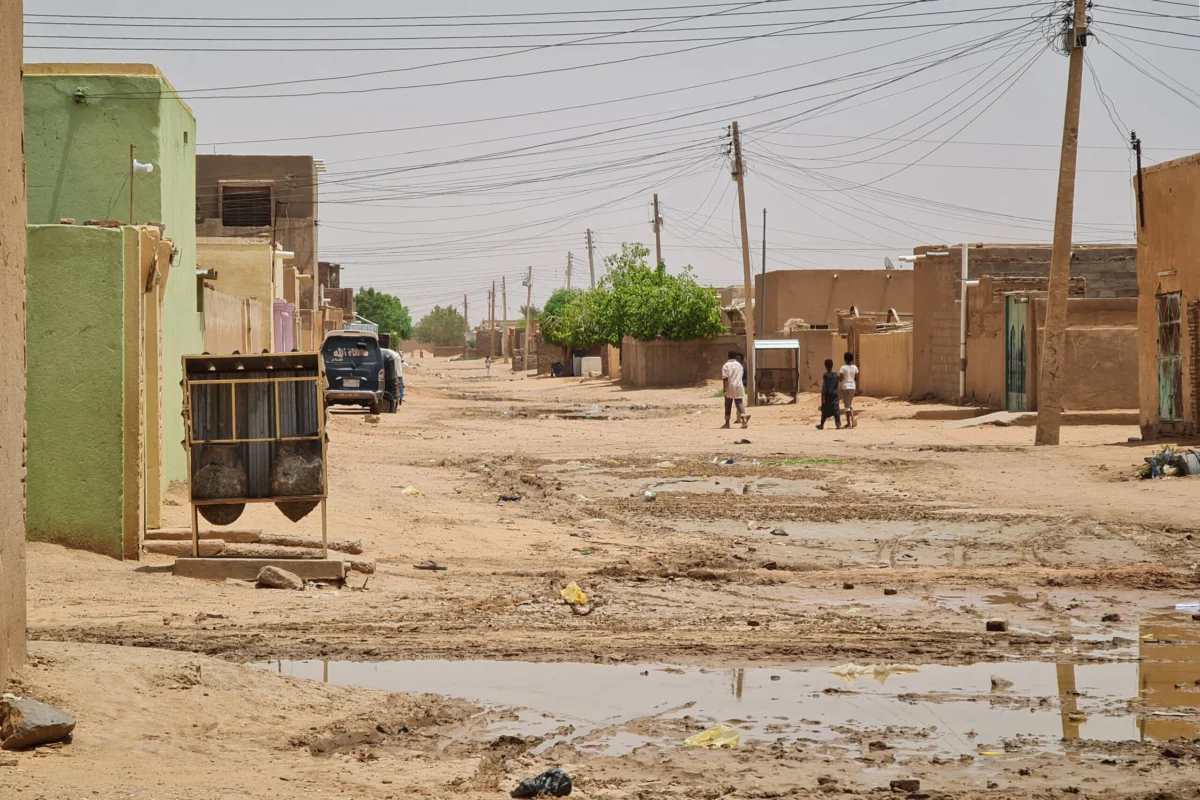
The ongoing civil strife in Sudan reached a devastating new milestone on Saturday as an airstrike ripped through a densely populated residential neighborhood in the capital city of Khartoum. According to Sudanese health officials, the strike resulted in the deaths of at least 17 individuals, a toll that tragically includes five children. This latest escalation underscores the deteriorating security situation in a nation caught in the crossfire of two rival generals vying for absolute control over Africa’s third-largest country by land area.
The attack targeted the Yarmouk neighborhood in southern Khartoum, an area that has become a focal point of intense kinetic activity in recent weeks. The district is strategically significant as it houses a major military industrial complex controlled by the Sudanese Armed Forces (SAF). However, the human cost of the weekend’s bombardment was felt primarily by civilians. Sudan’s Ministry of Health confirmed via social media that the strike leveled at least 25 houses, leaving many families trapped beneath the rubble. In addition to the confirmed fatalities, dozens were injured and rushed to nearby hospitals, which are already struggling to operate under the constraints of a collapsing healthcare infrastructure.
The Dynamics of Urban Warfare in Khartoum
The nature of the strike—whether conducted by traditional fixed-wing aircraft or an unmanned aerial vehicle (drone)—remains a subject of contention. The Sudanese Armed Forces, led by General Abdel Fattah al-Burhan, possess a significant advantage in airpower, utilizing a fleet of MiG and Sukhoi fighter jets to target positions held by the paramilitary Rapid Support Forces (RSF). Conversely, the RSF, commanded by General Mohamed Hamdan Dagalo, commonly known as Hemedti, has increasingly deployed anti-aircraft weaponry and suicide drones to counter the military’s aerial dominance.
Local volunteer groups, known as "Emergency Rooms," which have emerged as the primary providers of humanitarian aid and casualty reporting in the absence of international NGOs, documented the aftermath of the Yarmouk strike. Images circulated by these groups showed residents frantically digging through concrete debris with their bare hands. The RSF issued a statement shortly after the incident, accusing the SAF of deliberately targeting civilian quarters and claiming that their forces had successfully downed a military MiG fighter jet in response. These claims, however, have not been independently verified, and a spokesperson for the military did not respond to requests for comment regarding the specific casualties in Yarmouk.
A Chronology of the Conflict: From Tension to Total War
To understand the gravity of the Saturday airstrike, one must look at the timeline of Sudan’s rapid descent into chaos. The conflict did not emerge in a vacuum but was the result of months of simmering tensions regarding the transition to a civilian-led government and the integration of the RSF into the regular army.
- Late 2022 – Early 2023: Negotiations were underway for a Framework Agreement aimed at returning Sudan to a democratic path following the 2021 military coup. The primary sticking point was the timeline for merging the RSF into the SAF—the military demanded a two-year window, while the RSF pushed for a ten-year integration period.
- April 15, 2023: Heavy gunfire and explosions erupted in Khartoum. Both sides blamed each other for initiating the violence. The RSF quickly moved to occupy civilian infrastructure, including hospitals, residential buildings, and the international airport, while the SAF responded with heavy artillery and airstrikes.
- May 2023: The United States and Saudi Arabia brokered a series of short-term ceasefires in Jeddah. While these "humanitarian pauses" allowed some civilians to flee, they were systematically violated by both parties within hours of being signed.
- June 2023: The conflict shifted from a power struggle in the capital to an ethnically charged war in the Darfur region. The assassination of West Darfur Governor Khamis Abdalla Abkar on Wednesday marked a significant escalation in the regional dimensions of the war.
The Humanitarian Crisis in Numbers
The scale of the disaster in Sudan is reflected in the staggering data released by international monitoring agencies. As of mid-June 2023, the conflict has resulted in a displacement crisis of historic proportions.
- Displacement: More than 2.2 million people have been forced to flee their homes. This includes approximately 1.7 million internally displaced persons (IDPs) and over 500,000 who have crossed the borders into neighboring Chad, Egypt, South Sudan, and Ethiopia.
- Casualties: While official tallies sit at roughly 1,000 deaths, activist groups and medical unions suggest the true figure is likely much higher, as many bodies remain uncollected in the streets of Khartoum and Darfur.
- Healthcare Collapse: In Khartoum, upwards of 60% of hospitals are out of service. Facilities that remain open face critical shortages of oxygen, blood bags, and essential medications.
- Food Insecurity: The World Food Programme (WFP) warns that the number of people facing acute hunger in Sudan is expected to rise to 19 million—nearly 40% of the population—in the coming months.
The Darfur Front and the Killing of Governor Abkar
While the Saturday airstrike dominated headlines in the capital, the situation in western Sudan, particularly in the Darfur region, has taken an even more ominous turn. The city of Genena, the provincial capital of West Darfur, has been the site of what activists describe as a "scorched earth" campaign.
The conflict in Darfur has reawakened the ghosts of the early 2000s genocide. Reports indicate that Arab militias, known as the Janjaweed—from which the RSF originated—have joined the current fighting, targeting the Masalit ethnic group and other non-Arab communities. The violence reached a tipping point on Wednesday with the abduction and subsequent execution of Governor Khamis Abdalla Abkar.
Hours before his death, Abkar had given a televised interview in which he accused the RSF and allied militias of committing genocide and urged international intervention. Video footage later surfaced on social media showing the Governor being detained by men in RSF uniforms. Although the RSF leadership denied responsibility for the "heinous act," the United Nations and various human rights organizations have pointed to the paramilitary group as the primary perpetrator. The death of a high-ranking official like Abkar signals a total breakdown of the rule of law and the transition of the conflict into a multi-front civil war with deep ethnic divisions.
Official Responses and International Stagnation
The international community’s response has been characterized by a mixture of condemnation and diplomatic frustration. The United Nations Secretary-General, António Guterres, expressed horror at the escalating violence and the targeted killing of civilians. The African Union (AU) has repeatedly called for an immediate cessation of hostilities, but its influence has been limited by the lack of enforcement mechanisms.
In the United States, the State Department has imposed sanctions on key companies linked to both the SAF and the RSF, aiming to choke off the financial resources used to sustain the war effort. However, analysts argue that these measures have had little impact on the ground, as both generals appear convinced that a total military victory is still achievable.
The regional implications are equally concerning. Sudan’s neighbors, particularly Chad and South Sudan, are ill-equipped to handle the massive influx of refugees. There are also growing fears that the conflict could draw in regional powers, turning Sudan into a proxy battlefield for broader geopolitical interests in the Red Sea and the Nile Basin.
Analysis: The Prospect of a Failed State
The Saturday airstrike in Yarmouk is symptomatic of a war that has moved beyond the control of traditional diplomatic channels. By bringing the battlefield into the living rooms of Khartoum, the warring factions have effectively held the civilian population hostage. The RSF’s tactic of occupying private homes and using them as shields against aerial bombardment has turned every street corner into a potential target for the SAF’s jets.
The destruction of 25 houses in a single strike illustrates the indiscriminate nature of the current military strategy. For the Sudanese Armed Forces, the priority is to dislodge the RSF from the capital at any cost. For the RSF, the goal is to maintain a presence in Khartoum to leverage their position in any future negotiations. In this zero-sum game, the "collateral damage"—represented by the five children killed on Saturday—is becoming the defining feature of the conflict.
As the fighting enters its third month, the risk of Sudan becoming a "failed state" is no longer a distant possibility but a looming reality. The destruction of the central bank, the burning of factories, and the systematic looting of markets have decimated the economy. Without a functional government or a unified security apparatus, the country faces a prolonged period of warlordism and humanitarian catastrophe.
The strike in Khartoum’s Yarmouk neighborhood serves as a grim reminder that in the absence of a meaningful political settlement, the people of Sudan are left to endure a reality where the sky brings fire and the streets offer no sanctuary. The international community faces an urgent challenge to move beyond rhetoric and establish a mechanism that can effectively protect civilians and bring the rival generals to the negotiating table before the nation’s social fabric is irreparably torn.
