

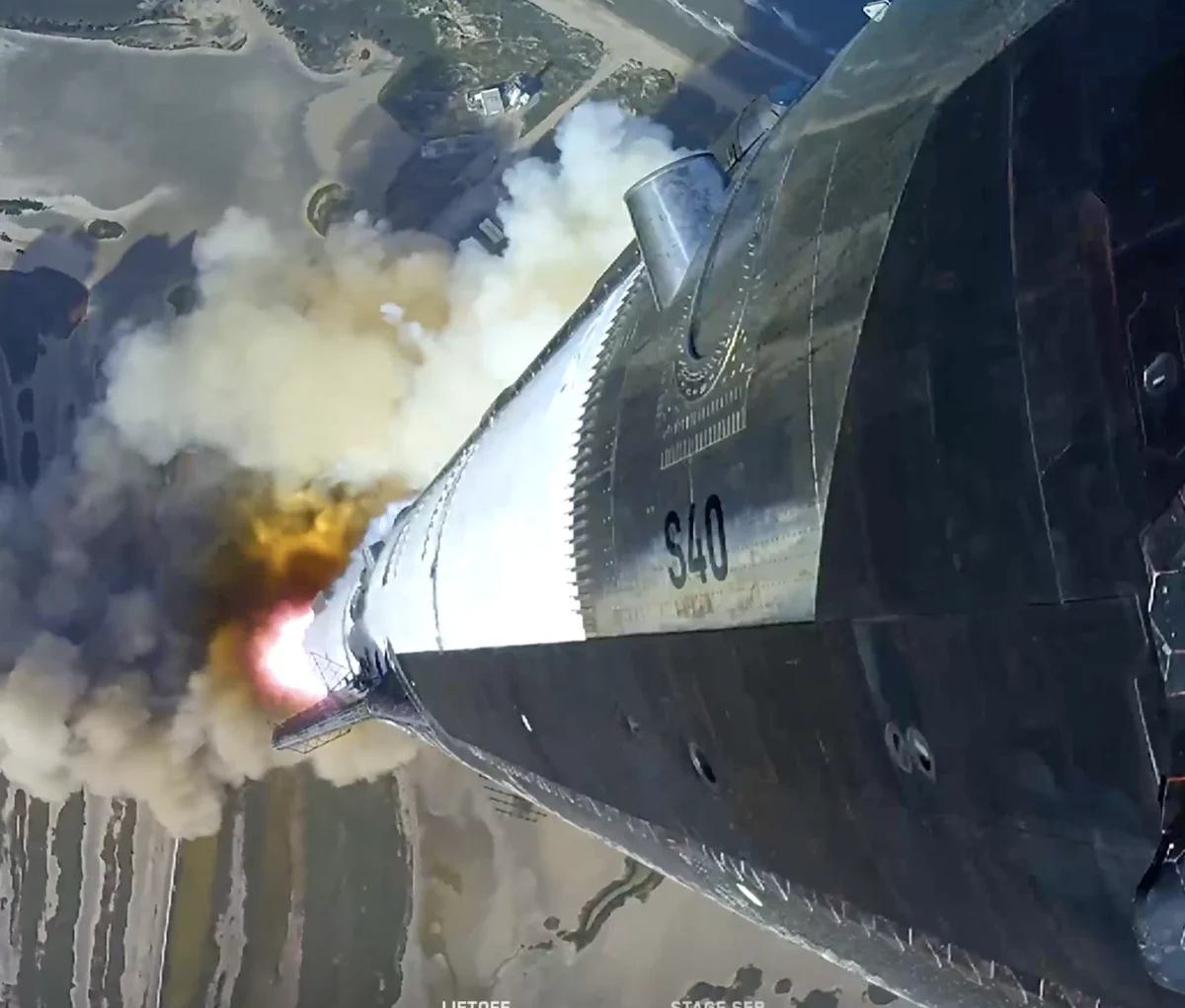
SpaceX successfully reached a critical operational milestone on Friday with the deployment of its first third-generation (V3) Starlink satellites, utilizing an upgraded version of the Starship launch vehicle in its 13th test flight to date. While the mission achieved its primary objective of testing the deployment mechanism for its next-generation internet constellation, the flight was marred by a significant hardware loss. The Super Heavy booster, the massive first-stage component of the rocket, experienced a catastrophic failure during a planned simulated landing in the Gulf of Mexico, marking a recurring challenge for the company’s latest vehicle iteration.
The mission, launched from SpaceX’s Starbase facility in Boca Chica, Texas, serves as a pivotal moment for the company’s transition from purely experimental flights to operational utility. This 13th flight was the second to feature the V3 version of the Starship architecture, which includes structural and engine enhancements designed to increase payload capacity and reliability. Despite these upgrades, the Super Heavy booster continues to be a point of concern. During the first V3 flight in May, the booster failed shortly after stage separation. Friday’s attempt saw the booster survive longer into its descent profile, but it ultimately failed to execute the complex landing burn required for a soft touchdown on the water’s surface.
Mission Chronology and Technical Adjustments
The path to Friday’s launch was fraught with technical hurdles that underscored the volatility of SpaceX’s "fly, fail, fix" development philosophy. Initially scheduled for a launch window earlier in the month, SpaceX attempted to conduct the 13th flight approximately eight days prior to the successful Friday liftoff. However, that attempt was aborted almost immediately following engine ignition. Ground sensors and onboard computers detected a series of anomalies across multiple Raptor engines, leading to an automated scrub of the mission.
In the intervening week, SpaceX engineers worked around the clock to diagnose the propulsion issues. The company later confirmed that it had replaced six of the 33 Raptor engines on the Super Heavy booster to address the failures identified during the aborted ignition. This rapid turnaround is a hallmark of SpaceX’s internal logistics but also highlights the narrow margins for error inherent in the Starship’s complex liquid oxygen and liquid methane propulsion system.
Upon Friday’s liftoff, the 33 Raptor engines on the Super Heavy booster appeared to perform within nominal parameters during the ascent phase. The vehicle cleared the launch tower and successfully executed the "hot-staging" maneuver, where the upper stage (Starship) ignites its engines while still attached to the booster to maximize efficiency during separation.
Analysis of the Super Heavy Booster Failure
Following successful separation, the Super Heavy booster began its return maneuvers, aimed at a specific target zone in the Gulf of Mexico. Unlike previous missions where the company successfully "caught" a booster using the "Mechazilla" launch tower arms, this flight was intended to perform a simulated landing on water to further refine the descent algorithms and engine relight reliability for the V3 hardware.
As the booster descended toward the ocean, it was required to reignite a subset of its Raptor engines to decelerate from supersonic speeds. Telemetry data indicated that the booster was unable to properly fire all the engines necessary for the final landing burn. Consequently, the vehicle hit the water at a velocity far exceeding its structural limits. The resulting impact led to an immediate explosion, with the booster being destroyed upon contact.
This failure is particularly significant because the Super Heavy is designed to be the most reusable part of the system. While the upper stage reached its target objectives, the loss of the booster represents a setback in SpaceX’s quest to achieve the rapid, airline-like turnaround times necessary to make Starship economically viable.
Success of the Starship Upper Stage and Starlink Deployment
In contrast to the booster’s fate, the Starship upper stage, often referred to simply as "the Ship," demonstrated improved reliability compared to its May debut. During the previous V3 flight, the Ship lost a rocket engine during its ascent, which hampered its ability to reach the desired trajectory. On Friday, however, all engines on the upper stage performed as expected, allowing the vehicle to reach a suborbital velocity sufficient for its experimental objectives.
The highlight of the mission was the successful deployment of the first batch of Starlink V3 satellites. These satellites represent a massive leap in technology for SpaceX’s space-based internet business. The V3 units are significantly larger and more capable than the V2-Mini satellites currently launched by the Falcon 9 rocket. SpaceX has stated that the Starship’s massive internal volume allows it to carry 60 of these new satellites at once, providing a "twenty-fold increase" in downlink capacity for the network compared to a single Falcon 9 launch.
While the satellites were successfully deployed, they were not intended to remain in orbit. Because Starship has not yet achieved a full, stable Earth orbit, the satellites reentered the atmosphere and burned up approximately 20 minutes after deployment. Nevertheless, SpaceX confirmed it was able to establish communication with all units while they were in space, validating the hardware’s durability during the stresses of launch.
The Ship itself also reached a new milestone in recovery testing. After surviving the intense heat of atmospheric reentry, the upper stage performed a controlled descent into the Indian Ocean. Unlike previous missions where the Ship exploded upon tipping over in the water, this unit remained intact. This allowed SpaceX to utilize a camera-equipped drone to perform a close-up inspection of the heat shield tiles on the vehicle’s belly, providing invaluable data on how the thermal protection system holds up against the plasma environment of reentry.
Financial Performance and Post-IPO Volatility
The technical outcomes of the 13th flight had immediate repercussions on the financial markets, as this was the first Starship launch since SpaceX’s historic Initial Public Offering (IPO) in June. The IPO, which was the largest in history, transitioned SpaceX from a private entity driven by the vision of Elon Musk to a public company accountable to a broad base of institutional and retail investors.
Prior to the launch, SpaceX’s stock had already been experiencing a downward trend. After peaking at over $200 per share shortly after the IPO, the stock closed at $115 on Friday. The abort earlier in the week had triggered a dip, and the news of the Super Heavy booster’s explosion led to a further 2% drop in after-hours trading.
Investors are increasingly scrutinizing the "fly, fail, fix" methodology. While this iterative approach allowed SpaceX to outpace traditional aerospace giants like Boeing and Lockheed Martin during its private years, the high cost of hardware loss is now a matter of public record. The company’s S-1 registration statement explicitly warned that the progress of the Starlink program—the company’s only profitable business segment—would be "at a slower pace and higher cost" if Starship fails to achieve full and rapid reusability.
Economic and Strategic Implications
The success of the Starlink V3 deployment is the primary silver lining for SpaceX’s balance sheet. The Starlink network is the financial engine intended to fund Musk’s ambitions for Mars colonization and NASA’s Artemis lunar missions. By increasing the downlink capacity twenty-fold per launch, SpaceX can significantly lower the cost per bit of data, making its satellite internet service more competitive against terrestrial fiber and 5G providers.
However, the economics of Starlink V3 are inextricably linked to the reusability of the Starship system. If SpaceX is forced to expend a Super Heavy booster for every mission, the capital expenditures will likely outpace the revenue gains from the new satellites. The "capital-hungry" nature of the space internet network requires a launch cadence that only a fully reusable Starship can provide.
Furthermore, the 13th flight provides critical data for NASA, which has contracted SpaceX to provide a modified version of Starship as the Human Landing System (HLS) for the Artemis III and IV missions. NASA officials have expressed cautious optimism regarding Starship’s progress but remain focused on the vehicle’s ability to demonstrate reliable engine relights and propellant transfer in orbit—milestones that SpaceX is still working toward.
The Path Forward for Flight 14
As SpaceX engineers begin the post-flight analysis of the booster failure, the focus shifts to Flight 14. The company must identify why the Raptor engines failed to relight during the landing burn and whether the issue is related to the plumbing of the V3’s upgraded propellant tanks or a fundamental flaw in the engine’s startup sequence under high-G maneuvers.
The successful splashdown of the Ship in the Indian Ocean suggests that the upper stage’s design is maturing. If SpaceX can stabilize the Super Heavy’s landing performance in the next two flights, it may clear the way for the Federal Aviation Administration (FAA) to grant licenses for more frequent launches and, eventually, attempts to recover the booster back at the launch site.
For now, the 13th flight of Starship stands as a testament to the complexities of modern rocketry. It was a mission of contradictions: a breakthrough for the company’s commercial future via Starlink, yet a reminder of the immense technical hurdles that remain before Starship can be considered a reliable workhorse for the final frontier. As the stock market reacts to the volatility of space exploration, SpaceX remains committed to its rapid development cycle, betting that the lessons learned from Friday’s explosion will pave the way for tomorrow’s successful landings.
