

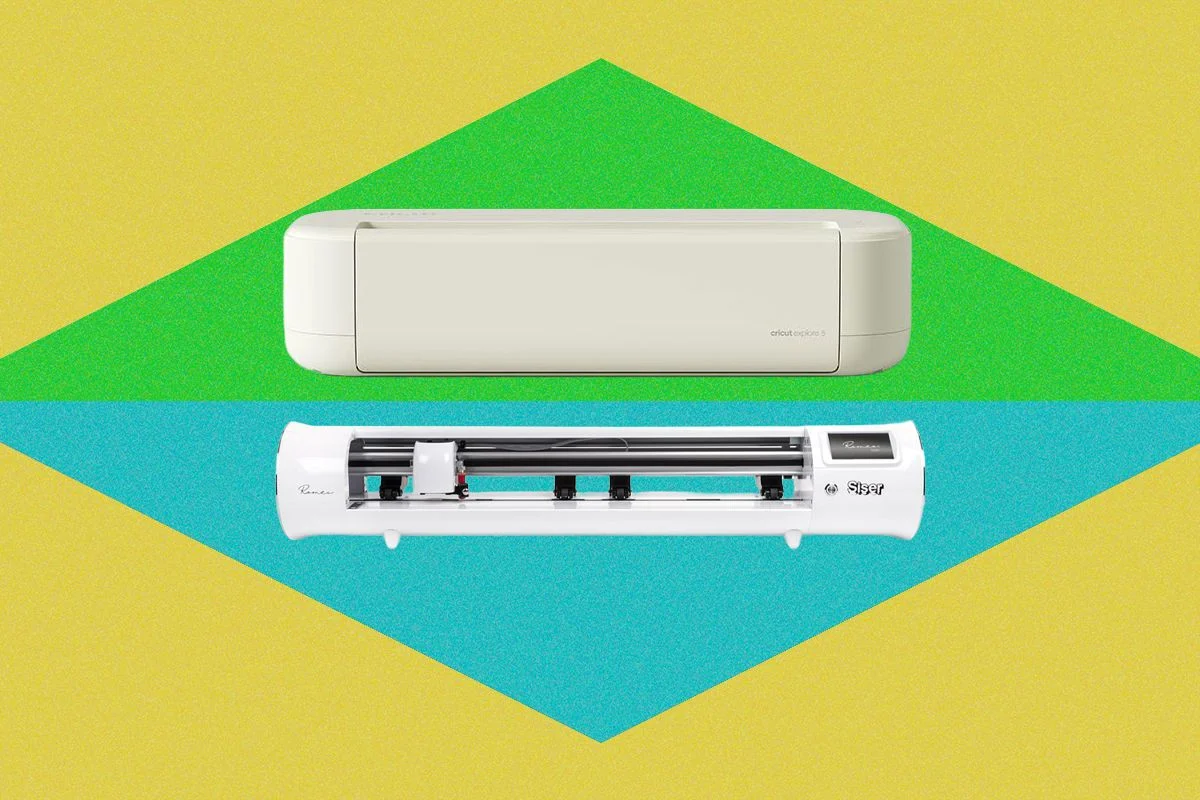
The landscape of the global "Do-It-Yourself" (DIY) and craft market has undergone a significant technological transformation over the last decade, evolving from simple manual tools to high-precision, software-driven smart cutting machines. At the forefront of this evolution are two distinct philosophies of hardware design: the user-centric, ecosystem-heavy approach of Cricut and the high-performance, industrial-leaning precision of Siser. As the creator economy continues to expand, with millions of individuals launching small businesses on platforms like Etsy and Shopify, the choice between a hobbyist-grade machine and a professional-grade cutter has become a pivotal decision for entrepreneurs and enthusiasts alike.
The recent market entry of the Cricut Explore 5 and the Siser Romeo highlights a widening gap in the consumer electronics sector dedicated to crafting. While both machines serve the primary function of cutting materials such as vinyl, cardstock, and heat-transfer paper, their technical specifications, software requirements, and operational workflows target vastly different segments of the market. The Cricut Explore 5, priced at approximately $199 for the base unit, positions itself as the "Weekend Warrior" tool—accessible, intuitive, and integrated. In contrast, the Siser Romeo, retailing for roughly $600, is marketed as "The Master"—a high-definition cutter designed for high-volume production and professional-grade accuracy.

The Evolution of the Smart Cutting Industry: A Brief Chronology
To understand the current competition between Cricut and Siser, one must look at the trajectory of home die-cutting technology. In the early 2000s, die-cutting was largely a manual process involving physical dies and hand-cranked presses. The industry shifted toward digital solutions with the introduction of early electronic cutters that utilized cartridges.
By the mid-2010s, the market moved toward software-integrated machines. Cricut established dominance by creating a "walled garden" ecosystem, prioritizing ease of use and a massive library of pre-made designs. Siser, historically a leader in the manufacturing of high-quality heat transfer vinyl (HTV) and adhesive materials, remained a primary supplier for these machines for years. However, as the demand for higher precision and faster production grew among small business owners, Siser transitioned from being a material supplier to a hardware manufacturer, launching the Juliet and Romeo series to provide an alternative to the limitations often found in hobbyist machines.
Technical Specifications and Performance Analysis
The Cricut Explore 5: Accessibility and Integration
The Cricut Explore 5 is designed to minimize the barrier to entry for new crafters. Its primary appeal lies in its "Load and Go" system, which simplifies the material-loading process. Unlike previous iterations, the Explore 5 emphasizes a streamlined physical interface, featuring a clamshell design that protects the internal blade carriage and rollers from dust—a common issue in home craft environments.

Key technical attributes of the Explore 5 include:
- Cutting Width: 12 inches.
- Connectivity: Bluetooth-centric, allowing for wireless operation from mobile devices and laptops.
- Software: Cricut Design Space, a cloud-based platform that offers a shallow learning curve and a vast repository of user-generated content.
- Special Features: Compatibility with "Smart Materials," which allow for matless cutting, further reducing the steps required to begin a project.
During performance testing, the Explore 5 demonstrated high proficiency in "plug-and-play" scenarios. For casual projects such as personalized bookmarks, vinyl decals for glassware, and basic apparel, the machine operates with a hum-like frequency similar to a standard inkjet printer. However, data suggests that the machine may struggle with highly intricate designs on fibrous materials like heavy cardstock, sometimes requiring manual "weeding" or secondary cleanup with a precision knife.
The Siser Romeo: Industrial Precision for High-Volume Production
The Siser Romeo represents a significant step up in both size and capability. With a 24-inch cutting width, it is double the size of the standard Explore 5, making it suitable for large-scale graphics and bulk orders. The Romeo utilizes adjustable pinch rollers, a feature typically reserved for industrial-grade plotters, which allows the machine to handle a wide variety of material widths without the need for a sticky cutting mat.

Technical highlights of the Siser Romeo include:
- Cutting Width: 24 inches.
- Connectivity: Wi-Fi and USB, offering a more stable connection than standard Bluetooth, which is prone to interference in hardware-heavy environments.
- Onboard Controls: A high-resolution touch screen that allows users to adjust cutting speed and blade force in real-time during a cut.
- Software: Leonardo Design Studio, a robust desktop application that provides granular control over vector paths and tiling.
The Romeo’s "tiling" feature is a critical data point for professional users. This software capability automatically replicates a design to fill the entire width and length of the loaded material, maximizing efficiency and reducing waste. In production environments, this can increase output by up to 40% compared to machines that require manual layout for every cut.
Software Ecosystems: Design Space vs. Leonardo Design Studio
The true differentiator between these two machines is not merely the hardware, but the software philosophy. Cricut Design Space is built on the premise of community and inspiration. It functions as a hybrid between a design tool and a social network, where users can bookmark projects created by others and customize them with minimal technical knowledge. This ecosystem is highly effective for users who prefer guided workflows, though it has faced criticism for its reliance on a stable internet connection and its subscription-based "Cricut Access" model.

Leonardo Design Studio, accompanying the Siser Romeo, is a more traditional design suite. It assumes a higher level of user competency, offering tools for advanced vector manipulation and layer separation. While the learning curve is steeper, the software provides a level of autonomy that professional creators demand. Recent reports indicate that Siser is working on integrations with third-party design platforms like Canva to bridge the gap between professional utility and user-friendly design.
Market Positioning and Consumer Feedback
Industry analysts suggest that the "tipping point" for moving from a Cricut to a Siser Romeo occurs when a hobbyist begins to transition into a commercial entity. Feedback from the crafting community indicates that while the Cricut is superior for "spontaneous" projects, the Siser Romeo is the preferred choice for "repeatable" workflows.
One of the most frequently cited concerns among Cricut users is the occasional inconsistency of Bluetooth connectivity and the limitations of the 12-inch cutting field. In contrast, Siser users frequently mention the Romeo’s size as a potential drawback, as the machine requires a dedicated, permanent workstation and significant rear clearance for material feeding.

From a noise perspective, the machines offer different acoustic profiles. The Cricut Explore 5 maintains a consistent whirring sound, while the Siser Romeo produces high-pitched "chirps" and "bleeps" characteristic of high-speed servo motors. While neither is disruptive in a standard home office, the Romeo’s speed—up to 600mm per second—is significantly faster than the Explore 5, a factor that becomes vital when fulfilling orders for dozens of items.
Broader Impact on the Creator Economy
The competition between the Explore 5 and the Romeo reflects a broader trend in the democratization of manufacturing. Tools that were once restricted to professional signage shops are now available to the general public. This has lowered the overhead costs for small-scale textile and giftware businesses.
The implications of this technology reach into various sectors:

- Education: Schools and libraries are increasingly adopting these machines for STEM and "Maker Space" programs to teach digital design and fabrication.
- Sustainability: The ability to personalize and repair existing items (upcycling) through patchwork and vinyl application contributes to a more sustainable "slow fashion" movement.
- Entrepreneurship: The low entry price of the Explore 5 allows individuals to test business ideas with minimal risk, while the Romeo provides a clear "graduation" path for those who find success.
Conclusion: Fact-Based Analysis of Value
When evaluating the Cricut Explore 5 against the Siser Romeo, the decision rests on the intended volume and complexity of the work. The Explore 5 is a triumph of user experience, removing the friction of technical settings and offering a curated path to creativity. It remains the market leader for the average household.
The Siser Romeo, however, is a precision instrument. Its higher price point is justified by its speed, 24-inch capacity, and the elimination of the recurring costs associated with cutting mats. For the user who views crafting as a production line rather than a pastime, the Romeo’s granular control and industrial build quality offer a superior return on investment.
As the smart cutting market continues to mature, consumers can expect further convergence between these two styles—Cricut moving toward more robust hardware and Siser refining its software to be more approachable. For now, the Explore 5 and the Romeo stand as the definitive bookends of the modern digital crafting world.
