

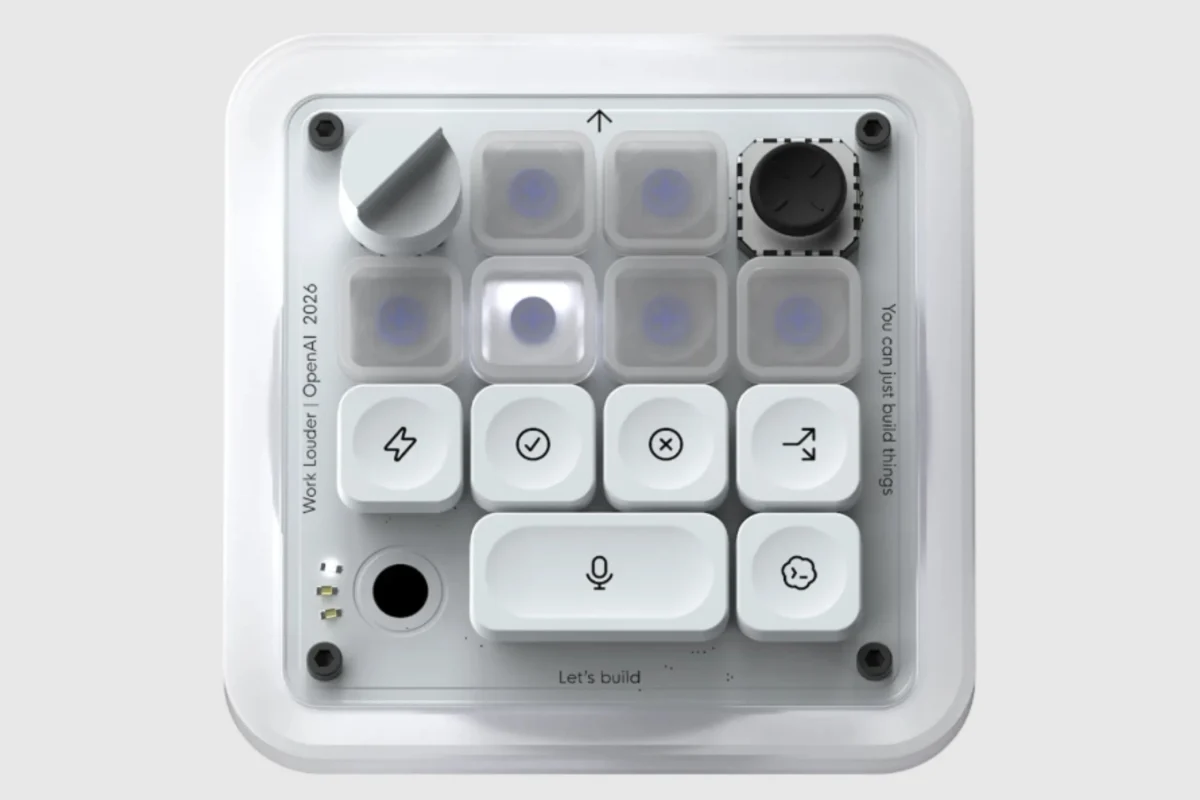
OpenAI officially entered the hardware market last week with the release of Micro, a specialized mechanical keypad designed to integrate directly with the ChatGPT ecosystem. Developed in a strategic collaboration with Work Louder, a boutique keyboard designer known for modular and artisanal input devices, Micro represents OpenAI’s first tangible step toward creating a physical interface for its artificial intelligence models. While the device has been marketed as a productivity enhancer for power users and developers, its launch coincides with a period of heightened legal and competitive tension for the San Francisco-based AI laboratory.
The introduction of Micro follows years of speculation regarding OpenAI’s hardware ambitions. The device is positioned not as a mass-market peripheral, but as a niche tool for the "agentic" era of computing—a shift where AI does not merely answer questions but performs multi-step tasks across various software environments. However, the $230 price point and the specialized nature of the hardware have sparked a debate within the tech community regarding the utility of dedicated AI peripherals in an era where software integration is increasingly seamless.
Technical Specifications and Aesthetic Design
The Micro keypad is a compact, "macropad" style device characterized by a sturdy build quality and a minimalist aesthetic that many industry observers have described as "Apple-coded." This description stems from the device’s immaculate white packaging, clean lines, and high-quality materials. The hardware is designed to be heavy enough to remain stationary on a desk during intense use, featuring a weight that allows it to function effectively as a high-end paperweight when not in use.
The interface consists of twelve primary keys, divided into two distinct functional groups. At the top of the device are six frosted "agent" keys. These are fully customizable and intended to be mapped to specific "agents" or workflows within ChatGPT or Codex, OpenAI’s specialized tool for agentic coding. Below these are six command keys used to execute prompts, toggle settings, or navigate the AI interface.
Connectivity is handled through both Bluetooth and USB-C, ensuring compatibility with a wide range of workstation setups. One of the standout physical features is the integrated voice dictation button. By holding this button, users can bypass text entry entirely, sending vocal instructions directly to the ChatGPT application. This feature aims to reduce the friction of the "human-in-the-loop" experience, allowing for a more conversational and fluid interaction with the model.
Programming the AI Interface
Functionality for the Micro is managed through a dedicated tab within the ChatGPT web and desktop interface. From this dashboard, users can calibrate the device’s behavior, including:
- Key Mapping: Assigning specific ChatGPT threads or custom GPTs to individual agent keys.
- Visual Feedback: Adjusting the brightness of the internal LED lighting.
- Status Indicators: The keys utilize a color-coded system to communicate the AI’s current state. A white light indicates the agent is idle; blue signifies the model is "thinking" or processing; green denotes a completed task; and red serves as an alert for errors or failed executions.
For developers using Codex, the Micro keypad is intended to act as a physical bridge for complex coding tasks, such as triggering automated refactoring or executing unit tests via AI agents. By allowing users to toggle between different project-specific agents with a single tap, OpenAI hopes to minimize the cognitive load associated with managing multiple AI-driven workflows.
The Competitive and Legal Landscape
The launch of Micro is shadowed by a significant legal confrontation between OpenAI and Apple. On July 10, 2026, Apple filed a lawsuit against the AI lab, accusing it of trade secret theft. The litigation centers on allegations that OpenAI recruited key talent from Apple’s hardware and software engineering divisions to accelerate its own product development. This legal battle is expected to be a long-term fixture in the industry, potentially impacting the speed and scope of OpenAI’s hardware roadmap.
The friction with Apple is particularly notable given the rumors surrounding OpenAI’s next hardware project. Reports suggest that the company is developing a screenless smart home speaker designed to compete with the likes of the Apple HomePod and Amazon Echo. This rumored device is reportedly being built by a team that includes several former Apple engineers, further fueling the accusations of intellectual property poaching.

Furthermore, OpenAI has been linked to a high-profile hardware collaboration involving Sam Altman, Jony Ive (Apple’s former Chief Design Officer), and Masayoshi Son of SoftBank. While Micro is a collaboration with Work Louder, it is viewed by many as a precursor or a "test balloon" for more ambitious consumer electronics projects aimed at redefining how humans interact with ambient intelligence.
Market Reception and Community Feedback
Despite the high production values, the Micro has met with a polarized reception, particularly from the developer community on platforms such as Reddit. Critics have pointed to the $230 price tag as a significant barrier to entry, especially when compared to existing DIY macropads or established peripherals like the Elgato Stream Deck, which offers similar macro functionality for nearly $100 less.
One prominent review from the independent outlet Aftermath characterized the device as being "engineered to piss me off," citing the steep learning curve and the redundancy of a physical keypad for users who are already proficient with keyboard shortcuts. Some users have labeled the product a "novelty" or a "prank," arguing that the time required to memorize color codes and key mappings outweighs the efficiency gains.
Conversely, proponents of the device argue that for "power users" who spend several hours a day interacting with LLMs (Large Language Models), the tactile feedback and dedicated dictation button offer a meaningful improvement in ergonomics. The ability to physically "switch" between different AI personalities or project contexts provides a level of organizational clarity that tabbed browsing often lacks.
Strategic Implications for the AI Industry
OpenAI’s foray into hardware signals a broader trend among software-first AI companies seeking to capture more of the user’s "attention stack." By controlling the hardware, OpenAI can:
- Reduce Latency: Deep integration between the physical button and the cloud-based model can shave milliseconds off response times, creating a more responsive user experience.
- Data Collection: Hardware provides unique insights into user behavior and physical interaction patterns that software alone cannot capture.
- Brand Ecosystem: Much like Apple’s ecosystem, physical devices create "stickiness," making it more difficult for users to switch to competing models from Google or Anthropic.
The Micro keypad also addresses the "blank page" problem. For many users, the most difficult part of using AI is knowing how to start. By providing physical buttons pre-mapped to specific tasks—such as "Summarize Email," "Debug Code," or "Draft Response"—OpenAI is attempting to turn a general-purpose tool into a series of specific, high-utility appliances.
Timeline of OpenAI’s Hardware Evolution
- Early 2024: Rumors emerge of Sam Altman seeking billions in funding for a hardware venture involving Jony Ive.
- Late 2025: OpenAI begins hiring specialized hardware engineers and industrial designers, many formerly of Apple and Tesla.
- July 10, 2026: Apple sues OpenAI for trade secret theft, specifically citing the poaching of hardware talent.
- July 14, 2026: Reports surface of a screenless smart speaker in development at OpenAI.
- Current Week: Official launch and shipping of the Micro keypad in collaboration with Work Louder.
Analysis of Future Prospects
The success of the Micro keypad will likely not be measured in millions of units sold, but in its ability to validate the concept of "AI-first" hardware. If OpenAI can prove that a dedicated physical interface significantly increases user engagement with ChatGPT, it will pave the way for more complex devices, including wearable AI and home automation systems.
However, the company faces a difficult path. The "AI hardware" graveyard is already growing, with recent high-profile disappointments like the Humane AI Pin and the Rabbit R1 failing to gain traction due to software bugs and the inherent superiority of the modern smartphone. OpenAI’s advantage lies in its dominant position in the software market; unlike its hardware competitors, OpenAI is building a physical interface for a tool that millions of people already use daily.
As the legal battle with Apple intensifies, the industry will be watching closely to see if OpenAI can maintain its momentum. For now, Micro stands as a high-priced, beautifully designed experiment—a "code monkey’s" luxury item that hints at a future where AI is not just a website or an app, but a physical presence on every desk. Whether users are willing to pay a premium for that presence remains to be seen.
