

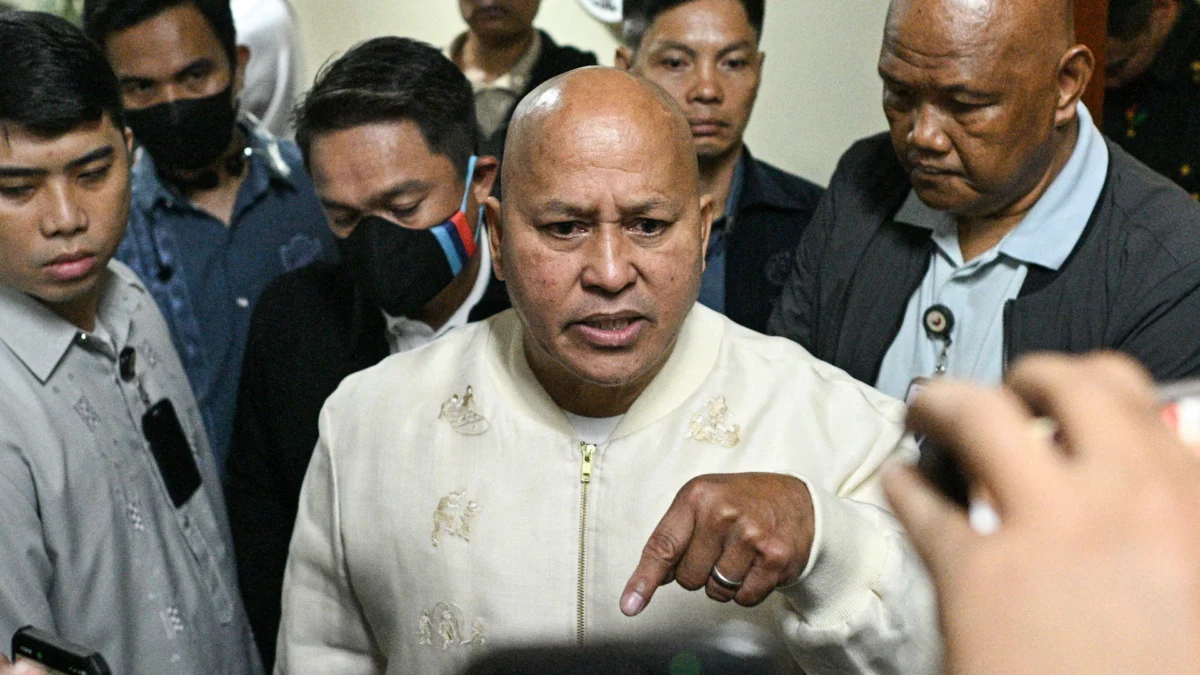
Philippines Senator Ronald Dela Rosa has taken refuge in the country’s parliament, as police sought to detain him on Monday, May 12, 2026, in accordance with an International Criminal Court (ICC) arrest warrant. The warrant, unsealed earlier today, targets Dela Rosa for his alleged role in former President Rodrigo Duterte’s controversial "war on drugs," a campaign that prosecutors at The Hague contend led to the extrajudicial killing of tens of thousands. Dela Rosa, who served as Duterte’s first chief of the Philippine National Police (PNP) and was a key architect and implementer of the anti-narcotics drive, has consistently defended the campaign as a legitimate effort to curb crime and drug proliferation. His current sanctuary within the legislative halls of the Senate raises complex questions regarding national sovereignty, parliamentary immunity, and the reach of international justice.
The Genesis of the Drug War and Dela Rosa’s Central Role
Senator Ronald "Bato" Dela Rosa, a retired police general, rose to national prominence as a loyal enforcer for Rodrigo Duterte. Their association dates back to Duterte’s tenure as mayor of Davao City, where Dela Rosa served as police chief, implementing a tough-on-crime strategy that foreshadowed the national drug war. When Duterte ascended to the presidency in June 2016, promising to eradicate illegal drugs within months, he appointed Dela Rosa as the chief of the Philippine National Police, placing him at the helm of the brutal campaign.
The drug war, officially dubbed "Oplan Tokhang" (a portmanteau of "toktok" or knock, and "hangyo" or plead), involved police knocking on doors of suspected drug users and pushers, urging them to surrender. However, it quickly devolved into a bloody crackdown characterized by widespread extrajudicial killings. While official government figures place the number of deaths during police operations at around 6,200 from July 2016 to May 2022, human rights organizations and independent monitoring groups offer significantly higher estimates, ranging from 12,000 to over 30,000, including victims of vigilante-style killings often linked to state agents.
Dela Rosa, as PNP chief from July 2016 to April 2018, was the public face and operational commander of this campaign. He frequently echoed Duterte’s fiery rhetoric, vowing to "bury" drug addicts and publicly ordering police to "kill them all" if suspects resisted arrest. Critics argue that his leadership fostered a climate of impunity within the police force, where due process was often disregarded, and accountability for abuses was virtually non-existent.
The International Criminal Court’s Long Road to Intervention
The ICC’s involvement in the Philippines’ drug war began with a preliminary examination in February 2018, initiated by then-ICC Prosecutor Fatou Bensouda. This examination sought to determine whether there was a reasonable basis to proceed with an investigation into alleged crimes against humanity committed in the context of the drug war.
In response to the ICC’s scrutiny, the Philippines, under President Duterte, formally withdrew from the Rome Statute, the treaty that established the ICC, in March 2019. Duterte argued that the ICC had no jurisdiction over the Philippines and that the country’s justice system was fully capable of addressing any alleged abuses. The withdrawal officially took effect in March 2019. However, under the principle of complementarity, the ICC retains jurisdiction over crimes committed while a state was a party to the Rome Statute, meaning the period between November 2011 (when the Philippines became a state party) and March 2019 remained under the court’s purview.
Despite the withdrawal, the ICC Pre-Trial Chamber I authorized a full investigation into the drug war in September 2021, finding that there was a reasonable basis to believe that crimes against humanity, specifically murder, had been committed. The Chamber emphasized that the Philippine government had not demonstrated that it was genuinely investigating or prosecuting those responsible for the alleged crimes.
The Philippine government, under both Duterte and his successor, President Ferdinand "Bongbong" Marcos Jr., has consistently refused to cooperate with the ICC, citing sovereignty and the country’s domestic legal processes. In 2023, the ICC Appeals Chamber definitively rejected the Philippines’ challenge to the court’s jurisdiction, affirming the Pre-Trial Chamber’s decision to authorize the investigation. This ruling paved the way for the issuance of arrest warrants for individuals deemed most responsible for the alleged crimes. Senator Dela Rosa’s warrant is among the first to be publicly unsealed following this affirmation.
Chronology of Key Events Leading to the Warrant:
- June 30, 2016: Rodrigo Duterte assumes presidency, Ronald Dela Rosa appointed PNP Chief. "War on Drugs" officially launched.
- February 8, 2018: ICC Prosecutor Fatou Bensouda initiates a preliminary examination into the Philippine drug war.
- March 17, 2018: President Duterte announces the Philippines’ withdrawal from the Rome Statute.
- March 17, 2019: Philippines’ withdrawal from the Rome Statute officially takes effect.
- June 14, 2021: ICC Prosecutor Karim Khan requests judicial authorization to open an investigation into the situation in the Philippines.
- September 15, 2021: ICC Pre-Trial Chamber I authorizes the opening of an investigation into alleged crimes against humanity in the Philippines between November 1, 2011, and March 16, 2019.
- November 18, 2021: Philippine government requests the ICC Prosecutor to defer the investigation, citing ongoing domestic investigations.
- July 18, 2022: ICC Prosecutor Karim Khan rejects the Philippine government’s deferral request, stating that the domestic proceedings "do not sufficiently mirror the ICC’s investigation."
- January 26, 2023: ICC Pre-Trial Chamber I authorizes the Prosecutor to resume the investigation.
- July 27, 2023: ICC Appeals Chamber rejects the Philippine government’s appeal against the resumption of the investigation, affirming the ICC’s jurisdiction.
- Early 2026 (Inferred): ICC Pre-Trial Chamber issues sealed arrest warrants for individuals, including Senator Ronald Dela Rosa.
- May 12, 2026: Arrest warrant for Senator Dela Rosa unsealed; Dela Rosa seeks refuge in the Philippine Senate.
Statements and Reactions from Related Parties
The unfolding events have triggered a wave of reactions from various stakeholders:
Senator Ronald Dela Rosa: From within the Senate building, Senator Dela Rosa is anticipated to reiterate his long-held defense that his actions during the drug war were lawful, necessary, and carried out in good faith to combat a severe national crisis. He is expected to denounce the ICC warrant as an infringement on Philippine sovereignty and a politically motivated attack. Sources close to the senator suggest he will invoke parliamentary immunity, though legal experts note this typically applies to legislative acts within national borders and not to international crimes. "I merely followed lawful orders from my Commander-in-Chief to protect the Filipino people from the scourge of illegal drugs," Dela Rosa is expected to state, "This is an assault on our sovereignty and an insult to our justice system."
The Philippine Government (Executive Branch): President Ferdinand Marcos Jr.’s administration is likely to face immense pressure. While Marcos Jr. has adopted a slightly softer tone on the drug war compared to Duterte, his government has maintained the stance of non-cooperation with the ICC. A statement from Malacañang is expected to reaffirm the Philippines’ position that it will not assist in the arrest or transfer of any Filipino citizen to the ICC, emphasizing that the country has a functioning justice system. However, the optics of a sitting senator sought by an international court could complicate diplomatic relations, especially with Western allies who are strong proponents of international justice.
The Philippine Senate: The legislative body is expected to be deeply divided. Some senators, particularly allies of Duterte and Dela Rosa, are likely to rally in support of their colleague, perhaps issuing a resolution condemning the ICC’s actions. Others, concerned about the country’s international standing and human rights record, may urge a more cautious approach, or even subtly suggest cooperation with international mandates. Senate President Juan Miguel Zubiri will be challenged to navigate this political minefield, balancing institutional solidarity with broader national interests.
International Criminal Court: While the ICC generally does not comment on ongoing investigations or warrants, its actions speak for themselves. The unsealing of the warrant signifies the court’s determination to pursue justice for alleged crimes against humanity, regardless of a state’s withdrawal from the Rome Statute. The court’s commitment to accountability for victims is paramount.
Human Rights Organizations: Local and international human rights groups, such as Amnesty International, Human Rights Watch, and Karapatan, have widely welcomed the ICC’s warrant as a crucial step towards justice for the thousands of victims of the drug war. They are expected to intensify calls for the Philippine government to cooperate fully with the ICC and to ensure the safety and protection of witnesses and victims. "This warrant is a beacon of hope for countless families who have been denied justice for far too long," a spokesperson for a prominent human rights group is likely to state.
Legal Experts: Legal scholars both domestically and internationally will dissect the implications of Dela Rosa’s refuge. Discussions will focus on the interplay between national sovereignty and international criminal justice, the limitations of parliamentary immunity in the face of international crimes, and the legal obligations of a non-cooperating state when an ICC warrant is issued against one of its citizens. The concept of "state responsibility" for crimes committed by its agents will also be a key point of analysis.
Broader Impact and Implications
The issuance of an ICC arrest warrant for a high-profile figure like Senator Dela Rosa carries significant and far-reaching implications:
Political Instability and Divisions: The event is likely to deepen political polarization within the Philippines. The Duterte-Marcos alliance, already showing cracks, may be further strained. The spectacle of a senator taking refuge in parliament could also create a constitutional crisis if the executive branch is compelled to act on the warrant, potentially leading to clashes between the legislative and executive powers. The political fallout could significantly influence the lead-up to the 2028 presidential elections.
International Relations and Reputation: The Philippines’ steadfast refusal to cooperate with the ICC could lead to diplomatic repercussions. Western nations, many of whom are strong supporters of the ICC, may exert pressure through various channels, potentially affecting trade relations, development aid, or even travel restrictions for implicated officials. The country’s image on the global stage as a respecter of human rights and the rule of law could suffer a significant blow. Conversely, some non-Western nations may view the Philippines’ stance as a defense of national sovereignty against perceived international overreach.
Precedent for International Justice: This case sets a crucial precedent for the ICC’s ability to assert jurisdiction and pursue accountability even against states that have withdrawn from the Rome Statute. It reinforces the principle that withdrawal does not absolve individuals of responsibility for crimes committed while the state was a party. This could embolden the ICC in future cases involving other non-cooperating nations.
Justice for Victims: For the thousands of families who lost loved ones in the drug war, this development represents a glimmer of hope for accountability. While the path to justice remains arduous, the ICC warrant validates their claims and offers a potential avenue for redress that has largely been unavailable domestically. The psychological impact on victims and their advocates, seeing a prominent figure finally face international scrutiny, cannot be overstated.
Domestic Legal System Under Scrutiny: The ICC’s intervention continues to highlight the perceived failings of the Philippine domestic legal system to genuinely investigate and prosecute alleged human rights abuses. Critics argue that the lack of convictions and the slow pace of investigations into drug war killings demonstrate a systemic failure that necessitated the ICC’s involvement. This event could spur renewed calls for comprehensive reforms within the Philippine judiciary and law enforcement agencies.
As Senator Dela Rosa remains within the confines of the Philippine Senate, the nation and the international community watch intently. The immediate future holds uncertainty, but one thing is clear: the long shadow of the Philippine drug war has finally reached the highest echelons of power, demanding a reckoning that transcends national borders.
