

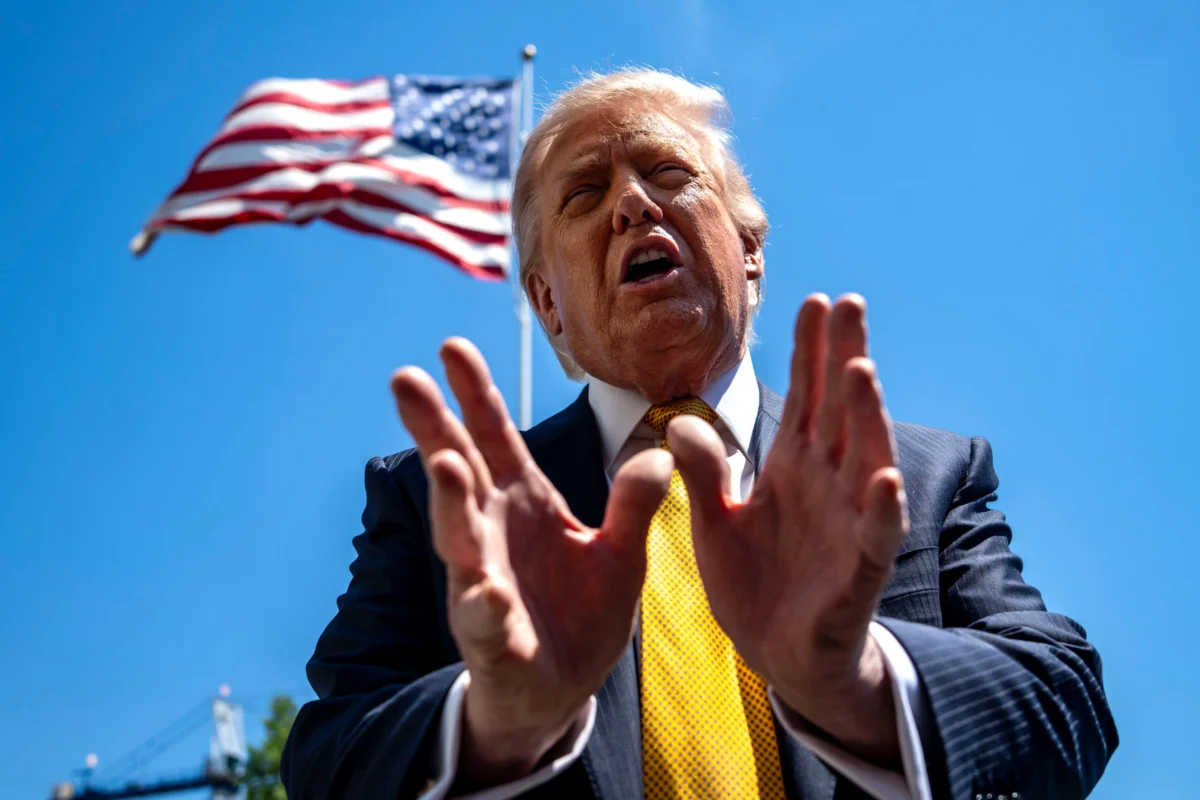
As U.S. President Donald Trump embarks on a pivotal diplomatic mission to Beijing to meet with Chinese President Xi Jinping, anticipation runs high regarding the potential outcomes of their bilateral discussions. The summit, scheduled against a backdrop of complex economic interdependence and simmering geopolitical tensions, is widely expected to yield significant announcements that could reshape aspects of the U.S.-China relationship. Prediction market traders, along with Wall Street analysts, are closely monitoring the unfolding events, projecting high probabilities for several key developments, particularly in trade and economic cooperation.
The Expected Boeing Bonanza: A Landmark Aircraft Deal
A primary focus of market speculation centers on a monumental aircraft purchase agreement. Prediction market platform Kalshi indicates an 86% chance that President Trump will announce China’s commitment to acquire a substantial number of aircraft from the American domestic manufacturer Boeing. This sentiment is strongly echoed on Wall Street, where Boeing’s stock experienced a nearly 2% advance on Wednesday in anticipation of the high-profile meeting, reflecting investor confidence in a forthcoming deal.
Tobin Marcus, head of U.S. politics and policy at Wolfe Research, articulated the prevailing sentiment in a recent note to clients: "The speculation is that Trump wants this to be the largest order ever announced, which could mean a Boeing purchase commitment in the triple-digit billions." Such an order would represent a colossal boost for Boeing, a cornerstone of American manufacturing, and would undoubtedly be touted by the Trump administration as a tangible victory for U.S. exports and job creation. However, Marcus also cautioned, "Investors will need to await clarification from the company about how ‘real’ those numbers are and what specific airframes are included." This nuance is critical, as large, multi-year purchase commitments can sometimes include options or letters of intent that do not immediately translate into firm orders or deliveries.
Historically, China has been a crucial market for Boeing. The company projects that China will need over 8,700 new commercial airplanes over the next two decades, valued at approximately $1.4 trillion, making it the world’s largest aviation market. Major orders from Chinese airlines are often strategically timed with high-level diplomatic visits, serving as goodwill gestures and concrete symbols of bilateral economic cooperation. A "triple-digit billions" deal could involve a mix of single-aisle jets like the 737 MAX, which has been working to regain global trust, and wide-body aircraft such as the 787 Dreamliner or 777, critical for China’s expanding international routes. Such an announcement would not only provide a significant financial injection for Boeing but also send a powerful signal of stability and cooperation in the broader U.S.-China trade relationship. It would also be a symbolic win for the U.S., demonstrating China’s willingness to address trade imbalances through large-scale purchases of American-made goods.
Extending the Tariff Truce: A Step Towards Trade Stability
Beyond the potential Boeing deal, traders are also placing high odds—over 81%—on President Trump announcing an extension of the existing U.S.-China tariff truce. This truce, established in an October deal, marked a significant de-escalation in the protracted trade tensions between the two economic superpowers. The original agreement saw China agree to temporarily suspend export controls on rare earths, a critical component for numerous high-tech industries, while the U.S. reciprocated by reducing tariffs on certain Chinese goods related to fentanyl from 20% to 10%.
The U.S.-China trade war, initiated in 2018 under the Trump administration, saw both countries impose billions of dollars in tariffs on each other’s goods, disrupting global supply chains and impacting industries worldwide. The "Phase One" trade deal, signed in January 2020, was an initial attempt to mitigate these tensions, with China committing to purchase an additional $200 billion in U.S. goods and services over two years, though many of these targets were not fully met amidst the global pandemic and other geopolitical shifts. The more recent October truce represented a targeted effort to address specific, pressing concerns for both nations: China’s control over rare earth elements is a strategic asset, while the U.S. has been grappling with a severe fentanyl crisis, largely fueled by illicit synthetic opioids originating from or transiting through China. Extending this truce would signify a continued commitment to dialogue and a preference for economic engagement over further punitive measures, potentially providing a much-needed period of predictability for businesses operating in both markets.
Barclays analysts predict that further tariff reductions could be on the table, specifically if China commits to additional purchases of American aircraft, oil, and soybeans. While Kalshi traders see a 79% chance of a soybean purchase announcement, reflecting China’s consistent demand for agricultural products and the U.S.’s position as a major producer, the probability of significant oil purchases is considerably lower at just 24%. The potential for further tariff adjustments, even by a few percentage points, underscores the intricate link between economic concessions and trade policy in the ongoing bilateral negotiations.
Broader Economic Frameworks: Soybeans, Oil, and a U.S.-China Board of Trade
The potential for large-scale agricultural purchases, particularly soybeans, holds significant weight for the U.S. agricultural sector, which was severely impacted by the initial trade war. China is the world’s largest importer of soybeans, and increased purchases would offer substantial relief and economic benefits to American farmers. While oil purchases appear less certain according to prediction markets, any commitment would contribute to balancing the trade deficit and supporting the U.S. energy industry.
Perhaps a more structural and long-term development anticipated by traders is the announcement of a U.S.-China Board of Trade, with a 69% probability. This initiative is noted as a key goal for U.S. Trade Representative Jamieson Greer. Wolfe Research’s Tobin Marcus suggests, "We suspect that this will be done primarily through ongoing purchase commitments, with the Board of Trade eliciting a centralized answer from the CCP about what China will buy from the US to mitigate their bilateral trade surplus."
A U.S.-China Board of Trade could serve as a permanent institutional mechanism for managing economic relations, providing a structured forum for dialogue, dispute resolution, and the coordination of trade policies. This would represent a shift from ad-hoc negotiations to a more formalized framework, potentially fostering greater transparency and predictability in trade dealings. Such a board could also play a crucial role in monitoring commitments, addressing non-tariff barriers, and facilitating ongoing economic cooperation, moving beyond episodic deals to a more enduring partnership in managing the world’s largest bilateral trade relationship. For USTR Greer, establishing such a board would be a strategic achievement, embedding a process for addressing the persistent issue of the bilateral trade surplus through a more systematic approach rather than solely through punitive tariffs.
Geopolitical Undercurrents: Iran, Energy, and the AI Frontier
While economic matters dominate the predictions, the summit is not solely confined to trade. Geopolitical issues, though perhaps less certain in terms of specific outcomes, are expected to feature prominently. President Trump, prior to his departure, told reporters that he expected to discuss the ongoing Iran war with President Xi. However, he also paradoxically stated, "I don’t think we need any help with Iran." Despite this public downplaying of the need for assistance, prediction markets still assign a 61% likelihood that Iran will be a topic of discussion during the bilateral meeting, reflecting its significance in global stability and energy markets. China, as a major global energy consumer and a permanent member of the UN Security Council, plays a critical role in Middle Eastern geopolitics and any resolution regarding Iran. Discussions could range from ensuring stability in oil supplies to diplomatic efforts aimed at de-escalating regional tensions.
Closely related to Iran and global stability is the topic of oil and gasoline. Traders give a 59% chance that these energy-related subjects will be addressed. Given the volatility of global energy markets and China’s vast energy demands, ensuring stable supply chains and managing prices is a shared interest for both nations.
However, a topic that might be of paramount importance to the future of global power dynamics—artificial intelligence (AI)—is given a comparatively lower probability of discussion by traders, at just 54%. This is despite the strong expectation from analysts like Jefferies’ Edison Lee, who noted the significant presence of technology executives accompanying President Trump on his trip. "In addition to discussions on US AI chip/WFE [wafer-fabrication-equipment] export restrictions, the presence of Micron’s CEO and Meta’s president could offer scope for the issues of China’s ban on Micron’s products in key Chinese infra and restrictions against Facebook to be part of the discussions," Lee wrote. He further suggested, "We also see these issues as part of the bargaining process in relation to US tech restrictions against China."
The U.S. and China are locked in an intense competition for technological supremacy, particularly in AI, advanced semiconductors, and quantum computing. The U.S. has implemented stringent export controls on advanced chips and wafer fabrication equipment, citing national security concerns, aiming to slow China’s progress in these critical areas. China views these restrictions as an attempt to stifle its economic and technological rise. The presence of CEOs from companies like Micron (a memory chip manufacturer that faced a ban in China for national security reasons) and the president of Meta (whose Facebook platform remains restricted in China) underscores the deep entanglement of technology, trade, and national security. While prediction markets may see a lower probability of explicit AI discussion, the underlying issues—tech export controls, market access for U.S. tech firms, and China’s indigenous tech development—are undeniably central to the broader strategic rivalry. Any progress or even acknowledgement on these fronts could have far-reaching implications for global technology supply chains and the future of digital economies.
The Symbolic Handshake: A Measure of Diplomatic Rapport
Amidst the weighty economic and geopolitical agenda, even seemingly minor details garner attention. Prediction market traders have also weighed in on the duration of the handshake between President Trump and President Xi. Despite the persistent high tensions between China and the U.S., traders believe the most likely scenario is a handshake lasting approximately 8.5 seconds. This specific prediction, while seemingly trivial, highlights the intense scrutiny placed on every aspect of such high-level diplomatic encounters. The length of a handshake, body language, and other non-verbal cues are often interpreted by political observers as indicators of the rapport, or lack thereof, between leaders and the underlying state of bilateral relations. A firm, sustained handshake would symbolize a degree of mutual respect and willingness to engage, even amidst significant disagreements.
Historical Context and the Path to Beijing
The current summit builds upon a complex history of U.S.-China relations, characterized by periods of cooperation, competition, and overt tension. From the landmark visit of President Nixon to China in 1972, which normalized relations, to China’s entry into the World Trade Organization in 2001, the economic ties between the two nations have grown exponentially, making them inextricably linked. However, this growth has also brought friction, particularly concerning trade imbalances, intellectual property theft, human rights, and regional security issues in the South China Sea and Taiwan.
The Trump administration’s approach to China marked a significant departure from previous administrations, initiating a full-scale trade war and adopting a more confrontational stance on various fronts. The October 2025 tariff truce and the current summit represent attempts to manage this complex relationship, seeking areas of common ground while acknowledging fundamental differences. The composition of the U.S. delegation, including prominent business leaders, underscores the administration’s focus on securing tangible economic benefits and market access for American companies.
Analyst Perspectives and Market Implications
The consensus among analysts suggests that the Beijing summit is a critical juncture for both leaders. For President Trump, securing large purchase commitments, particularly from Boeing and the agricultural sector, would be a significant domestic political win, demonstrating his ability to deliver on "America First" economic promises and create jobs. An extension of the tariff truce would also provide a measure of stability for U.S. businesses.
For President Xi, hosting the U.S. President and reaching agreements, particularly on trade, could project an image of China as a responsible global economic power willing to engage constructively. It could also provide much-needed stability for China’s economy, which has faced its own domestic challenges. The potential establishment of a U.S.-China Board of Trade, as envisioned by USTR Greer, could offer a formalized platform to manage future trade relations, reducing the likelihood of abrupt policy shifts and fostering a more predictable environment.
However, the disparities in prediction market probabilities for topics like AI discussions highlight the persistent areas of strategic competition that may not be easily resolved through economic deals alone. The underlying rivalry for technological dominance and geopolitical influence will likely continue to shape the U.S.-China relationship for years to come, even if the current summit yields positive economic outcomes.
The confluence of these factors makes President Trump’s trip to Beijing a highly watched event, with prediction markets offering a unique, real-time barometer of expectations. The outcomes of this summit will undoubtedly have significant ramifications for global trade, geopolitical stability, and the future trajectory of the world’s two largest economies.
