

Iran’s First Vice President, Mohammad Reza Aref, has issued a definitive statement regarding the Islamic Republic’s jurisdiction over the Strait of Hormuz, declaring that Tehran’s sovereign rights over the strategic waterway are "established" and that the "matter is closed." The high-level proclamation, reported by state media on May 13, 2026, comes at a critical juncture as the nation balances escalating maritime tensions with its high-profile participation in the 2026 FIFA World Cup, hosted primarily by the United States. Speaking during a period of heightened regional scrutiny, Aref’s comments signal a hardening of Tehran’s rhetorical stance on its maritime borders even as its national football team, Team Melli, prepares to travel to American soil for the world’s most-watched sporting event.
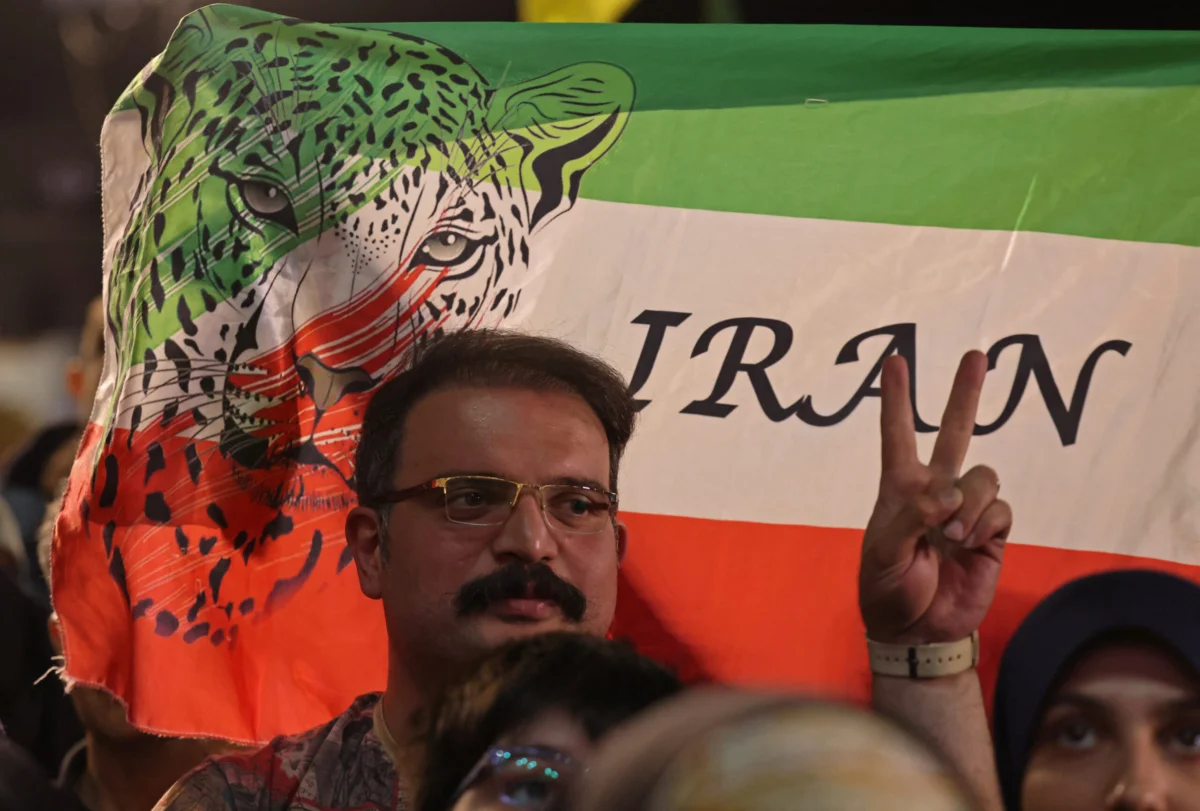
The Vice President’s remarks coincide with the official farewell ceremony for the Iranian national team in Tehran. The juxtaposition of hardline geopolitical assertions and the celebratory atmosphere of international sport highlights the complex "dual-track" diplomacy currently employed by the Iranian administration. While the government asserts control over global energy chokepoints, it simultaneously views the World Cup as a "major diplomatic asset" to maintain a presence on the global stage.
Strategic Significance of the Strait of Hormuz
The Strait of Hormuz remains the world’s most vital maritime oil chokepoint. Located between Oman and Iran, it connects the Persian Gulf with the Gulf of Oman and the Arabian Sea. According to data from the U.S. Energy Information Administration (EIA), approximately 20% to 30% of the world’s total oil consumption passes through this narrow passage daily. For Iran, the strait is not merely a geographic feature but a primary lever of national security and economic influence.
Vice President Aref’s assertion that the matter is "closed" likely refers to ongoing international disputes regarding the legal status of the waters. While the United Nations Convention on the Law of the Sea (UNCLOS) outlines the rights of "transit passage" for international vessels through such straits, Iran—which has signed but not ratified UNCLOS—has historically maintained that it reserves the right to regulate the passage of foreign warships and commercial vessels that it deems a threat to its national interests.
In recent years, the strait has been the site of numerous "shadow war" incidents, including the seizure of tankers and drone confrontations. By declaring the matter closed, Tehran is signaling to the international community, and specifically to the United States and its allies, that it will not negotiate on its perceived territorial waters, regardless of the diplomatic optics surrounding the World Cup.
The 2026 FIFA World Cup: A Diplomatic Tightrope
As Aref clarified Iran’s maritime stance, the Iranian Football Federation (FFIRI) was finalizing logistics for the national team’s journey to the United States. The 2026 FIFA World Cup, co-hosted by the U.S., Canada, and Mexico, presents a unique challenge for Iranian officials. For the first time in decades, a large Iranian delegation will be based in the United States, with the team’s training camp scheduled for Tucson, Arizona.
The President of the Iranian Football Federation emphasized on May 9 that participation in the tournament is essential for the nation’s soft power. He argued that withdrawing from the competition—a move occasionally suggested by hardline factions within the country during periods of high tension—would deprive Iran of a significant platform to project its national identity and engage with the global community.
FIFA, the world governing body for football, has remained steadfast in its insistence that Iran will participate. Despite calls from various political pressure groups to suspend Iran due to geopolitical conflicts or domestic policies, FIFA’s leadership has maintained that sport must remain insulated from political disputes, a stance that has allowed the Iranian team to proceed with its preparations for Group G.
Group G Match Schedule:
- June 15, 2026: Iran vs. New Zealand (Los Angeles, California)
- June 21, 2026: Iran vs. Belgium (Location TBD)
- June 27, 2026: Iran vs. Egypt (Location TBD)
The opening match against New Zealand in Los Angeles is particularly significant, as the city is home to the largest Iranian diaspora outside of Iran. This creates a high-stakes environment where sports, politics, and cultural identity will inevitably converge.
Chronology of Recent Events
The current tension and the Vice President’s statement are the culmination of several months of escalating rhetoric and logistical planning:
- Late 2025: Iran successfully qualifies for the 2026 FIFA World Cup, sparking national celebrations.
- January 2026: Diplomatic friction increases following naval drills in the Persian Gulf involving Iran, China, and Russia.
- March 2026: The U.S. State Department issues visas for the Iranian coaching staff and players, following months of negotiations mediated by third parties.
- May 9, 2026: The Iranian Football Federation President defends the World Cup campaign as a "diplomatic asset," countering domestic critics who suggested a boycott of the U.S.-hosted event.
- May 13, 2026: During the national team’s farewell ceremony, First Vice President Mohammad Reza Aref issues his statement on the Strait of Hormuz, effectively separating the nation’s sporting participation from its territorial claims.
- May 15, 2026 (Scheduled): Team Melli is expected to depart Tehran for their base in Tucson, Arizona.
Maritime Data and Economic Context
The timing of Aref’s statement is likely linked to recent fluctuations in global energy markets. As of May 2026, global oil prices have shown volatility due to supply chain disruptions in other parts of the world, making the stability of the Strait of Hormuz a focal point for global economists.
Data indicates that:
- Volume: Over 21 million barrels of crude oil and petroleum products pass through the strait daily.
- LNG Trade: Approximately 20% of the world’s Liquefied Natural Gas (LNG), primarily from Qatar, transits the strait.
- Dependence: Major Asian economies, including China, India, Japan, and South Korea, rely on the strait for more than 70% of their crude oil imports.
By asserting that the "matter is closed," Iran is reminding these global powers of its ability to influence their economic stability. This provides Tehran with a layer of "deterrence by statement" while its athletes are on American soil, ensuring that the country is not perceived as being in a position of weakness during its sporting engagement with the West.
International Reactions and Inferred Implications
While the U.S. State Department has not issued a direct response to Aref’s specific comments on the Strait of Hormuz on May 13, the general consensus among maritime security analysts is one of "cautious monitoring." Historically, the U.S. Fifth Fleet, based in Bahrain, has maintained that it will continue to protect the "free flow of commerce" in the region.
Diplomatic observers suggest that Aref’s rhetoric is intended for a domestic audience as much as an international one. Within Iran, there is a delicate balance between the "pragmatists" who want to use the World Cup to improve Iran’s image and the "principled" factions who fear that being guests in the United States might be seen as a capitulation. Aref’s hardline stance on the Strait of Hormuz serves to satisfy the latter, proving that footballing cooperation does not equal a softening of core geopolitical positions.
In the sports world, the focus remains on the logistical safety of the Iranian team. The choice of Tucson, Arizona, for their training base is seen as a strategic move to provide a controlled environment away from the potential political protests of larger metropolitan areas like Los Angeles or Washington D.C.
Analysis: The Intersection of Sport and Sovereignty
The situation highlights the unique role of the World Cup in modern geopolitics. For Iran, the tournament is a "double-edged sword." On one hand, it offers a rare moment of national unity and a chance to display the country’s talent to a global audience of billions. On the other hand, it places Iranian citizens and officials in the heart of what they have historically termed the "Great Satan."
Aref’s statement on the Strait of Hormuz acts as a geopolitical anchor. It ensures that while the Iranian flag flies in stadiums in Los Angeles and Arizona, the message from Tehran remains one of defiance and territorial integrity. The "diplomatic asset" described by the Football Federation is therefore being used as a shield, while the "maritime right" asserted by the Vice President is used as a sword.
As the Iranian team prepares to face New Zealand on June 15, the international community will be watching more than just the scoreboard. The behavior of the fans, the statements of the players, and the ongoing naval posture in the Persian Gulf will all serve as indicators of the state of Iran-West relations. For now, Tehran has made its position clear: the football will play on, but the sovereignty over the world’s most important waterway remains non-negotiable.
Conclusion
The departure of Team Melli for the 2026 World Cup marks a historic moment in the intersection of sports and international relations. However, the comments by First Vice President Mohammad Reza Aref serve as a stark reminder that beneath the veneer of sporting camaraderie lies a deep-seated and unresolved geopolitical struggle. By declaring the Strait of Hormuz issue "closed," Iran has set the stage for a summer where the drama on the pitch will be matched by the tension on the high seas. As the world turns its attention to the stadiums of North America, the eyes of the strategic community remain fixed on the narrow waters of the Persian Gulf, where the "established rights" of a nation continue to challenge the status quo of global maritime trade.
