

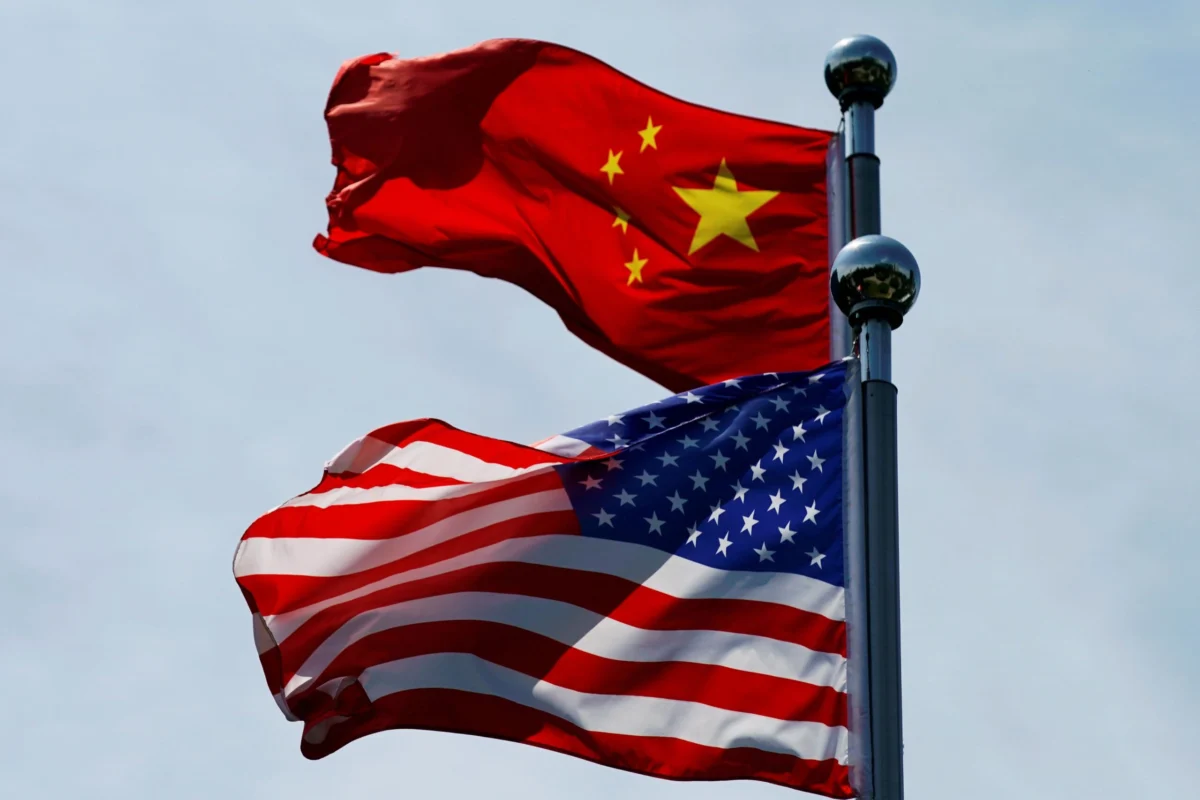
BEIJING — The intricate dance of global diplomacy is unfolding across East Asia this week, culminating in a highly anticipated presidential summit in Beijing between the United States and China. As both economic superpowers navigate a complex web of regional alliances, trade disputes, and geopolitical flashpoints, the upcoming meeting between U.S. President Donald Trump and Chinese President Xi Jinping, scheduled for Thursday and Friday, is being closely watched by leaders and markets worldwide. This pivotal engagement is preceded by a series of high-level diplomatic maneuvers, underscoring the delicate balance of power and the urgency of addressing pressing global challenges, notably the ongoing Iran war and its implications for energy security.
The summit itself is not an isolated event but rather the apex of a meticulously choreographed series of interactions designed to manage, if not resolve, escalating tensions. From Tokyo to Seoul, senior officials from Washington and Beijing are engaging their regional counterparts, laying the groundwork for discussions that are expected to touch upon critical issues ranging from trade imbalances and technological competition to regional security, including the sensitive question of Taiwan and the stability of the Strait of Hormuz. The packed itinerary reflects a broader regional dynamic, where U.S.-China relations are intrinsically linked to the stability and prosperity of East Asia and beyond.
The Evolving Landscape of US-China Relations
The backdrop to this summit is a period of heightened strategic competition and intermittent cooperation between the world’s two largest economies. Relations have been characterized by persistent trade friction, with the U.S. imposing tariffs on Chinese goods and Beijing retaliating, leading to disruptions in global supply chains. Beyond trade, a burgeoning technological rivalry has seen Washington implement restrictions on key Chinese tech firms, citing national security concerns, while Beijing has pushed for indigenous innovation. Geopolitically, differences over Taiwan, the South China Sea, and human rights have further strained ties.
However, amidst these tensions, moments of diplomatic engagement persist, driven by the recognition that complete disengagement carries prohibitive costs for both nations and the global economy. The current summit follows previous high-level interactions, including a significant meeting between President Trump and President Xi in Busan, South Korea, last October, which sought to de-escalate some of the more contentious issues and pave the way for ongoing dialogue. Analysts widely agree that while profound structural disagreements remain, both sides are motivated to prevent an uncontrolled escalation, particularly given the volatile international environment.
Tuesday’s Critical Stop: Bessent in Japan
The diplomatic flurry commenced with U.S. Treasury Secretary Scott Bessent’s arrival in Japan on Monday, setting the stage for discussions that highlight the interconnectedness of global challenges. Bessent met with Japanese Prime Minister Sanae Takaichi, as reported by public broadcaster NHK. Japan, a crucial U.S. ally, finds itself in a particularly precarious position due to the escalating Iran war. The Asian nation’s economy is heavily reliant on Middle Eastern oil, with approximately 75% of its crude imports originating from the region. Any disruption in the Strait of Hormuz, a vital chokepoint for global oil shipments, would have severe ramifications for Japan’s energy security and overall economic stability.
Bessent’s visit comes at a time when relations between Beijing and Tokyo have experienced considerable strain. Prime Minister Takaichi’s comments in November, indicating Japan’s potential support for Taiwan if it faced military threat from Beijing, drew a sharp and unequivocal response from China. Despite Beijing’s calls for her to soften her stance, Takaichi has remained steadfast. This firm position aligns with the deepened U.S.-Japan alliance, which saw President Trump and Prime Minister Takaichi commit to "peace and stability across the Taiwan Strait" during her visit to the U.S. in March, according to a White House fact sheet. The language regarding Taiwan that emerges from the Trump-Xi summit will therefore be scrutinized intensely by Tokyo, especially following President Trump’s Monday announcement that U.S. arms sales to Taipei were on the summit’s agenda. Japan, as a frontline state in East Asia, views Taiwan’s security as intrinsically linked to its own, adding another layer of complexity to the U.S.-China dialogue.
Wednesday’s Economic Diplomacy: US-China Trade Talks in Seoul
Shifting focus to economic diplomacy, Vice Premier He Lifeng, China’s chief trade negotiator, is leading a delegation to South Korea from Tuesday to Wednesday for critical trade talks with his U.S. counterparts. The Chinese Commerce Ministry confirmed the meeting, referencing the previous Trump-Xi summit in Busan. While the full list of participants was not immediately released, Secretary Bessent’s own social media post confirmed his intention to "stop in Seoul for a discussion with Vice Premier He Lifeng of China" on Wednesday, underscoring the parallel tracks of economic and political engagement.
The choice of Seoul as the venue for these pre-summit trade talks is notable. As a major U.S. ally and a significant trading partner for both Washington and Beijing, South Korea provides a neutral, yet strategically relevant, ground for discussions. The tight planning schedule, with China officially confirming the meeting only on Monday, highlights the intense pressure for tangible deliverables ahead of the presidential summit. Analysts suggest that these talks are less about forging comprehensive new agreements and more about managing existing trade frictions and setting a constructive tone for the leaders’ meeting.
Ting Lu, Chief China Economist at Nomura, encapsulated this sentiment in a Monday note, stating, "In our view, the summit will be more about avoiding an unnecessary escalation of tensions and managing risks than building up structural mechanisms and forging deep friendships." Lu further emphasized the immediate priority: "The most pressing agenda item is the Iran-Hormuz crisis," indicating that economic discussions would be heavily influenced by, and perhaps even leveraged against, geopolitical concerns. These trade discussions are expected to touch upon reducing the U.S. trade deficit with China, intellectual property protection, market access, and industrial subsidies – long-standing points of contention that have fueled the trade war.
Thursday’s Main Event: Trump’s Arrival in Beijing
The diplomatic journey culminates in Beijing on Thursday with President Trump’s official arrival, following his Wednesday evening touchdown. The itinerary for Thursday is steeped in both diplomatic protocol and cultural symbolism. The morning will commence with a formal welcome ceremony, followed by a crucial bilateral meeting with President Xi Jinping. These discussions are anticipated to cover the full spectrum of U.S.-China relations, from trade and technology to regional security issues like Taiwan and the South China Sea, and the critical global challenge posed by the Iran war.
Following their substantive talks, the two leaders are scheduled to tour the historic Temple of Heaven, a UNESCO World Heritage site and a 15th-century landmark in central Beijing. This symbolic gesture of shared cultural appreciation often accompanies high-level visits, aiming to project an image of constructive engagement despite underlying differences. The day is set to conclude with a lavish state banquet, providing a more informal setting for continued dialogue and networking.
A significant aspect of President Trump’s visit is the accompanying delegation of prominent U.S. executives. More than a dozen leaders from major American corporations have been invited, including Elon Musk, CEO of Tesla; Tim Cook, CEO of Apple; and Kelly Ortberg, CEO of Boeing. The presence of these industry titans underscores the economic stakes of the summit, particularly for sectors heavily involved in trade with China. Notably absent from the list, however, was Jensen Huang, CEO of Nvidia. This omission is particularly salient given the ongoing U.S. restrictions on advanced technology exports to China, which have significantly impacted semiconductor companies. The selective invitation list may signal Washington’s strategic priorities, emphasizing areas where trade expansion is sought (e.g., agriculture, aerospace) while maintaining a firm stance on technology controls.
According to analysis from the Economist Intelligence Unit China (EIU), the summit is likely to result in increased Chinese imports of specific U.S. products, such as Boeing aircraft, soybeans, and beef. However, the EIU cautions that these purchases are unlikely to recover to the historical highs seen before the trade war. The extent of China’s willingness to commit to larger import volumes is expected to be limited by U.S. concessions on tech exports, which, in turn, are constrained by political dynamics and legislative pressures within Washington. This suggests a nuanced outcome, where both sides seek limited, politically palatable gains rather than a wholesale reversal of existing policies.
Friday’s Departure and Future Outlook
President Trump’s visit concludes on Friday with further high-level engagement. The day’s agenda includes a working lunch and a tea ceremony with President Xi, providing additional opportunities for informal discussions and the finalization of any agreements. Following these engagements, President Trump is scheduled to depart Beijing.
A key indicator of the summit’s success, and the future trajectory of U.S.-China relations, will be any announcements regarding reciprocal visits. Discussions during last fall’s summit in Busan had indicated President Xi’s intention to visit the U.S. later this year. The conclusion of this week’s meeting will be closely watched for any sign of an exact travel date, which would signify a commitment to sustained high-level dialogue. President Xi last made a formal state visit to the U.S. in 2015 during the Obama administration, although he did attend the Asia-Pacific Economic Cooperation (APEC) conference in San Francisco in 2023. President Trump, for his part, visited China in 2017 during his first term, while his successor, Joe Biden, notably skipped traveling to the Asian country. Looking ahead, a potential opportunity for President Xi to visit the U.S. could be the G20 meeting in Florida in December. Concurrently, President Trump is expected to attend an Asia-Pacific Economic Cooperation meeting in Shenzhen in November, raising the possibility of another face-to-face meeting between the two leaders before the year’s end.
The Russia Factor: Putin’s Anticipated Visit
Adding another layer of geopolitical intrigue to Beijing’s bustling diplomatic calendar are growing expectations of a visit by Russian President Vladimir Putin, potentially as early as Monday, May 18. This anticipated visit would round out an extraordinary period of high-level political engagement for China, with over a dozen world leaders having visited Beijing in just the first five months of 2026. This flurry of diplomatic activity underscores China’s rapidly growing international clout and its central role in global affairs.
Prior to President Trump’s arrival, President Xi hosted Tajikistan’s President Emomali Rahmon. Last week, Iran’s foreign minister also traveled to Beijing, marking his first visit since the onset of the Iran war. These engagements highlight China’s strategic position and its efforts to project influence across Central Asia and the Middle East.
The issue of Iran is expected to be a major topic during the Trump-Xi summit. Cui Shoujun, a professor at Renmin University of China’s School of International Studies, confirmed that Iran will "definitely be discussed." Cui pointed out China’s unique position, maintaining relations with both Iran and various Gulf countries, which positions Beijing to potentially play a constructive role in de-escalating regional tensions. China’s reliance on Middle Eastern oil, albeit less than Japan’s, also gives it a vested interest in regional stability. However, Cui also cautioned against overly optimistic expectations for the U.S.-China summit itself, emphasizing that this meeting is "just a start of more discussions," suggesting a long road ahead for resolving deep-seated issues.
The convergence of these high-level visits—from the U.S. and potentially Russia—within days of each other, further solidifies Beijing’s growing importance as a nexus of global diplomacy. It signals a dynamic period where China is actively engaging with, and being courted by, major world powers, reflecting its rising economic and geopolitical influence on the international stage. The outcomes of this week’s summit will undoubtedly shape not only U.S.-China relations but also the broader contours of global stability and economic cooperation for the foreseeable future.
