

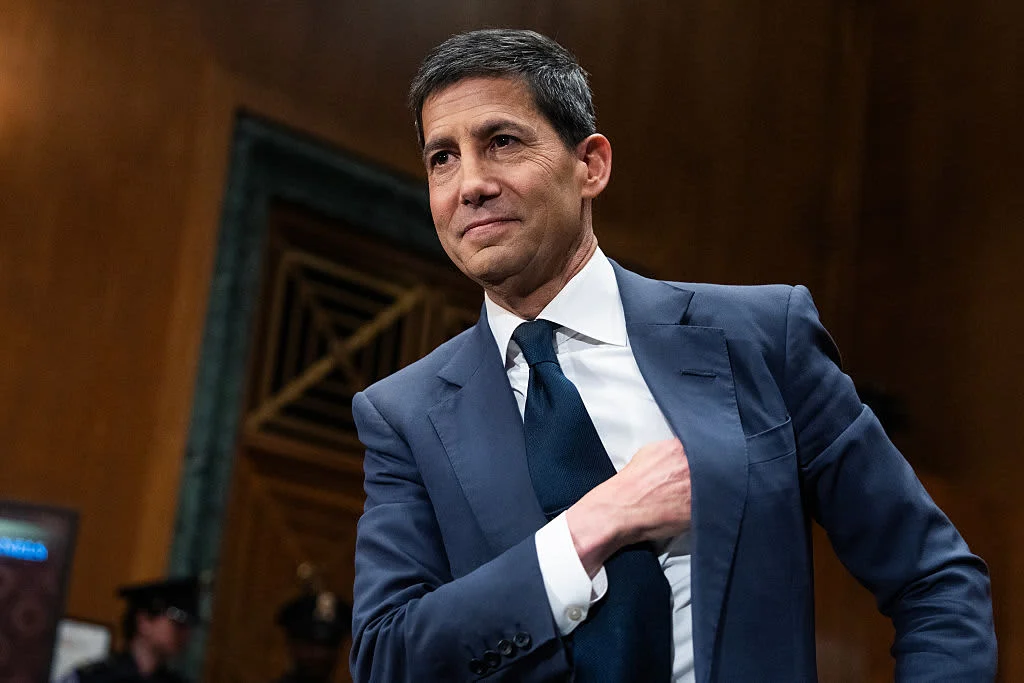
Kevin Warsh was confirmed Wednesday as the next Federal Reserve chair, inheriting leadership of the nation’s central bank at a critical juncture marked by President Donald Trump’s persistent advocacy for lower interest rates and a recent surge in inflation data that complicates the rationale for immediate monetary easing. In what has been described as the most divisive vote ever for a Fed chair, Warsh, 56, secured confirmation to succeed Jerome Powell, whose distinguished term at the helm began in 2018 and is set to conclude this Friday.
The Senate’s vote of 54-45 officially confirmed Warsh, concluding a protracted, months-long selection process that commenced in the summer of 2025. This extensive search for Powell’s successor involved a diverse field of candidates and intense scrutiny. The final vote largely cleaved along partisan lines, with only Pennsylvania Democrat Senator John Fetterman breaking ranks to support Warsh. His confirmation marks him as the 11th individual to assume the chairmanship of the Federal Reserve in the modern banking era, stepping into a role that profoundly influences global financial markets and the daily economic realities of Americans.
A Divisive Senate Battle and a Shifting Mandate
The confirmation process for a Federal Reserve Chair is typically a significant, albeit often bipartisan, affair, reflecting the institution’s critical need for independence from political influence. However, Warsh’s nomination proved to be an exception, igniting intense debate and drawing sharp partisan divisions unseen in recent memory. The narrow 54-45 margin stands in stark contrast to previous confirmations, such as Jerome Powell’s relatively smooth passage with an 84-13 vote in 2018, or Janet Yellen’s 56-26 vote in 2014. This unprecedented level of contention underscores the political charged atmosphere surrounding monetary policy and the deep ideological divides within Washington regarding the Fed’s direction.
Democrats largely voiced concerns over Warsh’s perceived dovish stance on interest rates, his past criticisms of expansive monetary policy, and the potential for the central bank’s independence to be compromised by presidential pressure. Many pointed to President Trump’s repeated public demands for rate cuts as evidence of a looming threat to the Fed’s traditional autonomy. Republican senators, conversely, lauded Warsh’s extensive experience, his commitment to price stability, and his willingness to challenge what they characterized as an overly cautious approach by the previous Fed leadership. Senator Fetterman’s cross-party vote was a notable outlier, interpreted by some analysts as a strategic move to secure future economic benefits for his state or a genuine belief in Warsh’s ability to navigate the current economic climate. This vote highlighted the complex interplay of national economic policy and local political considerations.
Jerome Powell’s Legacy and Unprecedented Transition
Jerome Powell’s tenure as Fed Chair, which began in February 2018, was defined by a series of extraordinary challenges and policy shifts. He inherited an economy in a period of steady growth but soon faced the unprecedented economic shock of the COVID-19 pandemic. Under his leadership, the Fed swiftly implemented emergency measures, slashing interest rates to near zero, launching massive quantitative easing programs, and establishing liquidity facilities to avert a financial collapse. This aggressive response is widely credited with stabilizing markets and preventing a deeper recession, though it also contributed to a significant expansion of the Fed’s balance sheet and laid groundwork for subsequent inflationary pressures.
As the economy recovered, Powell pivoted to an aggressive inflation-fighting stance, initiating a series of rapid interest rate hikes in 2022 and 2023. This period was marked by consistent criticism from President Trump, who frequently attacked Powell for what he deemed overly restrictive monetary policy, arguing that higher rates hindered economic growth and job creation. Despite these political pressures, Powell steadfastly maintained the Fed’s independence, emphasizing the central bank’s dual mandate of achieving maximum employment and stable prices.
In an unusual turn of events, Powell announced last month, on April 29, 2026, that he intends to remain at the Fed as a governor. He has two years remaining on his term as a board member and stated his commitment to serving at least until an ongoing internal investigation into renovations at the Fed’s headquarters is completed. This decision is nearly unprecedented; the last time a Fed chair returned to the board after their chairmanship ended was almost 80 years ago, creating a unique dynamic where the outgoing chair will serve alongside his successor. This arrangement raises questions about potential policy clashes, differing philosophies, and the internal cohesion of the Federal Open Market Committee (FOMC), the Fed’s principal monetary policymaking body. Analysts suggest Powell’s decision could be driven by a desire to provide institutional continuity, ensure the integrity of the investigation, or perhaps to offer a counterbalancing voice on the board should Warsh pursue policies that significantly deviate from the consensus.
The Looming Shadow of Inflation and Market Reactions

Warsh’s confirmation arrives amidst a highly sensitive economic environment, where recent data points to persistent inflationary pressures, complicating the case for the very rate cuts President Trump has demanded. Just this week, separate reports painted a concerning picture of rising prices. On May 13, 2026, the Producer Price Index (PPI) for April showed an unexpected month-over-month increase of 0.8%, far exceeding the consensus forecast of 0.4%. This surge was driven by accelerating pipeline pressures, particularly in energy and commodity inputs, reaching their highest levels in over three years. Concurrently, the latest Consumer Price Index (CPI) report, released earlier in the month, indicated that headline inflation remained stubbornly high at 3.6% year-over-year, significantly above the Fed’s long-standing 2% target. Core CPI, which strips out volatile food and energy prices, also registered a robust 3.2%.
These inflation figures have prompted a re-evaluation of monetary policy expectations across financial markets. Whereas earlier in the year, traders were pricing in multiple rate cuts by the Fed in 2026, the recent data has led to a significant scaling back of these expectations. Market analysts at major investment banks, including Goldman Sachs and JPMorgan, have revised their forecasts, with some now predicting only one modest rate cut by year-end, if any. Crucially, the bond market has even begun to price in a non-negligible chance of an increase in the federal funds rate later this year, particularly if inflation continues to show upward momentum. The 10-year Treasury yield, a key benchmark for borrowing costs, has risen by nearly 20 basis points since the start of May, reflecting growing concerns about inflationary persistence and the potential for a more hawkish Fed stance than previously anticipated. This market shift presents a formidable challenge for the incoming Chair Warsh, who must reconcile the political imperative for lower rates with the economic reality of elevated inflation.
Kevin Warsh: A Return to the Federal Reserve
Kevin Warsh’s appointment marks his second tenure at the Federal Reserve, bringing a unique historical perspective to the central bank. He previously served as a Fed governor from 2006 to 2011, a period of immense upheaval for the global financial system. During his initial run, Fed officials initially underestimated the burgeoning risks associated with the subprime mortgage meltdown, a crisis that ultimately spiraled into the worst global financial crisis since the Great Depression. In response, Warsh was part of the leadership that engineered an unprecedented set of policies aimed at rescuing the economy. These rescue endeavors included an unprecedented expansion of asset purchases, famously known as quantitative easing (QE), which swelled the Fed’s balance sheet past $4 trillion.
During this tumultuous period, Warsh emerged as a notable voice of caution regarding the extent of the Fed’s intervention. He frequently argued that the quantitative easing program had gone too far, expressing concerns about its potential long-term inflationary effects and the distortions it might create in financial markets. This stance positioned him as a more conservative voice within the Federal Open Market Committee.
Since departing the Fed, Warsh has remained a prominent figure in economic policy discussions and a consistent critic of what he viewed as overly accommodative monetary policy. In a widely cited CNBC interview in July 2025, he called for a "regime change" at the central bank, advocating for a more disciplined approach focused squarely on price stability and a clearer exit strategy from unconventional policies. Beyond his public commentary, Warsh has maintained an active career in academia and the private sector. He has served as a lecturer at the prestigious Stanford Graduate School of Business, imparting his insights on financial markets and central banking to future leaders. Additionally, he has held positions on various corporate boards of directors, contributing his expertise to companies navigating complex economic landscapes. His return to the Fed is viewed by some as a direct response to his long-held criticisms, offering him the opportunity to implement the very "regime change" he advocated for.
Political Endorsements and Economic Apprehensions
The White House immediately lauded Warsh’s confirmation, signaling clear expectations for a shift in monetary policy. White House spokesman Kush Desai issued a statement, asserting, "The Senate’s confirmation of Kevin Warsh as the next Chairman of the Federal Reserve is a welcome step towards finally restoring accountability, competence, and confidence in Fed decision-making." This statement underscores the administration’s belief that Warsh will align the Fed’s policies more closely with the president’s economic agenda, particularly regarding interest rates.
Congressional reactions were predictably polarized. Rep. French Hill, a Republican from Arkansas and a prominent voice on financial matters, praised the decision and highlighted Warsh’s strong credentials in combating inflation. "Chairman Warsh has repeatedly emphasized the importance of placing affordability and price stability at the center of our economic agenda," Hill stated. "His commitment to disciplined monetary policy will help restore confidence in our economy and support long-term prosperity." This sentiment was echoed by many Republicans who see Warsh as a necessary corrective to what they perceived as a drift from the Fed’s core mandate under previous leadership.
Conversely, several Democratic senators expressed profound apprehension. Senator Sherrod Brown of Ohio, Chairman of the Senate Banking Committee, voiced concerns about Warsh’s past criticisms of robust regulatory oversight and his perceived susceptibility to political pressure. "The Fed Chair must be an independent voice, committed to the dual mandate of full employment and stable prices, not a political appointee beholden to partisan demands," Senator Brown commented in a press briefing, implicitly criticizing the White House’s influence over the nomination process. Other Democratic lawmakers pointed to Warsh’s previous opposition to large-scale quantitative easing as a potential liability should the economy face another severe downturn requiring aggressive unconventional tools. Economists, too, offered mixed reactions. While some welcomed Warsh’s emphasis on price stability, others worried that a hasty move to cut rates in the face of current inflation could destabilize the economy, potentially forcing the Fed into a more aggressive tightening cycle later on. Warsh himself could not be reached for comment following his confirmation, maintaining a low profile as he prepares to assume his new role.
The Path Ahead: Monetary Policy Under Warsh

Kevin Warsh’s inaugural meeting as chair of the Federal Open Market Committee (FOMC) is scheduled for June 16-17, where he will immediately face the challenge of navigating conflicting economic signals and political pressures. His first major task will be to guide the committee’s decision on the federal funds rate, a decision keenly watched by global markets. Given President Trump’s explicit demands for lower rates and Warsh’s historical skepticism of overly restrictive monetary policy, many analysts anticipate a shift towards a more dovish stance. However, the latest inflation data presents a formidable obstacle to immediate rate cuts.
Warsh takes the seat previously held by Stephen Miran on the Fed board, who was appointed as a governor in September 2025 to complete the unexpired term of Adriana Kugler, who unexpectedly resigned in August 2025. Miran, throughout his brief tenure, emerged as a consistently dissenting voice within the FOMC, particularly advocating for more aggressive rate cuts than the committee ultimately approved. When the committee voted to cut rates by a quarter percentage point at each of its last three meetings in late 2025, Miran consistently argued for larger, half-point reductions. This year, he continued his dissent, opposing votes to keep the federal funds rate steady in April, arguing instead for quarter-point reductions. Miran’s consistent push for lower rates, even when the broader committee favored a more cautious approach, aligns somewhat with the expressed desires of President Trump and potentially Warsh’s own inclination. This alignment could suggest a more unified front for rate cuts under Warsh’s leadership, provided the inflation picture does not worsen dramatically.
The challenge for Warsh will be to balance the dual mandate of the Fed: maximum employment and price stability. Aggressive rate cuts, while potentially stimulating economic growth and satisfying political demands, risk exacerbating inflationary pressures. Conversely, maintaining higher rates to combat inflation might draw further criticism from the White House and potentially slow economic activity. His first FOMC meeting will be a critical indicator of his strategic direction and his ability to forge a consensus among the diverse members of the committee, especially with the unprecedented presence of his predecessor, Jerome Powell, still on the board.
Financial Disclosures and Ethical Considerations
Adding another layer of scrutiny to his appointment, Kevin Warsh is poised to become the wealthiest Fed chair in history, with reported holdings well exceeding $100 million. This substantial personal wealth necessitates strict adherence to the Federal Reserve’s updated ethics policies, which were implemented following disclosures of questionable trading practices among top officials in recent years. These enhanced regulations are designed to prevent conflicts of interest and maintain public trust in the central bank’s impartiality.
As Fed chair, Warsh will be required to divest himself of a significant portion of his investments, particularly those that could pose a conflict with his official duties or be perceived as benefiting from Fed policy decisions. This divestment process is often complex and time-consuming, involving careful legal and financial planning to ensure compliance with all ethical guidelines. The new strict policy aims to eliminate any appearance of impropriety, ensuring that Fed officials’ personal financial interests do not influence their public policy decisions. This unprecedented level of wealth for a Fed chair will undoubtedly draw increased public and media attention to his financial disclosures, emphasizing the importance of transparency and accountability in such a powerful role. The implementation of these policies reflects a broader effort to restore confidence in the integrity of the institution after past controversies.
Broader Implications for the U.S. and Global Economy
The confirmation of Kevin Warsh as Federal Reserve Chair carries profound implications not just for U.S. monetary policy but also for the broader global economic landscape and the perceived independence of the central bank. A significant shift towards lower interest rates, particularly if perceived as driven by political pressure rather than economic fundamentals, could erode the Fed’s long-standing credibility as an independent institution. This erosion could lead to increased market volatility, as investors become less confident in the predictability and objectivity of U.S. monetary policy.
Internationally, a more politically influenced Fed might prompt other central banks to reassess their own policy frameworks and potentially diminish the U.S. dollar’s role as the world’s primary reserve currency if confidence in U.S. economic stability wavers. Moreover, Warsh’s previous skepticism about aggressive quantitative easing could mean a more constrained response from the Fed in future economic crises, potentially limiting the tools available to stabilize markets during severe downturns. The long-term impact will depend on Warsh’s ability to navigate the complex interplay of political demands, economic realities, and institutional integrity, all while maintaining the delicate balance required for sustained economic prosperity. His tenure will undoubtedly be one of the most closely watched in the Federal Reserve’s history.
