

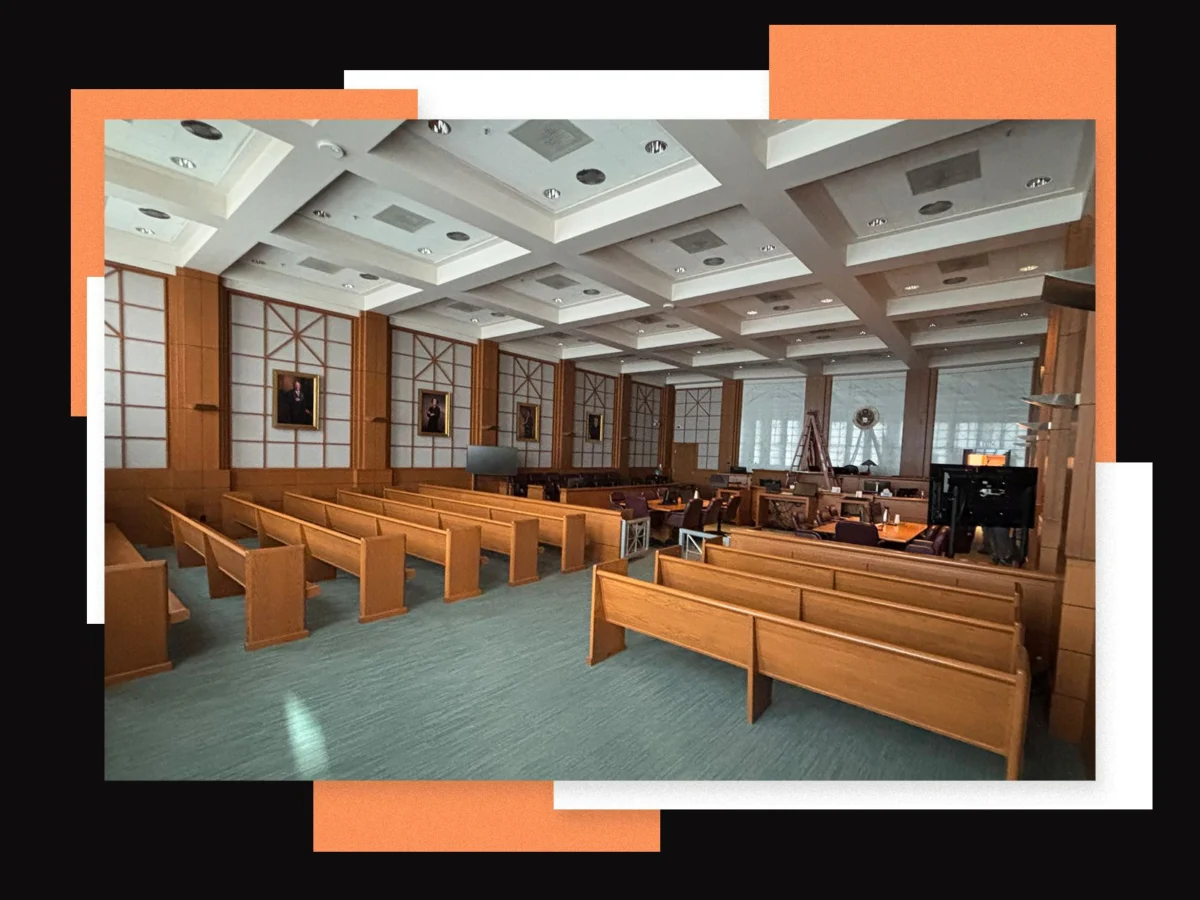
The high-stakes legal confrontation between Elon Musk and the leadership of OpenAI, specifically CEO Sam Altman and President Greg Brockman, reached a significant milestone this Wednesday as the final witnesses concluded their testimony. While the proceedings in the US District Court for the Northern District of California have been characterized by complex debates over fiduciary duties and the philosophical underpinnings of artificial intelligence, the closing days of testimony provided both a staggering financial revelation and a humanizing look at the physical toll of prolonged litigation. Among the most striking disclosures was the revelation that Microsoft Corporation has committed more than $100 billion to its partnership with OpenAI, a figure that underscores the massive economic engine driving the current AI revolution. However, for those present in the courtroom of Judge Yvonne Gonzalez Rogers, the atmosphere was defined as much by these astronomical figures as by the presence of ergonomic cushions lining the courtroom’s austere wooden benches.
The Financial Architecture of the OpenAI-Microsoft Alliance
The testimony delivered on Wednesday brought to light the sheer scale of the resources being poured into the development of generative artificial intelligence. The disclosure that Microsoft’s investment and partnership commitment has exceeded the $100 billion mark provides a new lens through which to view the "non-profit" origins of OpenAI. This figure encompasses not only direct capital infusions but also the massive infrastructure costs associated with Microsoft Azure’s cloud computing services, which power OpenAI’s large language models (LLMs).
This financial revelation is central to the core of Elon Musk’s complaint. Musk, a co-founder of OpenAI who left the board in 2018, alleges that the organization has strayed from its founding mission to develop artificial general intelligence (AGI) for the benefit of humanity, rather than for shareholder profit. The $100 billion figure serves as a potent data point for Musk’s legal team, who argue that OpenAI has effectively become a "closed-source de facto subsidiary" of Microsoft. In contrast, OpenAI’s defense maintains that the capital is a necessary requirement for the "compute-heavy" reality of modern AI development, arguing that the mission to achieve AGI cannot be realized without the infrastructure that only a titan like Microsoft can provide.
The Ergonomics of High-Stakes Litigation
While the legal teams debated the future of humanity and billions of dollars in assets, the physical reality of the three-week trial became increasingly apparent through an unusual sight: a proliferation of cushions and pillows. The courtroom, presided over by Judge Yvonne Gonzalez Rogers—who famously handled the Epic Games v. Apple bench trial in 2021—features traditional hard wooden benches for observers and secondary participants.
As the trial progressed, the defense side of the room, occupied by OpenAI and Microsoft executives, became a sea of ergonomic aids. OpenAI CEO Sam Altman and General Counsel Che Chang were observed utilizing thick black cushions to mitigate the discomfort of hours of stationary sitting. Observers noted that the most prominent of these were "Purple" brand cushions, known for their specialized hyper-elastic polymer grids and retailing for approximately $120. The use of such items highlighted the grueling nature of the trial, which saw participants remaining seated for nearly eight hours a day over several weeks.
The trend extended to OpenAI President Greg Brockman and his wife, Anna Brockman, who were frequent attendees. The couple utilized white pillows, identified by their tags as products from Coop, a brand specializing in alternative down-filled bedding. The logistics of these comforts were managed with professional precision; on Wednesday, a member of OpenAI’s security detail was seen transporting the pillows in a dedicated handbag. These details, while seemingly trivial, reflect the intense focus and endurance required for a legal battle of this magnitude, where even the "chief futurist" of the company, Joshua Achiam, eventually sought out a cushion after a stint on the unpadded benches.
A Chronology of the Musk v. Altman Conflict
To understand the tension in Judge Gonzalez Rogers’ courtroom, it is necessary to trace the timeline of the relationship between the parties involved:
- December 2015: OpenAI is founded as a non-profit research laboratory by Elon Musk, Sam Altman, Greg Brockman, and others, with a mission to ensure AGI benefits all of humanity. Musk pledges $1 billion in funding.
- February 2018: Musk resigns from the OpenAI board. Reports at the time cited a potential conflict of interest with Tesla’s AI development, though subsequent filings suggest a power struggle over the direction of the organization.
- March 2019: OpenAI creates a "capped-profit" subsidiary, OpenAI Global LLC, to allow it to take on massive investments while theoretically remaining under the control of the non-profit board.
- July 2019: Microsoft invests its first $1 billion in OpenAI, beginning a multi-year exclusive partnership.
- November 2022: The release of ChatGPT brings generative AI into the mainstream, skyrocketing OpenAI’s valuation and public profile.
- November 2023: In a dramatic turn of events, the OpenAI board fires Sam Altman, only to reinstate him days later following a near-total employee revolt and pressure from Microsoft. This event solidified the influence of the for-profit side of the entity.
- February 2024: Elon Musk files his lawsuit in San Francisco, alleging breach of contract and breach of fiduciary duty, claiming the organization’s shift toward profit-seeking violates its "Founding Agreement."
- April-May 2024: The trial proceeds in federal court, focusing on the discovery of internal communications and the financial intricacies of the Microsoft partnership.
Supporting Data and Technical Context
The trial has shed light on the immense costs of AI training. According to industry estimates, training a model of the scale of GPT-4 requires tens of thousands of specialized Nvidia H100 GPUs. The "compute" costs are not a one-time expense but a recurring necessity as models are refined and scaled.
The $100 billion figure mentioned in court reflects a broader trend in the industry. For comparison:
- Alphabet (Google): Reported capital expenditures of approximately $12 billion per quarter, largely driven by AI infrastructure.
- Meta (Facebook): Recently raised its 2024 capital expenditure forecast to $35-$40 billion to support AI research and development.
- Anthropic: A primary competitor to OpenAI, has raised over $7 billion from Amazon and Google to maintain its competitive standing.
In this context, the OpenAI-Microsoft partnership is not merely a business deal but an arms race. The legal challenge brought by Musk seeks to determine if this arms race is compatible with the charitable status under which OpenAI was originally conceived.
Official Responses and Courtroom Observations
OpenAI has generally declined to comment on the specific ergonomic choices of its executives, but their legal strategy has been vocal. The defense team argues that Musk’s lawsuit is a "revisionist history" designed to hamper a competitor. They point to the fact that Musk himself once advocated for OpenAI to become a for-profit entity under his own control before he left the organization.
The courtroom environment itself provided a stark contrast to the previous major tech trial in the same room. During the Epic v. Apple trial in 2021, COVID-19 protocols meant the 150-capacity room was largely empty, allowing journalists and lawyers to spread out. In 2024, the Musk v. Altman trial has seen the room filled to its 90-person bench capacity daily. The lack of space and the rigidity of the furniture created a physical endurance test for the press corps and legal observers. While several reporters initially avoided using cushions to maintain a professional appearance, the "run of six days" on the benches eventually broke the resolve of many, including veteran correspondents from the New York Times and local courtroom artists.
Broader Impact and Implications
The conclusion of the testimony phase marks a critical juncture. Judge Gonzalez Rogers is now tasked with weighing the evidence regarding the "jackass trophy"—a Musk-inspired award that became a bizarre point of evidence regarding the culture of the company—against the weighty legal arguments of contract law.
The implications of this trial extend far beyond the comfort of the attendees. If the court finds that OpenAI’s shift to a for-profit model constitutes a breach of its founding mission, it could set a massive precedent for how "public benefit" corporations and non-profits transition into commercial powerhouses. Furthermore, the disclosure of the $100 billion commitment from Microsoft may invite further scrutiny from antitrust regulators in the United States and the European Union, who are already investigating the "incumbent" advantage in the AI sector.
As the legal teams prepare for arguments regarding potential penalties and the next steps of the litigation, the "cushion-gate" of the courtroom remains a poignant symbol. It represents the friction between the high-flying, ethereal world of artificial intelligence and the slow, grinding, and often uncomfortable reality of the American judicial system. Next week, the court will pivot to hearing arguments about the potential ramifications of the trial’s findings, a phase where the stakes will be even higher, and the need for both legal acumen and physical padding will remain at a premium.
