

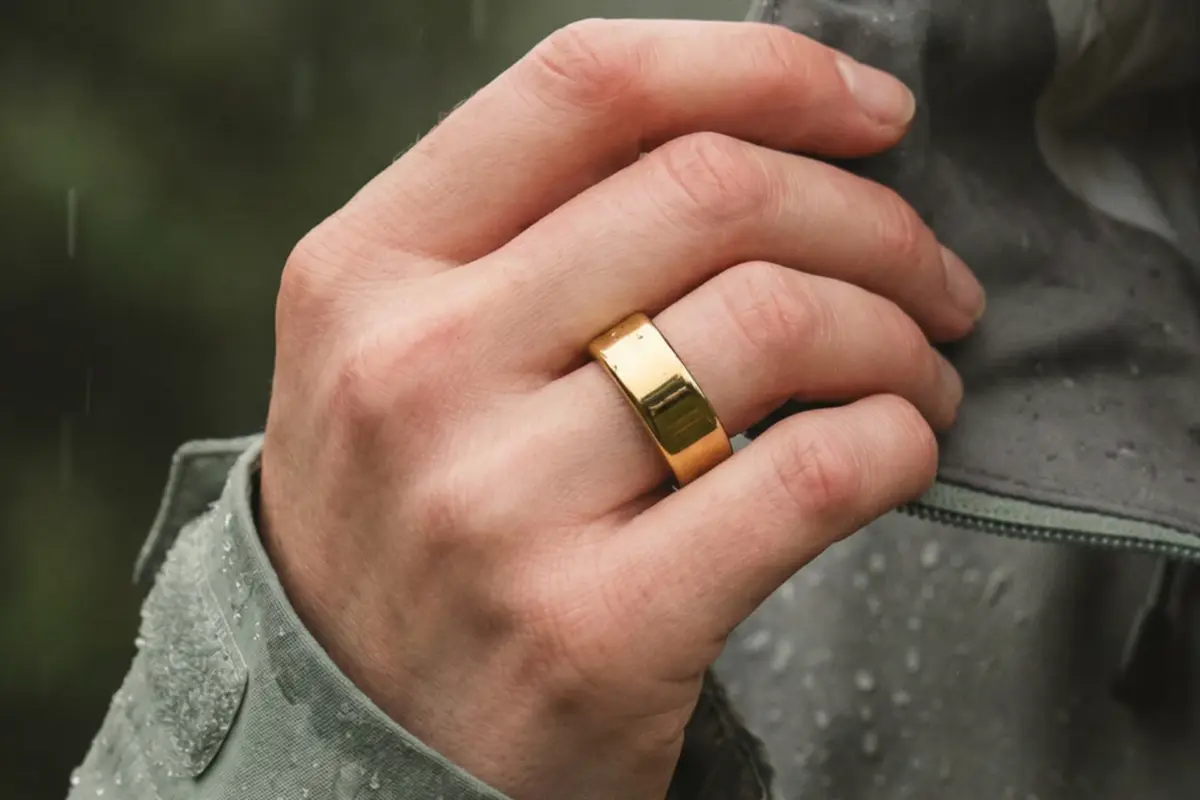
The competitive landscape of the wearable technology sector has intensified as Oura Health, the Finnish pioneer of the smart ring category, initiated a fresh legal offensive against its Indian rival, Ultrahuman. In a complaint filed Thursday in a federal court in Texas, Oura alleged that Ultrahuman’s flagship Ring Pro infringes upon its intellectual property, marking a significant escalation in a long-standing dispute between the two companies. This latest lawsuit seeks not only monetary damages but also a permanent injunction that would effectively ban the sale of Ultrahuman’s latest hardware within the United States market.
The legal action comes at a critical juncture for Ultrahuman, a Bengaluru-based startup that had only recently successfully navigated a previous import ban. The dispute centers on two specific patents held by Oura: D804,471, which pertains to the ornamental design of the ring, and 12,769,363, a utility patent covering the complex internal architecture of the device, including the arrangement of the curved battery, circuit boards, and sensors. Notably, the latter patent was granted to Oura just two days prior to the filing of the lawsuit, suggesting a highly coordinated legal strategy aimed at protecting the company’s latest technological breakthroughs.
The Evolution of the Oura-Ultrahuman Conflict
The friction between Oura and Ultrahuman is not a new development but rather the continuation of a multi-year legal saga. The companies first locked horns in 2023 when Oura filed a lawsuit regarding Ultrahuman’s earlier model, the Ring Air. That initial conflict culminated in August 2024, when the U.S. International Trade Commission (ITC) issued a ruling in favor of Oura, resulting in a formal import ban on the Ring Air.
In response to the ban, Ultrahuman pivoted by redesigning its product to create the Ring Pro. This new iteration was specifically engineered to bypass the patents cited in the original ITC case. In February 2025, Ultrahuman unveiled the Ring Pro, and by March, the company received a favorable ruling from U.S. Customs and Border Protection. This administrative victory allowed the startup to resume shipments to American customers, seemingly ending its period of exclusion from the lucrative U.S. market.
However, Oura’s new filing argues that the Customs ruling was narrow in scope, addressing only the patents involved in the previous litigation. The Finnish company contends that the Ring Pro, despite its redesign, continues to misappropriate Oura’s innovations. “Ultrahuman has a history of copying Oura’s innovations, as demonstrated by the 2025 ITC ruling against the company,” an Oura spokesperson stated. “Ultrahuman introduced a redesigned ring but failed to address continued infringement of Oura’s patents, seeking instead to capitalize on our innovation and the market leadership we have built.”
Technical Specifics and the Role of SVTronics
A unique aspect of the new lawsuit is the inclusion of SVTronics, a Texas-based electronics manufacturer, as a co-defendant. Oura alleges that SVTronics produces the Ring Pro at its facility in Plano, Texas, under the direct "direction and control" of Ultrahuman. By naming a domestic manufacturer, Oura strengthens its legal standing in a U.S. federal court and targets the actual production pipeline of its competitor.
The technical focus of the lawsuit highlights the difficulty of miniaturizing health-tracking technology. Patent 12,769,363 is particularly significant as it covers the "guts" of the smart ring. In such a small form factor, the placement of a curved battery alongside a flexible printed circuit board (PCB), magnets for charging, and sensitive photoplethysmography (PPG) sensors is an engineering challenge. Oura claims that Ultrahuman’s solution to this packaging problem is a direct copy of Oura’s proprietary layout.
For its part, Ultrahuman remains defiant. Mohit Kumar, co-founder and CEO of Ultrahuman, expressed confidence in the company’s legal position and the integrity of the Ring Pro’s design. Kumar pointed out the timing of Oura’s new patent as a point of contention. “Oura has now chosen to assert different patents, including one that issued just two days before this lawsuit was filed,” Kumar said. “We will address these claims through the appropriate legal process and will defend our position vigorously. There is no court order affecting Ring Pro, and it remains available to customers in the U.S.”
A Pattern of Aggressive Intellectual Property Defense
The lawsuit against Ultrahuman is part of a broader, more aggressive strategy by Oura to defend its dominant position in the smart ring market. As the category has grown from a niche enthusiast product to a mainstream wearable, Oura has faced a surge of competitors ranging from well-funded startups to global tech giants.
In recent months, Oura has initiated legal proceedings against several other players, including:
- Samsung: Oura has challenged the South Korean giant’s entry into the market with the Galaxy Ring, seeking to establish that even major tech conglomerates must respect its foundational patents.
- RingConn and Circular: These smaller rivals eventually entered into multi-year patent licensing agreements with Oura. Both companies now pay royalties to the Finnish firm to maintain their right to sell products in the United States.
- Zepp Health and Nexxbase: Oura has also targeted these companies, further demonstrating its commitment to policing the entire smart ring ecosystem.
This "patent wall" strategy serves a dual purpose: it generates a steady stream of licensing revenue and creates significant barriers to entry for new competitors who lack the capital to endure protracted legal battles.
Market Dynamics and the Smart Ring Boom
The legal warfare coincides with a period of explosive growth for the smart ring industry. According to data from the research firm IDC, global shipments of smart rings are expected to rise by 12.8% this year, reaching 4.9 million units. Projections suggest that by 2030, the market could expand to 6.3 million units annually.
Consumers are increasingly drawn to smart rings as a more discreet, less intrusive alternative to smartwatches. Unlike wrist-based wearables, rings offer superior data accuracy for certain metrics, such as sleep tracking and heart rate variability, because the sensors sit closer to the arteries in the finger.
As the market expands, the stakes for Oura and Ultrahuman have never been higher. Ultrahuman recently raised $70 million in a Series C funding round backed by high-profile investors including Qualcomm Ventures and Labcorp. This infusion of capital valued the startup at approximately $365 million and was intended to fuel its expansion into AI-driven health interactions and gaming. The company is also collaborating with Qualcomm to develop a new generation of rings capable of running complex software directly on the device.
Conversely, Oura recently faced a setback in its corporate roadmap. In September, the company shelved its planned $2.2 billion Initial Public Offering (IPO), citing market uncertainty. Despite this, Oura continues to innovate on the software front, recently launching new features focused on cardiovascular health and workout impact metrics. Maintaining its patent dominance is seen by analysts as essential for Oura to preserve its valuation ahead of a future public listing.
Broader Implications for the Wearable Industry
The outcome of this lawsuit could have far-reaching implications for how wearable technology is developed and sold. If Oura successfully secures an injunction against the Ring Pro, it will send a clear message that redesigning a product to avoid specific patents may not be enough to escape the reach of a determined incumbent.
This case also highlights the strategic importance of manufacturing locations. By utilizing a Texas-based manufacturer like SVTronics, Ultrahuman sought to streamline its supply chain and perhaps mitigate some of the risks associated with international shipping and ITC import bans. However, this move also brought the dispute into the heart of the U.S. legal system, making the company more vulnerable to domestic litigation.
Legal experts suggest that the smart ring industry may be following the path of the smartphone industry in the early 2010s, which was characterized by "patent wars" between Apple, Samsung, and Google. In such environments, innovation can sometimes be stifled as companies divert resources from research and development to legal fees. Alternatively, these disputes can lead to a more structured market where established players coexist through a web of cross-licensing agreements.
Chronology of Key Events
To understand the current state of the Oura-Ultrahuman conflict, it is essential to look at the timeline of their interactions:
- Early 2023: Oura files its first major lawsuit against Ultrahuman, alleging that the Ring Air infringes on several health-tracking patents.
- January 2024: Oura escalates the matter by bringing a case before the U.S. International Trade Commission (ITC).
- August 2024: The ITC rules in favor of Oura, leading to an official import ban on the Ultrahuman Ring Air in the United States.
- February 2025: Ultrahuman launches the Ring Pro, featuring a hardware redesign intended to circumvent Oura’s existing patents.
- March 2025: U.S. Customs and Border Protection clears the Ring Pro for sale, allowing Ultrahuman to re-enter the U.S. market.
- September 2025: Ultrahuman raises $70 million in Series C funding to accelerate growth and R&D.
- October 20, 2025: The U.S. Patent and Trademark Office issues Patent 12,769,363 to Oura Health.
- October 22, 2025: Oura files a new lawsuit in Texas federal court against Ultrahuman and SVTronics, specifically targeting the Ring Pro.
As the legal proceedings move forward, the Ring Pro remains available for purchase in the U.S., as no temporary restraining order has been issued. However, the shadow of a permanent injunction looms over Ultrahuman’s American operations. For Oura, the case represents a necessary defense of the R&D investments that allowed it to define the smart ring category nearly a decade ago. For the industry at large, the resolution of this case will likely define the boundaries of competition in the next generation of health-tech wearables.
