

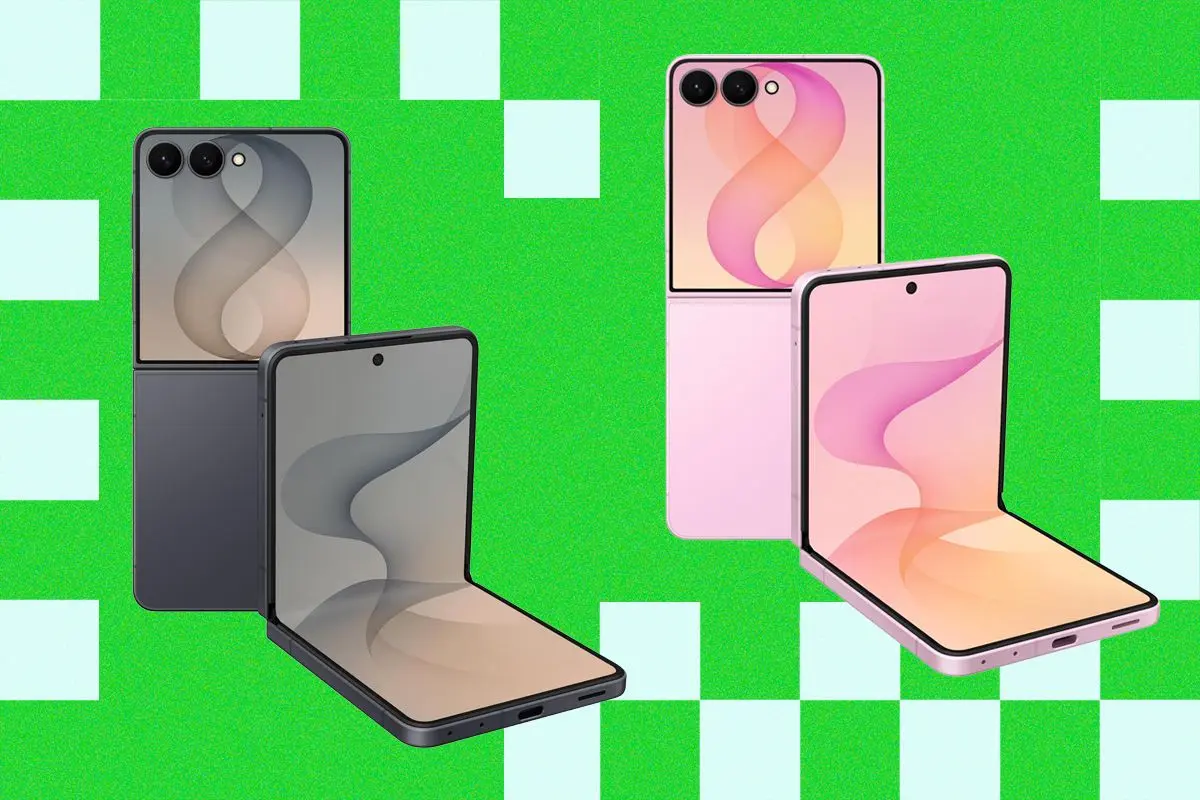
The Samsung Galaxy Z Flip8 has officially entered the competitive foldable smartphone market, positioning itself as a refined iteration of the vertical-folding form factor that Samsung pioneered. While the device continues to push the boundaries of aesthetic design and portability, it arrives with a mixture of cutting-edge hardware and familiar compromises that have sparked a nuanced discussion among industry analysts and consumers alike. As the foldable market matures, the Z Flip8 finds itself under intense scrutiny regarding its battery endurance, charging efficiency, and the seamlessness of its software ecosystem, particularly concerning its external "FlexWindow" display.
Hardware and Power: The Silicon-Carbon Battery Shift
A central point of discussion surrounding the Galaxy Z Flip8 is its power management system. Samsung has integrated a 4,300-mAh silicon-carbon battery into the device, a notable technical choice aimed at maximizing energy density within the constrained physical dimensions of a flip-style foldable. Silicon-carbon technology allows for a higher capacity in a smaller footprint compared to traditional lithium-ion batteries, which is critical for a device that must accommodate a complex hinge mechanism.
Despite this technological advancement, real-world performance metrics suggest that the battery life remains merely average. For casual users, the 4,300-mAh capacity is sufficient to navigate a standard workday involving light web browsing, messaging, and occasional social media use. However, for power users—those who engage in heavy video streaming, mobile gaming, or frequent photography—the device struggles to maintain a full day of autonomy. This has led to recommendations for users to maintain access to portable power banks, a requirement that somewhat offsets the "pocketable" convenience of the foldable design.

The charging capabilities of the Z Flip8 have also drawn criticism for being conservative compared to the broader Android landscape. The device supports 25-watt wired charging and 15-watt wireless charging. In a market where competitors are increasingly offering 65-watt to 120-watt fast charging, Samsung’s decision to cap speeds at 25 watts is seen by many as a missed opportunity. Furthermore, the absence of Qi2 support—a new wireless charging standard that incorporates magnets for better alignment and efficiency—remains a point of contention. The omission of magnetic charging features limits the device’s compatibility with a growing ecosystem of magnetic accessories that have become standard in the premium smartphone segment.
The Evolution of the Z Flip Series: A Chronological Context
To understand the Z Flip8’s position, it is essential to look at the trajectory of the series. Samsung’s foldable journey began with the original Galaxy Z Flip, which focused primarily on the "wow factor" of a folding screen. Over subsequent generations, the company has addressed structural durability, introduced water resistance (IPX8 and later ratings), and expanded the external cover screen.
- Galaxy Z Flip (2020): The debut featured a tiny 1.1-inch cover display and a fragile screen.
- Galaxy Z Flip3 (2021): Introduced a 1.9-inch cover screen and improved durability, making foldables more mainstream.
- Galaxy Z Flip5 (2023): Marked a major leap with the 3.4-inch "Flex Window," allowing for more significant interaction without opening the phone.
- Galaxy Z Flip8 (Current): Focuses on AI integration and internal hardware efficiency, though it retains the core design language of its immediate predecessors.
This chronology highlights Samsung’s strategy of incremental refinement. However, the persistence of certain limitations—such as the 25W charging speed which has remained static for several generations—suggests a cautious approach to battery safety and longevity, likely a vestige of the company’s historical challenges with battery stability.
Imaging and Camera Systems: Quality Over Versatility
The camera system on the Galaxy Z Flip8 is a study in trade-offs. The primary 50-megapixel sensor is the centerpiece of the array, delivering high-quality images in well-lit environments with the vibrant color profile characteristic of Samsung’s image processing. For the average user, the main camera is more than capable of capturing social media-ready photos with excellent dynamic range.

However, the hardware limitations become apparent in challenging conditions. In low-light scenarios, digital noise begins to manifest, and the lack of a dedicated telephoto lens limits the device’s versatility for long-range photography. While Samsung attempts to compensate for this with a "lossless" 2X crop-zoom and digital zoom up to 10X, the results are only "passable" in optimal lighting. The 12-megapixel ultrawide lens serves its purpose for group shots and landscapes but shows a noticeable dip in detail and sharpness compared to the primary sensor.
A significant advantage of the Z Flip8’s design is its ability to use the main camera for selfies. By utilizing the cover screen as a viewfinder, users can capture high-resolution self-portraits that far exceed the quality of the 10-megapixel internal punch-hole camera. The internal camera remains largely relegated to video conferencing duties. Additionally, the "Horizon Lock" feature has been lauded for its ability to maintain a level video plane during movement, making it a valuable tool for mobile content creators.
Artificial Intelligence and Software Innovation
Samsung has heavily leaned into Artificial Intelligence (AI) to differentiate the Z Flip8 from its predecessors. Several new features have been introduced under the "Galaxy AI" umbrella:
- My FanCam: This video-centric AI feature allows users to select a specific person within a group video. The software then uses AI to reframe the footage, making the selected individual the central focus. This is particularly useful for recording events like school performances or sporting events.
- Now Brief: An intelligent information hub that surfaces relevant data such as calendar events, weather updates, and reminders based on the user’s current context and location.
- Now Nudge: A proactive assistant that monitors messages and notifications to suggest actions, such as adding a date to a calendar, sharing a location, or auto-filling forms.
While these features add a layer of modern utility, they also raise questions about the increasing complexity of the user interface and the reliance on background processing, which can impact battery life.

The FlexWindow and the Bloatware Dilemma
The 3.4-inch cover screen, or FlexWindow, remains one of the device’s most compelling features, yet its software implementation continues to frustrate some users. While Samsung has expanded native support for apps like YouTube, Netflix, Google Maps, and various Samsung-branded utilities, the process for enabling other third-party apps remains "convoluted."
To run any app on the cover screen that hasn’t been officially whitelisted by Samsung, users must install the "Good Lock" app from the Galaxy Store, followed by the "MultiStar" plugin. This multi-step process is viewed as an unnecessary barrier to entry for the average consumer. Critics have pointed out the irony of Samsung requiring extra steps for user-desired apps while pre-installing third-party "bloatware" such as Facebook, Spotify, and Instagram. For a premium-priced flagship, the inclusion of non-removable or pre-installed promotional software remains a point of contention in the user experience.
Market Impact and Competitive Landscape
The Galaxy Z Flip8 does not exist in a vacuum. It faces stiff competition from the Motorola Razr series, which has been praised for its more open approach to the cover screen, allowing almost any app to run natively without secondary plugins. Additionally, manufacturers like Oppo and Vivo are pushing the boundaries of foldable thinness and charging speeds in international markets.
Industry analysts suggest that Samsung is relying on its brand dominance and robust trade-in programs to maintain its market share. The Z Flip8 is positioned as a "lifestyle" device—a fashion statement that happens to be a high-end smartphone. However, as the novelty of the folding screen wears off, Samsung may need to address the fundamental hardware bottlenecks, such as charging speed and telephoto capabilities, to stay ahead of the competition.

Broader Implications for the Foldable Industry
The release of the Z Flip8 signifies a stabilization period for foldable technology. We are no longer seeing radical changes in form factor; instead, the focus has shifted to software optimization and AI integration. The use of silicon-carbon batteries in the Z Flip8 indicates that Samsung is looking for ways to improve endurance without increasing the device’s bulk, a move that other manufacturers are likely to follow.
The debate over the "Good Lock" requirement and bloatware also highlights a broader industry trend: the tension between a curated, controlled user experience and the "open" nature of the Android operating system. As Samsung continues to build its own ecosystem of AI services, the integration of hardware and software will become the primary battleground for consumer loyalty.
In conclusion, the Samsung Galaxy Z Flip8 is a sophisticated piece of engineering that offers a unique and enjoyable user experience, particularly for those who value portability and innovative video features. However, its "average" battery life, conservative charging speeds, and software hurdles suggest that there is still significant room for growth as the series moves toward its ninth iteration. For the current market, it remains a top-tier choice for foldable enthusiasts, provided they are willing to navigate its specific quirks and maintain a charging cable within reach.
