

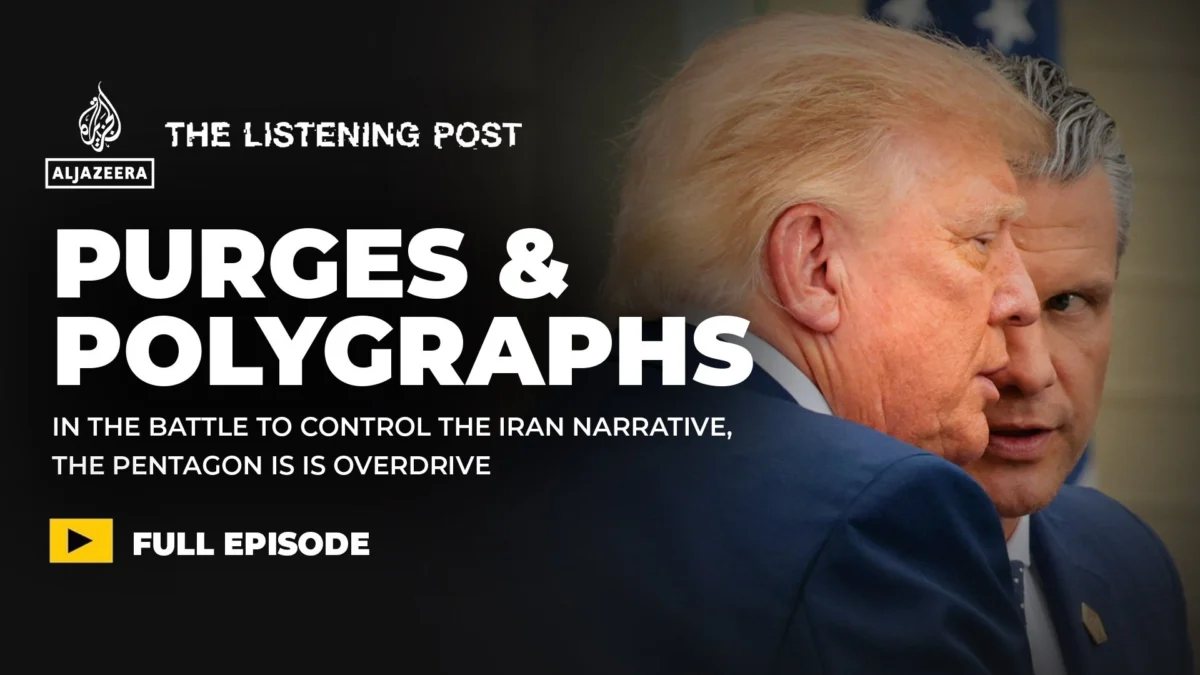
As the United States hurtles towards its midterm elections, the political and media landscapes are grappling with a confluence of high-stakes issues, from the persistent shadow of a potential conflict with Iran to the reverberations of intelligence failures in Israel and a critical examination of how media coverage during the COVID-19 pandemic fractured public trust. These disparate narratives, while distinct in their immediate focus, collectively underscore a period of profound challenges in governance, public communication, and the very fabric of societal confidence.
Geopolitical Tensions and Domestic Realities: The US-Iran Standoff Amidst Midterm Pressures
Weeks before the crucial US midterm elections, the incumbent administration finds itself in a delicate balancing act, attempting to frame a positive narrative around its foreign policy, particularly concerning the escalating tensions with Iran. This effort, however, is being significantly undermined by a cocktail of domestic economic pressures and a fraught relationship with the media. The specter of a "war with Iran" – a term often used to encompass a range of proxy conflicts, economic sanctions, and limited military engagements rather than a full-scale conventional war – looms large, showing no signs of de-escalation.
Background of the US-Iran Dynamic
The relationship between the United States and Iran has been fraught for decades, reaching a critical juncture following the 1979 Iranian Revolution. Tensions intensified significantly after the US withdrawal from the Joint Comprehensive Plan of Action (JCPOA), commonly known as the Iran nuclear deal, in May 2018 under the previous administration. This move, accompanied by a "maximum pressure" campaign of stringent economic sanctions, was intended to compel Iran to renegotiate a more comprehensive agreement covering its nuclear program, ballistic missile development, and regional activities.
Iran, in response, gradually scaled back its commitments under the JCPOA, accelerating its uranium enrichment program and expanding its regional influence through proxy groups. This cycle of escalation has led to a series of incidents, including attacks on oil tankers in the Persian Gulf, drone strikes, and cyber warfare, creating a volatile environment that has consistently raised fears of broader conflict. The current administration has largely continued a policy of deterrence and sanctions, albeit with occasional overtures for diplomacy, making the situation a constant point of concern for regional stability.
The Administration’s Narrative Challenge
Selling a positive story about US foreign policy, especially regarding a persistent geopolitical adversary like Iran, is inherently complex. For any administration, projecting strength and stability is paramount, particularly in an election cycle. However, the task becomes exponentially harder when domestic issues directly impact the daily lives of voters.
Economic Headwinds: Fuel and Grocery Prices
A primary impediment to the administration’s narrative is the tangible economic strain felt by American households. Climbing fuel and grocery prices have been a persistent feature of the economic landscape, fueling public discontent. According to the Bureau of Labor Statistics, the Consumer Price Index (CPI) for all items has seen significant year-over-year increases, with energy and food prices often leading the surge. For instance, gasoline prices, a highly visible and politically sensitive indicator, have often fluctuated wildly, at times reaching multi-year highs. Similarly, food-at-home prices have consistently risen, eroding purchasing power and forcing families to make difficult budgetary choices.
These economic realities directly translate into voter sentiment. Public opinion polls consistently show inflation and the economy as top concerns for voters ahead of midterm elections. When voters perceive a decline in their economic well-being, it becomes exceedingly difficult for any administration to pivot public attention to foreign policy successes or justify ongoing geopolitical engagements, even those deemed critical for national security. The argument that a strong stance against Iran contributes to global stability often rings hollow when juxtaposed against the immediate pinch of higher prices at the pump and checkout counter.
Presidential Communications and Pentagon-Media Friction
Adding to the complexity are the president’s often-provocative social media posts. In an era of instant communication, presidential social media usage has become a double-edged sword. While it allows for direct communication with the public, bypassing traditional media filters, it can also generate controversy, distract from policy initiatives, and further polarize public discourse. Critics argue that such posts can undermine diplomatic efforts, create unnecessary international incidents, or simply divert attention from the administration’s intended message.
Simultaneously, the Pentagon’s frequently combative relationship with the media further complicates the narrative. Transparency and access to information are crucial for informed public discourse, especially concerning military operations and defense policy. Historically, the Pentagon has often struggled to balance national security imperatives with the public’s right to know. Restrictive media policies, limited access to battle zones, and a perceived lack of openness can breed distrust and lead to accusations of controlling the narrative rather than facilitating independent reporting. This friction can make it challenging for journalists to provide comprehensive, nuanced coverage, inadvertently contributing to public skepticism about official statements regarding ongoing conflicts or military readiness.
Expert Perspectives on the Challenges
The complexities of this situation are illuminated by experts like Laicie Heeley, Editor-in-chief of Inkstick, who likely focuses on the nuances of defense policy and public perception; Mark Kimmitt, former US Assistant Secretary of State, who offers insights into diplomatic and military strategy; Negar Mortazavi, Host of The Iran Podcast, providing crucial context on Iranian domestic and foreign policy; and Samira Mohyeddin, Founder of On The Line Media, who can speak to the challenges of media representation and narrative control. Their combined expertise would dissect how these internal and external pressures converge to create a formidable challenge for the administration’s messaging ahead of the midterms.
Implications for the Midterm Elections and Foreign Policy
The success or failure of the administration in managing these narratives could significantly impact the midterm elections. If voters prioritize economic concerns over foreign policy, or if the perception of instability regarding Iran persists, it could sway critical races, potentially shifting the balance of power in Congress. Beyond the electoral immediate, the enduring tensions with Iran, coupled with domestic political constraints, will continue to shape US foreign policy in the Middle East, potentially influencing future diplomatic overtures, sanction regimes, and regional security alliances.
Political Earthquake in Israel: Netanyahu, October 7, and the Haaretz Revelation
In Israel, a different kind of political storm has erupted following explosive revelations from the esteemed Israeli newspaper Haaretz. The report, detailing what Prime Minister Benjamin Netanyahu allegedly knew prior to the devastating October 7 attacks, has ignited a firestorm across the nation, triggering widespread outrage and calls for accountability. Netanyahu, facing intense pressure, has vehemently denied the reporting, branding it fabricated and threatening legal action against the publication.
Context of the October 7 Attacks
The October 7, 2023, attacks by Hamas on southern Israel represent one of the deadliest days in Israeli history, resulting in the deaths of over 1,200 people, mostly civilians, and the abduction of hundreds more. The attacks exposed significant intelligence and operational failures within Israel’s formidable security apparatus, shattering the public’s long-held sense of security and trust in its leadership. The immediate aftermath saw a surge of national unity, but as the war in Gaza progressed, questions about accountability for the intelligence failures leading up to the attacks began to intensify.
Netanyahu’s Precarious Political Position
Prime Minister Benjamin Netanyahu, Israel’s longest-serving leader, was already navigating a highly polarized political landscape before October 7. His government, a right-wing coalition, had faced unprecedented mass protests for months over controversial judicial overhaul plans that critics argued would undermine Israel’s democratic foundations. Public trust in Netanyahu had been significantly eroded, and his approval ratings were at historic lows. The October 7 attacks, while initially galvanizing support for the war effort, inevitably brought renewed scrutiny to his leadership and the intelligence community’s preparedness.
The Haaretz Revelation
Haaretz, known for its critical and often left-leaning journalism, published a report alleging that Netanyahu was aware of specific intelligence warnings or assessments concerning Hamas’s intentions and capabilities to launch a major cross-border attack, potentially even having dismissed or downplayed such warnings. While the precise details of the Haaretz report are key to the controversy, such an allegation strikes at the heart of public confidence, suggesting a potential failure of leadership at the highest level to act on critical information.
The immediate and forceful reaction from Netanyahu — his outright denial and threat of a lawsuit — underscores the gravity of the accusations. Suing a prominent newspaper is a rare and aggressive tactic, indicating the severe political damage such a report could inflict on his already challenged leadership. His statements have been echoed by government spokespersons, who have attempted to discredit the reporting and shift focus to the ongoing war effort.
Chronology of Emerging Accountability Questions
- Pre-October 7, 2023: Growing intelligence concerns regarding Hamas capabilities, debated within Israeli security circles. Ongoing judicial overhaul protests divide the nation.
- October 7, 2023: Hamas launches devastating attacks, exposing major intelligence and operational failures.
- Post-October 7: Initial national unity, followed by increasing calls for an investigation into intelligence failures. Military and security officials begin to take responsibility.
- Weeks/Months Later: Public sentiment shifts, with polls indicating a significant drop in support for Netanyahu and his government regarding their handling of security.
- Recent Past: Haaretz publishes its report, directly implicating Netanyahu in pre-attack knowledge.
- Immediate Reaction: Netanyahu vehemently denies allegations, threatens legal action, calls report "fabricated."
Implications for Israeli Leadership and National Unity
The Haaretz report and Netanyahu’s response have plunged Israel into a deeper political crisis. The allegations, regardless of their veracity, fuel the existing narrative of accountability failures and leadership deficiencies. Public opinion polls conducted after October 7 have consistently shown a significant portion of the Israeli public holding the government, and particularly Netanyahu, responsible for the security failures. This latest revelation is likely to exacerbate these sentiments, intensifying calls for early elections once the immediate military conflict subsides.
Ryan Kohls, reporting on this development, would emphasize the deep schism it creates within Israeli society. The debate is not just about intelligence; it is about trust, leadership, and the future direction of the nation. It adds another layer of complexity to an already challenging wartime environment, potentially undermining national unity and distracting from the overarching goal of achieving security and stability. For Netanyahu, this is arguably the most significant challenge to his political survival, threatening to define his legacy not by his successes, but by the failures leading up to the nation’s darkest day.
The Pandemic’s Legacy: How COVID-19 Coverage Eroded Trust in US Media
Six years after the initial emergence of the COVID-19 pandemic, the virus continues to make headlines, albeit with less frequency. More significantly, its long-term impact is being critically re-evaluated, particularly concerning how newsrooms covered the crisis and the profound erosion of trust in US media that ensued. The pandemic, a truly unprecedented global event, presented an unparalleled challenge for journalism, forcing a reckoning with its role in public information dissemination during a period of scientific uncertainty and intense politicization.
The Early Days: Uncertainty and Rapid Evolution
When COVID-19 first emerged in late 2019 and early 2020, the world faced a novel pathogen about which little was known. Scientists were racing to understand its transmission, severity, and potential treatments, leading to rapidly evolving guidance from public health authorities. Newsrooms, tasked with informing a anxious public, struggled to keep pace. Initial coverage often reflected the scientific uncertainty, presenting various hypotheses and expert opinions that sometimes appeared contradictory as new data emerged.
This environment was ripe for the spread of misinformation and disinformation. Social media platforms, designed for rapid sharing, became fertile ground for unverified claims, conspiracy theories, and partisan narratives that often directly contradicted scientific consensus.
Challenges for Newsroom Coverage
Nicholas Muirhead’s analysis for The Listening Post likely delves into several key areas where COVID-19 coverage contributed to a breakdown of trust:
- Evolving Science vs. Public Demand for Certainty: Science is a process of iterative discovery, often characterized by uncertainty and revision. Public health guidance on masks, social distancing, treatments, and vaccines evolved as scientists learned more. Newsrooms, in an attempt to present the latest information, sometimes struggled to adequately explain this iterative process, leading to public confusion and accusations of inconsistency or even dishonesty when advice changed.
- Politicization of Public Health: From mask mandates to vaccine efficacy, nearly every aspect of the pandemic became deeply politicized in the US. Media outlets were often caught in the crossfire, accused by different factions of bias, either for "promoting government propaganda" or "downplaying the severity of the virus." This partisan lens often overshadowed the underlying public health imperative.
- "Both-Sidesism" and False Equivalencies: In an effort to appear balanced, some news outlets gave equal airtime to scientifically established facts and fringe theories or misinformation. This "both-sidesism" inadvertently lent credibility to unscientific viewpoints, confusing the public and undermining trust in expert consensus. For instance, giving equal weight to medical professionals and anti-vaccine activists on vaccine safety could be seen as irresponsible journalism.
- Government Messaging Inconsistencies: Official communications from various levels of government, including the Centers for Disease Control and Prevention (CDC) and the White House, sometimes suffered from internal inconsistencies or lack of clarity. Media reporting on these shifting messages, while accurate, often amplified the sense of chaos and unreliability.
- Focus on Conflict and Catastrophe: While legitimate, the media’s natural inclination to focus on conflict, rising case counts, and hospitalizations, while necessary, could also contribute to anxiety and a sense of hopelessness, sometimes overshadowing stories of recovery or resilience.
Data on Eroding Trust
Surveys from reputable organizations like the Pew Research Center and Gallup have consistently shown a decline in public trust in media over the past several years, with the pandemic period marking a particularly sharp drop. For example, some polls indicated that a significant portion of Americans believed news organizations exaggerated the severity of the pandemic or were biased in their reporting. This erosion of trust was not uniform; it often correlated with political affiliation, reflecting the deep partisan divisions within the country.
Expert Insights on the Fallout
The discussion features critical voices:
- Amesh Adalja, Infectious Disease Physician, Johns Hopkins Center for Health Security: As a frontline expert, Dr. Adalja would offer insights into the challenges of communicating rapidly evolving scientific information to the public and how media coverage either facilitated or hindered that process. He could speak to the frustration of scientists watching their messages be distorted or politicized.
- Frances E Lee, Co-author, In COVID’s Wake: How Our Politics Failed Us: Lee’s work likely focuses on the political dimensions of the pandemic response and how partisan polarization impacted public health outcomes and trust. She would highlight how political incentives and ideological divides seeped into media narratives, making objective reporting more difficult.
- Jeanne Lenzer, Investigative Medical Journalist: Lenzer would provide a journalist’s perspective on the internal struggles within newsrooms, the pressures to break stories quickly, and the ethical dilemmas of reporting on a crisis where lives were at stake. She could also critically examine instances where journalism may have fallen short in its responsibility.
Long-Term Consequences and Implications
The breakdown of trust in media during COVID-19 carries profound long-term implications:
- Impact on Future Public Health Crises: If the public lacks trust in mainstream media, it becomes significantly harder to disseminate crucial public health information during future pandemics or health emergencies, potentially leading to lower vaccination rates, non-compliance with public safety measures, and increased morbidity and mortality.
- Challenges for Scientific Communication: The pandemic highlighted a fundamental disconnect between the scientific process and public understanding. Rebuilding trust requires a more sophisticated approach to communicating scientific uncertainty and the iterative nature of discovery, both by scientists and by journalists.
- Rise of Alternative Information Ecosystems: The vacuum left by declining trust in mainstream media has been filled by a fragmented and often unreliable ecosystem of social media influencers, partisan news sites, and online communities, making it harder for individuals to discern fact from fiction.
- Exacerbated Political Polarization: The politicization of COVID-19 coverage further entrenched partisan divides, making it more challenging to find common ground on any issue, from public health to economic policy.
The critical self-reflection within journalism, as highlighted by Nicholas Muirhead’s report and the featured experts, is a necessary step towards understanding these failures and rebuilding the trust essential for a functioning democracy and an informed citizenry.
A Common Thread: Information, Trust, and Accountability
From the geopolitical tightrope walk involving Iran, complicated by domestic economic woes and presidential rhetoric, to the profound questions of accountability facing Israel’s leadership after October 7, and the deep introspection within US media regarding its role in the COVID-19 pandemic, a common thread emerges: the critical interplay of information, public trust, and governmental or institutional accountability.
In each scenario, the dissemination, reception, and perceived veracity of information are central. Whether it’s an administration attempting to control a foreign policy narrative amidst economic hardship, a prime minister denying a damning intelligence report, or news organizations grappling with how to report on evolving science, the challenge is consistent. When trust in institutions—be they government, military, or media—erodes, the very foundations of informed public discourse and collective action are undermined. These ongoing crises underscore the urgent need for transparency, rigorous journalistic ethics, and a renewed commitment from all stakeholders to foster an environment where factual information can prevail over misinformation, and accountability is consistently upheld. The future stability of these nations and the health of their democracies hinge on their ability to navigate this complex information landscape and restore the public’s faith in its guiding institutions.
