

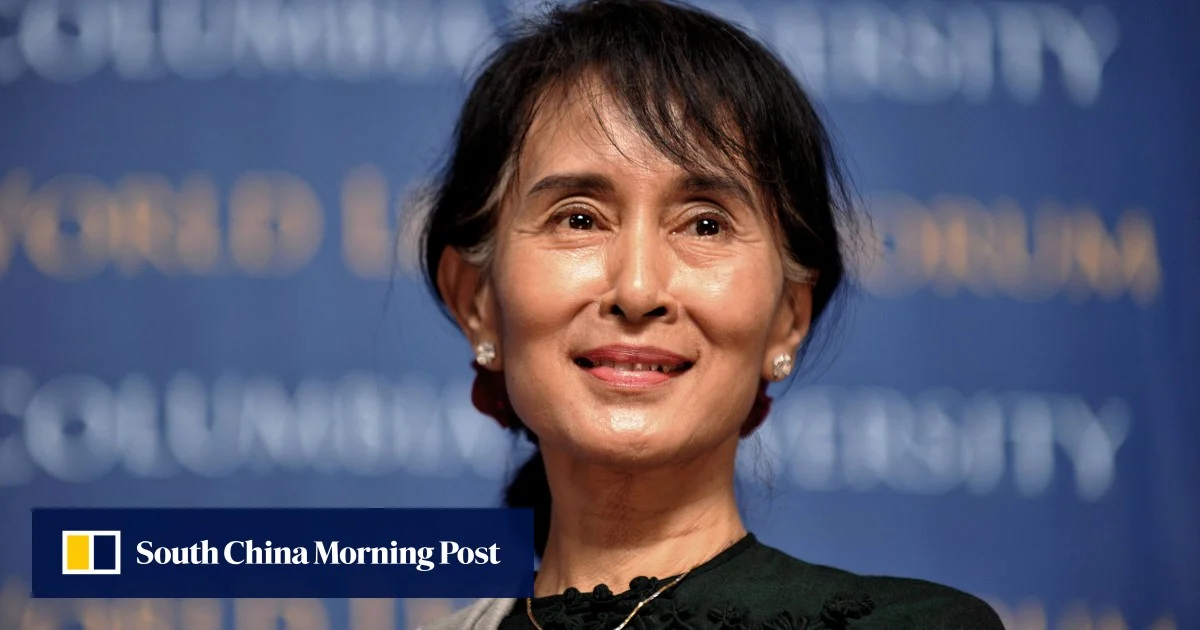
The military leadership of Myanmar has provided rare assurances to the Association of Southeast Asian Nations regarding the health and treatment of the detained former State Counsellor Aung San Suu Kyi. During a recent high-level diplomatic gathering, Myanmar’s military-appointed foreign minister informed his regional counterparts that the 81-year-old Nobel laureate remains in good health and is being treated with the care afforded to a family member. This statement comes at a critical juncture for the regional bloc, which has struggled for over three years to implement a viable peace roadmap for the conflict-torn nation.
Maria Theresa Lazaro, the Philippine Undersecretary for Bilateral Relations and ASEAN Affairs, acting as a key voice within the diplomatic mission, relayed the junta’s message during a press conference. According to Lazaro, the Myanmar representative framed the detention of the former leader in personal terms, suggesting a level of familial obligation in her care. "My recollection of the statement of the Myanmar foreign minister on Aung San Suu Kyi is that she’s in good health and that the premise of how he said this is that she is a relative, she’s a sister, and therefore we will take care of her," Lazaro stated. Despite these verbal assurances, the junta has continued to deny ASEAN special envoys and international observers direct physical access to Suu Kyi, leaving her actual condition a subject of intense international speculation.
The Legal Limbo of Aung San Suu Kyi
Aung San Suu Kyi has been in military custody since the early hours of February 1, 2021, when the Tatmadaw (Myanmar’s military) seized power in a pre-dawn coup, alleging widespread fraud in the 2020 general elections—claims that international monitors largely dismissed. Since her ousting, she has been subjected to a series of closed-door trials in a special court in the military-built capital, Naypyidaw.
The former leader was initially sentenced to a total of 33 years in prison on 19 different charges, ranging from the illegal importation of walkie-talkies and violations of the Official Secrets Act to various counts of corruption and election fraud. While the military government recently commuted her sentence by one-third, she still faces 27 years of confinement. Her legal team and international human rights organizations have consistently denounced the proceedings as politically motivated theater designed to permanently remove her from Myanmar’s political landscape.
At 81, concerns regarding her health are paramount. Reports from her son, Kim Aris, and various diplomatic sources have previously suggested she suffered from severe dental problems and bouts of dizziness, exacerbated by the isolation of her detention. The junta’s recent assertion that she is being treated like a "sister" is seen by analysts as an attempt to soften the regime’s image as it faces increasing pressure from both internal resistance and external sanctions.
A Timeline of the Crisis and Failed Diplomacy
The current situation in Myanmar is the result of a protracted deterioration of stability that began with the 2021 coup. To understand the gravity of the recent ASEAN meeting, it is necessary to examine the timeline of the conflict:
- February 2021: The military detains Aung San Suu Kyi and President Win Myint. Pro-democracy protests erupt nationwide, met with lethal force by the security apparatus.
- April 2021: ASEAN leaders meet in Jakarta and establish the "Five-Point Consensus" (5PC). This plan called for an immediate cessation of violence, constructive dialogue among all parties, the appointment of a special envoy, humanitarian assistance, and a visit by the envoy to meet all stakeholders.
- Late 2021 – 2022: The military ignores the 5PC, leading ASEAN to bar Myanmar’s political leaders from high-level summits. The resistance evolves from street protests into an armed struggle, with the formation of the People’s Defence Forces (PDF).
- October 2023: "Operation 1027" is launched by the Three Brotherhood Alliance, a coalition of ethnic armed organizations (EAOs). This offensive marks a turning point, as the military loses control of significant territories along the Chinese border and in Rakhine State.
- July 2024: Myanmar’s foreign minister attends the ASEAN Foreign Ministers’ Meeting in person for the first time in years, signaling a potential, albeit cautious, shift in the junta’s willingness to engage diplomatically as its territorial control slips.
The Stalled Five-Point Consensus
The meeting on Sunday represented the first time since the coup that top diplomats from across the region met face-to-face with their Myanmar counterpart in such a formal setting. The primary objective remains the "kick-starting" of the Five-Point Consensus, which many critics now describe as a failed initiative.
The peace effort has been hampered by the junta’s refusal to engage with the National Unity Government (NUG)—a shadow government formed by ousted lawmakers—and the various ethnic armed groups that now control large swaths of the country. For ASEAN, the challenge is twofold: maintaining regional unity while addressing a member state that is effectively in a state of total civil war.
The "sisterly" rhetoric used by the Myanmar foreign minister regarding Suu Kyi is viewed by some diplomats as a defensive posture. By framing her detention as a domestic, almost private matter, the junta seeks to deflect international demands for her unconditional release and her inclusion in peace negotiations. Without her participation, or at least the participation of the NLD (National League for Democracy) which she led, any "all-inclusive dialogue" mandated by the 5PC remains impossible.
Data on the Humanitarian and Conflict Toll
The human cost of the ongoing civil war is staggering, and it provides the backdrop against which these diplomatic talks occur. According to data from the Assistance Association for Political Prisoners (AAPP), over 5,000 civilians have been killed by the military since the coup, and more than 20,000 remain in detention.
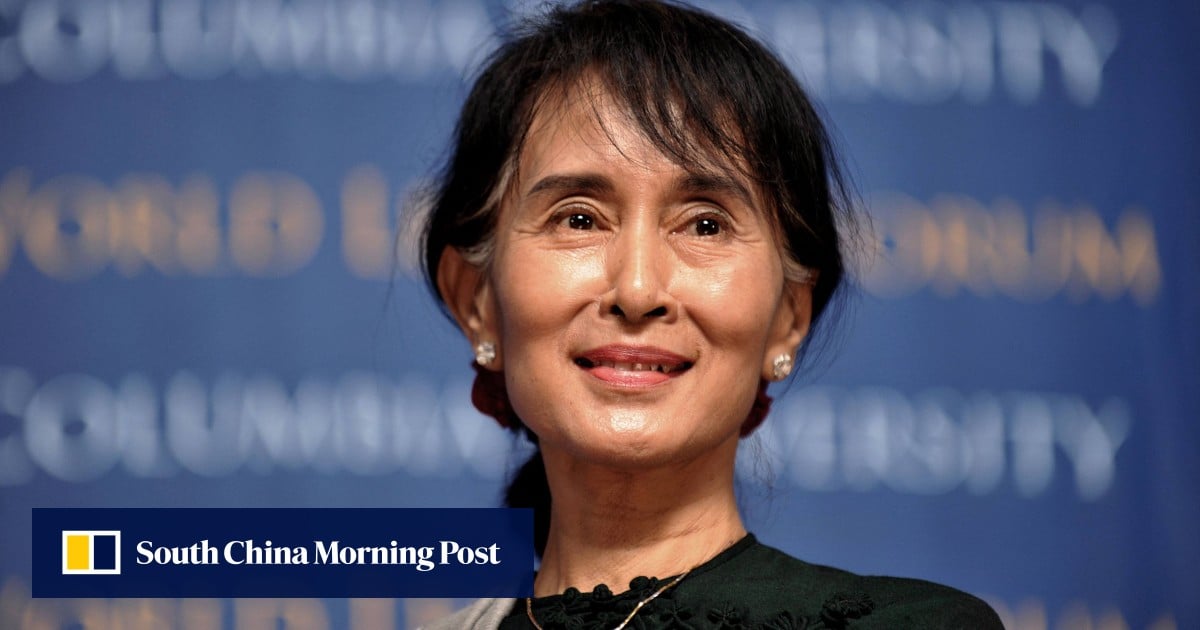
The United Nations High Commissioner for Refugees (UNHCR) reports that the number of internally displaced persons (IDPs) within Myanmar has surpassed 3 million. The conflict has seen a dramatic increase in the use of air strikes by the military to compensate for losses on the ground. As evidenced by recent reports from Rakhine State, air strikes have leveled entire villages, leading to a surge in casualties among non-combatants.
Furthermore, the economic impact has been devastating. The World Bank reports that Myanmar’s economy is roughly 10% smaller than it was in 2019, with poverty rates doubling. The instability has also turned parts of the country into hubs for transnational crime, including large-scale human trafficking and "scam centers" that affect the entire Southeast Asian region. This "spillover effect" is a primary reason why ASEAN members like Thailand, Malaysia, and Indonesia are pushing for a more aggressive resolution to the crisis.
Official Responses and Regional Divergence
The response to the junta’s claims about Suu Kyi’s health has been met with skepticism by the international community. While the Philippines, through Lazaro, reported the statement factually, other regional players have expressed deeper frustration.
Indonesia and Malaysia have historically taken a harder line against the junta, insisting that the military should not be represented at ASEAN meetings until "visible progress" is made on the Five-Point Consensus. Conversely, Thailand—sharing a long and porous border with Myanmar—has often favored "quiet diplomacy" and direct engagement with the military leadership to manage the flow of refugees and maintain border security.
The United Nations Special Rapporteur on the situation of human rights in Myanmar, Tom Andrews, has repeatedly called for stronger international action, suggesting that verbal assurances from the junta are often used as a stalling tactic. "The people of Myanmar need more than words of concern or claims of ‘good health’ for their leaders; they need a cessation of the aerial bombardments and a return to civilian rule," Andrews has noted in recent briefings.
Analysis: The Implications of the "Relative" Rhetoric
The choice of language by the Myanmar foreign minister—referring to Suu Kyi as a "sister"—is a calculated move in the context of Southeast Asian diplomacy. It utilizes "Asian values" of family and hierarchy to suggest that the military is acting as a paternalistic guardian rather than a jailer.
However, this narrative fails to address the legal reality of her 27-year sentence. If she were truly being cared for as a relative, analysts argue, she would not be held in isolation and denied access to her legal counsel and family. The rhetoric is likely aimed at the more conservative or authoritarian members of ASEAN who may be sympathetic to the idea of "internal stability" over democratic norms.
Furthermore, the timing of this outreach suggests the junta is feeling the pressure of its recent military defeats. By appearing cooperative at the ASEAN table, the military may hope to prevent further sanctions or more direct intervention from the international community. It also serves to create a wedge between ASEAN members who want to move forward with the 5PC and those who are weary of the ongoing diplomatic deadlock.
Conclusion: The Road Ahead
As Myanmar continues to be gripped by a civil war with no clear end in sight, the health and status of Aung San Suu Kyi remain a powerful symbol of the country’s broader struggle. While the junta’s assurances of her well-being may provide a temporary diplomatic lubricant for ASEAN meetings, they do little to resolve the underlying issues of legitimacy and governance.
The regional bloc faces a difficult path forward. The failure of the Five-Point Consensus to produce tangible results over three years has led to calls for a "5PC Plus" or a new framework that accounts for the reality of the military’s territorial losses. For the people of Myanmar, the stakes remain high. Whether the "sisterly care" described by the foreign minister translates into a genuine opening for peace or remains a diplomatic facade will determine the future of the nation and the stability of the entire Southeast Asian region. For now, the world remains watchful, waiting for more than just words to confirm the safety of the woman who for decades has personified Myanmar’s democratic aspirations.
