

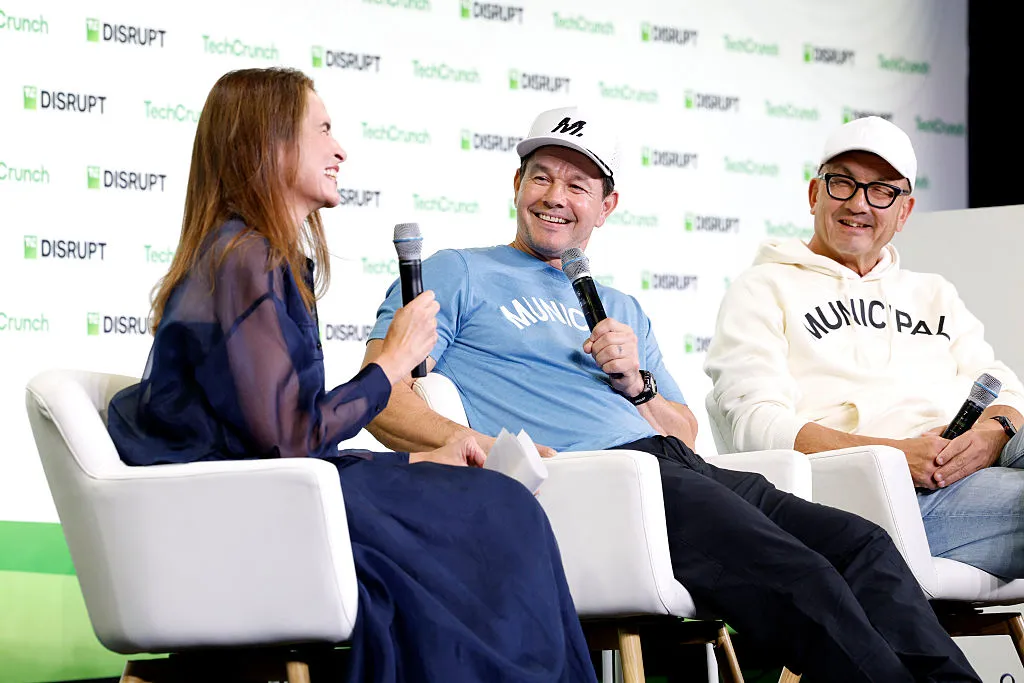
Mark Wahlberg, the actor and entrepreneur whose business portfolio spans from global restaurant chains to film production, has unveiled his latest and perhaps most ambitious venture: Municipal Gym. Speaking at the TechCrunch Disrupt conference in San Francisco, Wahlberg announced that the first flagship location of this new fitness concept is slated to open in December outside Las Vegas. The project represents a significant pivot toward the "longevity" sector of the wellness market—a niche currently dominated by high-priced, exclusive clubs. Wahlberg’s goal is to democratize access to advanced diagnostics and recovery technologies that have historically been reserved for the ultra-wealthy.
The inaugural facility is a 32,000-square-foot complex designed to serve as a comprehensive "health and wellness ecosystem." It will offer a suite of services typically found in boutique medical clinics, including epigenetic testing, comprehensive blood work, compression therapy, and cold plunges. By integrating these services with traditional fitness equipment and a specialized nutritional café, Wahlberg is positioning Municipal Gym as a direct competitor to high-end longevity centers that charge tens of thousands of dollars for annual memberships.
The Municipal Ecosystem: From Apparel to Infrastructure
The launch of the gym marks the second phase of a multi-year brand strategy that began with the Municipal clothing line. Launched in 2020, the apparel brand was born out of Wahlberg’s dissatisfaction with the standard "celebrity spokesperson" model. Having served as a brand ambassador for various fitness and lifestyle companies, Wahlberg sought to create a brand that offered more than just aesthetic appeal.
"Everybody just kind of wanted to sell T-shirts and sneakers," Wahlberg noted during his appearance at Disrupt. "And I was like, well, I want to kind of have a bigger impact on people’s lives as a whole."
Despite the challenging timing of the apparel launch—coinciding with a global pandemic that saw retail stalwarts like J.Crew and Brooks Brothers file for bankruptcy—Wahlberg viewed the clothing line as a necessary foundation. The physical gym locations are intended to complement the retail side of the business, providing a space where consumers can interact with the products while engaging in the lifestyle the brand promotes. Wahlberg described the strategy as building "soup to nuts," where supplements, apparel, training, and recovery are all housed under one brand identity.
Analyzing the Longevity Market: A Shift Toward Precision Wellness
Wahlberg’s entry into the longevity space comes at a time when venture capital and consumer interest are surging toward "precision wellness." The global wellness economy, valued at approximately $5.6 trillion by the Global Wellness Institute, is increasingly focused on biohacking and preventive health.
Currently, the market is bifurcated between traditional "big box" gyms and ultra-premium longevity clubs. For example:
- Fountain Life: Co-founded by Tony Robbins and Peter Diamandis, this longevity company raised $18 million last year. Its comprehensive memberships can cost upwards of $21,500 annually.
- The Estate: A joint venture between Robbins and hospitality mogul Sam Nazarian, which plans to charge memberships in the $35,000 range.
- Equinox Optimize: The luxury gym chain recently introduced a "longevity add-on" priced at approximately $36,000 per year, which includes personalized coaching based on biomarkers.
Municipal Gym intends to disrupt this pricing structure. While final membership tiers are still being finalized, Wahlberg cited examples such as offering three rounds of blood work and a physician consultation for roughly $99 as an add-on or entry point. This "luxury-for-less" model aims to capture a demographic that is interested in data-driven health but is priced out of the current top-tier offerings.
A Chronology of Wahlberg’s Fitness Ventures
Wahlberg’s business trajectory in the fitness industry has been marked by both rapid expansion and significant volatility. Understanding the Municipal Gym launch requires a look at his previous involvement with F45 Training, a functional fitness franchise.
- 2019: Wahlberg’s investment group, MWIG, purchased a minority stake in F45 Training at a valuation of approximately $450 million.
- 2020: The Municipal apparel brand launched amidst the COVID-19 lockdowns, focusing initially on e-commerce.
- 2021: F45 went public on the New York Stock Exchange (NYSE) with a valuation of $1.4 billion.
- 2023: Following a period of rapid over-expansion and internal management shifts, F45’s stock price collapsed, leading to its delisting from the NYSE.
- 2024 (December): The scheduled opening of the first Municipal Gym in Las Vegas.
Reflecting on the F45 experience, Wahlberg emphasized that he has learned the importance of operational control and aligning with partners who share his long-term vision. He noted that while F45 focused on high-intensity, short-duration classes, Municipal Gym is designed for longevity and community, encouraging members to stay for hours rather than minutes.
The Science of Municipal: Epigenetics and Diagnostics
The core differentiator for Municipal Gym is its focus on diagnostics. Epigenetic testing, one of the featured services, measures how a person’s environment and lifestyle choices influence their gene expression. Unlike a standard DNA test, which looks at the static genetic code, epigenetic testing provides a "biological age" and can identify how rapidly a person is aging at a cellular level.
By integrating this data with blood work, Municipal aims to provide members with personalized supplement and hormone therapy regimens. Wahlberg, who owns a performance nutrition company (PI Nutrition), intends to use these diagnostics to recommend specific products within his "ecosystem." This data-driven approach reflects a broader trend in the fitness industry where "feeling good" is increasingly tied to measurable biomarkers rather than just physical appearance.
Real Estate and Expansion Strategy
Despite the high costs associated with 32,000-square-foot build-outs, Wahlberg described the expansion strategy for Municipal Gym as "aggressive." He revealed that the Las Vegas site has already attracted interest from major landlords and developers.
"Landlords and developers who toured the Las Vegas site have offered AAA locations at very favorable terms, with great TI," Wahlberg said, referring to tenant-improvement allowances. These allowances are crucial for scaling, as they offset the capital expenditure required to install specialized medical and recovery equipment.
Wahlberg’s preference for the "big box" model—larger facilities with diverse amenities—is a departure from the boutique studio trend. By offering a protein café and social spaces, the gym seeks to foster a community environment. Wahlberg criticized the "join up but don’t show up" business model of many traditional gyms, stating that his goal is to create a destination that members are eager to visit daily.
Personal Philosophy and "Municipal" Roots
The name "Municipal" is a tribute to Wahlberg’s upbringing in Dorchester, Massachusetts. As one of nine children, Wahlberg spent much of his youth on municipal basketball courts and public parks. For him, the term represents a "level playing field" where character is built through competition and resilience.
"You learn a lot on the blacktop," Wahlberg told the audience at TechCrunch Disrupt. "You learn to win, to lose, to compete, and hopefully to get back up and do it again."
This personal connection informs the brand’s mission to be inclusive. While the gym offers high-tech services, Wahlberg expressed a desire to inspire at-risk youth and individuals from disadvantaged backgrounds. He credited his own turnaround—from a troubled teenager who served time in prison to a global superstar—to the influence of mentors like Father Jim Flavin, a parish priest who has been in his life for over four decades.
Market Implications and Future Outlook
The success of Municipal Gym will likely be viewed as a litmus test for the scalability of the longevity market. If Wahlberg can successfully deliver high-end diagnostics at a fraction of the current market price, it could force a correction in the pricing models of existing luxury wellness brands.
Industry analysts suggest that the integration of "wearables" data with in-gym diagnostics is the next frontier for the fitness sector. By providing a physical hub for this data, Municipal Gym is positioning itself at the intersection of healthcare and fitness.
At 53, Wahlberg’s personal focus has shifted from the aesthetic-heavy "Marky Mark" era to functional longevity. "I just want to feel good when I wake up in the morning," he stated. This shift mirrors the aging Millennial and Gen X demographics, who are increasingly prioritizing healthspan over mere muscle mass.
As the December opening approaches, the fitness industry will be watching to see if Wahlberg’s "aggressive" expansion can avoid the pitfalls of his previous ventures. With a full plate—including a film role as baseball legend Pete Rose and managing his daughter’s equestrian career—Wahlberg remains focused on the "dry paint" of his Las Vegas construction site, confident that his health and wellness ecosystem is the most significant project of his career.
