

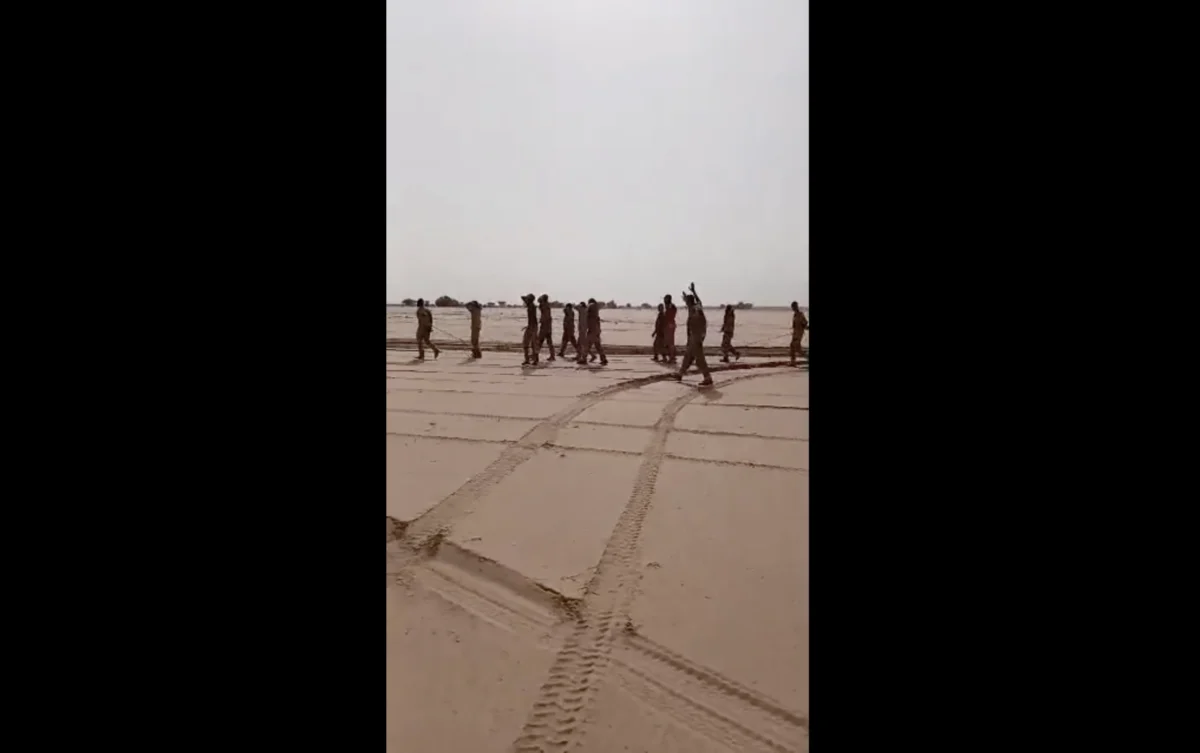
At least 50 Malian soldiers were killed after a joint Malian army and Russia’s Africa Corps convoy was ambushed near Anefis in northern Mali. Tuareg separatists and al-Qaeda linked fighters claimed responsibility as footage showed captured soldiers, destroyed military vehicles, and bodies at the scene, marking one of the deadliest single attacks against Malian forces in recent years and underscoring the escalating complexity and brutality of the conflict plaguing the Sahelian nation. The attack, which occurred on or around July 18, 2026, has sent shockwaves through the region, raising profound questions about the efficacy of current security strategies and the future stability of Mali.
The Attack: A Coordinated Ambush
The ambush unfolded with brutal efficiency in a remote stretch of northern Mali, an area long characterized by its volatile security landscape and sparse state presence. Reports indicate the convoy, comprising both Malian Armed Forces (FAMa) personnel and elements identified as "Russia’s Africa Corps" – a term widely understood to refer to mercenaries or military contractors associated with the Wagner Group – was en route through the Anefis region, a strategic locality situated between Gao and Kidal. The attackers reportedly utilized improvised explosive devices (IEDs) to disable lead and trailing vehicles, effectively trapping the convoy before launching a coordinated assault from multiple directions. Heavy small arms fire, rocket-propelled grenades, and possibly mortar fire overwhelmed the trapped forces.
Visual evidence circulating on social media, purportedly released by the claiming groups, depicted a scene of devastation. Images and short video clips showed numerous destroyed military vehicles, including armored personnel carriers and logistics trucks, smoldering wreckage, and scattered bodies of soldiers. Further footage also appeared to show several Malian soldiers captured alive, highlighting the multi-faceted nature of the assault. The sheer scale of the casualties, with at least 50 Malian soldiers confirmed dead, points to a highly organized and well-executed operation by the insurgent groups, demonstrating their continued capacity to inflict significant losses on government forces and their foreign partners.
Background: A Nation in Crisis
Mali has been embroiled in a multifaceted security crisis since 2012, when a Tuareg rebellion in the north was swiftly co-opted by various Islamist militant groups, leading to the collapse of state authority across vast swathes of the country. A military coup in Bamako further destabilized the nation, prompting a French-led military intervention (Operation Serval, later Barkhane) that initially dislodged the jihadists from major northern towns but failed to eradicate their presence.
Over the past decade, the conflict has metastasized, drawing in a complex array of actors:
- Tuareg Separatists: Groups like the Coordination of Azawad Movements (CMA) have historically sought greater autonomy or independence for the northern region they call Azawad. Despite peace agreements like the 2015 Algiers Accord, tensions with the central government have frequently flared, particularly concerning the integration of former rebels into the national army and administrative control of northern territories.
- Jihadist Groups: Predominantly Jama’at Nusrat al-Islam wal Muslimeen (JNIM), an al-Qaeda affiliate, and to a lesser extent, the Islamic State in the Greater Sahara (ISGS), have exploited state weakness and local grievances to expand their influence. These groups engage in both asymmetric warfare against state and international forces and impose strict interpretations of Islamic law in areas under their control.
- Malian Armed Forces (FAMa): Often underequipped and undertrained, FAMa has struggled to assert control over the vast and challenging terrain, suffering heavy casualties over the years.
- Foreign Military Presence: Following a series of coups and growing friction with Western partners, particularly France, the Malian transitional government ordered the withdrawal of French forces and the United Nations peacekeeping mission (MINUSMA) in 2023. This pivot coincided with a significant increase in the presence of Russian military contractors, widely known as the Wagner Group, which the Malian government refers to as "Russian instructors" or "Russia’s Africa Corps."
The strategic shift to Russian security assistance has been contentious, drawing criticism from international bodies and Western nations concerned about human rights abuses and the opaque nature of these operations. Proponents within Mali, however, argue it offers a more robust and less politically conditional alternative to Western support.
The Role of Russia’s Africa Corps
The presence of Russia’s Africa Corps in Mali has fundamentally altered the dynamics of the conflict. Since their initial deployment in late 2021, these contractors have reportedly been involved in training Malian forces, providing security for government officials, and participating directly in counter-insurgency operations. Their involvement has coincided with an increase in military operations in central and northern Mali, but also with allegations of severe human rights violations, including extrajudicial killings of civilians, which both the Malian government and Moscow deny.
The ambush near Anefis marks a significant blow, as it suggests the Africa Corps elements are operating in forward combat roles and are not immune to the sophisticated tactics of the insurgent groups. The inclusion of "Russia’s Africa Corps" in the official claims of responsibility by the attackers underscores their perceived direct involvement and the symbolic value of targeting them alongside Malian forces. This incident could prompt a re-evaluation of their operational strategies and highlight the inherent dangers of their deployment in a highly contested environment. The effectiveness of this partnership in achieving lasting security remains a subject of intense debate among security analysts.
Claimants and Their Motivations
The dual claim of responsibility by "Tuareg separatists" and "al-Qaeda linked fighters" is particularly telling. While these groups have distinct ultimate objectives—separatism/autonomy versus global jihad—they often find common cause in opposing the Malian state and its foreign allies.
- Tuareg Separatists (e.g., CMA): The relationship between the Malian government and the CMA has deteriorated significantly in recent months. The withdrawal of MINUSMA and the Malian army’s subsequent reoccupation of former MINUSMA bases in northern strongholds like Kidal, previously under CMA control, reignited hostilities. The CMA views these actions as violations of the Algiers Accord and a direct assault on their territorial claims. The ambush could be a retaliatory strike, demonstrating their capacity to challenge the Malian state’s efforts to reassert control over the north.
- Al-Qaeda Linked Fighters (JNIM): Jama’at Nusrat al-Islam wal Muslimeen (JNIM), led by Iyad Ag Ghaly, is a formidable force in the Sahel. It aims to establish an Islamic caliphate and expel all foreign influence. JNIM frequently targets state security forces and any international presence. Their participation in this ambush aligns with their established modus operandi and their strategic goal of destabilizing the Malian government and its partnerships.
The coordination between these seemingly disparate groups for a high-profile attack suggests either a tactical alliance born of shared immediate opposition to the Malian state and its Russian partners, or a simultaneous opportunistic exploitation of a vulnerable convoy. Regardless, it signals a formidable and evolving threat that is capable of overcoming doctrinal differences for operational gain.
Broader Chronology of Escalating Violence (2023-2026)
The Anefis ambush did not occur in isolation but is part of a disturbing pattern of escalating violence following the complete withdrawal of MINUSMA and the subsequent repositioning of Malian and Russian forces.
- August 2023: MINUSMA begins accelerated withdrawal. Malian army, supported by Russia’s Africa Corps, moves to take over vacated bases, particularly in the Kidal region.
- September 2023: Major clashes erupt between FAMa/Africa Corps and the CMA around Ber and Anefis, as the Malian army attempts to assert control over areas previously managed by MINUSMA or CMA.
- October 2023: Malian army and Africa Corps successfully seize Kidal from CMA, a symbolic victory for the Malian state but a major escalation of the conflict with separatists. CMA declares the Algiers Accord null and void, signaling a return to open warfare.
- Late 2023-Early 2024: Increased attacks by both JNIM and CMA against Malian forces across the central and northern regions, including ambushes, IED attacks, and rocket assaults on military camps.
- Mid-2024: Reports of increased civilian casualties and displacement, particularly in areas where Malian and Russian forces conduct anti-insurgency operations, leading to growing humanitarian concerns.
- Early 2025: Significant attacks reported near Tessit and Ménaka, showcasing the continued reach of militant groups. The Malian government reiterates its commitment to fighting terrorism and defending national integrity.
- Late 2025: Western intelligence reports suggest an increase in coordination between some Tuareg elements and jihadist groups against the Malian state, driven by shared grievances against Bamako and its new security partners.
- July 2026: The Anefis ambush occurs, demonstrating the continued and perhaps heightened threat level, particularly against joint convoys.
Official Responses and International Implications
As of publication, official statements from the Malian transitional government were anticipated to confirm casualties and condemn the attack, vowing to pursue those responsible. Typically, such statements emphasize the government’s resolve to fight terrorism and uphold national sovereignty. Malian authorities would likely frame the incident as an act of aggression against the Malian state and its partners, possibly downplaying the specific involvement of "Russia’s Africa Corps" or referring to them broadly as "military instructors."
Russian officials, when pressed on such incidents, generally maintain that their personnel are engaged in training and support roles, not direct combat, and would likely reiterate their commitment to assisting Mali in its fight against terrorism.
The international community is likely to react with concern. The United Nations Secretary-General’s office would probably issue a statement condemning the violence, calling for the protection of civilians, and urging all parties to de-escalate. Regional bodies like ECOWAS (Economic Community of West African States) would likely express dismay at the deteriorating security situation, which poses significant spillover risks to neighboring countries such as Burkina Faso and Niger, both of which are also grappling with jihadist insurgencies and political instability. Western nations, already critical of Mali’s pivot to Russia, might use this incident to highlight the perceived failures of Bamako’s current security strategy and the risks associated with its partnership with the Africa Corps. Humanitarian organizations would undoubtedly voice alarm over the potential for increased civilian suffering and displacement in the aftermath of such a major attack.
Broader Impact and Analysis
The Anefis ambush carries significant implications for Mali and the wider Sahel region:
- Military Morale and Strategy: Such a heavy loss of life can severely impact the morale of the Malian armed forces. It also forces a critical re-evaluation of operational tactics, intelligence gathering, and convoy security protocols, especially for joint operations with foreign partners. The perceived invulnerability of foreign forces may be challenged.
- Political Stability: The incident could fuel domestic discontent and deepen the political crisis in Mali. The transitional government, which came to power promising to restore security, faces immense pressure. Failures to protect its forces, even with foreign assistance, can erode public trust.
- Regional Instability: The Sahel remains one of the world’s most volatile regions. An escalation in Mali has direct consequences for its neighbors, contributing to a broader pattern of instability, refugee flows, and cross-border militant activities. The tactical coordination between separatists and jihadists sets a dangerous precedent for regional security.
- Geopolitical Dynamics: The attack highlights the challenges and risks associated with Russia’s expanding influence in Africa. While Moscow seeks to project power and secure strategic resources, its security assistance in Mali is demonstrably facing severe operational challenges. This incident could influence perceptions of Russia’s effectiveness as a security guarantor in the region, while simultaneously complicating Western efforts to counter both jihadism and Russian influence.
- Humanitarian Crisis: Intensified conflict inevitably exacerbates the humanitarian situation. Increased violence leads to more displacement, disrupts livelihoods, and hinders humanitarian access, further straining already fragile communities and exacerbating food insecurity in a region frequently affected by drought.
The deadly ambush near Anefis is a stark reminder of the intractable nature of Mali’s security crisis. It underscores the continued potency of various armed groups, the severe challenges facing the Malian armed forces, and the complex, often perilous, implications of foreign military involvement. As Mali grapples with the aftermath, the incident serves as a grim indicator of the long and arduous path toward achieving peace and stability in the troubled Sahel.
