

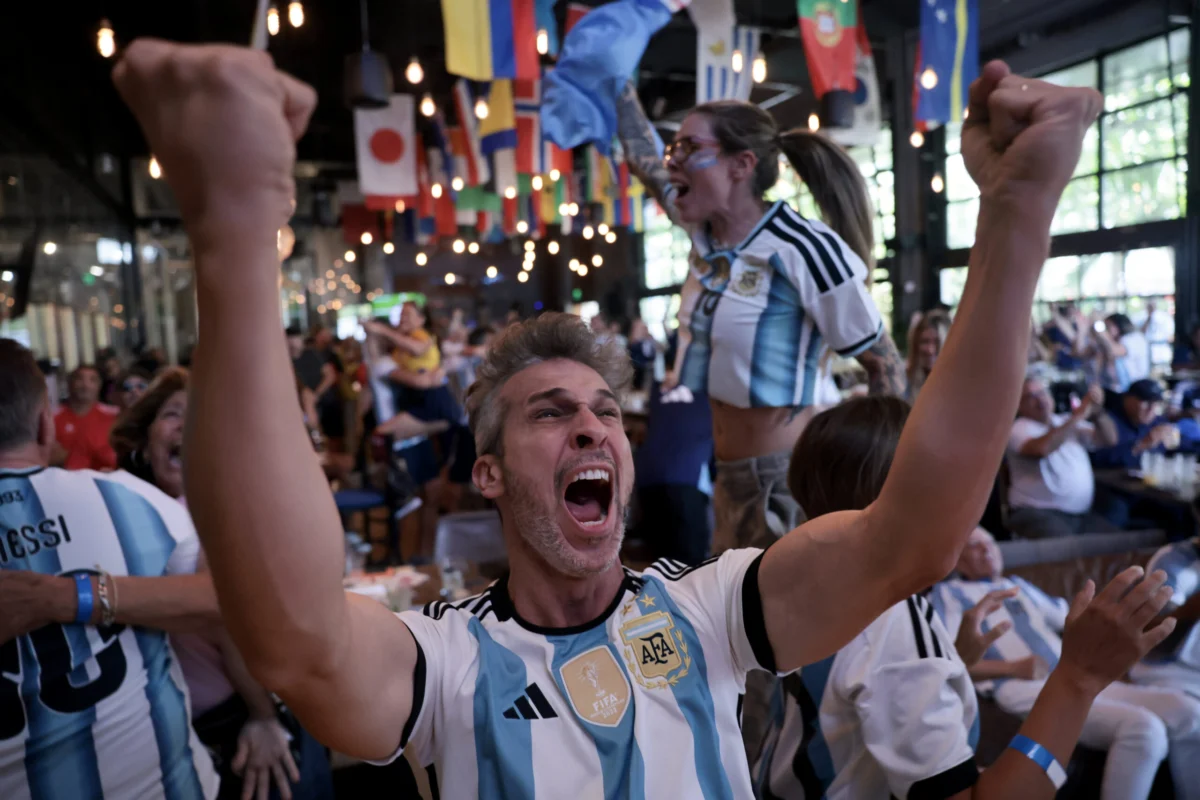
The 2026 FIFA World Cup has proven to be an unparalleled catalyst for prediction markets, driving trading volumes to unprecedented heights across various platforms, with Kalshi emerging as a significant beneficiary, attracting an astonishing 3 million new users over the course of the tournament. This surge in engagement has translated into a record-breaking $1.2 billion traded on contracts related to predicting the World Cup winner alone, culminating in anticipation as Spain and Argentina prepare to clash in the final on Sunday. This monumental growth, however, unfolds against a backdrop of escalating regulatory scrutiny and an ongoing legal battle concerning the classification and oversight of prediction market contracts, particularly those tied to major sporting events.
A Phenomenal World Cup Boost for Prediction Markets
The global spectacle of the FIFA World Cup, often hailed as the planet’s most-watched sporting event, has once again underscored its immense commercial and cultural power. For prediction market platforms like Kalshi, it presented a unique opportunity to tap into a vast, globally dispersed audience eager to test their foresight. Kalshi, a regulated exchange for event contracts, capitalized on this fervor, reporting an influx of 3 million new users since the tournament commenced. This figure represents a substantial expansion of its user base, signaling a growing mainstream acceptance of prediction markets as a novel form of engagement with current events.
The financial metrics are equally striking. Over $1.2 billion has been traded on Kalshi’s World Cup winner contracts, setting a new benchmark for a single market on the platform. This unprecedented volume highlights not only the popularity of soccer but also the increasing sophistication and liquidity within the prediction market ecosystem. Vijay Viswanathan, an associate dean of integrated marketing communications at Northwestern University, articulated the sentiment perfectly, stating, "I don’t think there’s any game like football. It’s played in about every country in the world… so in just terms of the total addressable market, there’s really nothing that comes close to the FIFA World Cup." This global reach provides an unparalleled platform for market engagement, far surpassing the scope of regional or even national events.
Aggressive Marketing and Strategic Partnerships: A Timeline of Kalshi’s World Cup Offensive
Kalshi’s success during the 2026 World Cup was not merely a passive outcome of the tournament’s popularity but a result of a meticulously planned and aggressively executed marketing strategy. The company initiated a multi-pronged approach that blended traditional sports endorsements with cutting-edge technological integrations and celebrity appeal, all designed to maximize brand visibility and user acquisition.
-
Early Tournament Phase (June 2026): As the World Cup kicked off, Kalshi wasted no time in unveiling its ambitious marketing initiatives. A significant move was its partnership with ADI Predictstreet, the official prediction market sponsor of the World Cup. This collaboration led to co-branded advertisements prominently featured in stadiums across North America, ensuring high visibility to millions of in-person spectators and billions of television viewers worldwide. Concurrently, Kalshi launched an advertisement campaign featuring actor Timothee Chalamet. This strategic choice aimed to broaden Kalshi’s appeal beyond the traditional sports betting demographic, leveraging Chalamet’s popularity during his high-profile appearances at the NBA Finals.
-
Mid-Tournament Momentum (Late June – Early July 2026): Kalshi deepened its engagement with the football world, securing endorsements from revered figures. Croatian soccer maestro Luka Modric and legendary Real Madrid coach José Mourinho lent their gravitas to Kalshi’s campaigns, directly appealing to hardcore football fans. A landmark deal was struck with the Argentina national team, culminating in a highly coveted feature in an Instagram post by none other than superstar Lionel Messi. Such an endorsement from one of the sport’s greatest icons provided an invaluable boost to Kalshi’s credibility and reach within the global football community. Tarek Mansour, Kalshi CEO, emphasized the philosophy behind this agile marketing, stating, "Our volumes are where the news is at… It’s a lot of the approach for the World Cup. The most important thing is enable creativity based on what’s happening." This agile strategy was exemplified by an advertisement featuring former professional soccer stars playing a scrimmage, which was conceived, executed, and released in a remarkable 24 hours on a recent Friday.
-
Technological Integration and Broad Appeal (July 2026): In a forward-thinking move, Kalshi partnered with OpenAI to integrate the company’s contract odds into ChatGPT. This innovative collaboration meant that users searching for information about World Cup games on the AI platform would encounter Kalshi’s prediction market odds, seamlessly blending real-time market data with informational queries. Further diversifying its celebrity endorsements, Kalshi released a spot with Colombian singer J Balvin this month, continuing its push to attract a wider, non-sports-centric audience. Elizabeth Johnson, executive director of the Wharton Neuroscience Initiative at the University of Pennsylvania, commented on this strategy, observing, "This is also a way for them to say, ‘oh, but we’re also relevant to all these other people who might not be that interested in sports, too.’ They’re seizing this moment to remind people about the ubiquitousness of what these prediction markets are." This holistic approach showcased Kalshi’s commitment to mainstreaming prediction markets as a general-interest platform.
Navigating a Treacherous Regulatory Landscape
Despite its commercial triumphs, Kalshi operates in a complex and often contentious regulatory environment. The rapid expansion of prediction markets, particularly into sports-related events, has ignited a fierce dispute between the federal government and various states regarding oversight. At the heart of the conflict is the classification of these contracts: are they akin to derivatives and futures, regulated by the Commodity Futures Trading Commission (CFTC), or are they a form of sports betting, traditionally controlled and taxed by state governments?
States argue that sports event contracts offered by platforms like Kalshi are functionally equivalent to sports betting, thus falling under their jurisdiction for licensing, taxation, and consumer protection. This stance is often supported by traditional gambling companies, who view prediction markets as encroaching on their established territories and revenue streams. Indeed, a report by a prominent gaming association in May 2026 estimated that states have collectively lost over $1 billion due to the unregulated nature of certain prediction market activities.
Kalshi, aligning with the federal government’s position, asserts that its contracts are financial instruments, specifically event contracts, that derive their value from the outcome of future events. As such, they contend that the CFTC, which regulates swaps and derivatives, possesses the sole authority to regulate them. CEO Tarek Mansour has openly dismissed concerns from states, suggesting that much of the pressure stems from incumbent gambling companies worried about losing their dominant market positions.
The regulatory turbulence is not new to Kalshi. Earlier in the year, on March 9, 2026, the company’s logo appeared amidst a major scandal and a $54 million lawsuit in Creteil, France, concerning bets related to recent strikes in Iran. While the specifics of this incident are distinct from the World Cup contracts, it underscores the consistent challenge of operating in a nascent industry where regulatory frameworks are still evolving and legal interpretations are frequently contested. This incident serves as a stark reminder of the high stakes involved and the potential for significant financial and reputational repercussions in this burgeoning sector.
Brian Sung, a partner specializing in derivatives and digital assets at Haynes Boone, offers a nuanced perspective on the impact of Kalshi’s aggressive marketing. While he believes that advertising strategies are unlikely to directly sway court rulings, he acknowledges their significant influence on public and political perception. "It does kind of weaken their perception, in public or politics," Sung notes, observing the paradox that while Kalshi seeks to differentiate itself from traditional sports betting, its marketing often leans heavily into sports. "They are trying to push against this idea that they’re really only about sports. I mean, that is where the bulk of their activity is." This creates a delicate balance for Kalshi, as it tries to appeal to a broad audience while maintaining a distinct legal and operational identity.
The Road Ahead: User Retention and Sustained Growth
With the 2026 FIFA World Cup drawing to a close, Kalshi faces its next significant challenge: converting the 3 million new users acquired during the tournament into recurring traders. Data suggests this will be a considerable hurdle; trading volumes on days without World Cup matches have been noticeably lower than on game days. This pattern highlights the potential for event-driven spikes rather than consistent, diversified engagement.
However, Tarek Mansour remains optimistic, framing this as a cyclical phenomenon. He posits that major events historically drive volume, followed by a temporary decline, only for volumes to rebound and continue their upward trajectory driven by other global happenings. "You have to believe there’s not going to be any news after Sunday," Mansour quipped, adding, "Maybe, but the more probable thing is that there’s going to be like a bunch of things going on in the world, and Kalshi’s going to be there to service it." This perspective suggests a strategy focused on diversifying event contracts beyond sports, encompassing politics, finance, entertainment, and other newsworthy topics to maintain user engagement.
The success of this retention strategy will hinge on several factors: the platform’s user experience, the breadth and depth of available contracts, the effectiveness of ongoing marketing efforts, and crucially, the resolution of the regulatory ambiguities. A clear and stable regulatory framework could provide the certainty needed for sustained institutional and retail investment in prediction markets, fostering long-term growth. Conversely, prolonged legal battles or adverse rulings could stifle innovation and limit market expansion.
Broader Implications and the Future of Event Contracts
Kalshi’s World Cup saga serves as a microcosm for the broader prediction market industry. It demonstrates the immense potential for growth when aligned with globally resonant events, showcasing how these platforms can democratize access to speculative markets and provide a novel outlet for public opinion and foresight. The integration with AI platforms like ChatGPT signals a future where prediction markets are seamlessly woven into daily digital interactions, making them more accessible and intuitive.
However, the regulatory debate is paramount. The outcome of the federal vs. state dispute will set critical precedents for how event contracts are regulated, taxed, and perceived. Should states succeed in classifying them as sports betting, it could lead to a fragmented regulatory landscape, potentially hindering interstate operations and increasing compliance costs. If the CFTC’s jurisdiction is affirmed, it could pave the way for a more unified and streamlined regulatory environment, fostering innovation but also demanding robust consumer protection mechanisms.
Ultimately, Kalshi’s journey through the 2026 FIFA World Cup highlights the dynamic interplay between technological innovation, global events, aggressive marketing, and the ever-present challenge of regulatory adaptation. As the final whistle blows on Sunday, the prediction market industry will not only reflect on a period of unprecedented growth but also look ahead to a future shaped by the lessons learned and the battles yet to be fought. The question remains whether the momentum generated by the World Cup will propel Kalshi and the broader prediction market sector into a new era of mainstream acceptance and sustained growth, or if regulatory headwinds will temper its ambitious trajectory.
Disclosure: CNBC and Kalshi have a commercial relationship that includes customer acquisition and a minority investment.
