

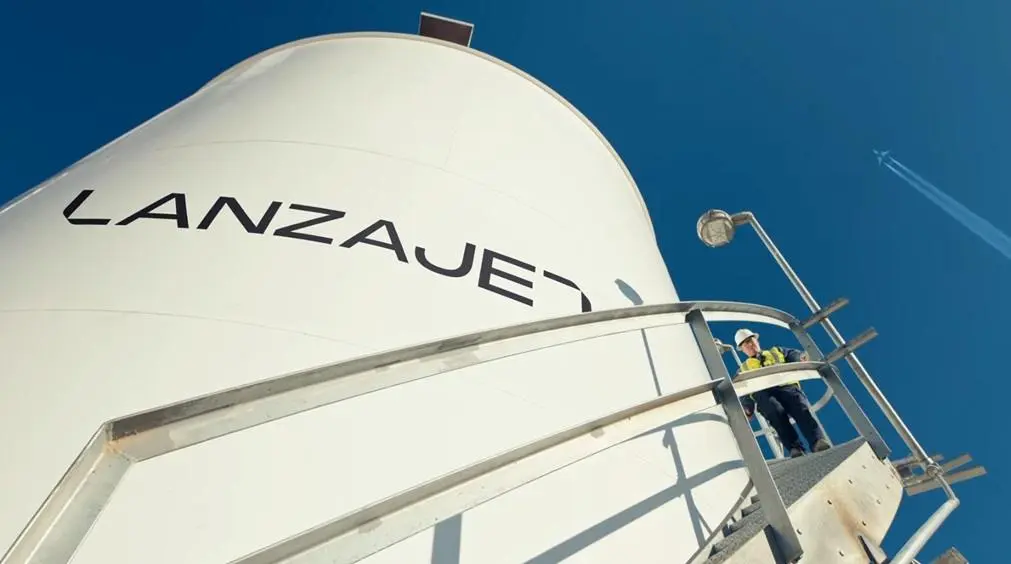
The sustainable aviation fuel (SAF) sector has reached a critical juncture in its commercialization journey, marked by a significant new capital infusion into one of its most prominent technology providers. LanzaJet, a leader in the Alcohol-to-Jet (ATJ) technology space, announced on October 16, 2026, that it has secured a minimum of $20 million in new financing. This capital is earmarked for the scaling of production and the global distribution of SAF from its Freedom Pines Fuels facility located in Soperton, Georgia. Supported by its founding parent company LanzaTech, renowned venture capitalist Vinod Khosla, and the LanzaJet Board of Directors, the investment signals a consolidation of confidence in the company’s ability to transition from a technology pioneer to a high-volume industrial supplier.
This latest round of funding is not merely an isolated investment but serves as a cornerstone of a more comprehensive recapitalization and debt reduction initiative. By restructuring its balance sheet, LanzaJet aims to fortify its financial foundation as it navigates the capital-intensive phase of scaling renewable fuel production. As part of this strategic realignment, LanzaTech has significantly increased its ownership stake in LanzaJet, reinforcing the symbiotic relationship between the carbon recycling parent and its aviation-focused subsidiary.
Strategic Leadership Transition and Commercial Growth
Concurrent with the financing announcement, LanzaJet revealed a shift in its executive leadership designed to steer the company through its next phase of commercial expansion. Jennifer Holmgren, the CEO of LanzaTech, will continue her role as Chair of the LanzaJet Board while also stepping in as interim CEO. This move ensures a seamless integration of LanzaTech’s operational expertise into LanzaJet’s daily management. Holmgren succeeds outgoing CEO Jimmy Samaritzis, who recently announced his departure to pursue a new leadership opportunity within the broader SAF industry.
Under Samaritzis’s tenure, LanzaJet successfully transitioned from a conceptual technology firm to the operator of the world’s first commercial-scale alcohol-to-jet facility. Holmgren’s interim leadership is expected to focus on optimizing the output of the Freedom Pines Fuels plant and replicating the facility’s blueprint in international markets. In her statement, Holmgren emphasized that LanzaTech has a proven track record of bringing "first-of-a-kind technology to profitable commercial operation," a milestone the company now intends to replicate across the LanzaJet portfolio.
The Freedom Pines Fuels Milestone: A Chronology of Success
The importance of the Freedom Pines Fuels facility in Soperton, Georgia, cannot be overstated in the context of the global energy transition. Launched as a flagship project, the plant achieved full operational status in November 2025. This milestone marked the first time the Alcohol-to-Jet pathway had been proven at a commercial scale, moving beyond pilot and demonstration phases.
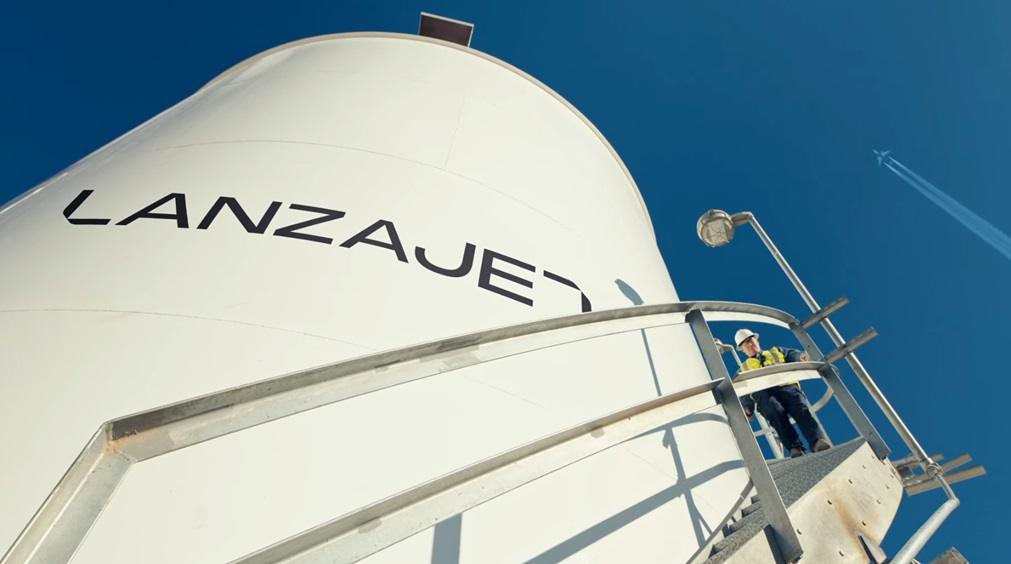
The facility currently boasts an annual production capacity of 10 million gallons of SAF and renewable diesel. Since reaching full capacity, the plant has successfully produced fuels that meet the rigorous ASTM International specifications, which are essential for the integration of renewable fuels into existing aviation infrastructure and aircraft engines. The chronology of LanzaJet’s development highlights a rapid ascent:
- 2020: LanzaJet is officially launched by LanzaTech with support from Suncor Energy, Mitsui & Co., and later, British Airways and Shell.
- 2021-2023: The company secures various grants and investments, including support from the Microsoft Climate Innovation Fund and the U.S. Department of Energy, to break ground on the Georgia facility.
- November 2025: Freedom Pines Fuels begins full-scale commercial operations, delivering its first batches of ASTM-certified SAF.
- October 2026: The company secures $20 million in recapitalization funding to scale operations and meet rising global demand.
Technical Innovation: The Alcohol-to-Jet (ATJ) Pathway
LanzaJet’s competitive advantage lies in its proprietary Alcohol-to-Jet (ATJ) technology. Unlike other SAF production methods that rely heavily on used cooking oils or fats (HEFA pathway), which face feedstock supply constraints, the ATJ pathway utilizes ethanol as its primary building block. This ethanol is sourced from a diverse array of sustainable and waste-based materials, including:
- Agricultural Residues: Stalks, husks, and other waste from food production.
- Forestry Residuals: Wood chips and waste from timber operations.
- Energy Crops: Low-carbon crops grown specifically for fuel production on marginal lands.
- Municipal Solid Waste: Organic waste diverted from landfills.
- Industrial Carbon Emissions: Through LanzaTech’s primary technology, industrial off-gases are captured and fermented into ethanol, which LanzaJet then converts into jet fuel.
This versatility in feedstock is crucial for the aviation industry’s goal of reaching net-zero emissions by 2050. By decoupling fuel production from the food supply chain and utilizing abundant waste streams, LanzaJet provides a scalable solution that can be localized in various geographic regions based on available biomass or industrial infrastructure.
Supporting Data and Market Context
The aviation sector contributes approximately 2% to 3% of global energy-related carbon dioxide emissions. Because electric and hydrogen-powered aircraft are still in early development stages and are largely limited to short-haul flights, SAF remains the most viable near-term solution for decarbonizing long-haul aviation.
Market analysts suggest that to meet the International Air Transport Association (IATA) goal of net-zero by 2050, SAF production must scale from current levels (roughly 0.2% of global jet fuel use) to nearly 65% by mid-century. This requires an astronomical increase in production capacity. The $20 million infusion into LanzaJet, while modest compared to the total capital needed for the industry, represents the type of "gap-filling" investment required to move successful projects from initial operation to optimized, high-output commercial entities.
Furthermore, the "Green Premium"—the price difference between conventional fossil-based kerosene and SAF—remains a hurdle. However, LanzaJet’s ATJ process is viewed as one of the more cost-competitive pathways as it matures, particularly when integrated with carbon capture and low-carbon intensity ethanol sources.

Official Responses and Industry Implications
The reaction from the investment community and industry stakeholders has been one of cautious optimism. Vinod Khosla, a long-time advocate for "black swan" technologies in the climate space, has reaffirmed his commitment to LanzaJet, signaling that the company has moved past the "valley of death" typically associated with new hardware-based climate technologies.
Industry analysts suggest that LanzaTech’s decision to increase its stake is a strategic move to vertically integrate the carbon-to-fuel pipeline. By controlling both the ethanol production (via LanzaTech’s gas fermentation) and the ethanol-to-SAF conversion (via LanzaJet), the parent company can optimize the entire value chain, reducing costs and improving the overall carbon intensity profile of the final product.
The leadership transition is also seen as a stabilizing force. Jennifer Holmgren is widely regarded as one of the most influential figures in the bioeconomy. Her dual role suggests that LanzaJet is entering a period of "operational hardening," where the focus shifts from engineering breakthroughs to supply chain logistics, long-term offtake agreements, and financial sustainability.
Broader Impact on the Aviation Ecosystem
The scaling of LanzaJet’s Georgia facility has broader implications for regional economies and global policy. In the United States, the Inflation Reduction Act (IRA) has provided significant tailwinds for the SAF industry through tax credits like the 40B and 45Z, which reward fuels based on their lifecycle carbon reduction. LanzaJet’s ability to utilize ultra-low-carbon ethanol puts it in a prime position to maximize these incentives.
Globally, the "LanzaJet model" is being looked at as a template for other nations. With projects already in various stages of planning in the United Kingdom, the European Union, and Southeast Asia, the success of the Freedom Pines Fuels facility serves as a "proof of concept" for international investors. If LanzaJet can demonstrate that the Soperton plant can operate profitably while significantly reducing greenhouse gas emissions, it will likely trigger a wave of similar investments in ATJ infrastructure worldwide.
Furthermore, the production of renewable diesel alongside SAF at the Georgia plant provides LanzaJet with a diversified revenue stream. While SAF is the primary focus, renewable diesel serves the heavy-duty transport and shipping sectors, which are also facing stringent decarbonization mandates.

Future Outlook and Challenges
Despite the positive momentum, LanzaJet and the wider SAF industry face significant challenges. The primary obstacle remains the stabilization of feedstock supply chains. As more ATJ plants come online, the demand for sustainable ethanol will surge, potentially leading to price volatility. Additionally, the industry must continue to navigate a complex web of international regulations and carbon accounting standards to ensure that the fuel produced meets the "sustainability" criteria of different jurisdictions.
However, the $20 million financing and the strategic recapitalization announced today suggest that LanzaJet is well-prepared to face these headwinds. By securing the support of its board and major investors, and by leaning on the experienced leadership of Jennifer Holmgren, the company is positioned to remain at the forefront of the aviation industry’s green transformation.
As the Freedom Pines Fuels facility continues to pump out millions of gallons of low-carbon fuel, the eyes of the global aviation industry will remain fixed on Georgia. The success of this facility will likely determine the pace at which the world’s airlines can transition away from fossil fuels and toward a more sustainable, carbon-neutral future. With this new financing, LanzaJet has not only secured its immediate operational needs but has also reinforced its role as a linchpin in the global effort to make flight a sustainable mode of transport for generations to come.
