

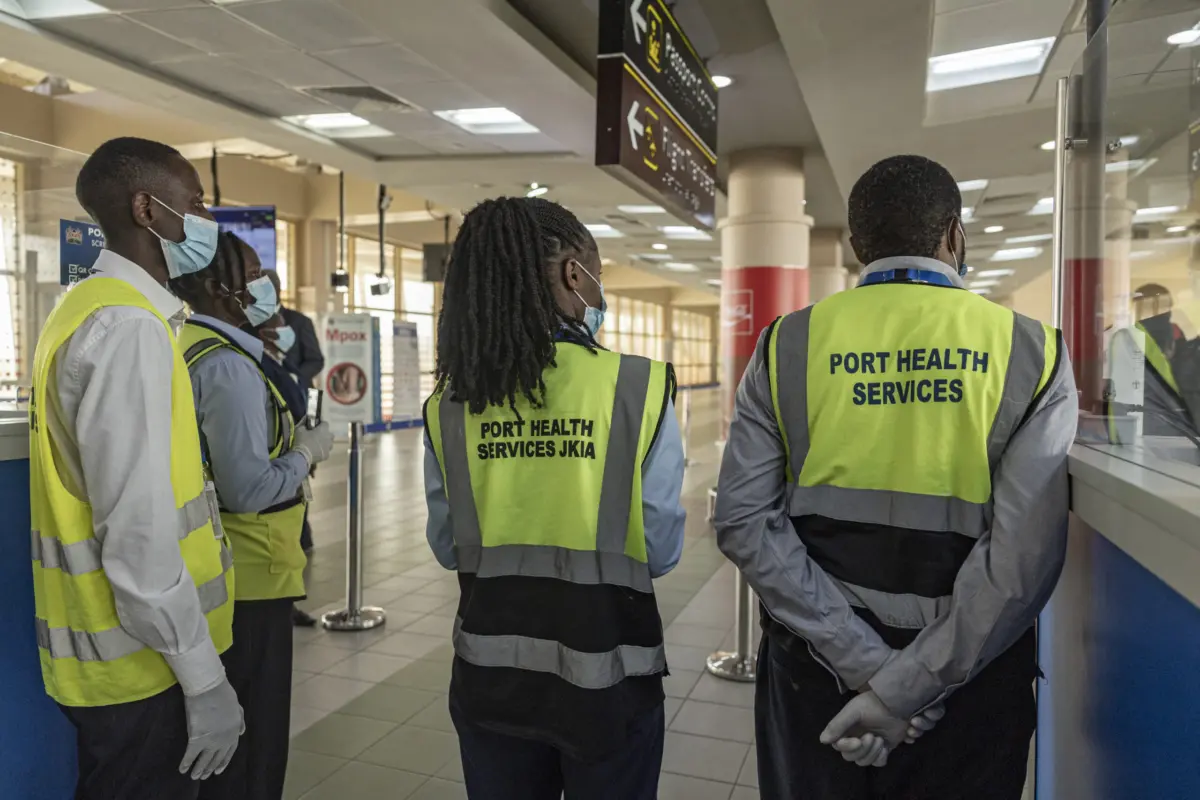
Nairobi, Kenya has reported its inaugural fatality from the highly virulent Bundibugyo (BDBV) strain of Ebola virus, a grim milestone that significantly escalates regional concerns regarding the containment of an outbreak that has ravaged the Democratic Republic of Congo (DRC) since earlier this year. The deceased, a patient who had travelled extensively from the DRC through Uganda before arriving in Nairobi, succumbed to the disease on Monday, igniting a fresh wave of anxiety over cross-border disease surveillance and the true geographical spread of the epidemic.
The Patient’s Journey and Kenya’s First Case
The individual, whose identity has not been publicly released, had been residing in the DRC for several years and first fell ill there approximately one month prior to their death. On October 2, the patient embarked on a land journey from the DRC, travelling through Beni to reach the Ugandan capital, Kampala. The following day, October 3, they boarded a flight from Kampala to Nairobi, Kenya. Upon arrival at Jomo Kenyatta International Airport, a relative and a friend facilitated their transfer to a local hospital. Swift action by Kenyan health authorities led to the patient’s immediate isolation and subsequent testing, which confirmed the presence of the Bundibugyo Ebola virus. Despite receiving intensive medical care, the patient’s condition deteriorated, and they passed away on Monday. In adherence to established Ebola protocols, the patient was buried on Tuesday, with strict safety measures in place to prevent further transmission.
This case has immediately triggered extensive contact tracing efforts by Kenyan health authorities. As of the latest reports, 28 potential contacts have been identified, including close family members and healthcare professionals who attended to the patient. Additionally, authorities are meticulously tracking 23 passengers and four crew members from the patient’s flight, with arrangements underway for their appropriate follow-up and potential quarantine, as outlined by the World Health Organization (WHO).
The Bundibugyo Strain: A Persistent and Unvaccinated Threat
The current outbreak is caused by the Bundibugyo virus (BDBV) strain, a form of Ebola first identified in Uganda in 2007. Unlike the Zaire strain, which was responsible for the devastating 2014-2016 West African outbreak and for which a vaccine now exists, there is currently no approved vaccine specifically for the Bundibugyo strain. This absence of a preventive measure complicates containment efforts significantly, making robust public health interventions, including rapid diagnosis, isolation, and meticulous contact tracing, the primary tools for curbing its spread.
Ebola is a severe, often fatal, viral infection transmitted through direct contact with the blood, secretions, organs, or other bodily fluids of infected people or wild animals. Contaminated surfaces and the consumption of infected bushmeat have also been implicated in transmission. Symptoms, which can manifest anywhere from two to 21 days post-infection, typically begin abruptly with flu-like signs such as a high fever, profound fatigue, and severe headache. As the disease progresses, it can lead to internal and external bleeding, impaired liver and kidney function, and ultimately, multi-organ failure. The rapid onset and non-specific initial symptoms often make early detection challenging, especially in areas with limited diagnostic capabilities.
DRC’s Protracted Struggle: The Epicenter of the Crisis
The ongoing Ebola outbreak in the Democratic Republic of Congo represents one of the most complex and protracted public health emergencies in recent history. Declared in May of this year, the outbreak has claimed the lives of at least 4,148 people out of 8,300 reported cases across seven provinces in the country’s north and east. This makes it one of the deadliest outbreaks ever recorded, surpassing even the 2014-2016 West African outbreak in terms of fatality rate within the DRC.
The challenges to containing the virus in the eastern DRC are multifaceted and deeply entrenched. The region is characterized by weak infrastructure, making access to remote communities difficult for response teams. Compounding this, persistent conflict with various armed groups near the borders with South Sudan, Uganda, and Rwanda creates an insecure environment that frequently disrupts surveillance, contact tracing, and safe burial practices. Health workers, often underpaid or unpaid, have resorted to strikes, further crippling response efforts. Misinformation and deeply ingrained cultural traditions, such as open-casket burials, have also fueled transmission, as mourners coming into direct contact with the deceased risk contracting the highly contagious virus.
The humanitarian situation has been exacerbated by recent incidents, including the burning of an Ebola-hit camp housing a transit center for infected patients by soldiers in Bunia, the capital of Ituri province, last Friday. This incident forced approximately 19,000 people to flee, further displacing vulnerable populations and complicating disease control efforts. Doctors Without Borders (MSF) recently issued a stark warning about an "alarming surge" of cases in eastern North Kivu province, which borders Uganda. Stephanie Hoffmann, coordinator at MSF’s Ebola treatment centre in Butembo, described the situation as "like fighting a megafire," with multiple outbreaks developing simultaneously across different locations. Butembo, a city of some 2 million people, has only four Ebola treatment centers, two of which are recent additions, highlighting the severe shortage of specialized care facilities.
Regional Alarm Bells: Uganda’s "Ebola-Free" Status Questioned

Prior to the Kenyan case, the Bundibugyo strain had spread across the border to Uganda, which reported approximately 20 cases before officially declaring itself "Ebola-free" in July. The detection of a patient, originating from the DRC, travelling through Uganda, and subsequently dying of Ebola in Kenya, has cast a shadow of doubt over Uganda’s previously declared Ebola-free status. It also raises serious questions about the efficacy and rigidity of border screening processes in both Uganda and Kenya.
Passengers travelling to, from, or through Uganda and Kenya are typically subjected to multiple airport temperature checks and are required to complete at least two digital health forms designed to flag potential exposure to the virus in the DRC. However, the infected patient in this instance evidently bypassed these layers of screening. Alan Kasujja, a Ugandan government spokesperson, vehemently denied any culpability on Uganda’s part, asserting on social media, "Leave Uganda out of this conversation. We don’t have Ebola here." The Ugandan Ministry of Health, in a statement released on Tuesday, further clarified that the man had registered a "normal temperature" during screening at Entebbe airport before his departure.
Kenyan authorities, however, suspect that the patient may have taken medication to mask his symptoms when later screened at Nairobi airport. Investigations are ongoing, with Ugandan health official Richard Mugahi stating that efforts are underway to retrieve the digital form the patient would have completed at Entebbe airport, which includes questions about recent health problems and travel history in the DRC. Furthermore, airport security camera footage is being reviewed to identify and trace contacts of the driver who dropped the patient at the airport in Uganda.
Wolfgang Preiser, a professor and head of medical virology at Stellenbosch University in South Africa, acknowledged that while the tracking system "seems to work as it did in Uganda" with a rapid diagnosis in Kenya, the incident underscores the inherent fragility of even robust screening mechanisms. He cited a past instance during the West African Ebola outbreak where a British nurse, despite cooperating and reporting to medical checks at Heathrow, was initially missed and only later diagnosed with Ebola at her destination. This, Preiser noted, illustrates that "even cooperative travellers and good systems may fall through the net," emphasizing the need for continuous vigilance and adaptation.
Kenya’s Response and Broader Implications
In the wake of this critical development, the World Health Organization has confirmed that the Kenyan government is significantly enhancing its disease surveillance capabilities, implementing more targeted screening measures at high-risk points of entry. Mohamed Janabi, WHO Regional Director for Africa, lauded Kenya’s existing health emergency preparedness, stating that it provides "a head start." He emphasized the immediate priority of "moving swiftly to detect any further cases before the virus has an opportunity to spread," underscoring WHO’s commitment to supporting Kenya’s efforts to prevent a larger outbreak. To aid these efforts, the WHO has delivered approximately 1,000 Ebola tests and 1,000 personal protective equipment (PPE) kits to high-risk counties across Kenya.
This is not Kenya’s first encounter with the specter of Ebola preparedness. In June, the Kenyan government had granted permission to the United States to establish an Ebola quarantine facility at the Laikipia airbase, 120 miles (193km) from Nairobi. The facility was intended to treat infected Americans travelling from African nations before their onward journey to the US. However, the plan met with significant public opposition from local communities who feared potential transmission, leading to Kenyan courts halting the initiative.
Jean Bisimwa Nachenga, a professor in infectious diseases at Stellenbosch University, stressed that merely strengthening border screening is insufficient. He argued for a comprehensive reinforcement of the "entire public health response," encompassing rigorous training for frontline healthcare workers, ensuring rapid laboratory diagnosis, prompt isolation of suspected cases, and thorough tracing and monitoring of contacts. Nachenga highlighted that Kenya’s ability to identify this case, despite the patient’s journey, presents a crucial opportunity to bolster overall preparedness for future health crises.
The implications of this cross-border transmission extend far beyond immediate health concerns. Population mobility, displacement due to conflict, and thriving cross-border trade networks in East Africa mean that diseases like Ebola do not "respect national borders," as Nachenga pointed out. The incident underscores the urgent need for enhanced regional cooperation and harmonized public health strategies among East African nations. Fragile healthcare systems, prevalent across the region, are easily overwhelmed by large-scale outbreaks, making collective action imperative. This includes sharing intelligence, coordinating screening protocols, and pooling resources for rapid response. The economic impact on trade, tourism, and daily life in affected regions could be substantial, further straining already vulnerable economies.
The Global Health Security Imperative
The Kenyan Ebola death serves as a stark reminder of the persistent threat posed by emerging and re-emerging infectious diseases. The sheer scale and speed of the current outbreak in the DRC, coupled with its cross-border spread, illustrate how quickly even geographically isolated epidemics can become regional, if not global, concerns. The comments from Professor Preiser, who expects continued spread until the outbreak trajectory is reversed, underscore the gravity of the situation.
International bodies, national governments, and local communities must continue to prioritize investment in resilient public health infrastructure, robust surveillance systems, and effective community engagement strategies. The development of vaccines and treatments for all Ebola strains, including Bundibugyo, remains a critical area of research. Ultimately, the successful containment of such outbreaks hinges on sustained political will, adequate financial resources, and a concerted, collaborative effort to address not only the immediate health crisis but also the underlying socio-economic and security challenges that perpetuate it. The lesson from Kenya’s first Ebola death is clear: in an interconnected world, an outbreak anywhere is a potential threat everywhere, necessitating unwavering vigilance and collective action.
