

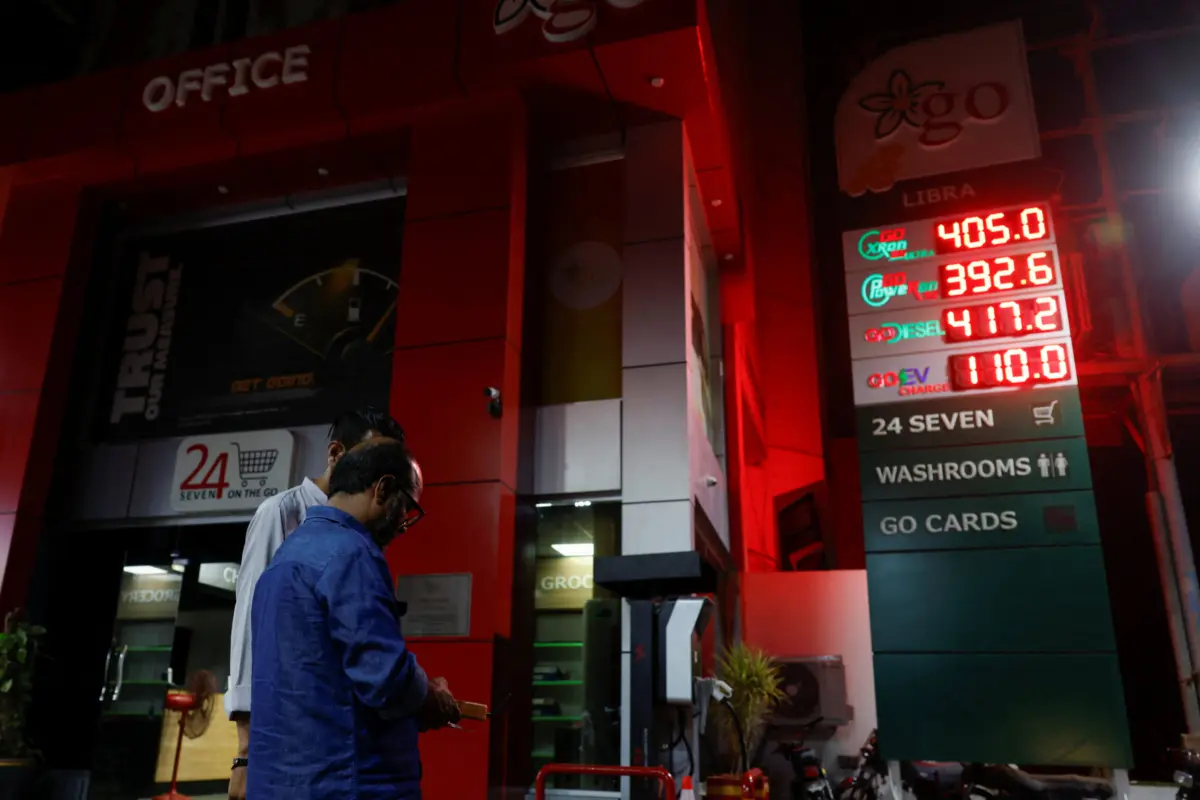
Islamabad, Pakistan – In a concerted effort to cushion its lower-income populace from the severe impacts of escalating fuel costs, Pakistan’s government has successfully distributed subsidised petrol to more than 9.5 million individuals through a meticulously structured fuel relief scheme. Federal Minister Shaza Fatima Khawaja, speaking to Al Jazeera on Wednesday, confirmed the significant reach of this initiative, which was personally championed by the Prime Minister. The programme targets vulnerable households grappling with an economic squeeze exacerbated by fuel price hikes, which officials attribute to the ongoing "war on Iran" – a reference that has been cited in relation to global and regional energy market instability.
A Nation Under Economic Strain: The Backdrop to the Fuel Relief
Pakistan has long contended with persistent economic challenges, characterized by a chronic balance of payments deficit, substantial external debt, and high inflation. Prior to the recent surge in fuel prices, the nation was already navigating a precarious fiscal landscape, compounded by a depreciating currency and a struggle to attract foreign investment. The ordinary Pakistani citizen has borne the brunt of these macro-economic pressures, facing a steadily rising cost of living that has eroded purchasing power and exacerbated poverty. Essential commodities, including food and transportation, have seen their prices soar, making daily existence increasingly arduous for millions.
The global energy market, notoriously volatile, has disproportionately impacted import-dependent nations like Pakistan. The "war on Iran," as referenced by government officials in their assessment of contributing factors, is cited as a significant catalyst in the recent trajectory of global oil prices, contributing to a nearly 50 percent increase in petrol costs within Pakistan since February 28. This dramatic surge, from approximately 266 rupees ($0.96) per litre to nearly 395 rupees ($1.42), even after a partial rollback in April, has placed immense pressure on consumers and further complicated the government’s efforts to stabilize the economy. Inflation, which stood at 7 percent in February, escalated to 10.3 percent by September, reflecting the broad-based impact of energy price shocks across various sectors of the economy. This inflationary environment, combined with sluggish economic growth, has created a formidable challenge for policymakers tasked with managing public expectations and fiscal realities.
Chronology of Relief Efforts and Policy Adjustments
The Pakistani government’s journey to deliver targeted fuel relief has evolved through several stages, reflecting an adaptive approach to policy implementation in the face of rapidly changing economic conditions.
-
April Initiative: The Initial Cash-Transfer Scheme: Earlier in April, the government launched an initial cash-transfer scheme aimed at assisting motorcycle owners. This programme, however, faced significant logistical hurdles. Minister Khawaja noted that it reached just over a million beneficiaries, primarily because it necessitated a bank account for disbursement – a requirement that proved to be a major barrier for many low-income riders who typically operate outside formal banking channels. This experience highlighted the critical need for a more accessible and inclusive delivery mechanism that could bypass traditional banking infrastructure.
-
September Launch of the SMS-Based Scheme: Learning from the challenges of the previous attempt, the current, more robust scheme was officially rolled out in September. This initiative adopted an innovative text-message system designed to bypass banking requirements and streamline the application and redemption process. It specifically targeted owners of motorcycles, rickshaws, and small cars (up to 800cc engines), offering a direct subsidy of 100 rupees ($0.36) off every litre of petrol. The explicit goal was to support those most reliant on these modes of transport for their livelihoods and daily commutes, recognizing their vulnerability to fuel price volatility.
-
Responsive Policy Adjustments Post-Launch: Recognizing the dynamic nature of public needs and feedback, the scheme underwent several crucial modifications post-launch to enhance its effectiveness and accessibility. Initially, registration for the scheme was a paid service, which again created an accessibility barrier for the very demographic it sought to assist. Following widespread complaints and user input, the government promptly made the registration process free of charge. Similarly, an initial requirement for a five-litre minimum purchase was also scrapped due to user feedback, ensuring that even those needing smaller quantities of fuel for short trips could benefit from the subsidy without undue burden. A particularly significant change, implemented on September 20, was the decision to waive the requirement for two- and three-wheelers to be registered in the applicant’s own name. This pragmatic adjustment was made to accommodate common household practices, where, as Minister Khawaja explained, "Even in my own house, there’s a bike registered in our name that our cook uses for daily errands." This demonstrated the government’s commitment to redesigning the system based on "experiences of users on the ground," showcasing an agile approach to public policy.
Operational Mechanics and Broad Reach
The current fuel relief scheme is predicated on a simple yet effective digital mechanism, leveraging mobile technology to ensure broad reach and ease of access across diverse geographic areas of Pakistan.
Applicants wishing to avail themselves of the subsidy must text their national ID number, vehicle registration details, and province of residence to the designated shortcode 9771. Upon successful registration and verification, beneficiaries receive a second message each time they intend to refuel. This message generates a unique token that is redeemable at any petrol pump across the country, signifying a nationwide, standardized system designed for widespread implementation.
The scheme delineates specific entitlements based on vehicle type to ensure targeted relief:
- Two- and Three-Wheelers: Owners of motorcycles and rickshaws are allocated 500 rupees ($1.80) in weekly subsidies, capped at a maximum of four tokens per month. This provision acknowledges the high frequency of fuel consumption for daily commuters, small-scale entrepreneurs, and those in the informal transport sector, for whom fuel costs represent a significant portion of their daily expenses.
- Small Cars: Owners of cars with engine capacities of up to 800cc are eligible for 1,000 rupees ($3.60) in subsidies every ten days, with a limit of three tokens monthly. This category aims to assist lower-to-middle-income families and small business owners who rely on compact vehicles for personal transport and operational needs.
These structured allocations are designed to provide regular, albeit capped, relief to target groups, ensuring that the subsidy remains manageable within the government’s fiscal framework while still offering tangible benefits to millions of Pakistanis. As of late September, Petroleum Minister Ali Pervaiz Malik reported that over 8.1 million tokens had been issued to two- and three-wheelers, compared with fewer than 380,000 for eligible cars, underscoring the predominant beneficiary demographic.
Government’s Perspective and Reported Success

Federal Minister Shaza Fatima Khawaja underscored the scheme’s success in reaching its intended demographic, emphasizing that the digital architecture has significantly improved outreach compared to previous attempts. The government maintains that the expansion of the scheme to include broader sections of society, particularly those whose livelihoods are directly linked to their vehicles, is a testament to its commitment to economic equity and social welfare.
Shakeel Ahmed, a 45-year-old electrician from Islamabad, shared a nuanced perspective with Al Jazeera, stating, "There’s a benefit; it’s not like there’s nothing. The relief is decent for people who use it normally, for local trips." However, he also articulated the limitations for those with higher fuel consumption: "But for people like us, who put in 1,000 to 1,500 rupees [$3.60-$5.40] of petrol a day, it’s not enough." This highlights the inherent challenge of designing a universal relief scheme that adequately addresses the diverse needs within the targeted lower-income bracket, where daily fuel consumption can vary significantly based on profession and commute distance.
Economist Safiya Aftab echoed the sentiment of the scheme’s effectiveness in reaching its intended recipients. "The scheme has indeed reached low-income segments of society, people who typically use two-wheelers and 800cc cars. So yes, it’s a good thing that they are subsidising the poor," she told Al Jazeera. This expert endorsement lends credibility to the government’s claims regarding the scheme’s targeting efficiency and its positive impact on specific segments of the population.
The Elephant in the Room: The Petroleum Development Levy
While the government champions the subsidy scheme as a crucial relief measure, critics and economists alike point to a significant counter-factor: the Petroleum Development Levy (PDL). Safiya Aftab highlighted this levy, currently standing at 114 rupees ($0.41) for every litre of petrol, as a major revenue generator for the government. She revealed that the government is now collecting over 100 billion rupees ($361 million) per month from this levy, a sum that not only dwarfs the total cost of the subsidy amount but also significantly contributes to the inflationary pressures faced by consumers.
Aftab further explained the historical context and evolution of the PDL: "The levy was originally meant as a sort of environmental tax, to discourage the use of petrol. Now it has become a full revenue earner for the government, one that helps keep the fiscal deficit down." This transformation underscores a complex policy dilemma: while the government provides targeted relief, it simultaneously relies heavily on fuel taxation to bolster its revenue, creating a paradoxical situation where one hand offers relief while the other levies a substantial charge on the very commodity it seeks to subsidize. This revenue generation is critical for Pakistan, which is under immense pressure to meet its fiscal commitments, particularly those mandated by the International Monetary Fund (IMF). The PDL has, therefore, become a cornerstone of the government’s non-tax revenue strategy, essential for maintaining fiscal stability but at a tangible cost to the consumer.
The IMF’s Stance and Pakistan’s Fiscal Tightrope
Pakistan’s economic stability is intrinsically linked to its ongoing engagement with the International Monetary Fund. The country is currently operating under a crucial $7 billion IMF programme, a lifeline designed to help stabilize its finances and implement structural reforms. An IMF team was in Islamabad this week for critical discussions with the government, focusing on the nation’s fiscal commitments amidst the ongoing fuel price shock and the broader economic challenges.
The IMF’s position on subsidies is generally one of caution, advocating for highly targeted interventions rather than broad-based measures that can strain public finances and exacerbate deficits. Officials familiar with the government’s discussions with the IMF indicate that the Fund has expressed a preference for capping the current relief scheme at three months. Furthermore, the IMF reportedly suggested routing such relief through the Benazir Income Support Programme (BISP), Pakistan’s principal cash-transfer scheme, which is already established for direct aid to the most vulnerable and has a robust infrastructure for targeted disbursement.
Minister Khawaja acknowledged the IMF’s consistent position, stating that "the IMF’s position from the outset was that relief had to be targeted, not universal, which was why the scheme was built around actual token use rather than a blanket price cut." This explains the rationale behind the current scheme’s design, emphasizing its targeted nature to align with IMF conditionalities, even if it differs from the Fund’s preferred delivery mechanism (BISP). The government’s decision to fund the scheme with an approved 75 billion rupees ($271 million) for its initial three months, through November, indicates an attempt to balance immediate public relief with the fiscal prudence demanded by the IMF. Petroleum Minister Ali Pervaiz Malik initially projected the running cost at 25-30 billion rupees ($90m-$108m) a month at launch, which later rose to 35-40 billion rupees ($126m-$144m) by late September, reflecting the scheme’s expanding reach and the substantial financial commitment. Malik has, however, expressed the government’s readiness to sustain the scheme for up to 10 months, or "until the end of the war," if economic conditions necessitate it, underscoring the political and social imperative behind the initiative to mitigate public discontent.
Exclusions and Equity Concerns: Who is Left Out?
Despite the government’s claims of wide reach, the scheme has drawn criticism for its inherent exclusions, prompting questions about its overall equity and effectiveness in addressing the needs of Pakistan’s most vulnerable segments. Notably, cars with engines larger than 800cc, all diesel vehicles, and the entire public transport sector are explicitly excluded from the subsidy. This means a significant portion of the population, particularly those without personal vehicles or those relying on public transport, may not directly benefit from the scheme.
Khaqan Najeeb, a former adviser in Pakistan’s Ministry of Finance, voiced significant concerns, arguing that these exclusions might leave out those most in need. "A poor household that uses public transport, walks to work, or relies on diesel-powered transport may receive nothing while still facing higher food and transport costs," he told Al Jazeera. This critique highlights a fundamental flaw in the scheme’s design from an equity perspective: while it aids specific vehicle owners, it overlooks a vast segment of the population, particularly the urban and rural poor, who are heavily reliant on public transportation or non-petrol vehicles for their daily mobility and economic activities.
Statistical data underscores this concern: A November 2024 Gallup Pakistan survey found that a substantial 79 percent of respondents, across both rural and urban areas, utilize public transport such as buses or wagons. This stark figure suggests that the current subsidy, by excluding public transport, is failing to reach a vast majority of the population that likely suffers the most from inflated transportation costs, which are inevitably passed down by public transport operators to their passengers. This exclusion raises questions about the scheme’s comprehensive impact on the broader cost-of-living crisis.
Does the Relief Go Far Enough? Public Sentiment and Expert Analysis
The question of whether the relief provided by the scheme is sufficient to offset the broader cost-of-living crisis remains a contentious point among economists and the general public. Khaqan Najeeb calculated that, at 100 rupees per litre, the maximum monthly saving for a motorcycle user is 2,000
