

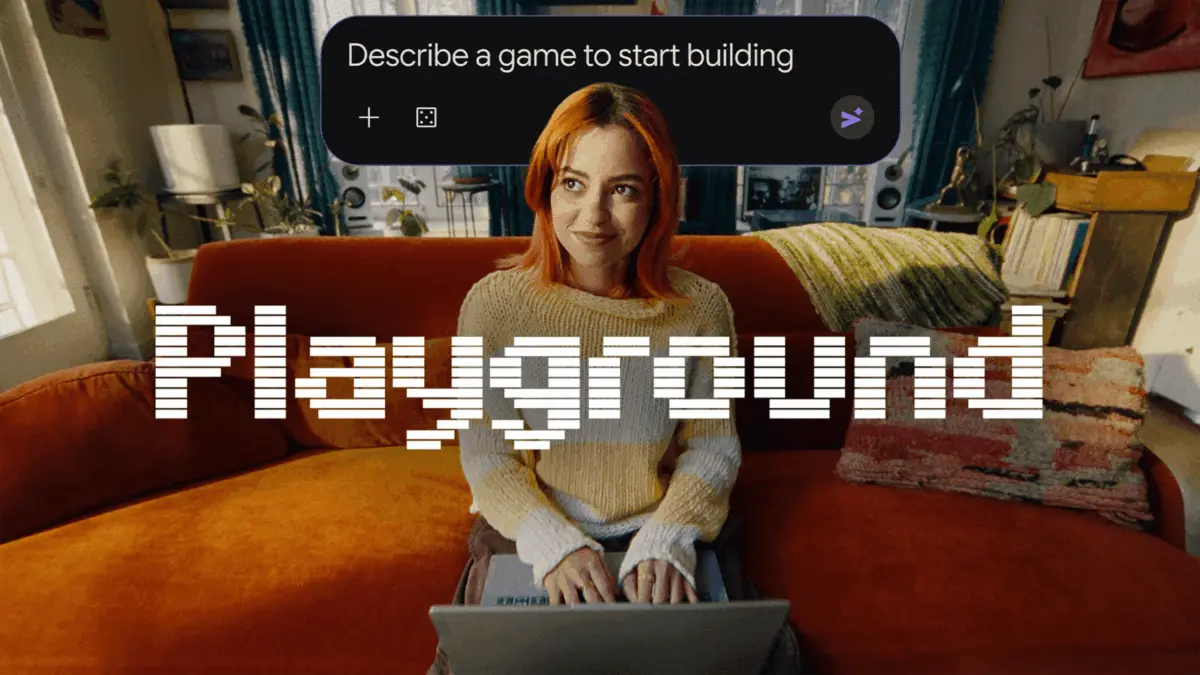
Google has officially introduced Playground, a sophisticated experimental platform within the Google Labs ecosystem designed to democratize video game development through the use of generative artificial intelligence. By leveraging natural language processing, Playground allows users to conceptualize, design, and deploy functional web-based games without the requirement of traditional programming knowledge or software engineering expertise. This initiative represents a significant shift in the "no-code" movement, moving toward what industry analysts are increasingly labeling as "vibe coding"—a process where the primary creative input is a descriptive prompt rather than a technical script.
The Mechanics of Generative Game Development
Playground operates on a conversational interface similar to advanced chatbots like Gemini or ChatGPT. Users initiate the creative process by describing the desired game mechanics, aesthetic themes, and character archetypes. The underlying AI models then interpret these instructions to generate a playable browser-based prototype. The platform supports iterative development, enabling users to refine their creations by providing follow-up instructions to adjust difficulty levels, modify visual assets, or introduce complex systems like level scaling and boss generation.
In addition to text-based prompts, Playground offers the capability for users to upload external references, including photographs, videos, and 3D models, to serve as a visual foundation for the AI. If no external assets are provided, the platform autonomously generates all textures, sprites, and background music. This comprehensive automation aims to lower the barrier to entry for creative expression, allowing individuals with minimal technical backgrounds to produce stable, interactive software in a matter of hours.
Chronology and Competitive Context
The launch of Playground occurs amidst a rapid acceleration in the development of generative AI tools for creative industries. Google’s move follows a similar announcement from Meta in September 2024 regarding "Horizon Create," a service designed to assist users in building virtual worlds and games within the Horizon Worlds ecosystem.
.png)
Google Labs has historically served as a staging ground for experimental technologies before they are integrated into the company’s broader product suite. Previous successful experiments include NotebookLM and various AI-assisted music production tools. The introduction of Playground signals Google’s intent to compete directly in the user-generated content (UGC) space, currently dominated by platforms such as Roblox and Fortnite Creative, albeit with a focus on instant, AI-driven synthesis rather than manual building blocks.
Case Studies in Prompt-Based Iteration
The efficacy of Playground has been demonstrated through several diverse projects that highlight both the capabilities and the current limitations of the technology. These projects illustrate how specific "vibes" or narrative prompts are translated into functional code.
One notable example is "Pork Drop," a variation of the classic puzzle game Tetris. The initial prompt requested a version of the game featuring "cute pigs instead of blocks." While the first iteration merely superimposed pig faces onto standard geometric shapes, subsequent natural language refinements allowed the creator to specify that the blocks themselves should be shaped like contorted, "squished" pigs. This demonstrates the AI’s ability to handle spatial reasoning and asset deformation based on subjective adjectives.
Another project, "Dinner Darling," explores the simulation genre. Prompted only with the phrase "gay dinner party," the AI synthesized a 2D management game where the player assumes the role of a host named Julian. The game involves time-sensitive tasks, such as preparing artisanal cocktails and appetizers for increasingly impatient guests. This instance highlights the AI’s capacity for autonomous world-building, as it independently assigned names, personalities, and specific gameplay objectives based on a highly concise prompt.
The most complex project documented during the platform’s early rollout is "Neon Don," a top-down cyberpunk-style shooter. The development of this title required multiple layers of instruction, transitioning the game from a rhythm-based experience to an arcade-style shooter reminiscent of "Hotline Miami." The user utilized Playground’s "snark system" to generate character dialogue, resulting in a protagonist who provides quips about his personal life—specifically his divorce—while engaging in combat. This illustrates the platform’s ability to integrate narrative depth and character consistency into procedural gameplay.

Technical Constraints and Resource Management
Despite the ease of use, Playground is governed by strict technical limitations and a resource allocation system. Google currently throttles usage through a credit-based allowance. Every new game generation or iterative update consumes a portion of the user’s credits. Once the allowance is exhausted, users must wait for a scheduled refresh—often several days—before they can continue modifying their projects.
This throttling mechanism reveals the high computational cost associated with real-time code generation and asset synthesis. It also introduces a friction point for developers who wish to engage in deep debugging. For example, if the AI introduces a bug during an update—such as a character getting stuck in geometry or a mislabeled "backflip" button—the user may find themselves unable to correct the error until their credits are restored.
Broader Implications for the Gaming Industry
The rise of platforms like Playground carries significant implications for the future of the gaming industry and the broader creator economy. Analysts suggest that these tools could lead to a "hyper-democratization" of game design, where the distance between an idea and a playable product is virtually eliminated.
- Educational Utility: Playground may serve as an entry point for students interested in game design, allowing them to understand logic and mechanics before diving into complex languages like C# or C++.
- Prototyping for Professionals: Professional developers may utilize these tools for "gray-boxing" or rapid prototyping, testing gameplay loops in minutes before committing resources to a full-scale production in engines like Unreal or Unity.
- The Saturation of "AI Slop": A significant concern among critics is the potential for an influx of low-quality, repetitive content. Early observations of the Playground library suggest a "sameness" in the output. Many games share nearly identical menu structures, UI layouts, and synthesized music tracks. This phenomenon, often referred to as "AI slop," raises questions about the long-term value of AI-generated content and whether it can truly replicate the intentionality and nuance of human-led design.
Official Response and Future Outlook
While Google has not released specific data regarding the number of active users on Playground since its launch, the company has emphasized that the platform is still in its "experimental phase." A spokesperson for Google Labs noted that the goal is to "explore how AI can act as a collaborative partner in the creative process, rather than a replacement for human ingenuity."
The platform’s community features allow users to share their games publicly, creating a nascent ecosystem of AI-generated titles. As of the latest reports, some of the more popular games on the platform have garnered hundreds of unique players, suggesting a growing appetite for this form of interactive media.

However, the industry remains divided on the ethics of generative AI in art. Issues regarding the provenance of training data and the potential displacement of entry-level artists and coders continue to be subjects of intense debate. For now, Playground remains a high-tech curiosity—a window into a future where anyone with a story to tell can manifest a digital world, provided they have the right "vibe" and enough usage credits to see it through.
As the technology matures, the success of Playground will likely depend on its ability to move beyond generic templates and offer creators more granular control over the logic and aesthetics of their games. Until then, it stands as a testament to the power of Large Language Models to bridge the gap between human language and machine code, turning casual descriptions into interactive reality.
