


The global imperative to transition toward a low-carbon economy has often been framed as a challenge of massive industrial proportions, requiring trillions of dollars in institutional capital and federal oversight. However, across Canada, a decentralized movement is proving that the financial solutions for the climate crisis may be found closer to home. By leveraging the power of community bonds and renewable energy cooperatives, local residents are bypassing traditional banking hurdles to fund, own, and manage the infrastructure of the future. From solar arrays in the prairies to wind turbines in the heart of Toronto, these projects represent a fundamental shift in how energy is produced and how social equity is integrated into the green transition.
The Rise of Community-Led Energy Financing
The traditional model for energy infrastructure involves large-scale utilities and multinational corporations securing private equity or government grants. While effective for massive projects, this model often overlooks localized needs and excludes the general public from the economic benefits of energy production. Community bonds have emerged as a disruptive financial instrument to bridge this gap. Unlike traditional stocks, community bonds allow organizations—typically non-profits or cooperatives—to raise capital directly from their community. Investors receive a fixed rate of return, while their capital is deployed into tangible local assets like solar farms or net-zero housing.
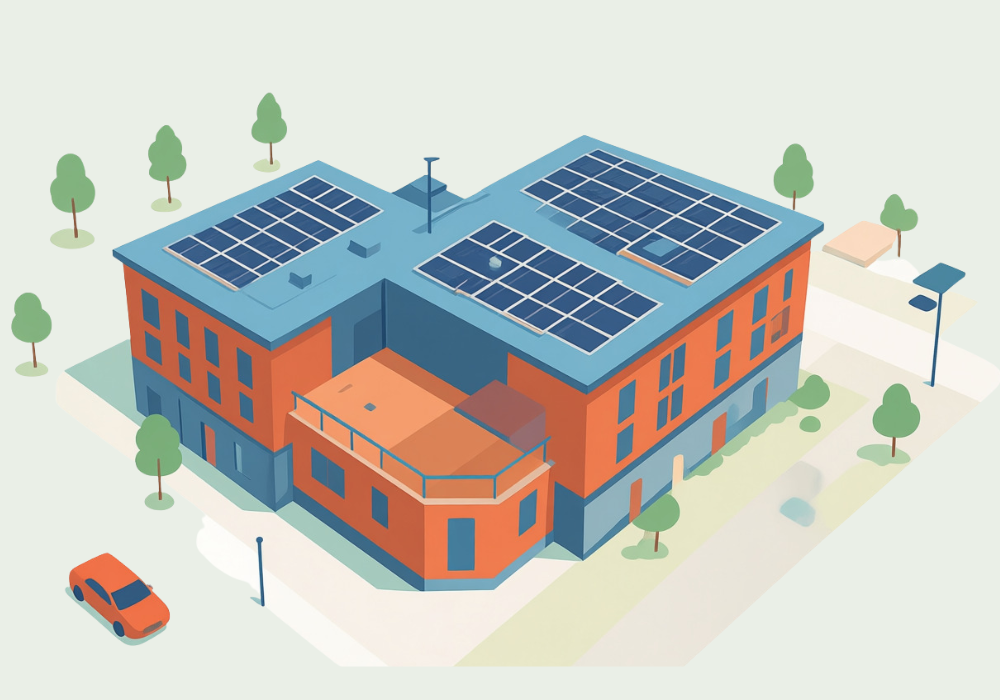
This model serves two primary purposes: it provides necessary "gap" financing for projects that might be deemed too small for major banks, and it democratizes the ownership of the energy grid. In Canada, the success of this model is evidenced by a growing portfolio of projects that span the breadth of the country’s diverse geography.
Solar Powering the Community: The SolarShare and Wintergreen Model
At the forefront of this movement is SolarShare, Canada’s leading renewable-energy cooperative. One of its hallmark projects, Wintergreen, located just outside Kingston, Ontario, serves as a prime example of how small-scale solar can have a meaningful impact. The Wintergreen solar array is capable of powering approximately 100 homes, providing a localized energy source that reduces the strain on the provincial grid.
SolarShare operates by allowing residents to become members for a nominal fee, after which they can invest in community bonds. To date, SolarShare has developed dozens of projects across Ontario, representing millions of dollars in community-led investment. By aggregating smaller projects like Wintergreen, the cooperative achieves the scale necessary to compete in the energy market while ensuring that the dividends stay within the province.
Biogas and Waste Management: The ZooShare Experience
Innovation in the green sector is not limited to wind and solar. ZooShare, based in Ontario, represents a unique intersection of waste management and energy production. The project utilizes an anaerobic digester to turn organic animal waste from the Toronto Zoo and food waste from local grocery stores into high-quality fertilizer and renewable electricity for Ontario’s grid.
Backed by approximately 800 cooperative members who purchased community bonds, ZooShare demonstrates the circular economy in action. However, the project also highlights the risks inherent in community-led ventures. Following a member vote in 2023, ZooShare announced it would stop interest payments and move toward a model of repaying bonds only when cash flow permits. This development serves as a critical case study for the sector, emphasizing the need for robust financial planning and the transparency required when community members take on the role of primary financiers.
Electrifying Transportation: The EcoCharge Initiative
As Canada moves toward its goal of ensuring all new light-duty cars and passenger trucks sold are zero-emission by 2035, the infrastructure gap remains a significant hurdle. EcoCharge has stepped in as the first EV-charging community bond campaign of its kind in Canada. By mobilizing local capital, EcoCharge members have secured ownership of roughly 100 charging stations across Quebec and New Brunswick.

This initiative is particularly significant in rural and semi-rural areas where major commercial charging providers may be slow to invest. By utilizing the community bond model, EcoCharge ensures that the transition to electric vehicles is not just a metropolitan phenomenon but one that includes smaller municipalities and regional corridors.
Intersecting Climate and Housing: The Propolis Project
In Kamloops, British Columbia, the Propolis cooperative is addressing two of Canada’s most pressing crises simultaneously: the lack of affordable housing and the need for net-zero construction. Propolis successfully raised $1 million in community bonds from roughly 100 local investors to fund a 53-unit apartment building.
What sets this project apart is its commitment to "net-zero" standards, meaning the building is designed to produce as much energy as it consumes. By integrating sustainable architecture with an affordable housing mandate, Propolis demonstrates that green living does not have to be a luxury. The project serves as a blueprint for other mid-sized Canadian cities looking to revitalize their urban cores without contributing to carbon emissions or gentrification.
Faith-Based Sustainability: The Faithfully Green Fund
The religious and non-profit sectors hold vast amounts of real estate across Canada, much of which consists of aging, energy-inefficient buildings. The Faithfully Green Fund provides a specialized financial vehicle for these communities. By selling community bonds, the fund creates a revolving loan pool that helps temples, churches, and mosques finance green retrofits.
These retrofits—ranging from heat pump installations to solar roofing—allow faith communities to reduce their operational costs significantly. As the loans are repaid through energy savings, the capital is "revolved" to the next institution, creating a perpetual cycle of green investment. This model highlights the role of social and spiritual institutions in the broader climate movement.
Democratizing Solar for Renters: The Wascana Cooperative
One of the persistent barriers to solar adoption is that it typically requires homeownership. Renters and apartment dwellers are often locked out of the benefits of renewable energy. In Regina, Saskatchewan, the Wascana Solar Co-operative has developed a solution.

The cooperative is responsible for the installation of 400 solar panels in the city, which are collectively owned by approximately 100 members. Many of these members are apartment dwellers who cannot install panels on their own roofs but wish to contribute to and benefit from the green transition. By purchasing shares or bonds in the cooperative, they own a piece of the city’s renewable infrastructure, receiving a return on their investment as the solar power is sold back to the grid.
Legacy and Leadership: WindShare and OREC
The history of community energy in Canada is anchored by pioneering projects like WindShare. Established as a joint venture between 825 Toronto residents and Toronto Hydro, WindShare’s turbine at Exhibition Place was the first Canadian example of local residents co-owning a major clean energy project. It proved that renewable energy could be integrated into an urban landscape and that citizens were willing to put their own money behind the technology.
Following in these footsteps, the Ottawa Renewable Energy Co-operative (OREC), founded in 2010, has expanded the scope of community ownership. OREC partly owns two significant wind turbines on Lake Huron, which generate approximately 3.3 million kWh annually—enough to power more than 400 homes. OREC’s diversified portfolio, which also includes numerous solar projects, showcases the maturity of the cooperative sector in Canada.

Economic and Environmental Implications
The data surrounding these projects points to a significant broader impact. According to industry analysis, every dollar invested in community-owned energy tends to stay within the local economy longer than a dollar invested in a project owned by a distant corporation. This "local multiplier effect" creates jobs in installation, maintenance, and administration within the community.
Furthermore, these projects play a vital role in public education. When a resident owns a piece of a wind turbine or a solar farm, their engagement with energy policy and climate science increases. This social license is crucial for the deployment of larger-scale projects needed to meet national targets.
Challenges and the Path Forward
Despite the successes, the community bond sector faces regulatory and systemic challenges. Securities regulations in Canada vary by province, often making it difficult for cooperatives to market their bonds to the general public without expensive legal filings. Additionally, the integration of small-scale projects into a grid designed for centralized power plants remains a technical and bureaucratic hurdle.

Analysts suggest that for this sector to reach its full potential, federal and provincial governments must provide more robust support, such as loan guarantees or tax incentives for community bond investors. The 2023 experience of ZooShare also underscores the importance of secondary markets or liquidity funds to help protect small investors in the event of project delays.
Conclusion: A New Paradigm for Power
The projects led by SolarShare, EcoCharge, Propolis, and others are more than just infrastructure; they are a reimagining of the social contract. They prove that when given the opportunity, Canadians are willing to invest their savings directly into the health of their communities. As the nation grapples with the immense cost of the green transition, these eight examples suggest that the most resilient and sustainable solutions may not come from the top down, but from the ground up. By turning consumers into owners, Canada is building a power grid that is not only low-carbon but also deeply rooted in the communities it serves.
