

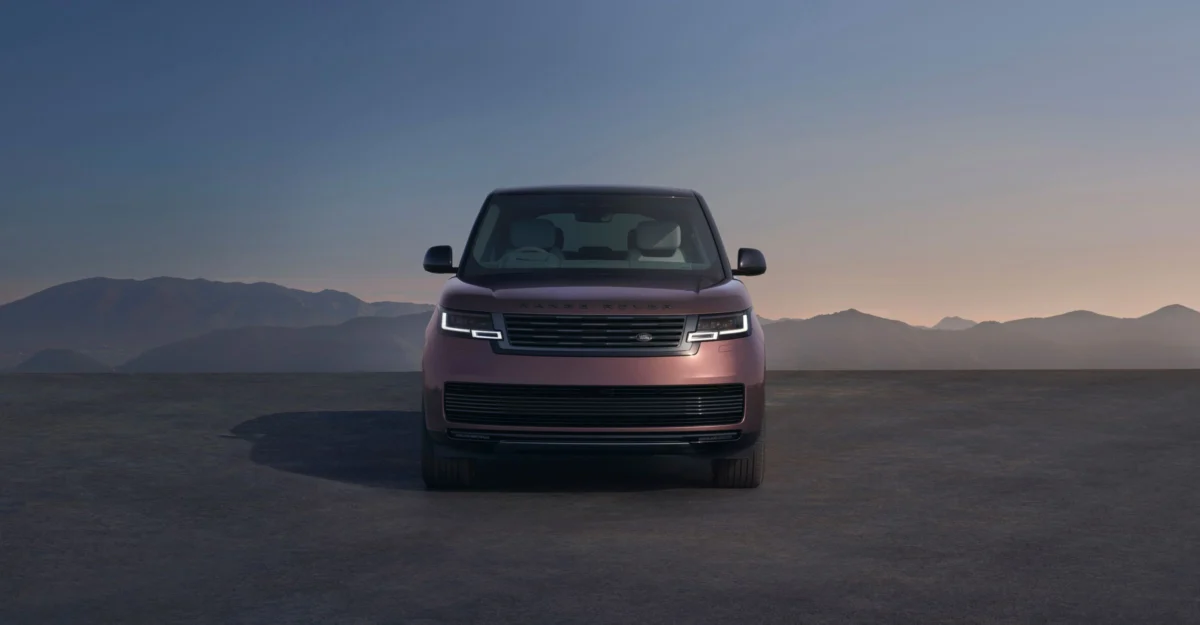
The global automotive landscape has reached a significant milestone with the official debut of the Range Rover Electric, the first fully battery-powered vehicle from the storied British marque. Jaguar Land Rover (JLR) has formally transitioned its flagship SUV into the electric age, promising a vehicle that maintains the brand’s peerless luxury and off-road heritage while embracing a high-performance zero-emissions powertrain. Originally slated for a 2024 release following its initial announcement in December 2023, the vehicle underwent an extended development cycle to ensure its reliability and performance met the exacting standards of the Range Rover nameplate. This launch represents a pivotal component of JLR’s "Reimagine" strategy, a multi-billion dollar initiative aimed at transforming the company into an electric-first luxury manufacturer by the end of the decade.
Engineering and Performance: V8 Power in a Silent Package
The Range Rover Electric is engineered to deliver performance metrics that rival, and in some cases exceed, its internal combustion engine (ICE) predecessors. At the heart of the vehicle are dual 260-kilowatt motors, which collectively produce 542 horsepower and 850 Newton-meters of torque. JLR engineers claim these proprietary motors offer 20 percent more torque density than other electric motors of comparable size. This power delivery allows the substantial SUV to accelerate from a standstill to 60 mph in just 4.3 seconds, a feat of engineering considering the inherent weight of the battery architecture.
The vehicle’s drivetrain is supported by a sophisticated traction management system. Unlike traditional mechanical systems that rely on physical linkages and differentials with inherent latency, the electric system can control motor speed within 50 milliseconds. This allows for slip management that is purportedly 100 times faster than equivalent internal combustion setups, providing unprecedented stability on slick surfaces and technical off-road terrain. Furthermore, the inclusion of single-pedal driving capability—even on steep climbs of up to 45 degrees—marks a significant evolution in low-speed technical maneuvering.

Battery Technology and Charging Infrastructure
Central to the Range Rover Electric’s utility is its massive 118.5-kWh battery pack. Utilizing a double-stacked configuration, the battery is designed to maximize energy density while maintaining the vehicle’s iconic silhouette. The SUV features an advanced 800-volt split-charging architecture, which allows it to utilize high-speed DC public chargers to their full potential. According to JLR, the vehicle can replenish its battery from 10 to 80 percent in approximately 22 minutes. For users in a hurry, the system can add 137 miles of range in just 10 minutes of charging.
Regarding range, the Range Rover Electric carries an official WLTP (Worldwide Harmonized Light Vehicles Test Procedure) estimate of 372 miles. Recognizing that laboratory conditions often differ from daily use, JLR has also provided a "real-world" distance estimate of up to 333 miles on a single charge. This range positioning places the Range Rover Electric at the top tier of the luxury EV segment, addressing the "range anxiety" often cited by high-net-worth buyers as a barrier to EV adoption.
A Rigorous Path to Production: Timeline and Development
The journey to the Range Rover Electric’s launch has been characterized by meticulous testing and strategic delays. When the project was first unveiled in late 2023, the automotive industry expected a rapid rollout. However, JLR leadership opted to extend the testing phase throughout 2024. This decision was driven by two primary factors: a commitment to extreme-environment reliability and a shifting global market for luxury electric vehicles.
The development program for the Range Rover Electric is the most exhaustive in the company’s history. Physical prototypes were driven the equivalent of 38 times around the circumference of the Earth. These tests were complemented by over 250,000 hours of virtual simulation. The vehicle’s battery and electrical components were subjected to shock and vibration testing in temperatures ranging from -40°C in the Arctic Circle to +90°C in desert environments. This rigorous validation process resulted in the filing of more than 300 patent applications, the highest number for any single vehicle in JLR’s history.

Off-Road Heritage and Wading Capabilities
One of the most significant concerns for traditional Range Rover enthusiasts was whether an electric powertrain could survive the brand’s legendary off-road requirements. JLR has addressed these concerns by ensuring the EV retains a 900-millimeter wading depth, matching the capability of the ICE-powered Defender and Range Rover models. Achieving this required the complete sealing of the battery, motors, and power electronics to prevent water ingress during deep crossings.
The "Range Rover first, electric second" philosophy is evident in the vehicle’s chassis tuning. The instant torque of the electric motors provides a smoother, more controlled crawl over rocks and obstacles compared to the rev-dependent power delivery of a gasoline engine. By removing the need for a traditional gearbox and exhaust system, engineers were also able to optimize the underbody for better ground clearance and protection.
Interior Luxury and Digital Integration
Inside, the Range Rover Electric remains a sanctuary of high-end materials and sophisticated technology. While some competitors have moved toward "hyper-screens" that span the entire dashboard, Range Rover has maintained a more restrained, elegant approach. The cabin is dominated by a large, high-definition central touchscreen that utilizes the latest iteration of the Pivi Pro infotainment system.
However, the interior design has sparked some debate among purists regarding the lack of physical switchgear. The vehicle relies heavily on touch-sensitive surfaces and steering-wheel controls for climate and secondary functions. JLR justifies this move as a step toward a "reductive" design language that minimizes visual clutter. The cabin also features advanced active noise cancellation technology, which works in tandem with the silent electric motors to create what JLR claims is the quietest interior in the luxury SUV market.

Market Context: Navigating the Luxury EV Slump
The launch of the Range Rover Electric comes at a delicate time for the automotive industry. Recent financial reports from competitors like Mercedes-Benz, Porsche, and Audi have indicated a cooling of demand for high-end electric vehicles. Specifically, sales of the electric Mercedes-Benz G-Class (the G 580 with EQ Technology) have faced headwinds in several key markets.
Industry analysts suggest that wealthy buyers are increasingly discerning, often preferring plug-in hybrids (PHEVs) or high-efficiency ICE vehicles over full battery-electric models due to concerns over charging infrastructure and resale value. JLR’s strategy to counter this "lukewarm" response is to market the vehicle not as a "tech gadget" but as a Range Rover that happens to be electric. By emphasizing the 8-year or 100,000-mile battery warranty and the vehicle’s unchanged luxury status, JLR hopes to capture a segment of the market that has remained skeptical of early-adopter EV brands.
Pricing and Global Availability
The Range Rover Electric is positioned at the apex of the luxury market, with pricing that reflects its advanced technology and brand prestige. In the United Kingdom, the entry-level Autobiography model is priced at £154,070 (approximately $208,000). For those seeking the ultimate in exclusivity, the SV Black long-wheelbase model starts at £225,240 (over $304,000). JLR has also introduced "Ultra" bespoke models, which are listed as "price on application," suggesting a level of customization that can push the cost significantly higher.
In the United States, JLR is offering a slightly different entry point. American customers can access a lower SE-spec model starting at $138,000, plus a $2,550 delivery and destination fee. Orders are currently being accepted, with the first deliveries expected to commence in the coming months.

Future Implications: The EMA Platform and the Range Rover GT
The arrival of the Range Rover Electric is only the beginning of a broader electrification wave for JLR. The company recently teased the "Range Rover GT," which it describes as the most "car-like" Range Rover ever created. Unlike the flagship SUV, which utilizes a modified version of the MLA (Flexible Modular Longitudinal Architecture), future mid-sized models will be built on the dedicated Electrified Modular Architecture (EMA).
The EMA platform is designed specifically for EVs, allowing for flatter floors, shorter overhangs, and more efficient interior packaging. The Range Rover GT is currently undergoing final testing and is expected to be fully revealed later this year. This expansion of the lineup indicates that JLR is fully committed to its "House of Brands" strategy, positioning Range Rover, Defender, Discovery, and Jaguar as distinct luxury entities within the electric space.
Conclusion: A High-Stakes Evolution
The Range Rover Electric represents a high-stakes gamble for JLR. By delaying the launch to ensure mechanical perfection, the company has risked missing the initial wave of EV enthusiasm but has gained a vehicle that is arguably more refined and capable than its rivals. As the automotive world shifts away from fossil fuels, the success of this vehicle will serve as a bellwether for the viability of ultra-luxury electric SUVs. For JLR, the goal is clear: to prove that the silence of an electric motor is the ultimate luxury, provided it is wrapped in the unmistakable heritage of a Range Rover.
