

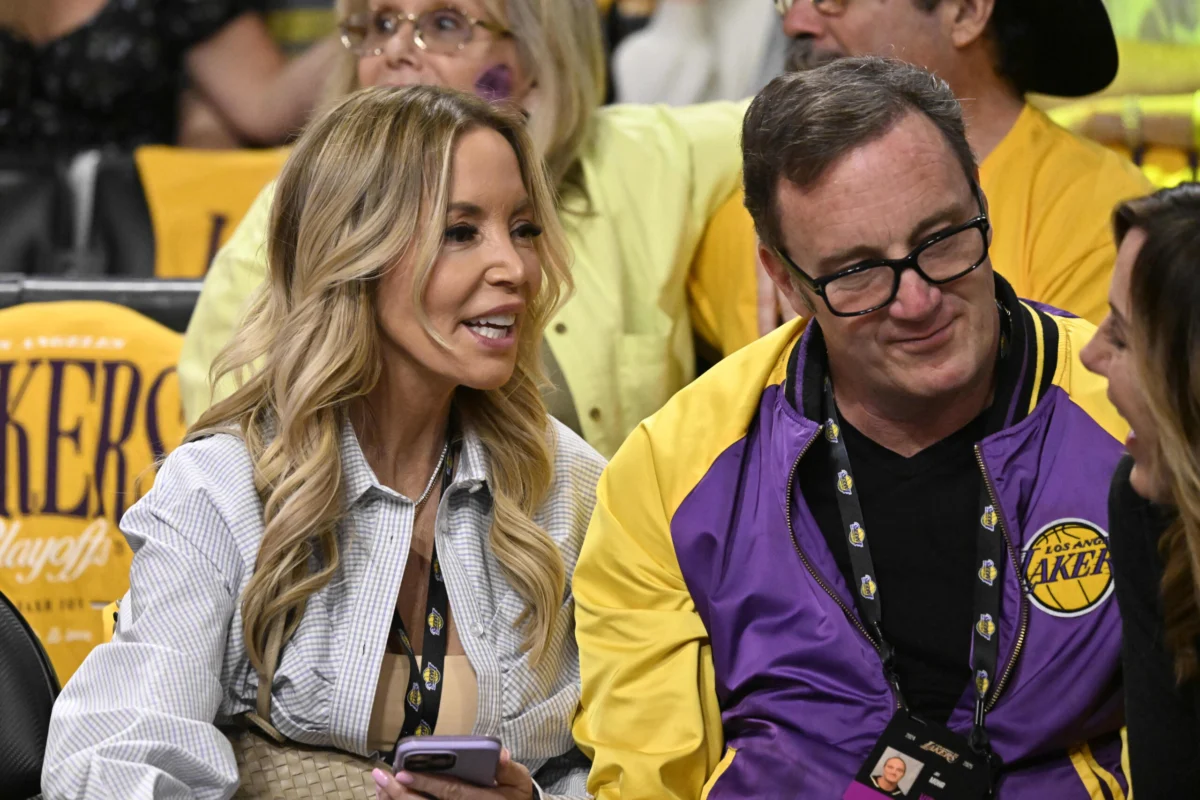
Los Angeles Lakers governor Jeanie Buss is unequivocally opposing the potential sale of her family’s minority stake in the iconic NBA franchise, directly contradicting an earlier ESPN report that suggested the Buss family had agreed to sell to prominent figures Bob Iger and Joshua Kushner. This significant development plunges the ownership structure of one of the NBA’s most storied teams into uncertainty and signals a potential new chapter in the complex intra-family dynamics that have historically surrounded the Lakers.
The Legal Challenge to a Proposed Sale
In a sharply worded letter obtained by CNBC, addressed to law firms representing Jeanie Buss’s siblings — Jim, Johnny, Janie, Joey, and Jesse — her attorney Adam Streisand asserted that Jeanie Buss has not consented to sell the team. Streisand’s letter explicitly states that any vote suggesting the Buss family is proceeding with a sale "would be and is void." This legal declaration immediately raises questions about the validity of any purported agreement among the Buss siblings and places a significant hurdle in the path of Iger and Kushner’s broader acquisition strategy.
Streisand’s central argument hinges on a 2017 court order that affirmed Jeanie Buss as the controlling shareholder of the Lakers. This order, a result of a past power struggle within the family, stipulates that no sale of the JAB Trust’s 17.8% ownership interest in the Los Angeles Lakers, Inc., can be effectuated without the explicit approval of the current co-trustees: Jeanie, Janie, and Joey Buss. More critically, Streisand emphasized that "Pursuant to the JAB Trust and the attached Court Order, the co-trustees are bound to vote the Los Angeles Lakers, Inc. shares to ensure that the minimum 15% ownership requirement is maintained in order to ensure that Jeanie Buss may remain Controlling Owner." He further warned of severe legal repercussions, stating, "Any attempt by the co-trustees to do otherwise, and any attempt to aid or abet the co-trustees as such, would constitute a breach of trust, breach of fiduciary duty and be in contempt of court." This legal stance makes it clear that Jeanie Buss is prepared to defend her controlling position and the family’s stake through legal means if necessary.
Background of the Buss Family’s Lakers Legacy
The Los Angeles Lakers have been synonymous with the Buss family for over four decades. The legendary Dr. Jerry Buss acquired the Lakers, the NHL’s Los Angeles Kings, and The Forum arena in 1979 from Jack Kent Cooke for a reported $67.5 million. Under his visionary leadership, the Lakers transformed into a global basketball powerhouse, accumulating 10 NBA championships and becoming one of the league’s most valuable franchises. Dr. Buss was renowned for his blend of business acumen and passion for entertainment, fostering the "Showtime" era and laying the groundwork for the team’s enduring success and cultural impact.
Upon Dr. Buss’s passing in 2013 at the age of 80, ownership of the Lakers was transferred to his six children via a trust. This arrangement, designed to ensure the family’s continued control and the team’s long-term stability, soon became the crucible for internal conflict. Dr. Buss had meticulously planned for Jeanie to assume the role of controlling owner and governor, a decision he had made public and cultivated over years. Her brothers, particularly Jim Buss, had also held significant roles in basketball operations, leading to differing visions for the team’s future.
The Pivotal 2017 Power Struggle
The current legal challenge is deeply rooted in the contentious events of 2017. Following a period of declining on-court performance and internal strife, Jeanie Buss moved to assert her authority as controlling owner, removing her brother Jim Buss from his position as Executive Vice President of Basketball Operations and Mitch Kupchak as General Manager. In their stead, she appointed Magic Johnson as President of Basketball Operations and Rob Pelinka as General Manager.
This executive reshuffle triggered a legal battle. Jim and Johnny Buss attempted to oust Jeanie as controlling owner, claiming the trust stipulated that she could be replaced by a majority vote of the siblings if she were found "unfit." Jeanie Buss countered, citing Dr. Buss’s specific instructions for her to maintain control. The Los Angeles Superior Court ultimately sided with Jeanie Buss, issuing a pivotal order that solidified her position as the controlling owner and confirmed the mechanisms in place to protect that control, including the critical 15% ownership threshold. This 2017 ruling is the bedrock of Adam Streisand’s current argument, making it clear that any decision regarding the sale of the family’s core stake cannot proceed without Jeanie’s explicit consent, precisely to safeguard her status as controlling owner.
The Proposed Acquisition by Iger and Kushner
The current dispute comes on the heels of another significant transaction involving the Lakers. Last week, former Disney CEO Bob Iger and Thrive Capital founder Joshua Kushner reportedly agreed to purchase Mark Walter’s majority stake in the Lakers. Walter, a co-owner of the Los Angeles Dodgers, had acquired a significant portion of the Lakers from the estate of Dr. Buss’s longtime business partner, Philip Anschutz, in a deal valued at approximately $3 billion in 2021. The latest transaction with Iger and Kushner valued the entire Lakers franchise at a staggering $12.5 billion, according to CNBC.
Had the Buss family’s 17.8% stake also been included in this sale, Iger and Kushner would have collectively owned approximately 83% of the team, as reported by ESPN, solidifying their control over the franchise. This would have represented a significant shift in the ownership landscape of the Lakers, moving the team further away from the direct influence of the Buss family.
Bob Iger brings decades of experience leading one of the world’s largest media and entertainment conglomerates, Disney, known for its strategic acquisitions and global brand building. Joshua Kushner, a venture capitalist, has a track record of investing in disruptive technology and media companies. Their combined expertise would undoubtedly offer new strategic directions for the Lakers, particularly in an era where sports franchises are increasingly seen as global entertainment brands with vast digital and media potential.
Motivations Behind Jeanie Buss’s Stance
According to a person familiar with the matter, who spoke on condition of anonymity due to the confidential nature of the discussions, Jeanie Buss’s refusal to sell stems from multiple, deeply held reasons. Primarily, she desires to maintain her role as governor and controlling owner of the Lakers. This position is not merely titular; it carries immense power within the NBA, allowing her to shape the team’s direction, basketball operations, and overall brand. Her father’s legacy and her own years of dedication to the organization are deeply intertwined with this role.
Secondly, Buss reportedly believes the current valuation, while substantial at $12.5 billion, still undervalues the Lakers’ long-term potential. NBA team valuations have consistently soared over the past decade, driven by lucrative media rights deals, global expansion, and the increasing convergence of sports and entertainment. The Lakers, as a marquee franchise in a major market, are uniquely positioned to benefit from these trends. Holding onto the stake could yield even greater financial returns in the future, especially as the NBA considers new broadcast agreements and potential expansion.
For the other Buss siblings, the motivations for selling could be varied. Financial liquidity is often a primary driver for selling a minority stake in a family-owned asset, especially one valued in the billions. A 17.8% stake in a $12.5 billion valuation would represent approximately $2.225 billion, a substantial sum to divide among the siblings, offering individual financial flexibility or diversification opportunities that might not be available otherwise. The complexities of shared ownership, particularly after years of internal disputes, could also motivate some siblings to simply exit and avoid future disagreements.
Broader Implications for the Lakers and the NBA
This ownership dispute introduces a layer of uncertainty for the Lakers organization at a time when stability is often paramount. While Jeanie Buss remains the controlling owner, an ongoing legal battle or internal family discord could create distractions. For the players, coaching staff, and front office, clarity in ownership and direction is often preferred.
For Bob Iger and Joshua Kushner, Jeanie Buss’s stance means their anticipated majority ownership will be less substantial than initially projected. Instead of acquiring approximately 83% of the team, they will likely hold the majority stake previously owned by Mark Walter, potentially around 65-70%, leaving the Buss family’s 17.8% as a significant minority bloc. This arrangement necessitates a continued working relationship with Jeanie Buss as the controlling governor, potentially shaping their strategic influence over the team’s future.
The NBA itself typically prefers stable ownership structures. While the league often stays out of internal family disputes, any prolonged legal battle could attract unwanted attention. The league’s approval is required for any ownership transfer, and while this situation doesn’t directly challenge the Iger/Kushner acquisition of Walter’s stake, it does complicate the broader picture of the Lakers’ ownership composition.
The Financial Landscape of NBA Franchises
The $12.5 billion valuation for the Lakers underscores the exponential growth in value of NBA franchises. In 2023, Forbes estimated the average NBA team valuation at $3.85 billion, with the Lakers ranking second only to the Golden State Warriors, who were valued at $7.7 billion. The reported $12.5 billion figure for the Lakers represents a significant premium even on these already high valuations, reflecting the team’s unique brand, global reach, and consistent revenue streams.
Comparatively, recent major NBA team sales include the Phoenix Suns, sold to Mat Ishbia for approximately $4 billion in 2023, and the Brooklyn Nets, which Joe Tsai acquired for an enterprise value of $3.3 billion in 2019. The Los Angeles Clippers were sold to Steve Ballmer for $2 billion in 2014. The Lakers’ reported $12.5 billion valuation positions it as arguably the most valuable sports franchise globally, surpassing even the Dallas Cowboys in the NFL, which Forbes recently valued at $9 billion. This immense financial scale highlights the stakes involved in any ownership decision, particularly for a controlling interest.
What Lies Ahead
The immediate future points towards a likely legal confrontation. Adam Streisand’s letter is a clear precursor to potential litigation if Jeanie Buss’s siblings proceed with any attempts to sell their stake without her consent. The existing 2017 court order provides a strong legal foundation for her position, making it difficult for the other siblings to bypass her authority.
This developing story will be closely watched by sports business analysts, legal experts, and NBA fans alike. It serves as a potent reminder of the complexities inherent in family trusts, especially when multi-billion-dollar assets like a storied NBA franchise are at stake. The outcome will not only determine the precise ownership structure of the Los Angeles Lakers but could also set precedents for how family-controlled sports empires navigate succession and sales in an increasingly lucrative and litigious landscape.
This story is developing. Please check back for updates.
