

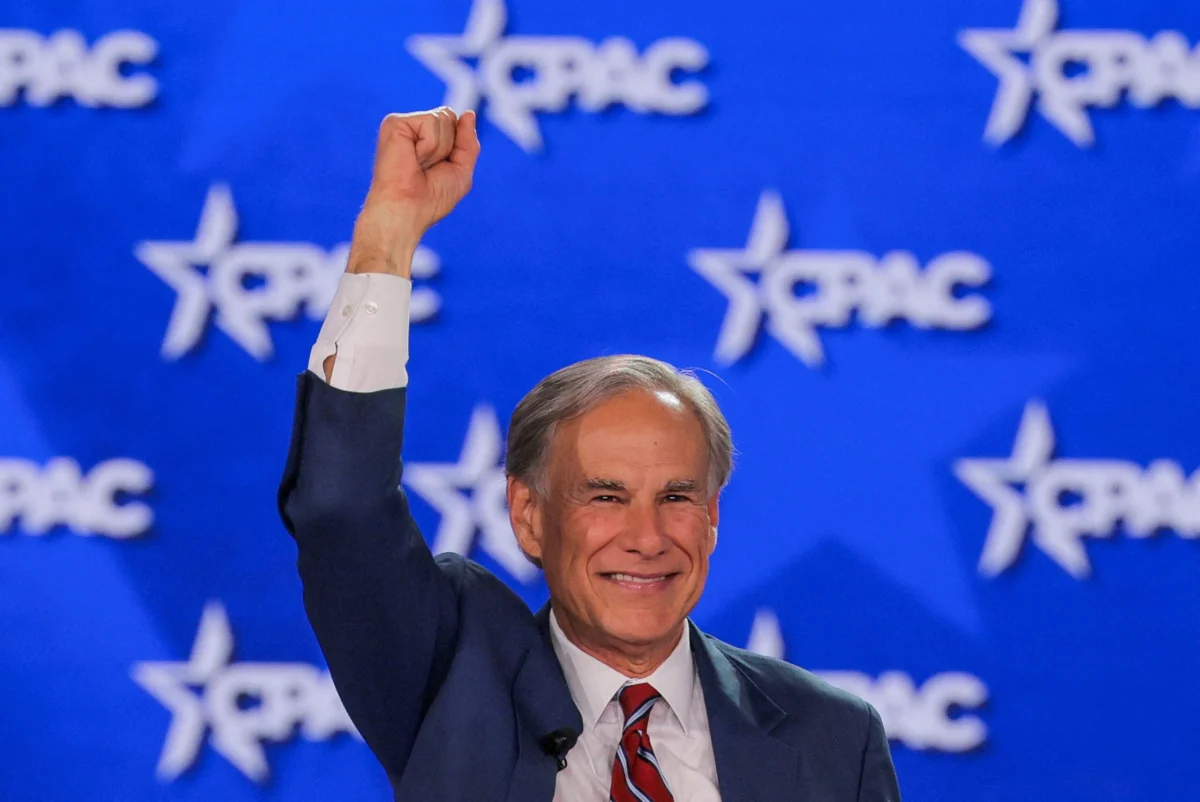
The Dallas-Fort Worth International Airport (DFW) has announced the immediate termination of its plans to install dedicated wudu facilities, a decision that followed a direct threat from Texas Governor Greg Abbott to revoke state funding for the major transportation hub. This rapid reversal has ignited a fierce debate across Texas and beyond, drawing sharp criticism from civil rights organizations, most notably the Council on American-Islamic Relations (CAIR), which has labeled the governor’s intervention an "anti-Muslim political stunt." The controversy underscores a broader national discussion about religious freedom, government accommodation, and the rising tide of Islamophobia in American public discourse.
The Governor’s Intervention and Airport’s Reversal
The dispute escalated last week when Governor Abbott, a prominent Republican, publicly announced an order for a comprehensive review of both DFW and Houston’s George Bush Intercontinental Airport (IAH). The governor’s directive specifically targeted "possible revocation of active state grant funds" for both airports, asserting that the planned or existing wudu stations constituted religious discrimination. In a strongly worded statement released on Friday, Abbott contended, "These ablution facilities appear designed to single out one subset of the population for special treatment based on religion. That is illegal." He further elaborated, "Both airports are government-owned facilities. The federal and state constitutions prohibit government from facilitating this sort of discrimination. Just as the government cannot favour the secular over the sacred, it also cannot favour one religious view over all others." Beyond threatening funding, Governor Abbott also referred both airports to relevant federal agencies for investigation into potential constitutional violations.
In response to the governor’s formidable pressure, DFW airport moved swiftly to abandon its plans. In a statement released on Monday, the airport explained its decision: "Like all proposed projects, the airport ultimately considers the operational benefits, customer service impacts, operational risks and costs before approving them. While that evaluation was planned, the airport accelerated its review due to elevated public interest this week and has determined not to proceed with the project as it would not deliver the originally anticipated operational benefits." This statement, while framed in terms of operational efficiency and customer service, is widely understood as a direct concession to the governor’s threat, highlighting the significant leverage state leadership holds over critical infrastructure projects.
CAIR’s Strong Condemnation and Broader Critique
The Council on American-Islamic Relations (CAIR), a leading Muslim civil rights and advocacy organization, wasted no time in condemning Governor Abbott’s actions. On Monday, the group issued a scathing critique, accusing the governor of manufacturing yet another "anti-Muslim political stunt." In a social media post, CAIR stated, "Of all the silly controversies that [Abbott] has manufactured about Muslims over the past year, the airport washing station outrage might be the most ridiculous. And hypocritical."
CAIR’s primary argument rests on the principle of religious accommodation, asserting that providing facilities for religious practices does not equate to government endorsement or establishment of religion. They highlighted that wudu stations, consisting of specialized sinks and faucets designed for ritual washing of hands, face, and feet before prayer, are open for use by anyone. "Washing stations already exist at various airports and anyone can use them. They are no different than the interfaith prayer rooms or toilet bidets found at airports around the world," the group explained. "Muslim travelers may use them most often, but they are open to all." CAIR further underscored that the provision of such facilities aligns with best practices for serving diverse global travelers and is a common feature in major international airports worldwide, reflecting an understanding of the diverse needs of passengers.
Understanding Wudu and Religious Accommodation
Wudu, an Arabic term meaning "ablution," is a ritual purification prescribed by Islam before certain acts of worship, most notably the five daily prayers (salat). It involves washing specific parts of the body with water, including the hands, mouth, nostrils, face, arms, head, and feet. For observant Muslims, performing wudu is a prerequisite for prayer, ensuring physical and spiritual purity. The absence of suitable facilities can pose a significant challenge, particularly for travelers in public spaces like airports where conventional restrooms may not be conducive to foot washing without causing inconvenience or hygiene issues.
The debate surrounding wudu stations touches upon a crucial aspect of American constitutional law: the Establishment Clause of the First Amendment, which states that "Congress shall make no law respecting an establishment of religion." While Governor Abbott interprets this as prohibiting any government action that might appear to favor one religion, rights advocates argue that providing reasonable accommodations for religious practices, especially in public facilities, does not constitute establishment. Instead, they view it as upholding the Free Exercise Clause, which protects individuals’ rights to practice their religion, and promoting inclusivity. Many legal scholars and civil liberties groups contend that accommodating diverse religious practices, such as providing prayer rooms, kosher meal options, or, in this instance, wudu facilities, is a legitimate function of public institutions serving a pluralistic society, rather than a violation of the Establishment Clause. These accommodations are often seen as analogous to providing ramps for individuals with disabilities or lactation rooms for nursing mothers – provisions designed to ensure equitable access and participation for all members of the public.
A Pattern of Controversies: Governor Abbott’s Stance on Religion
CAIR’s accusation of an "anti-Muslim political stunt" is rooted in a discernible pattern of Governor Abbott’s actions and rhetoric concerning religious issues, particularly those involving Islam. The civil rights group drew a stark contrast between the governor’s opposition to wudu stations and his support for policies that promote Christian religious displays in public schools. CAIR specifically highlighted Abbott’s signing of a law that mandates the display of the Ten Commandments from the Bible in classrooms across the state. Earlier this year, the Republican-controlled Texas State Board of Education also made Bible stories required reading for public schools, further cementing a conservative approach to religious instruction in the state’s educational system.
This apparent inconsistency—opposing an accommodation for Muslim prayer while actively promoting Christian tenets in public education—forms the core of CAIR’s "hypocrisy" claim. Critics argue that such actions demonstrate a selective application of religious freedom principles, favoring Christian expression while suppressing or opposing accommodations for other faiths. Furthermore, Governor Abbott’s relationship with CAIR has been particularly contentious; last year, he controversially declared CAIR a "foreign terrorist" organization, a designation that the civil rights group is actively challenging in the courts, viewing it as a baseless and politically motivated attack designed to delegitimize their advocacy work.
Chronology of Events
- Prior to Last Week: Dallas-Fort Worth International Airport (DFW) had initiated plans for the installation of wudu facilities as part of its ongoing efforts to enhance traveler experience and accommodate its diverse passenger base. George Bush Intercontinental Airport (IAH) in Houston already had such facilities in place.
- Last Week (Specific Day Unspecified, but before Friday): Details of DFW’s plans for wudu stations gained public attention, prompting conservative outcry.
- Friday, [Date]: Governor Greg Abbott issued a public statement and order, directing a review of DFW and IAH "for possible revocation of active state grant funds." He accused the airports of religious discrimination for providing or planning wudu facilities and referred them to federal agencies for investigation.
- Monday, [Date]: Dallas-Fort Worth International Airport announced its decision to scrap plans for the wudu stations, citing an "accelerated review due to elevated public interest" and concluding that the project "would not deliver the originally anticipated operational benefits."
- Monday, [Date]: The Council on American-Islamic Relations (CAIR) released a statement condemning Governor Abbott’s actions, calling it an "anti-Muslim political stunt" and highlighting the perceived hypocrisy in his stance on religious accommodation.
Broader Context: Rising Islamophobia and Political Climate
The controversy at DFW airport unfolds against a backdrop of increasing Islamophobic rhetoric and incidents across the United States. Political figures, including allies of former President Donald Trump, have continued to make public statements widely perceived as anti-Muslim. For instance, last week, Trump himself shared a photo of Democratic Senate candidate Abdul El-Sayed with his family, seemingly using the image to suggest that the Michigan doctor should not be elected because his wife, a practicing psychologist, wears the hijab. Such instances contribute to a climate where Muslim Americans often feel targeted and marginalized.
The implications of this broader political environment are significant. Data from organizations monitoring hate crimes and discrimination, such as CAIR and the Anti-Defamation League, consistently show an uptick in anti-Muslim incidents, particularly during periods of heightened political polarization or international conflict. The perceived validation of such sentiments by high-profile political figures can embolden individuals and groups to act on prejudiced views, sometimes with violent consequences. In May, for example, a mosque in San Diego was the target of a hate crime, resulting in the deaths of three people. These incidents underscore the real-world impact of inflammatory rhetoric and political posturing on the safety and well-being of Muslim communities.
Implications and Future Outlook
The DFW wudu facility controversy carries several layers of implications:
- Legal Implications: The central legal question revolves around the interpretation of the Establishment Clause versus the Free Exercise Clause of the First Amendment. While Governor Abbott frames wudu stations as government favoritism, civil liberties groups argue they are permissible religious accommodations. The governor’s referral to federal agencies could potentially lead to further legal challenges, though the DFW’s reversal may preempt direct litigation regarding its specific plans. The existing facilities at IAH, however, could still face scrutiny, potentially setting a precedent for similar accommodations in public spaces.
- Political Implications: For Governor Abbott, this move likely solidifies his standing with his conservative base, appealing to voters who may share his interpretation of religious freedom or hold anti-immigrant/anti-Muslim sentiments. It aligns with a broader trend of "culture war" issues being leveraged for political gain. However, it also risks alienating diverse communities and could draw criticism from business leaders concerned about Texas’s image as an inclusive state for international commerce and travel.
- Social Implications: The decision sends a chilling message to Muslim communities in Texas and nationwide, suggesting that their religious practices may be unwelcome or seen as a point of contention in public spaces. This can contribute to feelings of alienation and discrimination, undermining efforts to foster interfaith understanding and social cohesion. It also raises questions about the extent to which public institutions should cater to the needs of a diverse populace.
- Economic Implications: As major international gateways, DFW and IAH serve millions of travelers annually, including a significant number from Muslim-majority countries or those who observe Islamic practices. Providing culturally and religiously sensitive amenities can enhance the traveler experience, attract more international visitors, and boost the airports’ reputation as world-class facilities. The absence of such accommodations, or the perception that a state is unwelcoming to certain groups, could negatively impact tourism, international business, and the broader economic appeal of Texas. Other global airports, such as Heathrow in London, Dubai International, and even other major U.S. hubs like New York’s JFK, have long integrated diverse religious facilities, recognizing the economic and social benefits of inclusivity.
In conclusion, the decision by DFW to scrap its wudu facility plans, under pressure from Governor Abbott, highlights a contentious intersection of religious freedom, political maneuvering, and social inclusivity. While the airport has made its immediate decision, the broader debate over religious accommodation in public spaces, the interpretation of constitutional law, and the fight against Islamophobia in American politics is far from over. The incident serves as a stark reminder of the ongoing challenges in navigating religious diversity within a pluralistic society and the powerful role state leadership can play in shaping that landscape.
