

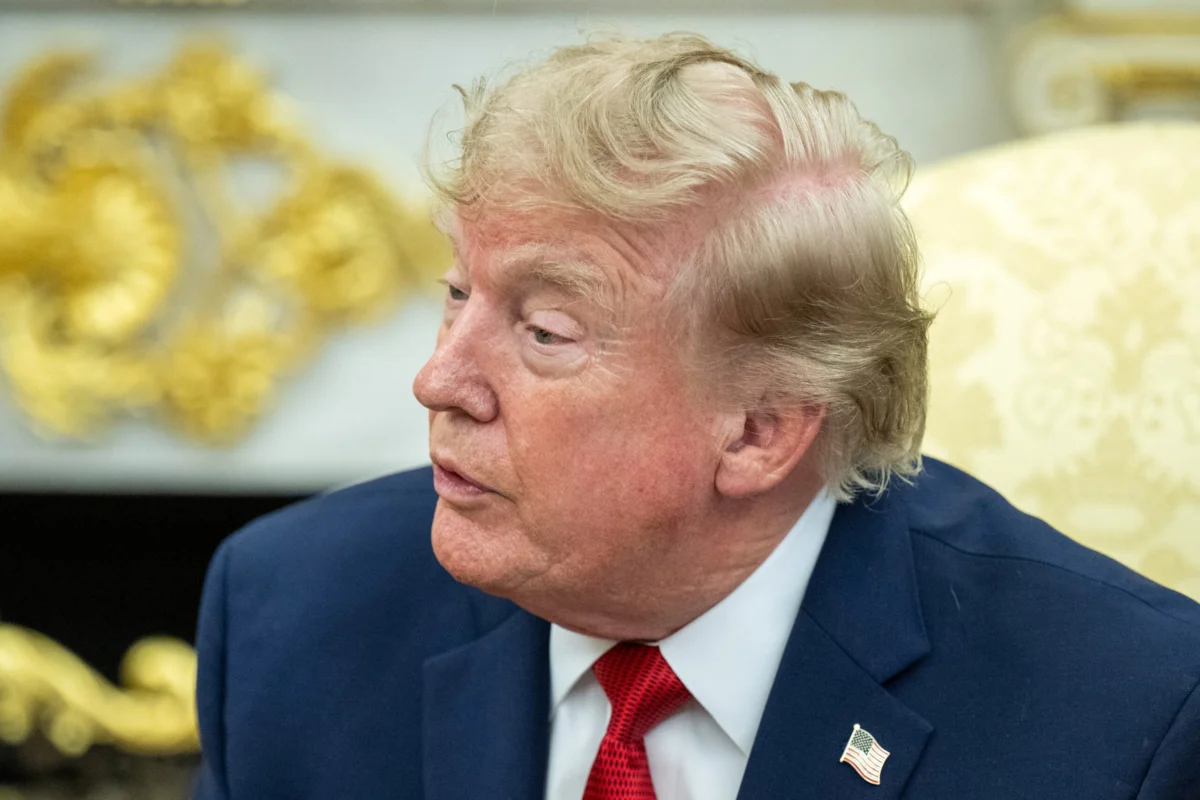
The already volatile relationship between the United States and Iran entered a perilous new phase on Monday following US President Donald Trump’s blunt demand that Tehran “put up the white flag of surrender,” a statement delivered as a pivotal bilateral Memorandum of Understanding (MoU) between the two nations officially expired. The President’s remarks, made during a public address in Washington D.C., signal a significant hardening of Washington’s stance and cast a long shadow over any immediate prospects for de-escalation in a region perpetually teetering on the brink of wider conflict. The expiration of the MoU, a fragile framework intended to facilitate confidence-building measures, has effectively dismantled a key, albeit informal, diplomatic bridge that had been painstakingly constructed to mitigate direct confrontation.
The now-lapsed agreement, officially titled the "Memorandum of Understanding on Maritime Security and Regional De-escalation," was a temporary, non-binding accord signed in late 2024. Its primary objective was to establish clearer communication channels and protocols to prevent accidental clashes in the Persian Gulf, particularly concerning naval interactions in strategic waterways such as the Strait of Hormuz. Key provisions included a commitment to advance notice for certain military exercises, the establishment of a dedicated secure communication hotline between naval commands, and an agreement to convene quarterly, low-level diplomatic meetings in a neutral third country to discuss regional security concerns. While modest in its ambitions, the MoU represented a rare instance of direct, if limited, operational dialogue between the two adversaries since the dramatic deterioration of relations following the US withdrawal from the Joint Comprehensive Plan of Action (JCPOA) in 2018. Its failure to be renewed or replaced underscores a profound and perhaps irreparable breakdown in the diplomatic overtures that characterized its brief existence.
A History of Antagonism: The Context of US-Iran Relations
The President’s forceful rhetoric and the MoU’s expiration are deeply rooted in over four decades of profound animosity and strategic rivalry between Washington and Tehran. The 1979 Islamic Revolution in Iran, which saw the overthrow of the US-backed Shah and the subsequent hostage crisis at the US Embassy, fundamentally reshaped bilateral ties, transforming a strategic alliance into an enduring adversarial relationship. Since then, successive US administrations have grappled with Iran’s nuclear ambitions, its ballistic missile program, its support for regional proxy groups (such as Hezbollah in Lebanon, Houthi rebels in Yemen, and various Shiite militias in Iraq and Syria), and its consistent calls for the destruction of Israel.
The early 21st century brought heightened international concern over Iran’s nuclear program, culminating in years of UN and multilateral sanctions. A significant, albeit temporary, breakthrough occurred in 2015 with the signing of the JCPOA, a landmark agreement between Iran and the P5+1 (China, France, Germany, Russia, the United Kingdom, and the United States), which saw Iran agree to severe restrictions on its nuclear activities in exchange for sanctions relief. However, President Trump’s decision in 2018 to withdraw the US from the JCPOA and re-impose a comprehensive "maximum pressure" sanctions campaign marked a dramatic escalation. This policy aimed to cripple Iran’s economy and force it to negotiate a more expansive agreement addressing its nuclear program, ballistic missiles, and regional influence.
The period following the JCPOA withdrawal was characterized by a series of dangerous incidents: attacks on oil tankers in the Gulf, drone incursions, the downing of a US drone by Iran, and the US assassination of Iranian Quds Force commander Qassem Soleimani in early 2020, followed by Iranian retaliatory missile strikes on US bases in Iraq. These events brought the two nations perilously close to open conflict. The "Memorandum of Understanding on Maritime Security and Regional De-escalation," signed during a brief window of opportunity in late 2024, was largely seen as a desperate attempt by third-party mediators, notably Oman and Qatar, to establish guardrails against further accidental escalation, particularly in the critical maritime domain. Its collapse now removes one of the few remaining mechanisms for direct, albeit informal, communication and crisis management.
The Expired MoU: A Fragile Bridge Collapses
The "Memorandum of Understanding on Maritime Security and Regional De-escalation" was never intended to be a comprehensive peace treaty or a permanent solution to the myriad disputes between the US and Iran. Rather, it was a pragmatic, albeit temporary, arrangement designed to prevent miscalculation and unintended conflict in the highly militarized waters of the Persian Gulf. Negotiated through back-channel diplomacy over several months, the MoU came into effect on January 1, 2025, with an initial term of eighteen months. Its expiration on Monday, August 17, 2026, marks the failure of efforts to extend or formalize its provisions.
Sources close to the negotiations indicated that discussions for renewal had stalled for several months. Iran reportedly insisted on the inclusion of guarantees for significant sanctions relief as a prerequisite for extending the MoU, arguing that continued economic pressure undermined the spirit of de-escalation. The United States, conversely, maintained that the MoU was a security-focused agreement, separate from broader economic and nuclear issues, and demanded Iranian concessions on its regional proxy activities and ballistic missile program. Neither side was willing to budge, leading to the predictable lapse of the agreement. Its failure highlights the deep-seated mistrust and the expansive nature of the disagreements that plague US-Iran relations, where even limited, technical agreements are held hostage by broader strategic objectives.
President Trump’s Uncompromising Stance
President Trump’s call for Iran to “put up the white flag of surrender” is consistent with his administration’s long-standing "maximum pressure" campaign, which posits that economic strangulation and unwavering diplomatic pressure will ultimately compel Iran to capitulate to US demands for a new, more comprehensive agreement. The phrase itself evokes historical military defeats, suggesting that the US perceives Iran as being in a position of weakness and that any negotiation must begin with Iran accepting fundamental concessions.
Analysts suggest this aggressive rhetoric serves multiple purposes. Domestically, it resonates with a political base that favors a hardline approach to perceived adversaries. Internationally, it signals to allies and rivals alike that the US remains committed to its strategy of isolating Iran and will not tolerate what it views as provocative actions or nuclear advancements. By demanding "surrender," the administration may be attempting to shift the burden of responsibility for the diplomatic impasse entirely onto Tehran, framing any future escalation as a consequence of Iran’s refusal to yield. This approach, however, leaves little room for face-saving measures for Iran, making any future diplomatic engagement exceptionally difficult.
Anticipated Iranian Rejection and Counter-Rhetoric
Unsurprisingly, Iran is expected to vehemently reject President Trump’s demand. Such a call for "surrender" is deeply antithetical to the foundational principles of the Islamic Republic, which prides itself on its resistance against external pressure and its commitment to national sovereignty. Iranian officials and state media are anticipated to issue strong condemnations, denouncing the US rhetoric as an affront to international law, a continuation of "economic terrorism," and an attempt to undermine Iran’s regional standing.
Key figures within Iran’s political and military establishment, including Supreme Leader Ali Khamenei and President Ebrahim Raisi, are likely to reiterate Iran’s steadfastness and its capacity for resilience. They will almost certainly emphasize that Iran will never negotiate under duress and will continue to pursue its national interests, including its nuclear program for peaceful purposes and its regional security doctrine. Such a rejection will further entrench the positions of both sides, making the prospect of any near-term diplomatic breakthrough exceedingly remote. Tehran may also respond by accelerating aspects of its nuclear program, increasing its support for regional proxies, or conducting further military exercises in the Gulf, signaling its defiance.
International Reactions and the Widening Diplomatic Chasm
The expiration of the MoU and President Trump’s confrontational statement are expected to elicit a range of reactions from the international community, further highlighting the deep divisions on how to manage the Iran challenge.
- European Allies (EU3: France, Germany, UK): European nations, which have consistently advocated for de-escalation and diplomacy, are likely to express profound concern. They will reiterate their commitment to the JCPOA (even in its weakened state) and call for both Washington and Tehran to exercise restraint. European leaders may lament the loss of the MoU as a vital communication channel and emphasize the dangers of a region without such guardrails. They are likely to continue their efforts to preserve channels for dialogue and potentially explore new diplomatic initiatives, though their leverage without US participation remains limited.
- United Nations: The UN Secretary-General is expected to issue a statement urging all parties to de-escalate tensions and return to dialogue. The International Atomic Energy Agency (IAEA) will likely continue to monitor Iran’s nuclear activities closely, publishing reports that detail any deviations from its commitments, further fueling international debate.
- Russia and China: Both permanent members of the UN Security Council, Russia and China, are expected to criticize the US’s unilateral approach and its "maximum pressure" policy, which they view as destabilizing. They will likely reiterate their support for the JCPOA and call for a return to multilateral diplomacy, positioning themselves as advocates for international law and stability, in contrast to what they perceive as US exceptionalism.
- Regional Actors:
- Israel: Israel is likely to express tacit or explicit support for the US’s hardline stance, having long viewed Iran as its primary existential threat. Israeli officials will probably emphasize the need to prevent Iran from acquiring nuclear weapons and to counter its regional influence, seeing the US demand for surrender as aligning with their security objectives.
- Saudi Arabia and UAE: Gulf Arab states, particularly Saudi Arabia and the UAE, which have been targets of Iranian-backed attacks and perceive Iran as a regional hegemon, may welcome the tough US rhetoric. However, they are also acutely aware of the potential for any escalation to destabilize the region, impact oil markets, and draw them into direct conflict. Their response will likely be a cautious endorsement of US pressure while privately urging measures to prevent outright war.
Chronology of Escalation: A Timeline of Mounting Tensions
The path to the MoU’s expiration and the President’s latest demand is paved with years of escalating tensions:
- 1979: Islamic Revolution in Iran; US Embassy hostage crisis.
- 1980s: Iran-Iraq War; US involvement in the Gulf.
- 2000s: International concerns over Iran’s nuclear program intensify; UN sanctions begin.
- 2015 (July): Joint Comprehensive Plan of Action (JCPOA) signed, limiting Iran’s nuclear program in exchange for sanctions relief.
- 2018 (May): US withdraws from the JCPOA under President Trump, re-imposes "maximum pressure" sanctions.
- 2019: Iran begins to incrementally reduce its JCPOA commitments in response to US sanctions; attacks on oil tankers in the Gulf; Saudi oil facilities targeted.
- 2020 (January): US drone strike kills Iranian Quds Force Commander Qassem Soleimani in Baghdad; Iran retaliates with missile strikes on US bases in Iraq.
- 2021-2023: Continued sanctions, proxy conflicts, and periodic flare-ups; indirect negotiations attempt to revive JCPOA but ultimately fail. Iran continues to advance its nuclear program.
- 2024 (Late): Amid heightened maritime incidents, back-channel diplomacy leads to the signing of the "Memorandum of Understanding on Maritime Security and Regional De-escalation," a temporary agreement.
- 2025 (January 1): MoU on Maritime Security and Regional De-escalation officially comes into effect.
- 2025 (Mid-late): Initial discussions for MoU renewal stall, with both sides making demands deemed unacceptable by the other.
- 2026 (August 17): MoU officially expires without renewal. US President Donald Trump demands Iran’s "surrender."
Economic Implications: Sanctions and Global Markets
The expiration of the MoU, coupled with President Trump’s "surrender" demand, reinforces the US "maximum pressure" strategy, which has severely crippled Iran’s economy. Sanctions have targeted Iran’s oil exports, banking sector, and various industries, leading to soaring inflation, unemployment, and a significant depreciation of the national currency. While Iran has developed strategies to circumvent some sanctions, its economy remains under immense strain. The current development signals no relief is in sight, prolonging the economic hardship for the Iranian populace.
Globally, the increased tensions could have significant repercussions for oil markets. Any perceived threat to the flow of oil through the Strait of Hormuz, a choke point for roughly 20% of the world’s oil supply, typically sends crude prices soaring. While markets have become somewhat accustomed to US-Iran tensions, the complete absence of any de-escalation mechanism raises the risk premium. Shipping costs in the Gulf could increase due to higher insurance premiums, impacting global supply chains and potentially contributing to inflationary pressures worldwide.
Iran’s Nuclear Program: A Persistent Shadow
Amidst these diplomatic and economic pressures, Iran’s nuclear program remains a central concern. Following the US withdrawal from the JCPOA, Iran has steadily increased its uranium enrichment levels and stockpiles, far exceeding the limits set by the 2015 agreement. Reports from the IAEA indicate that Iran is enriching uranium to levels approaching weapons-grade purity and has significantly expanded its centrifuge cascades. While Iran consistently maintains its nuclear program is for peaceful purposes, critics argue that these advancements shorten its "breakout time" – the time needed to produce enough fissile material for a nuclear weapon. The expiration of the MoU and the heightened rhetoric further diminish the prospects of a return to nuclear negotiations, raising fears that Iran could accelerate its program even further in defiance, potentially leading to a full-blown proliferation crisis.
Regional Security Landscape: A Powder Keg
The Middle East remains a geopolitical powder keg, and the latest developments between the US and Iran only increase the inherent instability. Proxy conflicts in Yemen, Syria, Iraq, and Lebanon are deeply intertwined with the US-Iran rivalry. Iranian-backed groups continue to challenge US interests and allies in the region, while US forces maintain a significant presence. The collapse of the MoU removes a crucial, albeit fragile, layer of protection against accidental military confrontation, particularly in the Persian Gulf. Naval incidents, drone encounters, and cyberattacks could become more frequent and carry a higher risk of spiraling out of control without established communication protocols. The demand for surrender could also embolden Iranian hardliners, leading to more assertive actions by Tehran in regional theaters.
Analysis of Implications: A Dangerous Precedent
The expiration of the US-Iran de-escalation MoU and President Trump’s uncompromising demand for "surrender" mark a dangerous new chapter in an already fraught relationship. The immediate implications are clear:
- Increased Risk of Conflict: Without even a rudimentary framework for managing maritime incidents, the likelihood of accidental clashes escalating into broader military confrontation is significantly heightened.
- Diplomatic Deadlock: The "surrender" rhetoric leaves virtually no room for diplomatic maneuver, making future negotiations incredibly difficult and underscoring a complete breakdown in trust.
- Nuclear Proliferation Concerns: Iran is likely to view the US stance as further justification for advancing its nuclear program, exacerbating non-proliferation concerns and potentially leading to a regional arms race.
- Regional Destabilization: Proxy conflicts are likely to intensify, and regional actors may feel compelled to take more decisive actions, further destabilizing the already volatile Middle East.
- Global Economic Impact: Sustained high tensions in the Gulf will continue to pose a risk to global oil supplies and potentially dampen global economic recovery.
In conclusion, the events of Monday underscore a critical juncture. The failure of the US-Iran Memorandum of Understanding on Maritime Security and Regional De-escalation, combined with the US President’s unyielding demand, signals a significant escalation in the long-standing rivalry. With diplomatic channels at their lowest ebb and rhetoric at its most confrontational, the path ahead appears fraught with peril, demanding cautious vigilance from the international community to prevent the current cold war from igniting into open conflict.
