

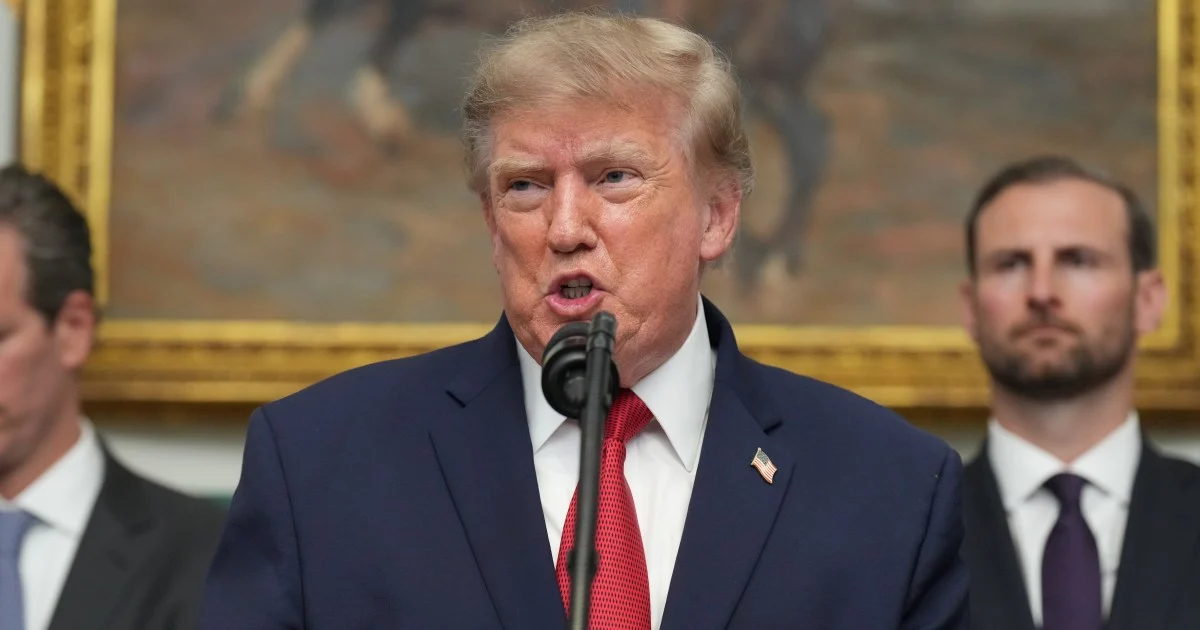
President Donald Trump’s audacious declaration, viewing the Strait of Hormuz as "American territory," has sent shockwaves across the globe, escalating an already volatile geopolitical standoff with Iran. The pronouncement, made amidst heightened tensions and a palpable sense of impending conflict, represents a dramatic shift in international maritime policy and a direct challenge to established international law. The US president further stated that Iran "would love to make a deal, but they’re not ready to make the right deal in my opinion," underscoring a deep diplomatic impasse that shows no immediate signs of resolution. This statement, delivered during a meeting with technology leaders in the Roosevelt Room of the White House on Wednesday, August 19, 2026, has immediately fueled concerns of a direct military confrontation in one of the world’s most critical maritime chokepoints.
The Strategic Crucible: The Strait of Hormuz
The Strait of Hormuz is not merely a narrow waterway; it is a global economic lifeline, connecting the Persian Gulf to the open seas. Approximately one-fifth of the world’s total petroleum liquids consumption, or about 21 million barrels per day, passes through this strait. It is the only sea passage from the Persian Gulf to the open ocean, making it strategically vital for oil-exporting countries such as Saudi Arabia, Iran, the UAE, Kuwait, and Iraq. The strait is about 21 nautical miles (39 km or 24 miles) wide at its narrowest point, with the shipping lane split into two 2-mile-wide channels for inbound and outbound traffic, separated by a 2-mile-wide buffer zone. Control or disruption of this passage has profound implications for global energy markets, international trade, and geopolitical stability.
Under international law, specifically the United Nations Convention on the Law of the Sea (UNCLOS), the Strait of Hormuz is considered an international strait, granting all vessels, including warships, the right of "transit passage." This right allows for continuous and expeditious passage without impediment, even through the territorial waters of coastal states. Iran, while a signatory to UNCLOS, has not fully ratified it and has historically asserted its right to control passage through the strait, especially concerning military vessels from countries with which it has hostile relations. President Trump’s assertion of the strait as "American territory" directly contravenes these established international norms and legal frameworks, suggesting a unilateral claim of sovereignty over a shared international waterway. Such a claim, if pursued, could be seen as an act of aggression by numerous nations and would undoubtedly be challenged in international courts and diplomatic forums.
Escalating Tensions: A Chronology of US-Iran Relations
The current crisis is the culmination of decades of animosity, punctuated by periods of intense diplomatic engagement and sharp escalations. The relationship significantly deteriorated following the US withdrawal from the Joint Comprehensive Plan of Action (JCPOA), commonly known as the Iran nuclear deal, in May 2018. This move, spearheaded by then-President Trump, reimposed stringent economic sanctions on Iran, crippling its economy and drastically reducing its oil exports.
- May 2018: The Trump administration withdraws from the JCPOA, arguing it was a flawed deal that did not adequately address Iran’s ballistic missile program or its regional malign activities.
- 2019: A series of attacks on oil tankers in the Gulf of Oman, drone incidents, and assaults on Saudi oil facilities are attributed by the US and its allies to Iran, which Tehran denies. The US significantly bolsters its military presence in the region, including aircraft carriers and advanced missile defense systems.
- January 2020: A US drone strike kills Iranian Major General Qassem Soleimani in Baghdad, leading to Iranian retaliatory missile strikes on US bases in Iraq and further increasing fears of an all-out war.
- 2020-2024: The "Maximum Pressure" campaign continues, with additional sanctions targeting Iran’s financial sector, industrial base, and leadership. Iran responds by gradually scaling back its commitments under the JCPOA, enriching uranium beyond agreed limits, and developing advanced centrifuges. Diplomatic efforts by European nations and others to salvage the nuclear deal repeatedly fail.
- 2025: Reports emerge of increased Iranian naval exercises in the Strait of Hormuz, coupled with more aggressive encounters with US naval vessels. Discussions about a new, broader deal with Iran falter, with both sides setting preconditions deemed unacceptable by the other. The international community grows increasingly concerned about the lack of any viable diplomatic off-ramp.
- Early 2026: A series of cyberattacks targeting critical infrastructure in both the US and Iran are reported, with each side blaming the other. Minor skirmishes involving naval vessels in the Persian Gulf occur, leading to heightened alert levels for military forces in the region. There are unconfirmed reports of non-state actors, allegedly backed by Iran, targeting shipping in the southern Red Sea.
- August 2026: Amidst live reports of ongoing "war" conditions, which could refer to an undeclared, low-intensity conflict involving proxy groups, cyber warfare, or limited naval engagements, President Trump makes his provocative statement regarding the Strait of Hormuz. This declaration signals a significant escalation in the US posture and strategy towards Iran, moving beyond sanctions and military deterrence to a direct challenge of territorial claims.
The "American Territory" Claim: Legal and Diplomatic Fallout
President Trump’s assertion that the Strait of Hormuz is "American territory" is unprecedented and carries profound legal and diplomatic ramifications. From a legal standpoint, such a claim is virtually impossible to reconcile with established principles of international law, particularly UNCLOS. The convention clearly delineates territorial waters (up to 12 nautical miles from the baseline) and grants states sovereignty over these waters, but it also mandates the right of transit passage through international straits. Declaring a strait as "American territory" would imply US sovereignty over waters that are internationally recognized as either the territorial waters of Iran and Oman, or international waters subject to transit passage.
The immediate international response is likely to be one of widespread condemnation and alarm.
- Iran: Tehran is expected to vehemently reject the claim, branding it a blatant violation of its sovereignty and international law. Such a declaration could be interpreted by Iran as a pretext for military intervention or control, potentially prompting a forceful response, including threats to close the strait.
- United Nations: The UN Secretary-General and the International Court of Justice would likely be called upon to address the legality of such a claim, which runs contrary to the foundational principles of state sovereignty and freedom of navigation.
- European Union: EU member states, traditionally advocates for multilateralism and adherence to international law, would likely express deep concern and call for de-escalation and respect for UNCLOS. Major European powers, heavily reliant on the free flow of oil, would view any disruption in the Strait as catastrophic.
- China and Russia: Both nations, often critical of US unilateralism, would almost certainly condemn the statement as an illegal infringement on international norms and a dangerous escalation, potentially using it to bolster their geopolitical narratives against US hegemony.
- Regional Allies: Saudi Arabia, the UAE, and other Gulf states, while generally supportive of US efforts to counter Iran, would face a complex dilemma. While they desire security in the strait, a unilateral US claim of sovereignty could destabilize the region further and potentially draw them into a direct conflict they wish to avoid. Their official statements would likely emphasize the importance of international law while subtly supporting US efforts to ensure freedom of navigation.
Economically, the declaration could trigger an immediate spike in global oil prices. Past incidents in the Strait of Hormuz have demonstrated its sensitivity to market stability. For instance, in mid-2019, following attacks on tankers, Brent crude futures rose by more than 4%. A direct claim of US sovereignty, implying potential military enforcement, would introduce an unprecedented level of uncertainty, potentially pushing oil prices to multi-year highs and triggering fears of a global recession.
The "Right Deal" – A Diplomatic Impasse

President Trump’s reiteration that Iran "would love to make a deal, but they’re not ready to make the right deal" highlights the persistent chasm between Washington and Tehran’s expectations for a diplomatic resolution. From the US perspective under Trump, a "right deal" would entail a comprehensive agreement that not only restricts Iran’s nuclear program far beyond the JCPOA’s limits but also addresses its ballistic missile capabilities, support for regional proxies, and human rights record. This maximalist approach, often characterized by "all or nothing" demands, leaves little room for incremental progress.
Iran, on the other hand, has consistently maintained that any new deal must first involve the complete lifting of all US sanctions, which it views as economic warfare. Tehran has also insisted on verifiable guarantees that a future US administration would not unilaterally withdraw from an agreement again. Furthermore, Iran views its ballistic missile program and regional influence as non-negotiable aspects of its national security. The Iranian leadership, particularly hardliners, perceive Trump’s "deal" rhetoric as an attempt to force their capitulation through economic strangulation and military intimidation, making them less likely to compromise.
This fundamental disagreement on the scope and preconditions for negotiations has created a seemingly insurmountable diplomatic barrier. The current "live war" context, whether low-intensity or on the brink of full-scale conflict, only serves to harden positions on both sides, making the prospect of a mutually acceptable deal increasingly remote. Each side views the other’s demands as unreasonable and a threat to its core interests, perpetuating a cycle of confrontation rather than negotiation.
Military Posturing and Risk of Conflict
The US has maintained a robust military presence in the Persian Gulf region for decades, including the US Navy’s Fifth Fleet based in Bahrain, carrier strike groups, and air assets. This presence is ostensibly to ensure freedom of navigation and deter aggression. Iran, while possessing a less technologically advanced military, has developed asymmetric warfare capabilities designed to challenge larger naval powers in the confined waters of the Persian Gulf. These include fast attack craft, coastal missile batteries, mines, and a network of proxy forces across the region capable of launching disruptive actions.
President Trump’s declaration on the Strait of Hormuz significantly raises the stakes for military engagement. If the US were to attempt to enforce its "American territory" claim through naval patrols or restrictions on Iranian vessels, it would inevitably lead to direct confrontations. Potential scenarios include:
- Naval Encounters: US Navy vessels could attempt to assert control over specific sections of the strait, leading to standoffs with Iranian Revolutionary Guard Corps (IRGC) naval units.
- Freedom of Navigation Operations (FONOPs) Escalation: What were once routine FONOPs could transform into direct challenges to Iranian claims, potentially resulting in collisions, warning shots, or even limited engagements.
- Mine Warfare: Iran has historically threatened to use mines to close the strait, a tactic that would be highly disruptive and dangerous, requiring extensive international mine-clearing operations.
- Missile Strikes: In the event of open conflict, Iran’s extensive arsenal of ballistic and cruise missiles, coupled with its drone capabilities, could target US bases, regional allies, and shipping.
The risk of miscalculation is extraordinarily high. Any incident, however minor, could rapidly spiral into a broader regional conflict, drawing in other regional and global powers. The economic consequences of such a war, particularly on global energy supplies, would be devastating.
Broader Implications for International Order
President Trump’s assertion regarding the Strait of Hormuz is not merely about US-Iran relations; it has profound implications for the entire international order. If a major global power can unilaterally declare an international strait as its own territory, it sets a dangerous precedent for other strategic choke points around the world, from the Suez Canal to the Malacca Strait. This would undermine the very fabric of international maritime law and the principles of freedom of navigation that have been painstakingly developed and maintained since UNCLOS.
Such a move could embolden other nations to make similar claims, leading to a fragmented and unstable global maritime environment. It would challenge the authority of international institutions like the UN and undermine the rule-based international order, favoring unilateral action and power projection over diplomacy and shared legal frameworks. The long-term impact could be a more fragmented, less predictable world where vital trade routes are constantly under threat and the risk of conflict is elevated. The global community would be forced to grapple with a new reality where the strategic importance of waterways is increasingly tied to the unilateral claims of powerful states, rather than the collective agreement of nations.
In conclusion, President Trump’s declaration regarding the Strait of Hormuz has dramatically escalated an already fraught situation with Iran. It represents a significant departure from established international norms, raising serious questions about sovereignty, international law, and the potential for military confrontation. While the US seeks a "right deal" with Iran, the current trajectory suggests that the path to peace remains fraught with peril, with the Strait of Hormuz standing as a potent symbol of global tensions and the precarious balance of power in the 21st century. The world watches with bated breath, as the implications of this assertion continue to unfold, threatening to redraw geopolitical maps and redefine the very nature of international maritime conduct.
