

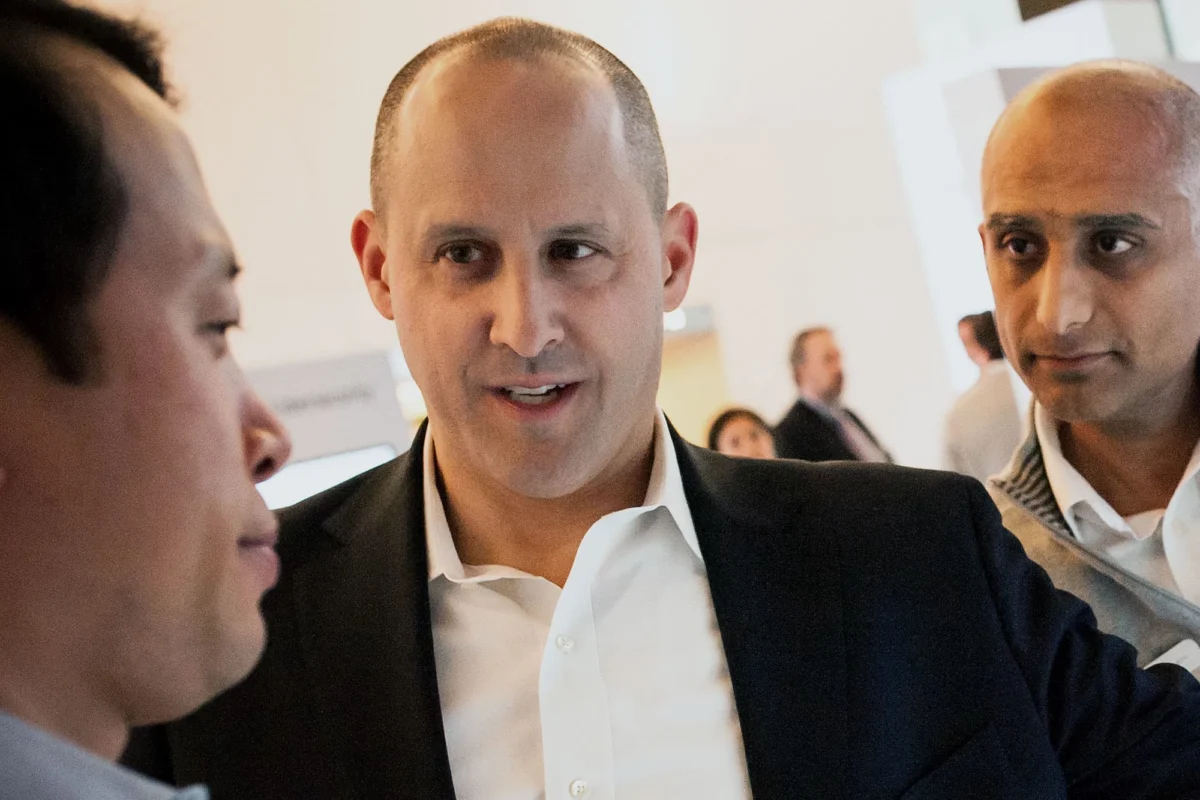
Matt Zames, the seasoned financial executive known for his pivotal role at JPMorgan Chase, including navigating the aftermath of the infamous "London Whale" trading scandal, has officially joined the Trump administration as an advisor to the Social Security Administration (SSA). This high-profile appointment sees Zames stepping into an unpaid, part-time position, tasked with assisting Social Security Commissioner Frank Bisignano, a former colleague from their shared tenure at JPMorgan, in spearheading the agency’s critical modernization efforts. The move, confirmed by individuals with direct knowledge of the matter who requested anonymity due to not being authorized to discuss it publicly, signals a distinct push by the administration to inject private sector efficiency and technological acumen into one of the federal government’s most vital, yet technologically antiquated, institutions. Zames commenced his advisory role on Monday, with an office placard bearing his name already installed at the SSA headquarters in Baltimore, Maryland.
Zames’s entry into public service comes at a crucial juncture for the SSA, an agency grappling with a dual crisis: a technology infrastructure largely reliant on decades-old systems and a looming fiscal challenge threatening the solvency of its retirement trust fund. His mandate is clear: to leverage his extensive experience in technology integration, cost reduction, and complex organizational restructuring to streamline the SSA’s operations. The appointment of a figure of Zames’s caliber underscores the perceived urgency within the administration to address these profound challenges, which have significant implications for millions of American retirees and beneficiaries.
Zames’s Illustrious Career: From Wall Street to Public Service
Matt Zames brings a formidable resume to his new advisory role. Before his departure from JPMorgan Chase in 2017, he served as the bank’s chief operating officer for approximately five years, a period marked by significant technological advancements and rigorous cost-cutting initiatives. His ascent within the banking giant was particularly notable for his instrumental role in mitigating the fallout from the "London Whale" trading losses in 2012. This staggering $6 billion debacle, stemming from speculative derivatives trading by a London-based trader, severely tested JPMorgan’s risk management and operational integrity. Zames was central to the painstaking process of unwinding the massive positions, restructuring the offending unit, and implementing stricter controls, a testament to his crisis management capabilities and operational prowess.
Prior to his COO role, Zames held several high-ranking positions at JPMorgan, including co-head of global fixed income, currencies, and commodities, and chief investment officer of the firm’s Chief Investment Office, the very division responsible for the "London Whale" trades, though he was not in charge at the time the problematic positions were accumulated. His career trajectory at JPMorgan, which spanned 13 years, saw him emerge as a potential successor to the formidable CEO Jamie Dimon, a testament to his strategic vision and leadership qualities. His background as a former hedge-fund trader also provided him with a deep understanding of market dynamics and risk assessment, skills that proved invaluable in the complex world of global finance.
After leaving JPMorgan in 2017, Zames transitioned to the private equity sector, joining Cerberus Capital Management as its president in 2018. At Cerberus, a firm renowned for its focus on distressed investing and operational turnarounds, Zames continued to hone his expertise in technology investments and corporate restructuring. A notable project during his tenure involved overseeing efforts to improve Cerberus’s significant stake in Deutsche Bank, a challenging endeavor given the German bank’s struggles at the time. His departure from Cerberus in 2021 marked another pivot, as he subsequently founded his own advisory and restructuring firm, further cementing his reputation as a sought-after expert in corporate efficiency and strategic transformation. Beyond his corporate roles, Zames has also contributed his financial acumen to the public sector in advisory capacities, serving on key Treasury and Federal Reserve advisory groups focused on debt markets, demonstrating a pre-existing commitment to contributing to national economic stability.
The Social Security Administration’s Modernization Imperative
The core of Zames’s mission at the SSA revolves around addressing its pervasive technological obsolescence. The agency, responsible for administering retirement, disability, and survivors’ benefits to over 60 million Americans, operates on a labyrinthine network of legacy systems, some dating back to the 1970s and 1980s. These antiquated platforms hinder efficiency, complicate data management, and pose significant cybersecurity risks. For instance, many core processing functions still rely on mainframe computers and programming languages like COBOL, requiring a diminishing pool of specialized IT personnel to maintain them. The complexity and interconnectedness of these systems make upgrades and replacements extraordinarily challenging and expensive.
The impact of this technological deficit is felt throughout the agency’s operations. Processing claims, updating beneficiary information, and responding to public inquiries can be slower and more error-prone than in modern, digitally-native organizations. The SSA’s workforce, while dedicated, often has to navigate cumbersome manual processes or outdated interfaces, diverting resources that could otherwise be allocated to improving service delivery. The cost of maintaining these legacy systems alone consumes a significant portion of the agency’s administrative budget, often crowding out funding for innovative solutions. In fiscal year 2016, for example, the SSA’s IT budget was approximately $1.6 billion, with a substantial portion dedicated to maintaining existing systems rather than investing in new development.
Commissioner Frank Bisignano, himself a former COO of JPMorgan Chase and CEO of First Data, a global leader in payment technology, has made technological modernization a cornerstone of his tenure. His experience transforming First Data from a traditional payments processor into a tech-driven fintech company positions him uniquely to appreciate the scale of the challenge at the SSA. The appointment of Zames, with his complementary expertise in large-scale organizational and technological overhauls, is a clear signal of Bisignano’s intent to aggressively pursue this modernization agenda, aiming to bring the SSA’s operational capabilities into the 21st century.
The Looming Fiscal Challenge: Social Security’s Solvency Crisis
Beyond technology, Zames also steps into an agency grappling with fundamental questions about its long-term financial stability. The Social Security Administration’s retirement trust fund is projected to face significant depletion in the coming decades, raising concerns about the program’s ability to pay full promised benefits to future generations. As of the 2017 Trustees’ Report, the Old-Age and Survivors Insurance (OASI) Trust Fund, which pays retirement and survivors benefits, was projected to be able to pay 100 percent of scheduled benefits until 2034. At that point, its reserves would become depleted, and continuing income would be sufficient to pay only about 77 percent of scheduled benefits. While the specific phrasing in the original article, "less than a decade," might have reflected a heightened sense of urgency or referred to a different actuarial component, the overarching concern about the program’s long-term solvency was, and remains, a significant political and economic issue.
This projected shortfall is primarily driven by demographic shifts: lower birth rates, increased longevity, and the retirement of the large Baby Boomer generation. Fewer workers are contributing payroll taxes per retiree, straining the pay-as-you-go system. The implications of this are profound, potentially requiring benefit cuts for millions of Americans, an increase in the retirement age, or an increase in payroll taxes. Each of these solutions carries significant political and social ramifications.
The Social Security program, enacted in 1935, has been a bedrock of American social welfare, providing a critical safety net for the elderly, disabled, and survivors. Its financial health is a perennial topic of national debate, with various administrations and Congresses grappling with proposals for reform. While Zames’s primary focus is operational modernization, any efficiency gains he helps implement could indirectly contribute to the agency’s overall fiscal health by reducing administrative costs and improving revenue collection mechanisms. However, fundamental changes to the trust fund’s solvency require legislative action, a complex political undertaking beyond the scope of an advisory role. Nevertheless, a more efficient, technologically advanced SSA would be better positioned to adapt to any future legislative reforms and administer benefits more effectively, regardless of the ultimate policy solutions.
Bringing Private Sector Expertise to Government
Zames’s appointment is consistent with a broader philosophy often espoused by administrations, particularly those emphasizing business-minded approaches, to bring private sector acumen into government. The rationale is that executives from fast-paced, results-oriented corporations can apply their expertise in efficiency, innovation, and strategic planning to government bureaucracies often perceived as slow and inefficient. This approach often involves identifying inefficiencies, implementing performance metrics, and fostering a culture of accountability.
As a "special government employee" (SGE), Zames’s role is defined by specific legal parameters. SGEs are temporary, part-time federal employees who are often appointed to provide specialized expertise that might not otherwise be available within the civil service. They are subject to federal ethics rules, albeit with some modifications given their limited engagement. The "130-day" limit refers to the maximum number of days an SGE can work in a 365-day period, allowing for a flexible, intermittent work schedule that can be spread out over a longer timeframe. This structure enables individuals like Zames to contribute their high-level expertise without fully disengaging from their private sector commitments or necessitating a full-time, salaried federal position. The unpaid nature of the position further underscores the administration’s narrative of bringing in top talent motivated by public service rather than financial gain.
The strategy of importing Wall Street veterans into key government roles has historically drawn both praise and criticism. Proponents argue that such individuals bring a valuable outside perspective, an understanding of complex financial systems, and a track record of driving change in large organizations. Critics, however, sometimes express concerns about potential conflicts of interest, a lack of understanding of public sector unique challenges and regulations, and the applicability of profit-driven corporate strategies to public service mandates. In Zames’s case, his prior experience on Treasury and Federal Reserve advisory groups indicates a familiarity with the interface between the financial sector and government, potentially mitigating some of these concerns.
Reactions and Expert Perspectives
While specific official statements regarding Zames’s appointment were limited, the underlying sentiment from the administration and within the SSA leadership would logically be one of optimism and strategic alignment. Commissioner Bisignano would likely welcome Zames’s operational expertise as a critical asset in his ambitious modernization agenda. An SSA spokesperson, if authorized to comment, might emphasize the agency’s commitment to enhancing service delivery through technological improvements and the value of external expertise.
From a broader political and analytical perspective, Zames’s appointment would likely be viewed through several lenses. Financial analysts and corporate governance experts might laud the move as a smart deployment of talent, recognizing Zames’s proven track record in complex organizational environments. They might highlight his ability to dissect operational inefficiencies and implement scalable technological solutions. Policy experts focused on government reform could see it as a positive step towards addressing long-standing issues within the SSA, particularly its technological debt.
However, advocates for Social Security beneficiaries and some political observers might express a cautious optimism, or even skepticism. Concerns could arise about whether a private sector approach, focused on cost-cutting and efficiency, might inadvertently impact service quality or the human element of an agency that serves vulnerable populations. Questions might also be raised about the limitations of an unpaid, part-time advisory role in tackling challenges of such immense scale and complexity, which often require sustained, dedicated leadership and significant budgetary allocations. The effectiveness of such appointments often hinges on the willingness of career civil servants to embrace change and the availability of resources to implement ambitious reform plans. The political will to fund comprehensive technological overhauls and address the underlying fiscal challenges of Social Security remains a crucial variable.
The Road Ahead for Social Security
Matt Zames’s arrival at the Social Security Administration marks a significant moment for an agency at a critical crossroads. His background and experience suggest a focused effort to address the deep-seated technological and operational inefficiencies that have plagued the SSA for decades. Working alongside Commissioner Bisignano, Zames faces the formidable task of translating his Wall Street-honed skills in crisis management, technological integration, and cost reduction into the complex, regulated environment of a federal agency.
The success of this initiative will be measured not only by the implementation of new systems or the reduction of administrative costs but also by its ultimate impact on the millions of Americans who rely on Social Security for their financial security. A more efficient, modernized SSA could lead to faster claims processing, improved customer service, and greater transparency, ultimately reinforcing public trust in this indispensable program. However, the path to modernization is fraught with challenges, including navigating bureaucratic inertia, securing adequate funding, and managing the inherent complexities of transforming an organization of this magnitude. While Zames’s advisory role is focused on operations, his presence undeniably injects a sense of urgency into the broader, ongoing national conversation about the future stability and sustainability of Social Security for generations to come.
