

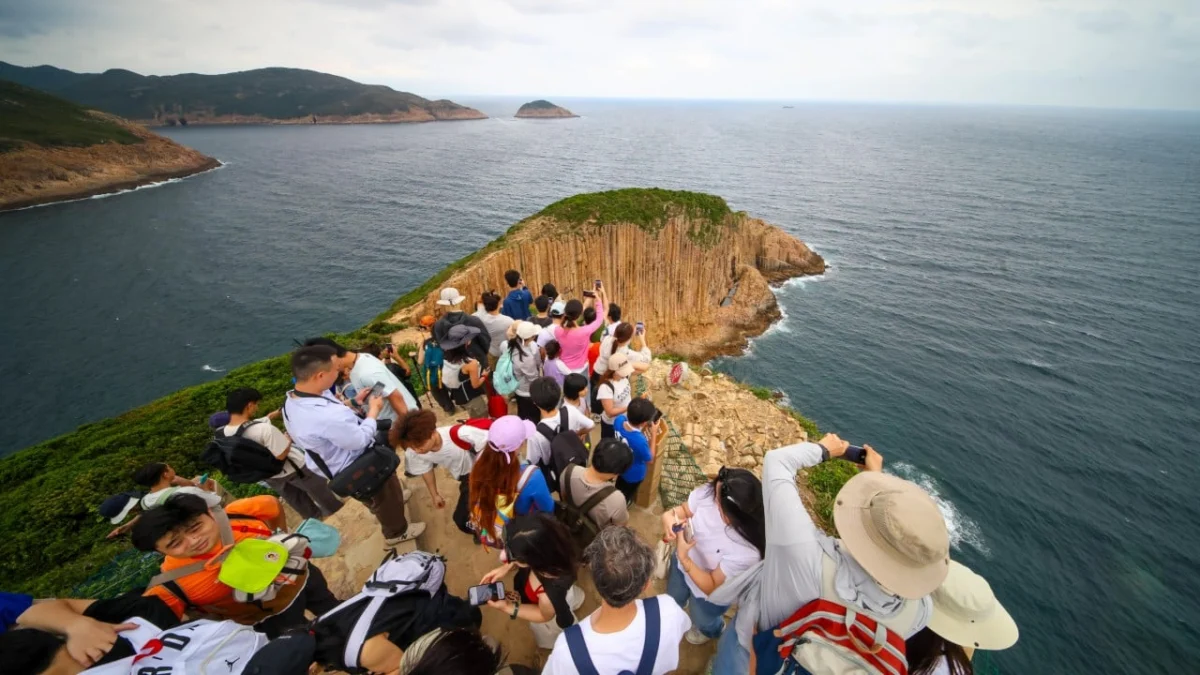
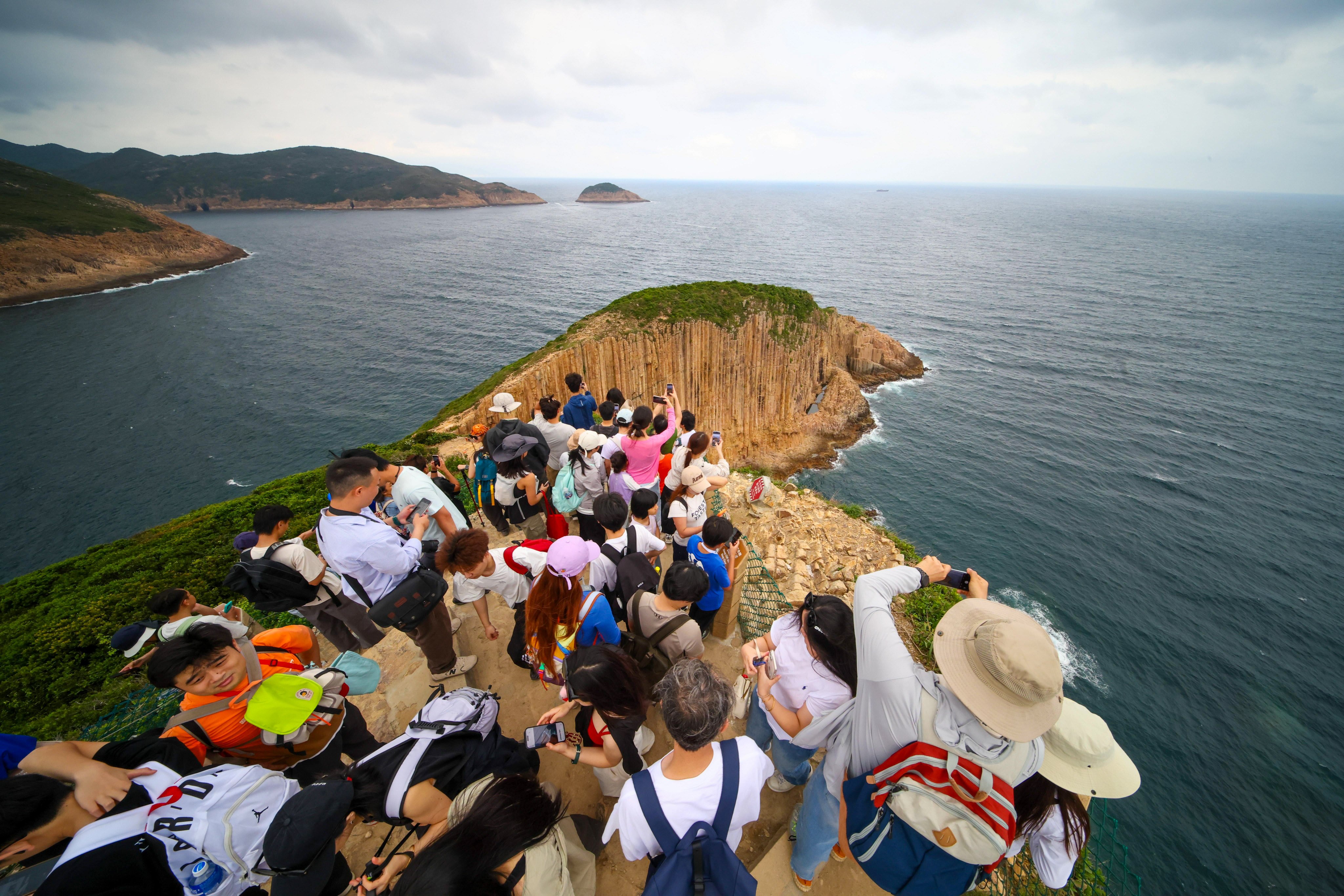
Hong Kong authorities have announced a landmark decision to regulate the flow of hikers and tourists at one of the city’s most iconic natural landmarks, signaling a significant shift in how the territory manages its vast and increasingly popular countryside. Starting next month, the Agriculture, Fisheries and Conservation Department (AFCD) will impose a daily visitor cap of 2,000 people for the Po Pin Chau section of the High Island Geo Trail. This initiative, which includes a mandatory real-name registration system, represents the first time such stringent crowd control measures have been applied to Hong Kong’s hiking trails, reflecting growing concerns over environmental degradation and public safety at high-traffic sites.
The Po Pin Chau section, located within the Sai Kung East Country Park, is a cornerstone of the Hong Kong UNESCO Global Geopark. Known for its spectacular hexagonal volcanic rock columns and the dramatic sea stack that gives the trail its name, the area has seen a surge in popularity over the last several years. The AFCD’s announcement on Friday follows a preliminary proposal floated in April 2026, which sought to address the "saturation" of the trail during peak periods, particularly during public holidays and weekends.
Strategic Management of Natural Heritage
The implementation of a quota system is a direct response to the physical limitations of the terrain and the surge in "green tourism." Mickey Lai Kin-ming, the director of the AFCD, emphasized that the primary driver for this arrangement is the sudden and overwhelming spikes in visitor numbers. According to Lai, certain sections of the trail are currently operating at or beyond their sustainable capacity. "Through the reservation system, we hope to achieve organised crowd control and to prevent visitors from over-concentrating, as well as to protect the environment and improve visitor experience," Lai stated during a press briefing.
The Po Pin Chau trail is approximately 1 kilometer long, but it is characterized by narrow paths and steep ridges that offer little room for error or high-volume foot traffic. The giant hexagonal columns, which formed nearly 140 million years ago during a period of intense volcanic activity, are sensitive to human impact. Authorities have noted that "excessive wear and tear" has led to the widening of trails—a process known as trail braiding—where hikers step off the main path to avoid crowds or mud, inadvertently destroying local flora and accelerating soil erosion.
Registration Logistics and Policy Framework
The new system requires all visitors to register their intent to hike the Po Pin Chau section through an official government portal. Under the real-name registration requirement, hikers must provide identification details to secure a spot within the 2,000-person daily limit. While the AFCD has confirmed that no fees will be charged for these bookings at this stage, the department is also refraining from imposing penalties for "no-shows" during the initial rollout phase. However, officials have indicated that the quota and the enforcement mechanisms will be subject to ongoing review based on the system’s effectiveness.
The registration will be enforced through checkpoints at key access points leading to the High Island Reservoir East Dam, which serves as the gateway to the Geo Trail. Staff will be deployed to verify registrations, ensuring that the daily limit is not breached. This move aligns Hong Kong with international best practices seen in other globally recognized natural sites, such as the booking systems used for certain trails in the United States National Park System or the recently implemented hiker caps on Japan’s Mount Fuji.
Chronology of the Decision
The path toward regulated access began in the wake of the COVID-19 pandemic, which saw a domestic "hiking boom" as residents sought outdoor alternatives to indoor gatherings. By 2023 and 2024, the High Island Geo Trail had become a viral sensation on social media platforms like Instagram and Xiaohongshu, drawing not only local enthusiasts but also a significant number of mainland Chinese tourists.
In April 2026, the AFCD first publicly discussed the possibility of a quota system during a meeting with the Country and Marine Parks Board. The proposal was met with a mix of support from conservationists and concern from the hiking community regarding the "bureaucratization" of the outdoors. Over the summer of 2026, the department conducted site surveys and foot-traffic analysis, concluding that on peak days, the number of visitors exceeded 3,500, nearly double the proposed sustainable limit of 2,000. The formal announcement on August 21, 2026, confirms that the system will go live in September, coinciding with the start of the cooler autumn hiking season.
Geological and Environmental Context
The Po Pin Chau area is geologically unique on a global scale. Unlike the basaltic hexagonal columns found in the Giant’s Causeway in Northern Ireland, Hong Kong’s columns are composed of acidic rhyolitic volcanic rock, which is much rarer. These columns were formed as a massive volume of volcanic ash and lava cooled and contracted in a caldera following a cataclysmic eruption.
The environmental impact of overcrowding at this site is two-fold. First, there is the geological risk: while the rocks themselves are ancient and sturdy, the surrounding slopes and the viewing platforms are prone to landslides if the vegetation holding the soil together is trampled. Second, the ecological impact on the Sai Kung East Country Park is significant. The area is home to various species of local birds and reptiles that are sensitive to human noise and waste. Increased human presence has led to a rise in littering and the disturbance of nesting sites, issues that the AFCD hopes to mitigate through lower, more controlled visitor volumes.
Public Safety and Rescue Statistics
Beyond conservation, public safety is a major factor in the AFCD’s decision. The Po Pin Chau trail features several "informal" paths that are often steep and precarious. As visitor numbers have climbed, so too have the number of call-outs for the Government Flying Service (GFS) and the Fire Services Department.
Data from the Fire Services Department indicated a 30% increase in mountain rescue incidents in the Sai Kung district between 2023 and 2025. Many of these incidents involved hikers who were ill-prepared for the terrain or who became trapped in crowded bottlenecks on narrow cliffside paths. By capping the daily number of visitors, authorities aim to reduce the density of people on the trail, thereby lowering the statistical likelihood of accidents and ensuring that emergency services can access the area more easily if needed.
Stakeholder Reactions and Broader Implications
The introduction of real-name registration and visitor caps has sparked a broader debate about the management of public spaces in Hong Kong. Environmental groups, such as the Conservancy Association, have largely welcomed the move. Spokespersons for these groups argue that "carrying capacity" must be the primary metric for managing UNESCO-listed sites. They suggest that without these controls, the very beauty that draws visitors to Po Pin Chau would eventually be destroyed.
Conversely, some members of the hiking community have expressed reservations. Concerns have been raised regarding digital privacy related to real-name registration and the potential for "gatekeeping" the countryside, which has historically been free and accessible to all. There is also a fear that capping one trail will simply push the crowds to other, currently unregulated areas like the Dragon’s Back or Lion Rock, creating new environmental "hotspots."
From a tourism perspective, the Hong Kong Tourism Board (HKTB) sees this as an opportunity to promote "quality tourism." By ensuring a less crowded and more "premium" experience, Hong Kong can position its Geopark as a world-class destination for eco-conscious travelers. This move is part of a larger trend toward sustainable tourism management, where the goal is to balance economic benefits with the long-term preservation of natural assets.
Analysis of Future Trends
The Po Pin Chau quota system is likely a pilot program for a more comprehensive management strategy for Hong Kong’s 24 country parks. As the city continues to promote itself as a hub for "green tourism," the pressure on natural infrastructure will only increase. If successful, similar caps could be introduced at other sensitive locations, such as the High Junk Peak or the remote beaches of Tai Long Wan.
Furthermore, the integration of technology into countryside management—via registration apps and QR code check-ins—represents a modernization of the AFCD’s operations. It allows for the collection of high-quality data on visitor demographics and behavior, which can inform future conservation efforts and infrastructure planning.
The decision to cap visitor numbers at Po Pin Chau marks a turning point in the relationship between Hong Kong’s urban population and its wild spaces. It reflects a growing recognition that the city’s natural heritage is a finite resource that requires active protection. While the transition from open access to regulated entry may be met with initial resistance, the long-term sustainability of the High Island Geo Trail depends on the success of these measures. As September approaches, the eyes of environmentalists, hikers, and tourism officials will be on Sai Kung to see how this new chapter of countryside management unfolds.
