

Representatives from Sudan’s two warring factions have convened in the Saudi Arabian coastal city of Jeddah for preliminary talks, marking the first significant diplomatic effort to halt nearly three weeks of intensive urban warfare. The initiative, jointly brokered by the United States and Saudi Arabia, aims to address a spiraling humanitarian crisis that has claimed hundreds of lives, displaced hundreds of thousands, and pushed the strategic Horn of Africa nation toward the brink of total state collapse. While the international community views these "pre-negotiation talks" as a vital first step, the atmosphere remains fraught with tension as both the Sudanese Armed Forces (SAF) and the paramilitary Rapid Support Forces (RSF) continue to exchange heavy fire in the capital and surrounding regions.
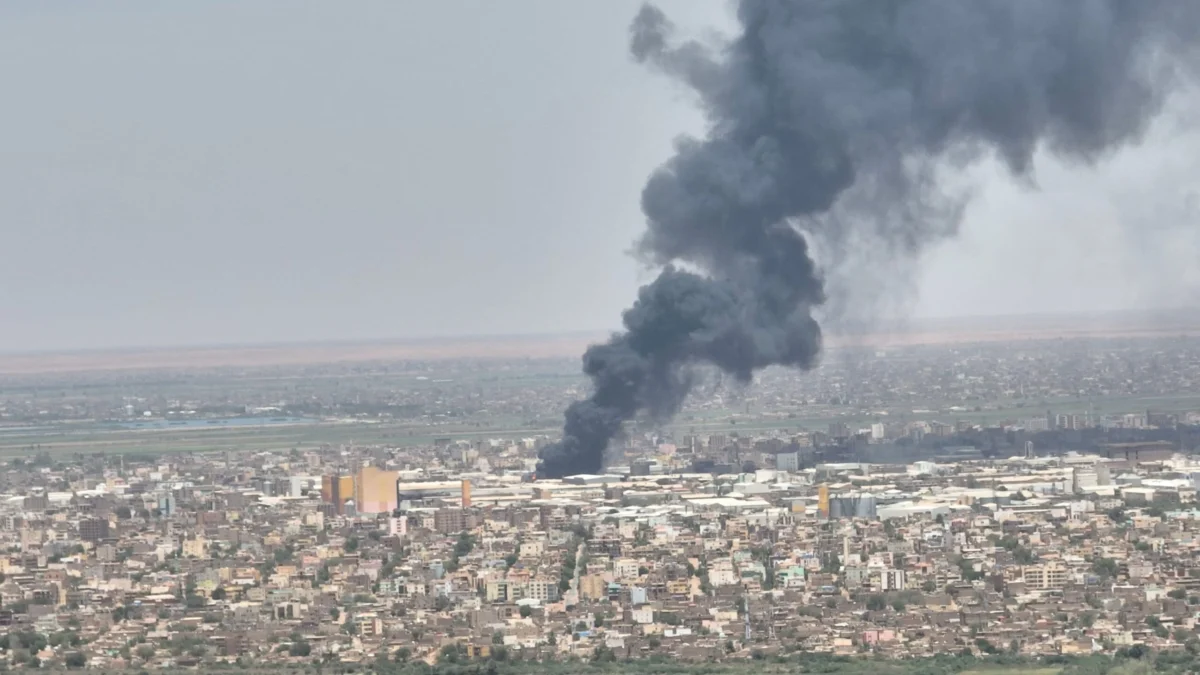
The conflict, which erupted on April 15, 2023, has fundamentally altered the landscape of Khartoum and its sister cities, Bahri and Omdurman. Drone footage and eyewitness reports have documented thick plumes of black smoke rising over Bahri, also known as Khartoum North, where industrial areas and residential neighborhoods have become frontlines. Despite the commencement of talks in Jeddah, residents in the capital report that the sounds of warplanes and heavy artillery remain a constant, terrifying presence. The "pre-negotiation" status of the meeting underscores the fragility of the peace process; both sides have indicated that the primary focus will be on establishing a sustainable humanitarian truce rather than a comprehensive political settlement.
The Genesis of the Power Struggle
To understand the gravity of the current situation, one must look at the fractured transition that followed the 2019 ouster of long-time autocrat Omar al-Bashir. The revolution, fueled by mass civilian protests, initially promised a path toward democratic governance. However, that path was derailed in October 2021 when General Abdel Fattah al-Burhan, head of the SAF, and General Mohamed Hamdan Dagalo, better known as Hemedti, leader of the RSF, joined forces in a military coup to dissolve the transitional civilian government.
The alliance between Burhan and Hemedti was always one of convenience rather than shared vision. Burhan, a career military officer representing the traditional security establishment, and Hemedti, whose RSF grew out of the Janjaweed militias involved in the Darfur conflict, eventually found themselves at odds over the terms of a new, internationally backed "Framework Agreement." The primary sticking point was the timeline and method for integrating the RSF into the regular army. Burhan pushed for a swift two-year integration, while Hemedti sought a ten-year window that would allow him to maintain his independent power base and political influence. As tensions peaked in mid-April, the verbal sparring transformed into a full-scale armed confrontation for control of the state.
A Timeline of Escalation: April 15 to May 6
The transition from political deadlock to open warfare was swift and devastating.
- April 15, 2023: Fighting breaks out at the Soba military base and quickly spreads to Khartoum International Airport and the Presidential Palace. Both sides claim control of key strategic sites.
- April 18-20, 2023: Multiple 24-hour ceasefires are announced but immediately violated. Heavy weaponry, including tanks and airstrikes, is deployed in densely populated urban areas.
- April 23-25, 2023: Foreign nations, including the U.S., U.K., and various European and Arab states, begin emergency evacuations of diplomats and citizens via Port Sudan and military airbases.
- April 30, 2023: Saudi Arabia emerges as a primary hub for evacuees, utilizing its naval assets to transport thousands across the Red Sea to Jeddah.
- May 4-5, 2023: The U.S. and Saudi Arabia formally invite the warring parties to Jeddah. The SAF confirms its delegation’s departure, while the RSF’s attendance remains shrouded in tactical ambiguity until the last moment.
- May 6, 2023: Formal pre-negotiation talks begin in Jeddah, even as airstrikes are reported over residential areas in Eastern Khartoum.
The Humanitarian Emergency and Displacement Data
The human cost of the conflict has been staggering. According to data from the United Nations and the Sudanese Doctors’ Syndicate, the death toll has surpassed 500, though officials acknowledge this is likely a significant undercount due to the inability of medical teams to reach many conflict zones. Thousands more have been wounded, and the healthcare infrastructure in Khartoum has effectively collapsed. Reports indicate that approximately 70% of hospitals in conflict-affected areas are out of service, either due to direct shelling, lack of medical supplies, or the occupation of facilities by armed personnel.
The displacement crisis is equally alarming. The UN Refugee Agency (UNHCR) estimates that over 100,000 people have already fled Sudan to neighboring countries, including Egypt, Chad, Ethiopia, and South Sudan. Domestically, hundreds of thousands are internally displaced, often trapped in homes without electricity, running water, or access to food markets. The World Health Organization (WHO) recently managed to deliver a shipment of medical aid to Port Sudan, but the "last mile" delivery to Khartoum remains blocked by a lack of security guarantees. The looting of UN warehouses and the killing of several humanitarian aid workers have further hampered relief efforts, leading many international NGOs to scale back operations at a time when they are most needed.
The Geopolitical Significance of the Jeddah Talks
The choice of Jeddah as the venue for these talks is no coincidence. Saudi Arabia has deep-seated interests in Sudan’s stability. Both Burhan and Hemedti have historically maintained close ties with Riyadh, notably by providing Sudanese troops to the Saudi-led coalition in the Yemeni civil war. Furthermore, Saudi Arabia’s "Vision 2030" economic strategy relies heavily on the security of the Red Sea, a vital maritime corridor that it shares with Sudan. Any prolonged instability in Sudan threatens the security of Saudi ports and the ambitious tourism and trade projects currently under development along the kingdom’s western coast.
The United States has also prioritized the Sudanese crisis, sending White House National Security Adviser Jake Sullivan to Saudi Arabia to coordinate with Saudi leadership. For Washington, a stabilized Sudan is essential to prevent a power vacuum that could be exploited by extremist groups or rival global powers. The conflict also threatens the stability of the wider Sahel region, a belt of African nations already struggling with insurgency and coups.
Official Responses and Diplomatic Skepticism
Despite the start of talks, rhetoric from both sides remains bellicose. General Burhan has characterized the war as a defense against the "ambitions" of a rebellious militia, while Hemedti has framed his struggle as a fight against "radical Islamists" within the army leadership.
Dafallah Alhaj, a special envoy for the Sudanese army, stated ahead of the talks that the delegation would not engage in direct face-to-face negotiations with the RSF "rebels." Instead, the mediation is expected to function through "proximity talks," where mediators move between separate rooms. This level of animosity suggests that even a basic ceasefire agreement will be difficult to achieve, let alone a long-term political resolution.
The international community, including the African Union and the Intergovernmental Authority on Development (IGAD), has expressed cautious optimism but warned against high expectations. The United Nations has emphasized that any lasting peace must eventually include civilian political leaders, who have been largely sidelined since the fighting began.
Broader Impact and Implications for the Future
The conflict in Sudan is more than a localized power struggle; it is a crisis with the potential to reshape the geopolitics of Northeast Africa. If the Jeddah talks fail to secure a meaningful pause in hostilities, the risk of a protracted civil war increases. Such a scenario would likely draw in regional neighbors, as various factions in Libya, Chad, and Ethiopia have historical ties to the competing Sudanese generals.
Furthermore, the economic implications are severe. Sudan’s economy, already reeling from years of sanctions and mismanagement, is in a state of freefall. The destruction of infrastructure in Khartoum, the country’s economic heart, means that even if a ceasefire is reached tomorrow, the path to recovery will take decades.
The talks in Jeddah represent a narrow window of opportunity. The focus on "pre-negotiations" regarding humanitarian access is a pragmatic approach, acknowledging that the trust between Burhan and Hemedti is non-existent. The world now watches to see if the pressure from Riyadh and Washington can compel the two generals to prioritize the survival of their nation over their personal quest for absolute power. For the residents of Khartoum and Bahri, hiding from stray bullets and watching the smoke rise over their neighborhoods, the outcome of these diplomatic maneuvers is quite literally a matter of life and death.
