

Across the road from the Toronto Zoo, in a low, nondescript industrial building that escapes the notice of most tourists, a quiet revolution in waste management and renewable energy is taking place. Inside this facility, elephant dung and unsold grocery store produce are being systematically converted into clean electricity. This site, operated by the ZooShare Biogas Co-operative, represents a significant shift in how Canadian communities are addressing climate change, bypassing traditional financial institutions to fund the infrastructure of the future through "community bonds."
The facility exists because the Toronto Zoo, which leases the land to the co-operative, sought a sustainable solution to divert animal and food waste from landfills. When the co-operative formed in 2011, its founders faced a common hurdle for grassroots environmental projects: a lack of capital. Traditional banks were often hesitant to fund small-scale, experimental biogas projects. In response, ZooShare turned to its neighbors, launching a community bond program in 2013. This debt instrument allowed ordinary residents to lend money directly to the project, with the promise of being repaid with interest over a fixed term.
The initial fundraising round attracted 300 investors and raised $2.2 million. Two subsequent rounds followed, bringing the total bond financing to over $4 million. According to Rob Grand, ZooShare’s general manager, the motivation for these investors was rarely purely financial. Instead, the members—who now number approximately 800—were driven by a desire to align their investment portfolios with their environmental values. This model of "energy democracy" is now being studied as a blueprint for localized energy systems across North America.
The Technical and Environmental Imperative
The urgency of projects like ZooShare is underscored by Canada’s federal climate commitments. The nation has pledged to reduce greenhouse gas emissions by 40% to 45% below 2005 levels by 2030. A critical component of this strategy involves tackling methane, a potent greenhouse gas that is roughly 86 times more effective at trapping heat than carbon dioxide over a 20-year period. Municipal landfills are responsible for approximately 23% of Canada’s total methane emissions.
To reach the federal target of a 50% reduction in landfill methane by 2030, experts argue that capturing gas at existing large-scale dumps is insufficient. Small, local infrastructure projects like anaerobic digesters are essential. The ZooShare plant, which became fully operational in April 2021 after two years of construction, processes approximately 15,000 tonnes of food waste and zoo manure annually. The resulting biogas is burned to generate enough electricity to power roughly 250 average Toronto homes. Furthermore, the process yields high-quality fertilizer, certified by the Canadian Food Inspection Agency, which is distributed to farmers in the nearby Rouge Valley, creating a closed-loop circular economy.
A Chronology of Community Energy Evolution
The path toward community-owned energy in Canada has moved through several distinct phases over the last two decades:
- 2011: ZooShare Biogas Co-operative is formed with the goal of turning Toronto Zoo waste into energy.
- 2013: The first round of community bonds is issued, proving the viability of the "retail" investment model for green infrastructure.
- 2013 (Quebec): Following the tragic oil train explosion in Lac-Mégantic, the community begins planning a rebuilt downtown powered by a Hydro-Québec microgrid.
- 2019: Kiashke Zaaging Anishinaabek (Gull Bay First Nation) in Ontario switches on a solar-and-battery microgrid, significantly reducing its reliance on diesel fuel.
- 2021: The ZooShare plant officially comes online, feeding power into the provincial grid.
- 2024–2026: Federal investments and new academic tools, such as the Community Energy Finance Navigator, begin to scale these models nationally.
- June 2026: The federal government commits $21.6 million to the Sayisi Dene First Nation in Manitoba for an integrated renewable microgrid, scheduled to go live in late 2026.
The Mechanics of Community Financing
Community bonds differ from traditional equity shares in a co-operative. While a share represents ownership and usually includes voting rights, a bond is a loan. However, in the case of ZooShare, the two are intertwined. Membership in the co-op costs a nominal $10 and provides one vote in electing the board of directors, regardless of how many bonds a member holds.
Basma Majerbi, an associate professor of finance at the University of Victoria, notes that community bonds are more than just a source of capital; they are an economic development strategy. "It fills a gap in the current financial system," Majerbi explains. "Either because a project doesn’t have the right scale to warrant financing from a bank or it could be deemed too early or a bit risky."
This "gap" often occurs in the pre-revenue stage of a project. Banks typically require a proven track record of cash flow before issuing loans. Community investors, however, are often willing to take on that early-stage risk because they see the local benefits—such as waste reduction, local jobs, and energy security—as a secondary "return" on their investment.
National Momentum and the Diversity of Ownership
While ZooShare is a prominent example of a co-operative model, the landscape of community energy in Canada is increasingly dominated by Indigenous-led initiatives. Julie MacArthur, Canada Research Chair in Reimagining Capitalism at Royal Roads University, points out that the majority of operating community microgrids in Canada are majority-owned by Indigenous communities rather than broad-based co-operatives.
In northwestern Ontario, the Kiashke Zaaging Anishinaabek project serves as a landmark for energy sovereignty. For years, the community was isolated from the provincial grid and forced to rely on expensive, polluting diesel generators. Their solar-and-battery microgrid, developed in partnership with Ontario Power Generation but owned by the community, offsets 130,000 litres of diesel per year.
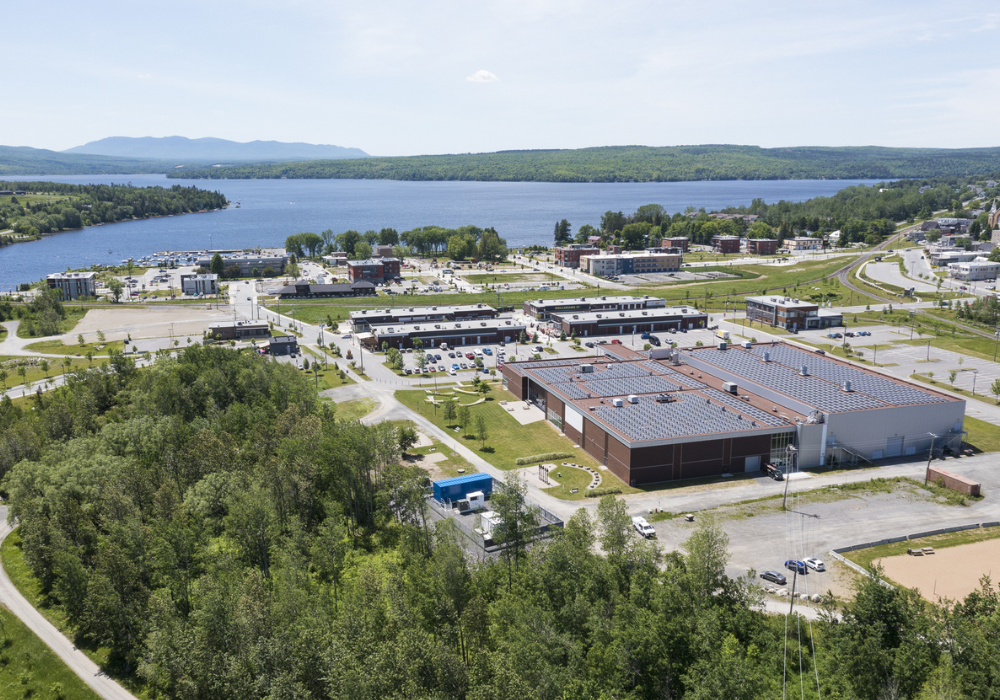
Similarly, the Lac-Mégantic microgrid in Quebec demonstrates the concept of "islanding." This allows the local grid to disconnect from the main provincial network and operate independently using its own solar and battery reserves. This technology is particularly vital for remote or disaster-prone areas, providing a level of resilience that centralized power systems cannot match.
However, MacArthur cautions that the term "community energy" is sometimes used loosely. Some projects are actually owned by private developers who provide "benefit agreements" to local residents. She argues that there is a fundamental difference between a project located in a community and one owned and governed by that community.
Overcoming the Information Gap
Despite the success of ZooShare and various Indigenous microgrids, the adoption of local energy systems has not yet reached a "tipping point" in Canada. Research by Basma Majerbi suggests that the primary obstacle is not a lack of available money, but a lack of information. Many community groups default to seeking government grants and stop their search there, unaware of the "capital stack" options available to them.
To address this, the University of Victoria’s Impact Investing Hub launched the Community Energy Finance Navigator in May 2026. This pilot database tracks 86 projects across the country, detailing how they were structured and financed. The data shows that successful projects almost never rely on a single source of funding. Instead, they "stack" different types of capital: federal grants, low-interest loans, community bonds, and private partnerships.
"People create their own capital stack, but it’s not done in a very strategic way," Majerbi says. She is currently working on a national initiative to scale "blended finance," which uses catalytic capital (like grants or government guarantees) to de-risk projects and attract private or community investment.
Future Implications for the Canadian Energy Grid
The shift toward decentralized energy systems has profound implications for the stability and cost of the Canadian electrical grid. As more communities generate their own power from waste, sun, and wind, the pressure on aging centralized infrastructure is reduced. Distributed energy resources (DERs) can provide "peak shaving," reducing the need for utilities to fire up expensive gas plants during times of high demand.
Furthermore, the ZooShare model proves that urban centers can be sites of energy production, not just consumption. By turning "nuisance" waste—manure and rotting food—into a resource, cities can reduce their carbon footprint while generating local wealth.
For communities looking to follow in ZooShare’s footsteps, the advice from experts is clear: strategic financial planning must happen at the inception of the project. Rather than treating the budget as a final hurdle, groups should view the "capital stack" as a tool for community engagement. When residents are financially and emotionally invested in their local energy infrastructure, the resulting project is often more resilient, more transparent, and more closely aligned with the long-term interests of the people it serves.
As Canada moves toward its 2030 and 2050 climate targets, the nondescript building across from the Toronto Zoo stands as a testament to what is possible when neighbors stop waiting for traditional institutions and start building their own solutions, one bond at a time.
